The Fluffiest Homemade Cornbread Recipe Your Table Has Been Missing
My grandmother never measured a thing. She’d tip the cornmeal bag over a cast iron skillet, splash in buttermilk by feel, and somehow every single time — a perfect, golden loaf would come out of that oven. I stood on a step stool watching her for years before I finally understood what she was doing. This cornbread recipe is my attempt to put those lessons into a form I can actually share.
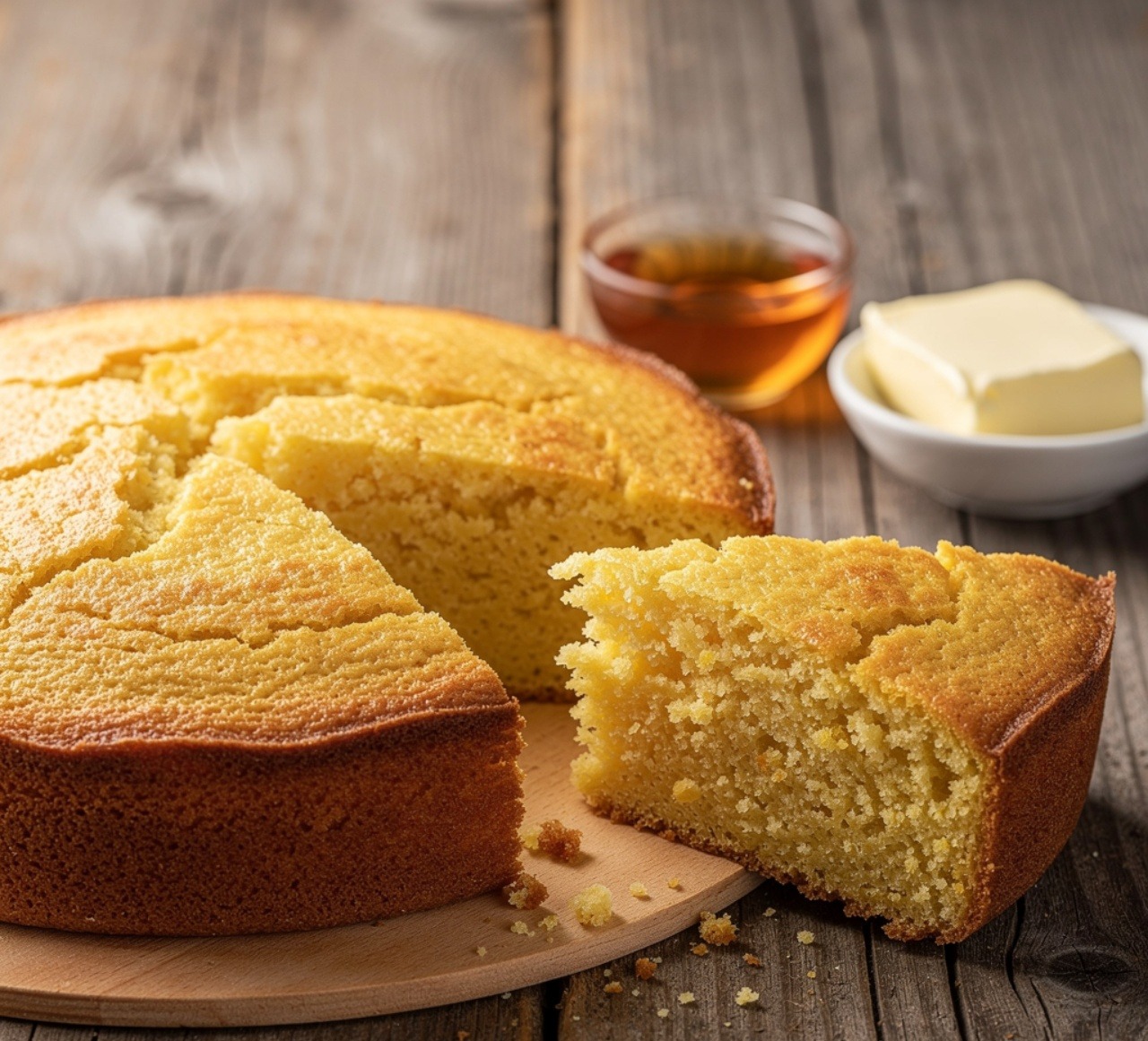
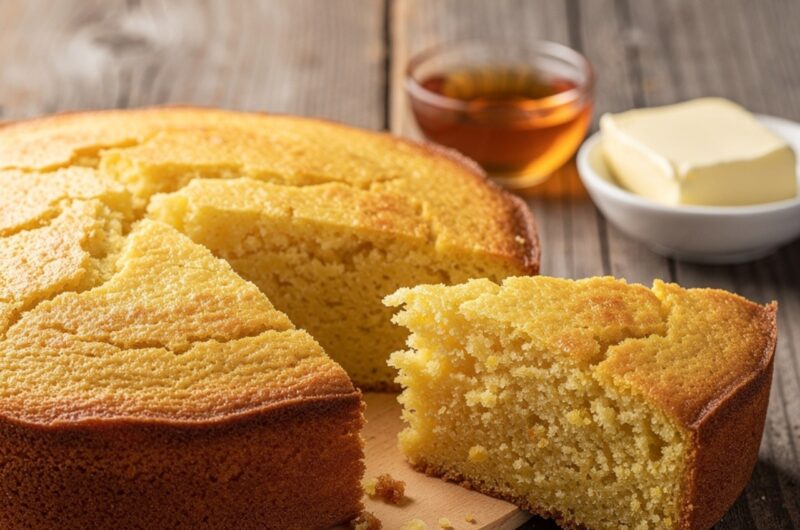
The moment you cut into it, you get that soft resistance — a tender crumb that’s just dense enough to feel satisfying but light enough that one piece becomes two without guilt. The edges have a faint crunch from the butter that crisped up in the pan, the inside smells of warm corn and a hint of sweetness, and the whole thing tastes like something that was made with intention.
This is the kind of moist cornbread you bring to a potluck and come home with an empty pan. It holds its own at Thanksgiving next to turkey and gravy, pairs beautifully with a bowl of chili on a cold Tuesday, and disappears quietly at summer barbecues. Whether you call it Southern cornbread, skillet cornbread, or just “that bread everyone asks about,” this recipe earns its place at every table.
Why You’ll Love This Recipe
⭐ It Has the Perfect Sweet-Savory Balance
This isn’t the overly sweet, cake-like cornbread you get from a box mix. It has just enough sweetness to round out the corn flavor without tipping into dessert territory. The buttermilk adds a gentle tang that keeps every bite interesting.
⭐ The Texture Is Absolutely Spot-On
You get a golden, slightly crisp crust on the outside with a tender, moist center that doesn’t fall apart when you slice it. It holds together beautifully whether you’re crumbling it into soup or serving it in neat wedges.
⭐ It Comes Together in Under 30 Minutes
One bowl, a skillet or baking pan, and about ten minutes of prep. There’s no yeast, no kneading, and no waiting around. From mixing bowl to table, you’re looking at less than half an hour.
⭐ It Feeds a Crowd Without Fuss
This recipe scales easily and bakes evenly, making it a reliable choice for family gatherings and potlucks. Slice it into squares, wedges, or rustic chunks — it looks equally good either way.
⭐ Classic Flavor With a Buttermilk Twist
The addition of buttermilk instead of regular milk gives this homemade cornbread a subtle depth that makes people ask what your secret is. It’s a small change that makes a genuinely big difference.
Ingredients
For the Dry Base
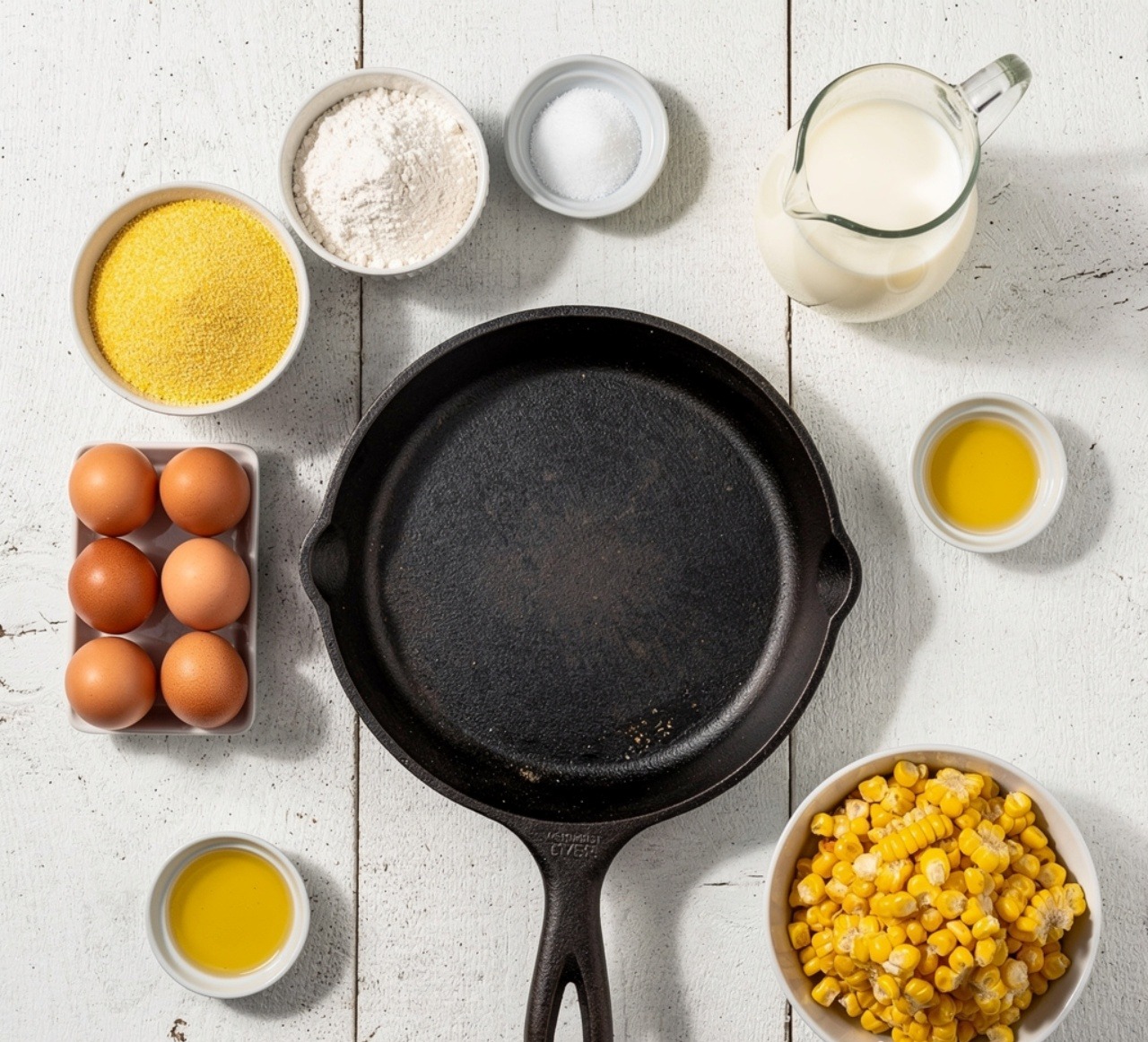
- 1 cup yellow cornmeal (fine or medium grind — both work beautifully)
- 1 cup all-purpose flour
- 1 tbsp baking powder
- ½ tsp baking soda
- ½ tsp salt
- 3 tbsp granulated sugar
For the Wet Batter
- 1 cup buttermilk (full-fat for best texture; shake well before using)
- 2 large eggs (room temperature)
- ⅓ cup unsalted butter, melted (plus extra for greasing the pan)
- 2 tbsp honey (adds gentle sweetness without overpowering the corn flavor)
For the Pan Finish (Optional but Recommended)
- 1 tbsp unsalted butter (to coat the cast iron or baking pan before pouring in the batter — creates those irresistible crispy edges)
The buttermilk and honey work together here to create a crumb that stays moist for days. The butter in the batter adds richness while the butter in the pan gives you that golden, slightly crunchy perimeter that makes this recipe genuinely hard to stop eating.
How to Make Cornbread Recipe — Step-by-Step
Step 1: Preheat and Prepare Your Pan
Preheat your oven to 400°F (205°C). Place your cast iron skillet or 8×8 inch baking pan in the oven while it preheats — this is the trick that gives you those perfectly crisped edges. Once hot, carefully remove it and add your tablespoon of butter, swirling to coat the bottom and sides. You’ll hear a satisfying sizzle.
Step 2: Mix the Dry Ingredients
In a large mixing bowl, whisk together the cornmeal, flour, baking powder, baking soda, salt, and sugar until evenly combined. There should be no pockets of baking powder hiding at the bottom — take an extra ten seconds to whisk thoroughly. Don’t worry if the mixture looks a little pale and dusty at this point; that’s exactly right.
Step 3: Combine the Wet Ingredients
In a separate bowl or large measuring cup, whisk together the buttermilk, eggs, melted butter, and honey until smooth. The mixture should look slightly frothy and smell warmly buttery. Don’t worry if you see a few streaks — as long as the eggs are fully incorporated, you’re in good shape.
Step 4: Bring It All Together
Pour the wet mixture into the dry ingredients and stir with a spatula or wooden spoon until just combined. Stop as soon as the last visible streaks of flour disappear. The batter will be slightly lumpy — that’s exactly what you want. Overmixing is the number one enemy of tender cornbread, so resist the urge to keep stirring.
Step 5: Bake Until Golden
Pour the batter into your hot, butter-coated pan and spread gently to the edges. Bake for 20–23 minutes, until the top is a deep golden brown and a toothpick inserted in the center comes out clean. The edges will have pulled away slightly from the sides of the pan. Let it rest for at least 10 minutes before slicing — this gives the crumb time to set so it cuts cleanly instead of crumbling.
Perfecting This Recipe
- Use room temperature eggs so they incorporate smoothly and don’t cause the melted butter to seize up when combined.
- Preheat your pan — this step is non-negotiable if you want crispy edges. A cold pan produces flat, pale sides.
- Don’t skip the resting time. Ten minutes of patience rewards you with clean slices instead of a crumbly mess.
- If you prefer a less sweet cornbread (more Southern-style), reduce the sugar to 1 tbsp and omit the honey entirely.
- Fine-ground cornmeal gives a smoother, more cake-like crumb. Coarse-ground adds texture and a slightly rustic bite. Either works — pick based on what you love.
- Avoid opening the oven before the 18-minute mark. Cornbread rises quickly and an early draft of cold air can cause it to sink in the middle.
Common Mistakes to Avoid
- Overmixing the batter — Once the wet and dry meet, overstirring develops gluten and turns your cornbread tough and chewy. Stir until just combined and walk away.
- Using cold buttermilk straight from the fridge — Cold dairy can shock the melted butter, creating clumps in the batter. Let it sit out for 15 minutes or warm it briefly in the microwave.
- Skipping the hot pan step — If you pour batter into a cold pan, you lose the crispy, buttery crust. Always preheat the pan in the oven first.
- Underbaking to be “safe” — A pale top usually means the center is still gummy. Wait for genuine golden color and a clean toothpick — the full bake time matters.
- Not measuring the cornmeal properly — Scooping straight from the bag packs the cornmeal and can throw off the ratio. Spoon it into the measuring cup and level off with a straight edge.
Add Your Touch
- Stir in 1 cup of shredded sharp cheddar and ½ tsp smoked paprika for a savory, cheesy version.
- Add 1–2 finely diced jalapeños (seeds removed for mild heat, left in for a kick) for jalapeño cornbread.
- Mix in a small can of well-drained creamed corn for an extra-moist, ultra-corn-forward loaf.
- Fold in fresh or frozen corn kernels for bursts of sweetness in every bite.
- For a fall twist, replace 2 tbsp of butter with an equal amount of pumpkin purée and add ½ tsp cinnamon.
- Make it dairy-free by swapping buttermilk for oat milk mixed with 1 tbsp apple cider vinegar, and using coconut oil in place of butter.
Visit Also: Greek Salad
What to Serve With This
- A big pot of chili — this is the classic pairing and it earns that reputation every time.
- Slow-cooked pulled pork or BBQ ribs, where the cornbread doubles as a utensil.
- A hearty bowl of vegetable soup or chicken and dumplings on a cold evening.
- Scrambled eggs and honey butter at brunch — it’s unexpectedly wonderful.
- A simple green salad with a tangy vinaigrette to balance the richness of the bread.
Storing and Serving
Fridge:
Wrap leftover cornbread tightly in plastic wrap or store in an airtight container. It keeps well in the refrigerator for up to 4 days without drying out.
Freezer:
Slice the cornbread first, then wrap individual pieces in plastic wrap and place in a zip-top freezer bag. It freezes well for up to 3 months with minimal quality loss.
Reheating:
Warm slices in a 300°F oven for 8–10 minutes, or microwave individual pieces for 20–30 seconds wrapped in a damp paper towel. The oven method restores a bit of that original crust.
Make-Ahead Tip:
You can mix the dry and wet ingredients separately up to 24 hours in advance and store them covered in the fridge. Combine and bake just before serving for the freshest result possible.
Servings:
This recipe yields approximately 9 squares (from an 8×8 pan) or 8 wedges (from a 10-inch skillet).
Nutrition (Approximate Per Serving)
- Calories: 210
- Total Fat: 9g
- Saturated Fat: 5g
- Carbohydrates: 28g
- Sugar: 8g
- Protein: 4g
- Sodium: 290mg
Nutritional values are approximate and may vary based on specific ingredients and brands used.
Chef’s Helpful Tips
- Room temperature dairy matters. Cold buttermilk and cold eggs both interfere with how the fat and liquid emulsify. Give them 15–20 minutes on the counter before you begin.
- Know your oven. If your oven runs hot, check for doneness at 18 minutes. A golden top and clean toothpick are your real indicators — not the clock alone.
- For clean slices, let the cornbread cool for the full 10 minutes and use a thin, sharp knife. Wipe the blade between cuts for bakery-clean edges.
- Quality cornmeal makes a difference. Stone-ground or whole-grain cornmeal has a deeper, more authentic corn flavor than highly refined yellow cornmeal. It’s worth seeking out.
- If it turns out too dry, you likely overbaked or overmeasured the cornmeal. Next time, pull it a minute earlier and try spooning the cornmeal into the cup instead of scooping.
Frequently Asked Questions
Q1. Can I make this without buttermilk?
Absolutely — make a quick substitute by adding 1 tablespoon of white vinegar or lemon juice to 1 cup of regular milk. Stir and let it sit for 5 minutes until it curdles slightly. It works almost identically to real buttermilk in this recipe.
Q2. How is this different from boxed cornbread mix?
Think of boxed mix as a convenient shortcut and this as the real thing. This homemade cornbread has a more complex flavor — you get genuine corn taste, buttermilk tang, and buttery richness rather than the one-dimensional sweetness most mixes produce.
Q3. Is this recipe beginner-friendly?
Very much so. If you can measure ingredients and stir a bowl, you can make this. The only techniques are whisking and knowing when to stop mixing — both of which take about one try to master.
Q4. Can I make this ahead for a potluck?
Yes — bake it the night before, cool completely, and wrap tightly. It tastes just as good the next day. For a fresh-from-the-oven feel, warm it in a 300°F oven for 10 minutes before serving.
Q5. Can I freeze the whole loaf?
You can, though slicing before freezing makes it much easier to use later. Thaw slices overnight in the fridge or on the counter for an hour, then warm gently in the oven or microwave.
Conclusion
There’s a reason this cornbread recipe shows up at tables across every season, every occasion, and every kind of gathering. It’s the kind of food that asks nothing complicated of you and gives back something that feels genuinely homemade — warm, golden, and just a little bit proud of itself. Whether you’re passing the basket at Thanksgiving or tucking a square alongside a bowl of soup on a random Wednesday, it always fits.
Make it once and it’ll become muscle memory. Adjust the sweetness, add the cheese, throw in some jalapeño — make it yours. That’s the whole point of a recipe like this. It’s a starting point, not a rulebook. I hope it earns a permanent spot in your kitchen.
The Fluffiest Homemade Cornbread Recipe
Course: Trending Recipes8-9
servings10
minutes20
minutes210
kcal10
43
minutesTender, golden, and moist with crispy buttered edges, this easy cornbread is the perfect companion for chili nights, holiday spreads, and everything in between. One bowl, no fuss, and ready in under 30 minutes.
Ingredients
Dry Base:
1 cup yellow cornmeal
1 cup all-purpose flour
1 tbsp baking powder
½ tsp baking soda
½ tsp salt
3 tbsp granulated sugar
Wet Batter:
1 cup buttermilk
2 large eggs, room temperature
⅓ cup unsalted butter, melted
2 tbsp honey
Pan Finish:
1 tbsp unsalted butter (for greasing hot pan)
Directions
- Preheat oven to 400°F. Place skillet or 8×8 pan in oven while preheating. Remove carefully, add butter, and swirl to coat.
- Whisk together cornmeal, flour, baking powder, baking soda, salt, and sugar in a large bowl.
- In a separate bowl, whisk buttermilk, eggs, melted butter, and honey until smooth.
- Pour wet ingredients into dry. Stir until just combined — batter will be slightly lumpy.
- Pour into prepared hot pan. Bake 20–23 minutes until golden on top and a toothpick comes out clean.
- Rest 10 minutes before slicing and serving.