The Fluffiest Homemade Biscuits You’ll Make Over and Over Again
My grandmother never measured a single thing when she made biscuits. She’d reach into a flour canister, work cold butter between her fingers, and pour in just enough buttermilk until the dough “felt right.” I stood on a step stool and watched her hands move, completely convinced she was performing some kind of kitchen magic I’d never be able to replicate. Turns out, she was just making homemade biscuits — and once you understand a few simple rules, you can too.
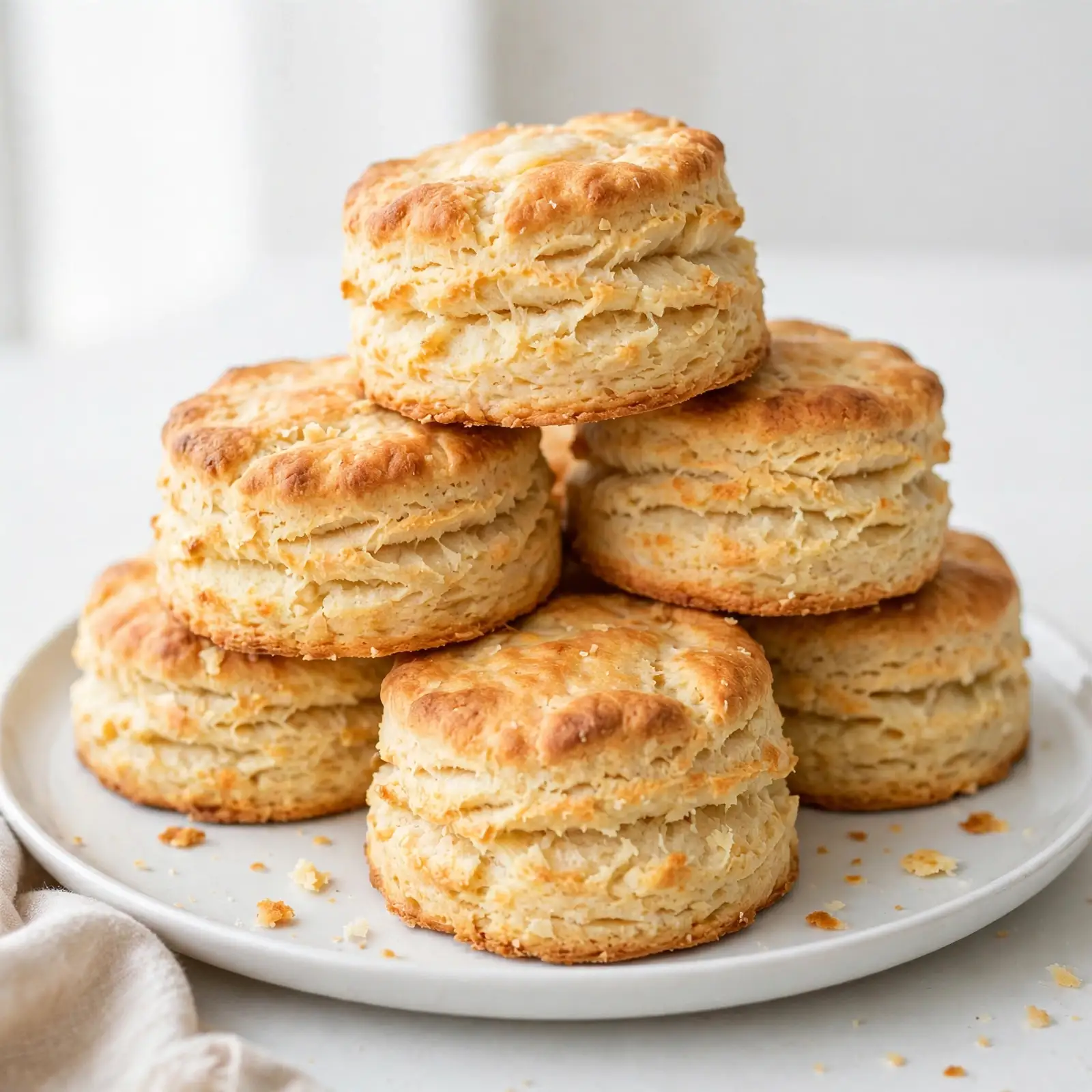
Pull one of these biscuits apart and the steam rises in a little cloud. The inside is cloud-soft and pillowy, threaded with those thin, papery layers that catch melted butter and hold it like a tiny edible sponge. The outside cracks gently with a golden crust that smells of toasted butter and warm flour. Whether you top them with honey, a fried egg, or a ladleful of sausage gravy, they deliver.
These are the kind of fluffy biscuits worth making on a slow Sunday morning, at a holiday brunch, or when you need something warm and homey to bring to a potluck. Whether you’re chasing that classic Southern biscuit experience or just need an easy biscuit recipe that actually works, this one delivers every single time.
Why You’ll Love This Recipe
They Come Together in Under 30 Minutes
From pulling out the butter to sliding the pan into the oven takes less than 30 minutes. There’s no yeast, no overnight rest, and no mixer required — just a bowl, a fork, and cold hands.
The Layers Are Genuinely Impressive
The folding technique used here builds real, distinct layers that peel apart beautifully at the table. It’s not a trick — it’s just the right method, and it makes every biscuit look bakery-worthy.
The Flavor Is Rich Without Being Fussy
Butter and buttermilk do all the heavy lifting here. The slight tang from the buttermilk plays perfectly against the rich, salty butter, creating a flavor that tastes more complex than the short ingredient list suggests.
They’re Crowd-Pleasing by Nature
Whether you’re feeding picky kids or hosting a table full of adults, biscuits land every time. They work as a side dish, a base for breakfast sandwiches, or as dessert with strawberry jam.
This Is the Recipe You’ll Pass Down
A good homemade biscuit recipe becomes a family heirloom. Once you’ve made this version, you’ll stop buying the canned kind entirely — and people will start asking for your recipe instead.
Ingredients
For the Biscuits
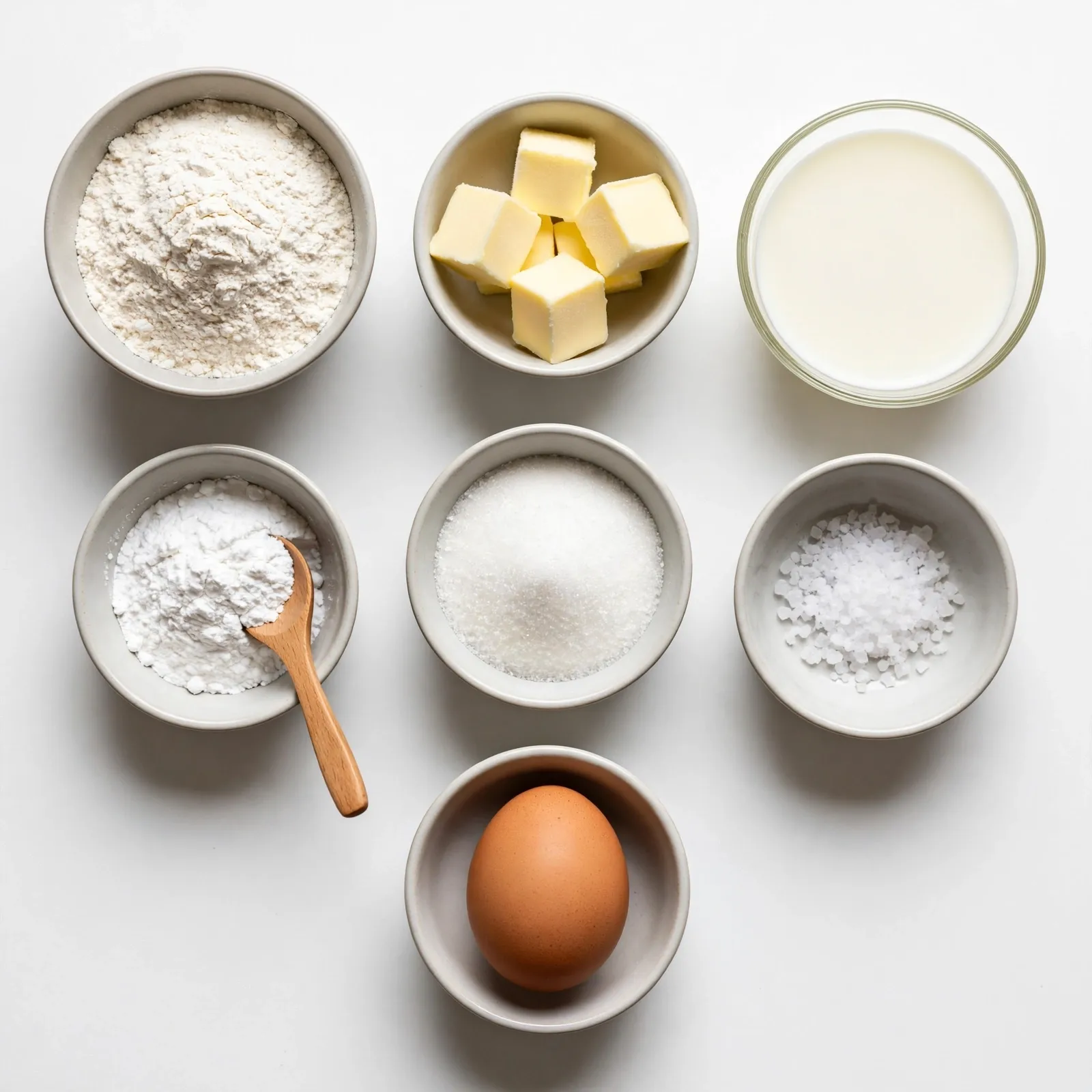
- 2 cups all-purpose flour (plus more for dusting)
- 1 tablespoon baking powder
- 1 teaspoon fine sea salt
- 1 teaspoon granulated sugar
- ½ teaspoon baking soda
- ½ cup unsalted butter, very cold (cubed — freeze for 15 minutes before using for best results)
- ¾ cup full-fat buttermilk, cold (plus 1–2 tablespoons more if dough is dry)
For the Topping
- 2 tablespoons unsalted butter, melted (for brushing on top before and after baking)
The cold butter creates steam pockets as it bakes, which is exactly what gives these biscuits their lift and flaky layers. The buttermilk adds both tenderness and a subtle tang that takes these from good to unforgettable.
How to Make Homemade Biscuits — Step-by-Step
Step 1: Chill Everything and Preheat the Oven
Position your oven rack in the upper third of the oven and preheat to 450°F (232°C). Place your mixing bowl in the freezer for five minutes while you cube the butter, then return the butter to the freezer too. Cold ingredients are everything with biscuits — the moment butter starts to melt before it hits the oven, you lose your layers.
Step 2: Whisk Together the Dry Ingredients
In your chilled bowl, whisk together the flour, baking powder, salt, sugar, and baking soda until well combined. This step only takes 30 seconds, but it’s worth doing properly — uneven distribution of leaveners means uneven rise.
Step 3: Cut in the Cold Butter
Add the frozen butter cubes to the flour mixture. Using your fingertips or a pastry cutter, work the butter into the flour quickly, pressing and smearing until the mixture looks like rough, shaggy crumbs with visible pea-sized butter pieces. Don’t worry if the mixture looks uneven — those chunky bits of butter are exactly what you want. Overworking it is the only real mistake you can make here, so stop when it looks “almost ready.”
Step 4: Add the Buttermilk and Form the Dough
Pour in the cold buttermilk and stir with a fork just until the dough comes together into a shaggy mass. It should look slightly rough and sticky — not smooth like bread dough. Turn it out onto a lightly floured surface and gently press it into a rectangle about 1 inch thick. Fold it in half, rotate 90 degrees, and fold again. Repeat twice more. Don’t worry if the edges look ragged — that rustic look means you haven’t overworked it, which is a good thing.
Step 5: Cut and Bake
Press or roll the dough to about ¾ inch thick. Using a sharp, floured biscuit cutter (2½ inches works well), press straight down without twisting — twisting seals the edges and prevents a good rise. Place biscuits on a parchment-lined baking sheet with their sides just touching. Brush the tops with melted butter and bake for 12–15 minutes until the tops are deeply golden and the sides look set. Brush once more with butter the moment they come out of the oven and let them rest for 3 minutes before serving. The inside will finish setting during that short rest.
Perfecting This Recipe
- Keep all your ingredients as cold as possible right up until they go into the oven — warm butter is the fastest way to flat biscuits.
- Don’t twist the cutter when stamping out biscuits. A clean, straight press gives you a higher, straighter rise.
- Touching biscuits on the pan is intentional — they support each other as they bake and rise taller together than they would spaced apart.
- Folding the dough a few times (the lamination step) is what creates distinct layers rather than a uniform crumb. Skipping it gives you a dinner roll, not a biscuit.
- If the dough feels too sticky to handle, add flour one tablespoon at a time — but stop as soon as it’s manageable. Too much flour makes dense biscuits.
- Always use full-fat buttermilk. Low-fat versions don’t have enough fat to create the same tender, rich crumb.
- The 450°F temperature isn’t a typo. High heat is what gives biscuits their rapid rise and that gorgeous golden crust before the inside has a chance to dry out.
Common Mistakes to Avoid
- Using warm or softened butter — Butter that isn’t truly cold will melt into the flour before baking instead of creating steam, and you’ll end up with flat, dense biscuits instead of fluffy, layered ones. Pop it in the freezer for at least 15 minutes.
- Overworking the dough — The more you handle biscuit dough, the more gluten develops, which makes biscuits tough instead of tender. Mix just until the dough comes together and stop.
- Twisting the biscuit cutter — This seals the edges of each biscuit and prevents a clean, tall rise. Always press straight down and lift straight up.
- Skipping the rest time after baking — Pulling a biscuit apart the instant it comes out of the oven can make the inside seem gummy or underdone. Three minutes of resting lets the crumb finish setting properly.
- Spacing biscuits too far apart on the pan — Biscuits baked with space around them tend to spread outward rather than rise upward. Nestling them close together encourages a taller, more even rise.
Add Your Touch
- Stir in ½ cup of shredded sharp cheddar and a pinch of garlic powder for a savory, cheesy variation.
- Add 1 tablespoon of fresh rosemary or thyme for an herby, aromatic twist.
- Swap the melted butter brush for honey butter (equal parts softened butter and honey) for a sweeter finish.
- Fold in ¼ cup of crumbled cooked bacon for a smoky, rich variation that works especially well for brunch.
- Use a circle cutter for classic round biscuits, or cut them into squares with a knife to eliminate scraps and avoid re-rolling.
- For a slightly sweeter biscuit to serve with jam or fruit, increase the sugar to 1 tablespoon.
Visit Also: Pumpkin Bread Recipe
What to Serve With This
- Sausage gravy — the all-time classic pairing; the rich, peppery gravy was practically invented to go over a flaky biscuit.
- Scrambled eggs and bacon — stack them for a breakfast sandwich that beats any drive-through version.
- Honey and softened butter — sometimes the simplest option is the best one.
- A bowl of tomato soup or chili — biscuits are fantastic for dunking and make a hearty soup feel like a full meal.
- Strawberry jam and whipped cream — serve these as a shortcake-style dessert with fresh berries for something unexpectedly beautiful.
Storing and Serving
Fridge: Store leftover biscuits in an airtight container or zip-lock bag at room temperature for up to 2 days, or in the refrigerator for up to 4 days. Fridge storage keeps them safe longer but can dry them out slightly, so a quick warm-up is recommended.
Freezer: Biscuits freeze beautifully. Let them cool completely, then wrap each one individually in plastic wrap and store in a freezer-safe bag for up to 3 months. Quality holds well — they taste nearly as good as the day they were baked.
Reheating: For the best texture, reheat biscuits in a 350°F oven for 8–10 minutes. Wrap them in foil if you want them soft, or leave them unwrapped for a slightly crisped exterior. Microwaving works in a pinch (30–45 seconds), though the texture won’t be quite as satisfying.
Make-Ahead Tip: Cut the biscuits and arrange them on the baking sheet, then freeze the unbaked rounds on the sheet until solid (about 1 hour). Transfer to a freezer bag and bake directly from frozen at 450°F for 15–18 minutes. This is perfect for hosting — you can have fresh-baked biscuits on the table with almost no morning effort.
Servings: This recipe yields approximately 10–12 biscuits, depending on the size of your cutter.
Nutrition (Approximate Per Serving)
- Calories: 210
- Total Fat: 11g
- Saturated Fat: 7g
- Carbohydrates: 24g
- Sugar: 2g
- Protein: 4g
- Sodium: 310mg
Nutritional values are approximate and may vary based on specific ingredients and brands used.
Chef’s Helpful Tips
- Take your buttermilk out of the refrigerator last, right before you’re ready to use it — you want it cold, not room temperature.
- Start checking the biscuits at the 12-minute mark. Every oven runs a little differently, and overbaked biscuits lose their tender interior quickly.
- For clean, neat slices when cutting biscuits into squares, use a bench scraper or a large chef’s knife rather than a small biscuit cutter — one clean motion rather than multiple presses reduces overworking.
- The quality of your butter really does matter here. A good European-style butter with higher fat content (like Kerrygold) produces noticeably richer, more flavorful biscuits.
- If your biscuits come out dense rather than fluffy, the most common culprit is overworked dough or butter that wasn’t cold enough. Next time, freeze the butter cubes for 20 minutes and stop mixing the moment the dough comes together.
Frequently Asked Questions
Q1. Can I make these without buttermilk? Absolutely — make a quick substitute by adding 1 tablespoon of white vinegar or lemon juice to ¾ cup of regular whole milk. Stir and let it sit for 5 minutes until it curdles slightly. It works nearly as well as the real thing and in a pinch, no one will know the difference.
Q2. How do these compare to canned biscuits? Think of canned biscuits as the fast food version — convenient but one-dimensional. These homemade biscuits have real butter flavor, a more complex crumb, and those beautiful layers you just can’t get from a tube. Once you’ve made them from scratch, going back is hard.
Q3. Are these beginner-friendly? These are one of the most beginner-friendly baked goods you can make, honestly. There’s no yeast, no proofing, no special equipment, and the dough comes together in minutes. The only real technique is keeping everything cold and not overworking the dough — and even if you mess up slightly, they’ll still taste great.
Q4. Can I make these ahead for a brunch or gathering? Yes, and it’s actually one of the best make-ahead options out there. Cut and freeze the unbaked biscuits up to a month in advance, then bake them straight from frozen the morning of your event. Your guests will never guess they weren’t made entirely fresh that morning.
Q5. Can I freeze baked biscuits? You can, and they hold up really well. Cool them completely, wrap individually in plastic wrap, and freeze for up to 3 months. Reheat in a 350°F oven for about 10 minutes and they taste nearly as good as the day they came out of the oven.
Conclusion
There’s a reason homemade biscuits have been made in home kitchens for generations — they’re one of those rare recipes that manages to be deeply comforting and genuinely impressive at the same time. They’re humble enough for a Tuesday morning and special enough to set out at a holiday table. And once you’ve made a batch yourself, you’ll understand exactly why people get sentimental about them.
So whether this is your first time or your fiftieth, pull out that cold butter, trust the process, and don’t be afraid to make this recipe yours. Add cheese, add herbs, serve them with gravy or just a good smear of honey. However you enjoy them, these biscuits are meant to be shared — and they’re always best eaten warm.
The Fluffiest Homemade Biscuits
Course: Trending Recipes10–12 biscuits
servings15
minutes12
minutes210
kcal30
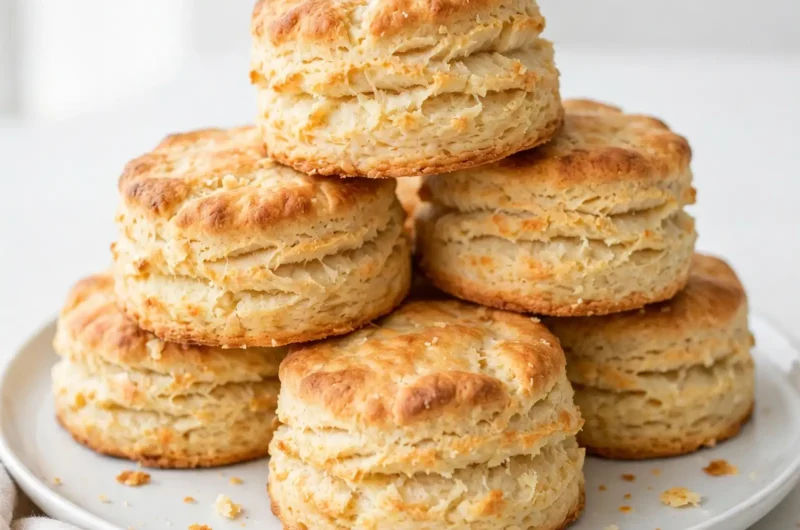
minutesButtery, golden-topped, and impossibly flaky, these homemade biscuits have a pillowy soft interior and distinct layers that pull apart beautifully. Perfect for breakfast, brunch, or alongside any hearty dinner.
Ingredients
For the Biscuits:
2 cups all-purpose flour (plus more for dusting)
1 tablespoon baking powder
1 teaspoon fine sea salt
1 teaspoon granulated sugar
½ teaspoon baking soda
½ cup unsalted butter, very cold (cubed)
¾ cup full-fat buttermilk, cold (plus 1–2 tablespoons if needed)
For the Topping:
2 tablespoons unsalted butter, melted
Directions
- Preheat oven to 450°F. Chill your mixing bowl and cubed butter in the freezer for 10–15 minutes.
- Whisk flour, baking powder, salt, sugar, and baking soda together in the chilled bowl.
- Cut cold butter into flour mixture using fingertips or a pastry cutter until crumbly with pea-sized butter pieces visible.
- Pour in cold buttermilk. Stir with a fork until a shaggy dough just comes together.
- Turn dough onto a floured surface. Fold in half, rotate, fold again — repeat twice. Press to ¾-inch thickness.
- Cut with a floured 2½-inch biscuit cutter, pressing straight down without twisting. Place biscuits touching on a parchment-lined sheet.
- Brush tops with melted butter. Bake 12–15 minutes until deeply golden.
- Brush again with butter immediately out of the oven. Rest 3 minutes before serving.