Crispy, Saucy Mongolian Beef That Beats Any Takeout Night
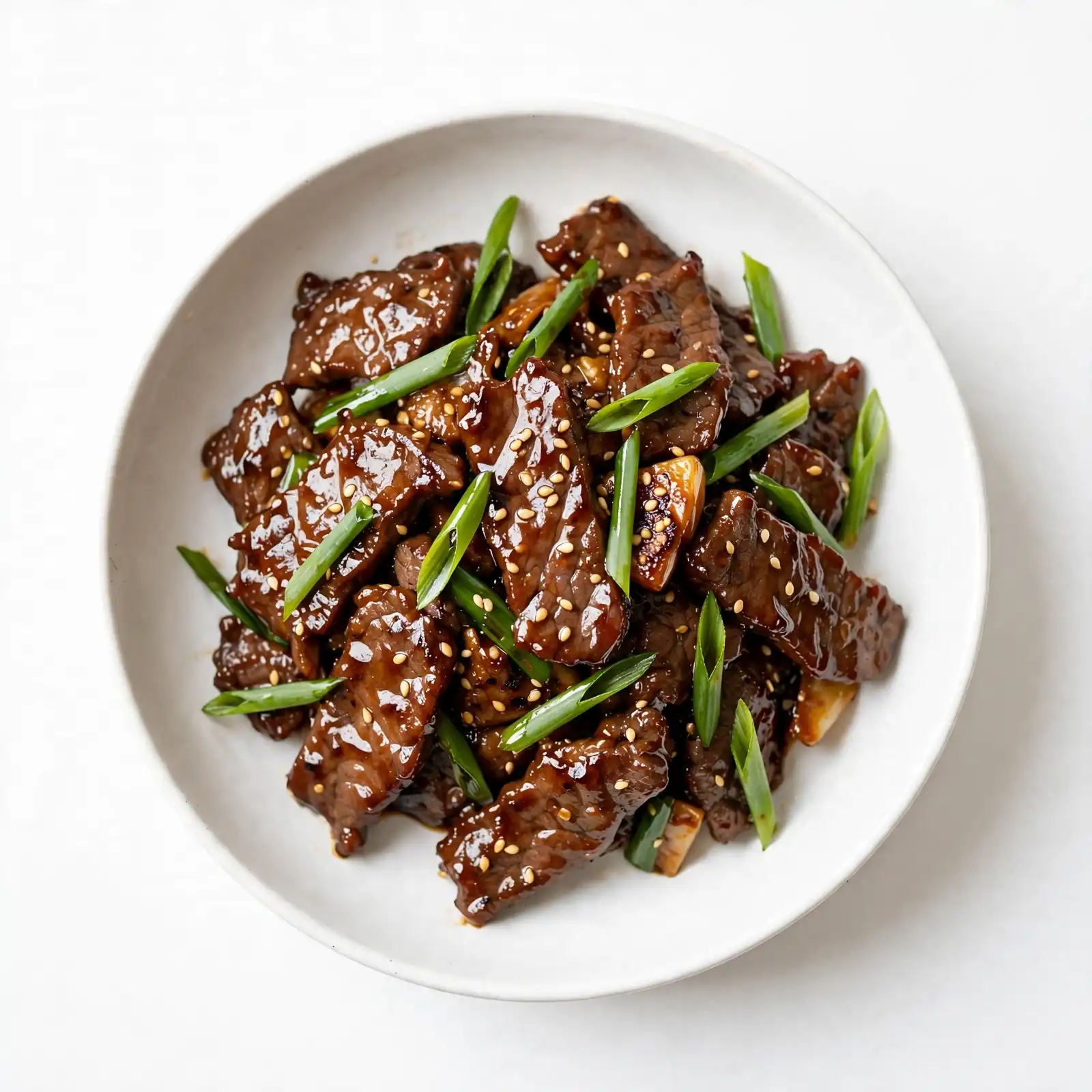
The first time I made Mongolian Beef at home, I stood at the stove stealing pieces straight from the pan before they even made it to the plate. The sauce was glossy and dark, clinging to every crispy edge of beef, and the smell alone — that deep, caramel-soy perfume with a hint of ginger — had everyone wandering into the kitchen asking what was for dinner.
Once you bite into a piece, you understand why people order this again and again. The beef is thin, lightly coated, and pan-fried until the edges go just slightly crisp before being tossed in a sauce that’s equal parts sweet, savory, and deeply rich. The green onions soften just enough to add a fresh, mild bite against all that boldness. It’s the kind of dish that tastes like it took hours but comes together in under thirty minutes.
Whether you’re feeding a hungry family on a Tuesday night, impressing guests who think you ordered in, or meal-prepping rice bowls for the week ahead, this easy weeknight dinner has you covered. It pairs beautifully with steamed jasmine rice or noodles, and once you try this version, the Chinese takeout at home debate is officially settled in your kitchen’s favor.
Why You’ll Love This Recipe
It Tastes Exactly Like Your Favorite Takeout — Only Better
The sauce is built from pantry staples you likely already have, but the result is genuinely restaurant-worthy. You control the sweetness, the saltiness, and the heat, so every batch is tuned to your taste.
The Beef Gets Perfectly Crispy
Coating the sliced beef in cornstarch before frying is the secret to that signature texture — lightly crunchy on the outside, tender and juicy inside. It’s the technique that makes this dish feel special rather than just another beef stir fry.
Ready in Under 30 Minutes
From slicing to serving, this recipe moves fast. If your rice is already cooking, dinner is on the table before anyone has time to suggest ordering in.
Family and Crowd Friendly
This is the kind of dish that disappears fast at potlucks and family dinners alike. It’s approachable enough for picky eaters and flavorful enough to genuinely impress adults.
Simple Ingredients, Big Flavor
No obscure sauces or specialty ingredients required. Soy sauce, brown sugar, garlic, ginger, and a few basics do all the heavy lifting here.
Ingredients
For the Beef
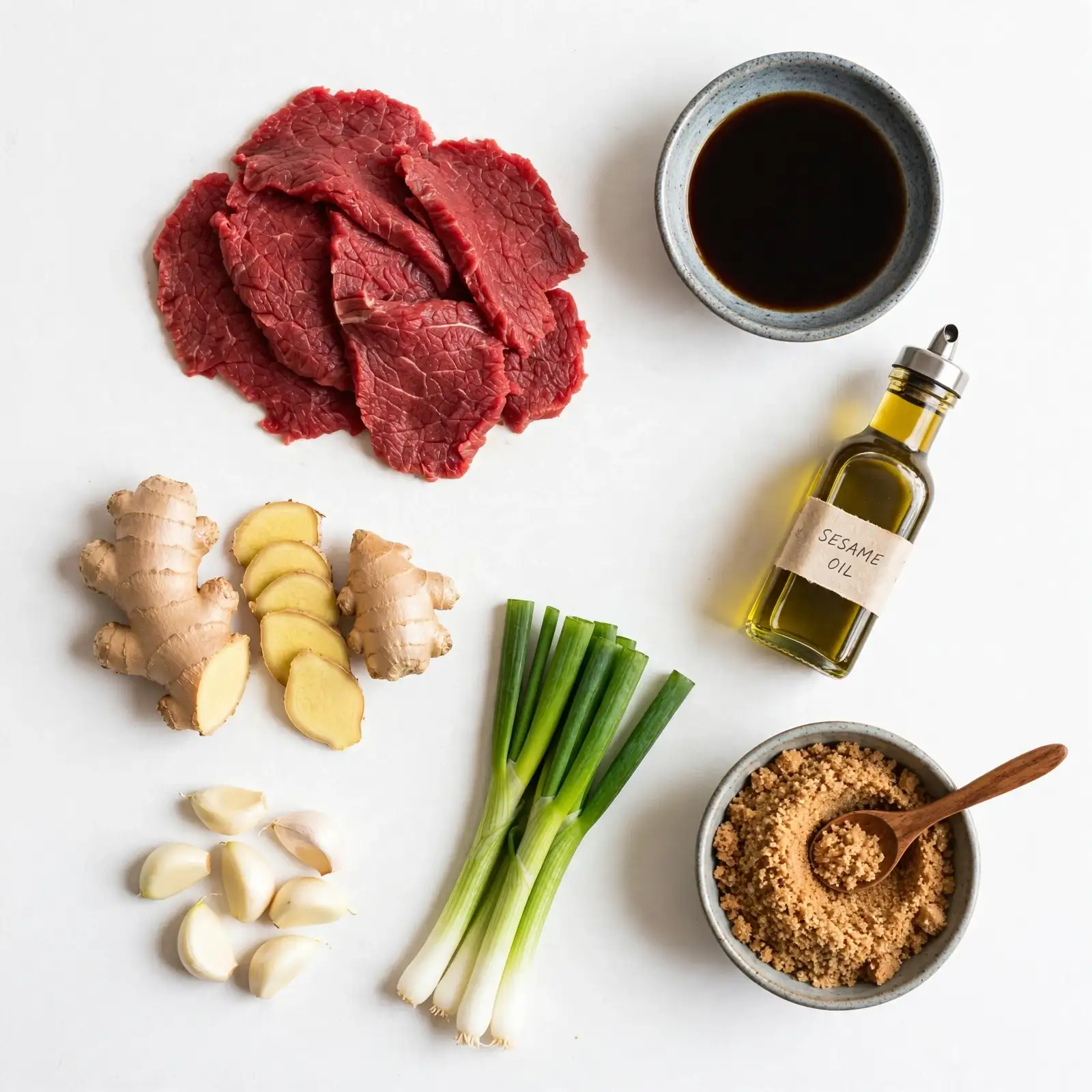
- 1½ lbs flank steak, sliced thin against the grain
- ½ cup cornstarch
- ¼ tsp black pepper
- ½ cup vegetable oil (for frying)
For the Mongolian Beef Sauce
- 2 tsp sesame oil
- 1 tbsp fresh garlic, minced (about 4 cloves)
- 1 tsp fresh ginger, grated (or ½ tsp ground ginger)
- ½ cup low-sodium soy sauce
- ½ cup water
- ⅔ cup packed light brown sugar
- 1 tbsp cornstarch mixed with 2 tbsp cold water (slurry)
- ½ tsp red pepper flakes (optional, for a mild kick)
For Serving
- 4–5 green onions, cut into 2-inch pieces
- Steamed jasmine rice or noodles
- Sesame seeds for garnish (optional)
The soy sauce and brown sugar create that signature balance of salty and sweet, while the cornstarch slurry pulls the sauce into a thick, glossy coating that clings beautifully to every piece of beef.
How to Make Mongolian Beef — Step-by-Step
Step 1: Slice and Coat the Beef
Slice the flank steak as thin as possible — about ¼ inch — cutting against the grain. Toss the slices in a bowl with the cornstarch and black pepper until every piece is evenly coated. Don’t worry if it looks like a lot of cornstarch; the excess will shake off and the coating will fry up perfectly.
Step 2: Fry the Beef in Batches
Heat the vegetable oil in a large skillet or wok over medium-high heat until shimmering. Add the beef in a single layer — don’t crowd the pan. Fry for 1 to 2 minutes per side until the edges are golden and slightly crisp, then transfer to a paper towel-lined plate. Work in batches to keep the heat high and ensure each piece fries rather than steams.
Step 3: Build the Sauce
Pour out most of the oil, leaving just a thin film in the pan. Add the sesame oil, then sauté the garlic and ginger over medium heat for about 30 seconds until fragrant — you’ll smell that warm, toasty aroma rise almost immediately. Add the soy sauce, water, and brown sugar and stir to combine. Bring it to a gentle simmer.
Step 4: Thicken and Glaze
Stir in the cornstarch slurry and let the sauce cook for 1 to 2 minutes, stirring constantly, until it thickens into a glossy, deeply colored glaze. Don’t worry if it looks a little thin at first — it tightens quickly as it heats.
Step 5: Toss, Add Green Onions, and Serve
Return the fried beef to the pan and toss to coat it completely in the sauce. Add the green onion pieces and stir for another 30 seconds, just until they soften slightly but still have some brightness. Serve immediately over steamed rice and garnish with sesame seeds if you like.
Perfecting This Recipe
- Slice against the grain. This breaks up the muscle fibers and keeps the beef tender rather than chewy. If you’re unsure which direction the grain runs, look for the lines running through the meat and cut perpendicular to them.
- Freeze the steak for 20 minutes before slicing. A slightly firm piece of beef is much easier to slice thin. This one step makes prep significantly easier.
- Pat the beef dry before coating. Excess moisture can prevent the cornstarch from adhering properly and will cause the oil to splatter.
- Don’t skip the batch frying. Crowding the pan lowers the temperature and results in beef that steams rather than crisps. Two batches take only a few extra minutes and make a real difference.
- Taste the sauce before it reduces. Brown sugar brands vary in sweetness, and soy sauces differ in saltiness. Adjust the balance before you add the beef.
- Add green onions at the very end. They only need 30 seconds of heat — long enough to soften slightly and absorb flavor, but not so long that they go limp.
Common Mistakes to Avoid
- Slicing the beef too thick — Thick slices won’t cook quickly enough to develop crisp edges and tend to turn chewy. Aim for ¼ inch or thinner.
- Using high-sodium soy sauce without adjusting — Regular soy sauce can make the dish overwhelmingly salty. Low-sodium soy sauce gives you more control, and you can always add a pinch of salt at the end if needed.
- Rushing the sauce reduction — If you add the beef before the sauce is thick enough, it won’t coat properly and you’ll end up with watery results. Wait until it visibly clings to a spoon.
- Letting the garlic burn — Burnt garlic turns bitter fast. Keep the heat at medium and stir constantly during that first 30 seconds.
- Skipping the cornstarch on the beef — This coating is what creates that characteristic crispy texture and helps the sauce grip the meat. It’s not optional.
Add Your Touch
- Add heat — Stir in a teaspoon of chili garlic sauce or a drizzle of sriracha to the sauce for a bolder, spicier version.
- Try a different cut — Sirloin or skirt steak both work well. Avoid stew beef, which is too thick and tough for this method.
- Add vegetables — Sliced bell peppers, broccoli florets, or snap peas can be stir-fried separately and tossed in with the beef at the end.
- Make it gluten-free — Swap the soy sauce for tamari or coconut aminos and double-check your cornstarch packaging.
- Sweeten differently — Honey or maple syrup can replace the brown sugar for a slightly different depth of sweetness.
- Serve it over noodles — Lo mein or rice noodles are a fantastic alternative to rice, especially for a more filling bowl-style meal.
Visit Also: Lemon Pepper Chicken
What to Serve With This
- Steamed jasmine rice — The classic pairing that soaks up every drop of that glossy sauce.
- Garlic fried rice — If you want to lean fully into the takeout experience, this is the move.
- Simple cucumber salad — A cool, lightly dressed cucumber salad cuts through the richness beautifully.
- Stir-fried bok choy or broccoli — A quick veggie side that rounds out the plate and adds some green.
- Hot and sour soup — For a full Chinese-inspired spread, a bowl of soup alongside this is hard to beat.
Storing and Serving
Fridge:
Store leftovers in an airtight container in the refrigerator for up to 4 days. The sauce will thicken slightly as it chills — this is normal.
Freezer:
Mongolian Beef freezes surprisingly well. Let it cool completely, then transfer to a freezer-safe container for up to 3 months. Note that the beef will be slightly less crispy after freezing, but the flavor remains excellent.
Reheating:
Reheat in a skillet over medium heat with a splash of water to loosen the sauce. Microwave works in a pinch — cover loosely and heat in 60-second intervals, stirring between each. Avoid overheating, which can toughen the beef.
Make-Ahead Tip:
The sauce can be made up to 3 days in advance and stored in the fridge. On the day of serving, simply fry the beef, reheat the sauce, and toss everything together fresh.
Servings:
This recipe serves 4 generously as a main dish over rice.
Nutrition (Approximate Per Serving)
- Calories: 480
- Total Fat: 18g
- Saturated Fat: 4g
- Carbohydrates: 42g
- Sugar: 28g
- Protein: 35g
- Sodium: 890mg
Nutritional values are approximate and may vary based on specific ingredients and brands used.
Chef’s Helpful Tips
- Room temperature beef fries more evenly. Pull it from the fridge 15 minutes before you start cooking so it isn’t ice cold going into the pan.
- Use a wok if you have one. The high, sloping sides make tossing easier and the thinner metal heats faster, giving you better sear.
- Don’t sauce the beef too early. If you toss it in the sauce and then let it sit, the coating softens. Serve immediately for the best texture.
- Quality soy sauce makes a difference. A good low-sodium soy sauce — like Kikkoman or San-J — has a more rounded, less metallic flavor that improves the final dish noticeably.
- If the sauce turns out too thick, add water a tablespoon at a time and stir over low heat until it loosens to the consistency you want.
Frequently Asked Questions
Q1. Can I use a different cut of beef instead of flank steak?
Yes — skirt steak and sirloin are both great substitutes and follow the same slicing technique. Avoid using stew meat or chuck, which are cut too thick and won’t develop the right texture with this method.
Q2. How does this compare to the Mongolian Beef from PF Chang’s?
It’s very similar — same glossy, sweet-savory sauce and tender beef — but making it at home gives you control over the sweetness and salt level. Many people find the homemade version actually tastes more balanced than the restaurant version.
Q3. Is this recipe beginner friendly?
Absolutely. If you can slice beef and stir a sauce on the stove, you can make this. The steps are simple and the timing is forgiving — the main thing to watch is not overcrowding the pan and not burning the garlic.
Q4. Can I make this ahead for a party or potluck?
You can prep the sauce and slice the beef in advance, but for the best texture, fry the beef and toss it in the sauce right before serving. If you must make it fully ahead, reheat gently in a skillet with a splash of water to revive the sauce.
Q5. Can I freeze Mongolian Beef?
Yes, it freezes well for up to 3 months. The beef will lose a little of its crispiness after thawing, but the flavor holds up beautifully. Reheat from thawed in a skillet rather than the microwave for the best result.
Conclusion
Some recipes become permanent fixtures in your kitchen not because they’re fancy, but because they deliver every single time — satisfying, fast, and genuinely delicious. This Mongolian Beef is exactly that kind of recipe. It hits every note you want on a weeknight: bold flavor, satisfying texture, and a sauce so good you’ll want to spoon it over rice even after the beef is gone.
Go ahead and make it this week. Serve it over a big bowl of jasmine rice, let the green onions do their thing, and don’t be surprised when the pan is scraped clean before you’ve even sat down. Once you realize how quickly it comes together at home, it has a way of becoming the most-requested dinner in the rotation.
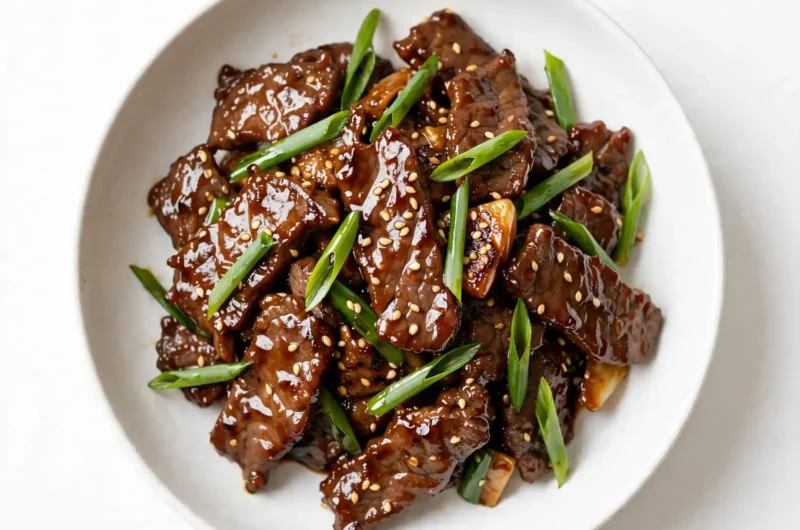
Crispy Mongolian Beef with Savory Sauce
Course: Trending Recipes4
servings15
minutes15
minutes480 per serving
kcal30
minutesThin-sliced flank steak coated in cornstarch, pan-fried to golden perfection, and tossed in a rich sweet-savory soy sauce. Ready in under 30 minutes and better than takeout — perfect for weeknight dinners or casual entertaining.
Ingredients
Beef:
1½ lbs flank steak, sliced thin against the grain
½ cup cornstarch
¼ tsp black pepper
½ cup vegetable oil
Sauce:
2 tsp sesame oil
1 tbsp garlic, minced
1 tsp fresh ginger, grated
½ cup low-sodium soy sauce
½ cup water
⅔ cup packed light brown sugar
1 tbsp cornstarch + 2 tbsp cold water (slurry)
½ tsp red pepper flakes (optional)
For Serving:
4–5 green onions, cut into 2-inch pieces
Steamed jasmine rice
Sesame seeds (optional)
Directions
- Toss sliced beef with cornstarch and black pepper until fully coated.
- Heat oil in a large skillet over medium-high. Fry beef in batches, 1–2 minutes per side, until edges are golden. Drain on paper towels.
- Drain excess oil, leaving a thin film. Sauté garlic and ginger in sesame oil for 30 seconds.
- Add soy sauce, water, and brown sugar. Stir and bring to a simmer.
- Add cornstarch slurry. Cook 1–2 minutes, stirring, until sauce is thick and glossy.
- Return beef to pan. Toss to coat. Add green onions and stir 30 seconds.
- Serve immediately over rice with sesame seeds.