Perfectly Silky Poached Eggs That Will Transform Your Breakfast Forever
My grandmother had a cast iron skillet she never let anyone touch, but her real party trick was a shallow saucepan and a dozen eggs she could poach with her eyes half-open. I watched her do it every Sunday — cracking each egg into a teacup first, sliding it gently into the barely-bubbling water, then lifting it out two minutes later like she was handling something precious. She was. I didn’t understand it then. I do now.
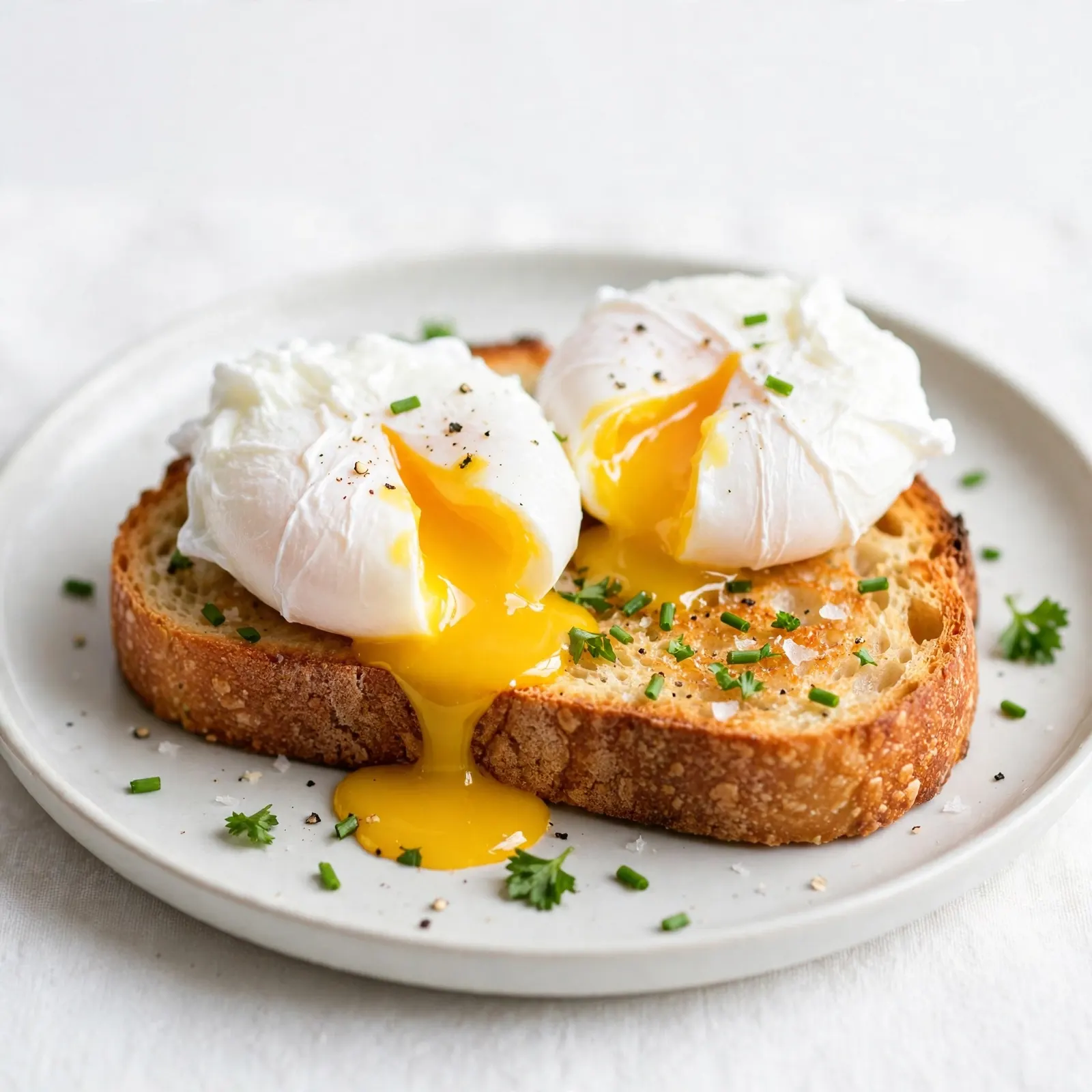
There is something almost meditative about a beautifully poached egg. The whites set into a soft, cloud-like envelope — tender but firm enough to hold together. The yolk stays liquid gold inside, trembling when you press it lightly with a spoon, just waiting for the moment you break it open and let it run. It’s silky. It’s rich. It smells like butter and morning.
Poached eggs fit every occasion — draped over creamy avocado toast on a slow Saturday, stacked tall in a classic eggs Benedict for a weekend brunch spread, or balanced on a simple green salad when you want something fast and nourishing on a busy weeknight. Once you nail the technique, you’ll find yourself reaching for this method again and again. Let’s get into it.
Why You’ll Love This Recipe
They Look Incredibly Impressive
Two minutes of work and your plate looks like it came from a restaurant kitchen. Poached eggs have that effortless elegance that makes any dish feel elevated — guests will ask how you did it, and the honest answer is: it’s easier than it looks.
The Texture Is Unmatched
No rubbery whites. No chalky yolks. When done right, you get that perfect contrast — a just-set white that holds its shape and a yolk that’s still warm and flowing. No other cooking method comes close to that combination.
Completely Customizable to Your Preferred Doneness
Like your yolk a little firmer? Add thirty seconds. Prefer it nearly raw in the center? Pull it at ninety seconds. You’re fully in control, and the window of adjustment is forgiving enough for any preference.
One Pan, No Fuss
You don’t need a poaching rack, a special pan, or any equipment beyond a wide saucepan and a slotted spoon. Simple tools, big results.
Works With Everything
Whether it’s sitting on top of sautéed greens, tucked into a grain bowl, or floating on a bowl of ramen, a poached egg improves almost any dish it touches. It’s the ingredient that finishes a plate.
Ingredients
For Poaching
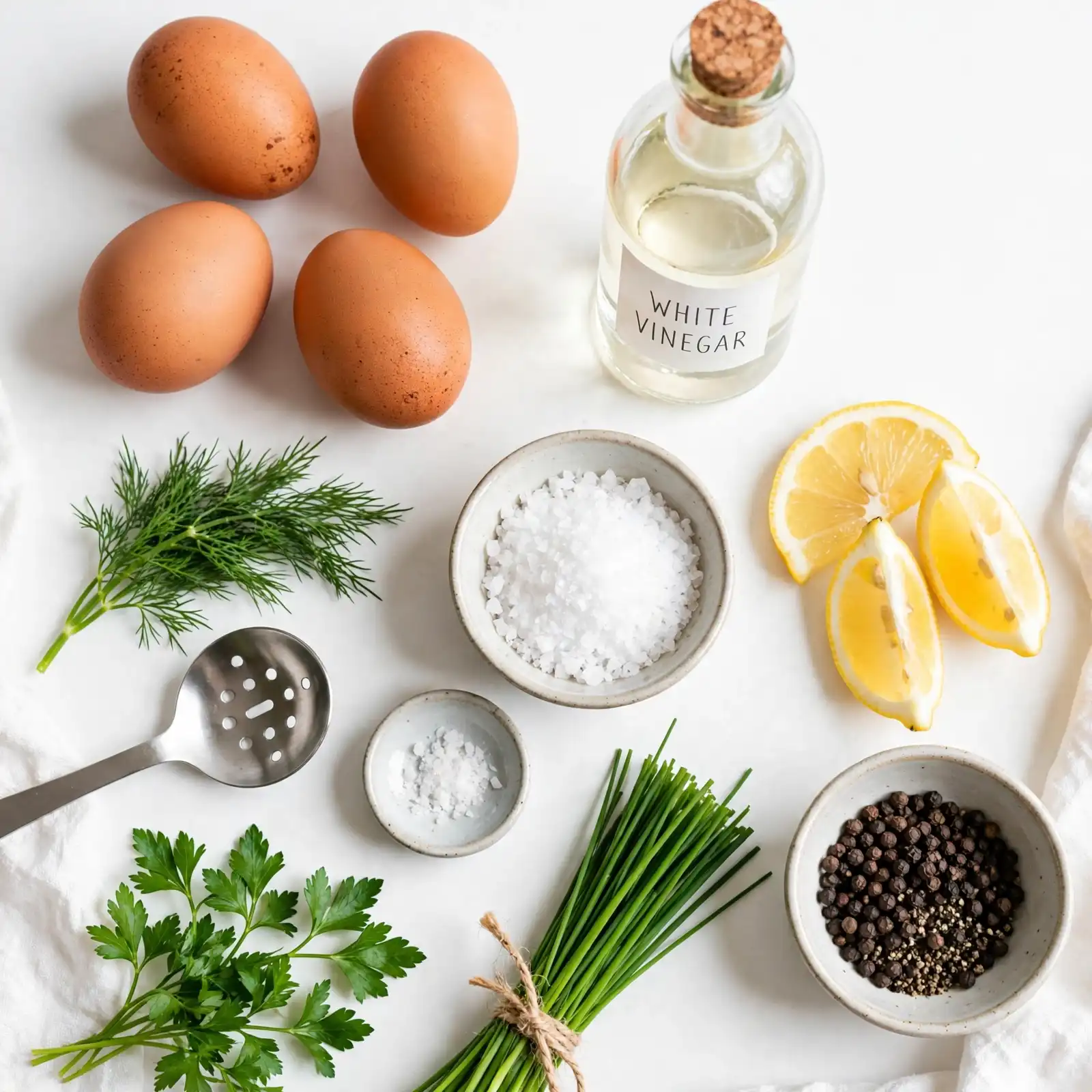
- 4 large eggs (the freshest you can find — see tips below)
- 4 cups water
- 1 tablespoon white vinegar
- ½ teaspoon fine sea salt (for the water)
For Serving (Optional but Recommended)
- 2 slices thick-cut toast or English muffins, toasted
- 1 ripe avocado, sliced (or ¼ cup hollandaise sauce for a classic eggs Benedict vibe)
- Flaky sea salt, to finish
- Freshly cracked black pepper, to finish
- Fresh chives or microgreens, for garnish
The vinegar in the water is a small thing with a big impact — it encourages the egg whites to contract quickly and wrap tightly around the yolk instead of spreading out into thin, wispy strands. Together with perfectly fresh eggs and gentle heat, these simple elements create something genuinely beautiful.
How to Make Poached Eggs — Step-by-Step
Step 1: Prep Your Eggs and Your Pan
Fill a wide, shallow saucepan with about 3 inches of water and bring it to a gentle simmer over medium heat — you’re looking for small bubbles rising slowly from the bottom, not a rolling boil. Add the white vinegar and a pinch of salt. While the water heats, crack each egg individually into its own small ramekin or teacup. Don’t skip this step — cracking directly into the pan means you have no control if the yolk breaks, and the whole thing becomes a scramble.
Step 2: Create a Gentle Whirlpool
Use a spoon to stir the water in one direction until you have a slow, steady swirl moving around the pan. This is your secret weapon. The circular motion wraps the egg whites around the yolk as they cook, giving you that compact, tidy shape instead of a flat pancake. Don’t worry if your whirlpool slows down before the egg sets — even a fading swirl helps.
Step 3: Slide the Egg In
Hold your ramekin just above the surface of the water — barely an inch — and tip the egg in gently right at the center of the swirl. You’ll see the whites start to turn from translucent to white almost immediately. If you’re cooking multiple eggs, wait about 30 seconds between each one so the water temperature stays consistent. Don’t worry if the whites look a little wispy at first — they tighten up as they cook.
Step 4: Cook to Your Preference
Let the egg cook undisturbed for 2½ to 3 minutes for a runny yolk, or up to 4 minutes if you prefer something slightly firmer. Resist the urge to poke or prod it. You’ll know it’s nearly ready when the whites look fully set and matte — no translucent spots — and the egg holds its shape when you nudge the pan slightly. The yolk underneath should still feel soft when pressed very gently with your fingertip.
Step 5: Lift, Drain, and Serve
Use a slotted spoon to scoop the egg from the water, letting it drain for a few seconds over the pan before setting it down. For an extra-clean presentation, rest it briefly on a folded kitchen towel to absorb any excess water before plating. Finish immediately with flaky salt, black pepper, and whatever you’re serving alongside. Poached eggs don’t wait — eat them while they’re fresh and hot.
Perfecting This Recipe
- Use the freshest eggs possible. Fresh eggs have tighter whites that hold together beautifully in the water. Older eggs spread out and get wispy. If you’re unsure how fresh your eggs are, do the float test — fresh eggs sink, old ones float.
- Keep the water at a gentle simmer, not a boil. Aggressive bubbling tosses the egg around and tears the whites apart before they have a chance to set.
- The vinegar works best when it’s white vinegar — apple cider vinegar works too but can add a slight flavor. A tablespoon per 4 cups is the right ratio; too much and you’ll taste it.
- Resting the egg on a kitchen towel before plating makes a real difference for presentation and prevents your toast from getting soggy.
- If you’re making poached eggs for a crowd, cook them in batches and transfer to a bowl of warm (not hot) water to hold for up to 5 minutes. Reheat briefly in hot water for 30 seconds before serving.
Common Mistakes to Avoid
- Using old eggs — The whites in older eggs are thinner and looser, which means they spread into messy threads the moment they hit the water. Buy the freshest eggs available, and your results will immediately improve.
- Boiling the water too hard — A vigorous boil is the enemy of a poached egg. The turbulence breaks the whites apart before they can set. You want a lazy simmer — think hot tub, not jacuzzi.
- Skipping the ramekin step — Cracking your egg directly into the water gives you no second chance if the yolk breaks. Always pre-crack into a small cup so you can inspect the egg and control exactly when and where it enters the water.
- Overcrowding the pan — Cooking more than 2–3 eggs at once drops the water temperature too fast and causes uneven cooking. Work in batches and keep things unhurried.
- Walking away from the stove — Poached eggs cook in under 3 minutes. Stay nearby. Even 30 extra seconds can turn a runny yolk into a fully set one, which is fine if that’s what you wanted — but not if you were hoping for something silkier.
Add Your Touch
- Add a splash of hot sauce or a drizzle of chili crisp on top for some gentle heat.
- Swap the toast for a bowl of congee, rice, or creamy polenta — the egg becomes a rich finishing layer.
- Try serving over wilted spinach sautéed with garlic for a light, protein-packed lunch.
- For a more indulgent healthy breakfast, serve on smashed roasted sweet potato with crumbled feta and fresh herbs.
- Make it a shakshuka-style dish by poaching the eggs directly in a spiced tomato sauce instead of plain water.
- Finishing with truffle oil and shaved Parmesan turns a simple egg into something special-occasion-worthy.
Visit Also: Homemade Coffee Creamer
What to Serve With This
A thick slice of sourdough toast with salted butter underneath the egg is the classic move, and it works every single time. Crispy bacon or smoked salmon bring a salty contrast that’s hard to beat. For brunch, a simple arugula salad with lemon and olive oil alongside is bright and balancing. If you’re making eggs Benedict, a warm English muffin and silky hollandaise are obviously the dream combination. A glass of cold-pressed orange juice or a latte rounds things out perfectly.
Storing and Serving
Fridge: Poached eggs can be refrigerated in a container of cold water for up to 2 days. Change the water daily to keep them fresh.
Freezer: Not recommended. The texture of poached eggs does not survive freezing and thawing — the whites turn rubbery and the yolk becomes grainy.
Reheating: Lower the refrigerated eggs into a bowl of hot (not boiling) water for about 60 seconds until warmed through. They reheat gently this way without overcooking.
Make-Ahead Tip: You can poach eggs up to 2 days ahead and store them in cold water in the fridge. This is a great trick for brunch entertaining — do all the work the day before and just reheat to order.
Servings: This recipe makes 4 poached eggs, which serves 2–4 people depending on what you’re pairing them with.
Nutrition (Approximate Per Serving — 1 Poached Egg)
- Calories: 72
- Total Fat: 5g
- Saturated Fat: 1.6g
- Carbohydrates: 0.4g
- Sugar: 0.2g
- Protein: 6g
- Sodium: 71mg
Nutritional values are approximate and may vary based on specific ingredients and brands used.
Chef’s Helpful Tips
- Room temperature eggs slide into the water more gently and cook more evenly than cold eggs straight from the fridge. Take them out about 10 minutes before you start.
- If your whites are consistently spreading too much, try straining each egg through a fine mesh sieve before poaching — this removes the looser, waterier part of the white and gives you a much tidier result.
- Don’t skip the slotted spoon drain. Even a few seconds over the pan removes enough water to make a real difference on your plate.
- Taste your poaching water before you start — if it tastes strongly of vinegar, dilute it slightly. You shouldn’t be able to taste the vinegar in the finished egg.
- If your yolk breaks too often, you may be cracking too hard or using eggs straight from the refrigerator. Gentle handling and slightly warmer eggs make the process much smoother.
Frequently Asked Questions
Q1. Can I make poached eggs without vinegar? Absolutely — the vinegar just helps the whites firm up faster and stay neat. Without it, your eggs will still poach fine, just with slightly more feathered edges. If you want to skip it entirely, focus on using very fresh eggs and keep the water at a very gentle simmer to compensate.
Q2. How do I know when a poached egg is done? The whites should look fully set and matte white — no jelly-like translucent patches — and the yolk should still feel soft and bouncy when you press it gently with the back of a spoon. For a runny yolk, aim for 2½ to 3 minutes. For firmer, go to 4 minutes.
Q3. I’m a complete beginner — is this really achievable? Yes, genuinely. The first egg might look a little messy, and that’s totally fine. By the third egg, you’ll already have a feel for the water temperature and timing. It’s one of those techniques that improves dramatically with just one or two practice sessions.
Q4. Can I make these ahead for a brunch party? You can and it works beautifully. Poach the eggs up to two days before, store them in cold water in the fridge, and reheat them in hot water for about a minute right before serving. It means you can focus on everything else while your eggs are already done.
Q5. Can I freeze poached eggs? Unfortunately, no. Freezing changes the texture of both the whites and the yolk in ways that really aren’t pleasant — the whites turn rubbery and the yolk becomes crumbly. For the best experience, make them fresh or keep them refrigerated for up to two days.
Conclusion
There’s a reason poached eggs have been on cafe menus and family tables for generations — they are, in their quiet way, one of the most satisfying things you can make in a kitchen. Silky, rich, endlessly versatile, and genuinely impressive with almost zero equipment required. Whether you’re making a lazy Sunday brunch or pulling together a fast weeknight meal, mastering poached eggs opens a door you’ll walk through again and again.
Now it’s your turn. Fill the pan, warm the water, and give it a try. Don’t stress if the first one isn’t magazine-perfect — it’ll still taste wonderful. And when you get it right — when that egg breaks open on a piece of buttered toast and the yolk runs slow and golden — you’ll understand exactly why your grandmother guarded her technique so carefully.
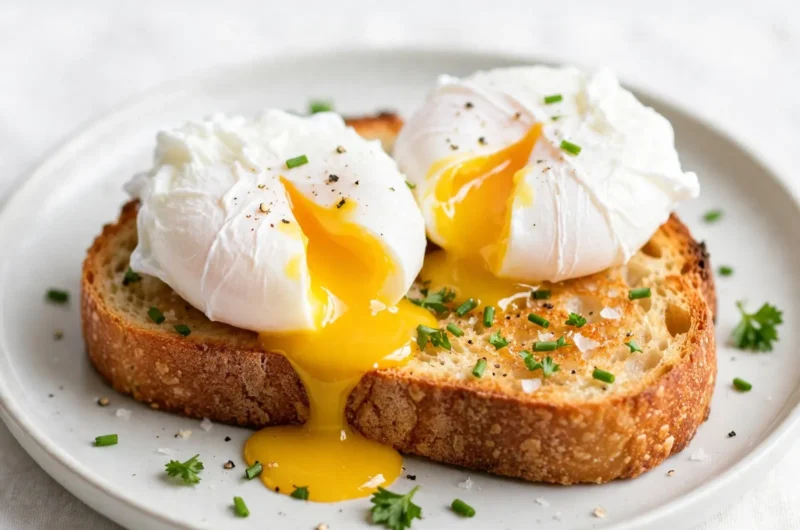
Easy, Perfect Poached Eggs
Course: Trending Recipes4 eggs (serves 2–4)
servings5
minutes3
minutes72 per egg
kcal10
minutesSilky whites, runny golden yolks, and a surprisingly simple method that works every time. Perfect for brunch, a quick healthy breakfast, or finishing any grain bowl or salad.
Ingredients
For Poaching:
4 large eggs (freshest available)
4 cups water
1 tablespoon white vinegar
½ teaspoon fine sea salt
For Serving (Optional):
2 slices thick-cut toast or English muffins, toasted
1 ripe avocado, sliced, or ¼ cup hollandaise sauce
Flaky sea salt and black pepper, to finish
Fresh chives or microgreens, for garnish
Directions
- Fill a wide, shallow saucepan with 3 inches of water. Add vinegar and salt. Bring to a gentle simmer over medium heat.
- Crack each egg into its own small ramekin or teacup. Do not crack directly into the pan.
- Stir the water in one direction to create a slow whirlpool.
- Tip one egg from its ramekin into the center of the swirl, holding the ramekin just above the water surface.
- Cook undisturbed for 2½–3 minutes for a runny yolk, or up to 4 minutes for firmer.
- Lift with a slotted spoon, drain briefly, and serve immediately with flaky salt and black pepper.