The Coziest Homemade Pierogi Recipe Your Family Will Fight Over
My grandmother’s kitchen table was always dusted with flour by four o’clock on a Sunday. She’d have a mountain of soft dough resting under a dish towel, a pot of mashed potatoes cooling on the stove, and three of us kids crowded around trying to pinch the edges the way she did. Nobody’s pierogi looked as neat as hers, but that never seemed to matter once they hit the melted butter.
Good pierogi have a particular kind of magic. The dough turns silky and slightly chewy once boiled, giving way to a filling that’s warm, creamy, and just salty enough. Pan-fry them afterward and the edges go crisp and golden while the inside stays soft — that contrast of textures is what makes people go back for seconds even when they swore they were full.
This pierogi recipe is the kind of project that turns into a gathering. It’s perfect for a lazy Sunday, a potluck where everyone wants a taste of something homemade, or a holiday table that could use one more comforting dish. Whether you’re making a batch of traditional potato and cheese pierogi or looking for the best pierogi dough to fill with your own favorite mixture, this one comes together with simple pantry staples and a little bit of patience.

Why You’ll Love This Recipe
Perfectly Balanced Filling
The mashed potato and cheese filling hits that sweet spot between rich and savory, with just enough sharpness from the cheese to keep every bite interesting.
That Signature Chewy-Soft Texture
The dough turns tender and slightly chewy once boiled, giving pierogi their classic bite without ever feeling heavy or doughy.
Easier Than It Looks
Despite their reputation, pierogi come together with basic ingredients and a straightforward process — no special equipment required.
Built for Sharing
This recipe scales beautifully for potlucks, family dinners, or freezer stashes, making it a reliable go-to whenever you’re feeding a crowd.
A Classic With Room to Play
While the potato and cheese version is timeless, the dough and folding technique here are a blank canvas for sweet or savory fillings of your own.
Ingredients
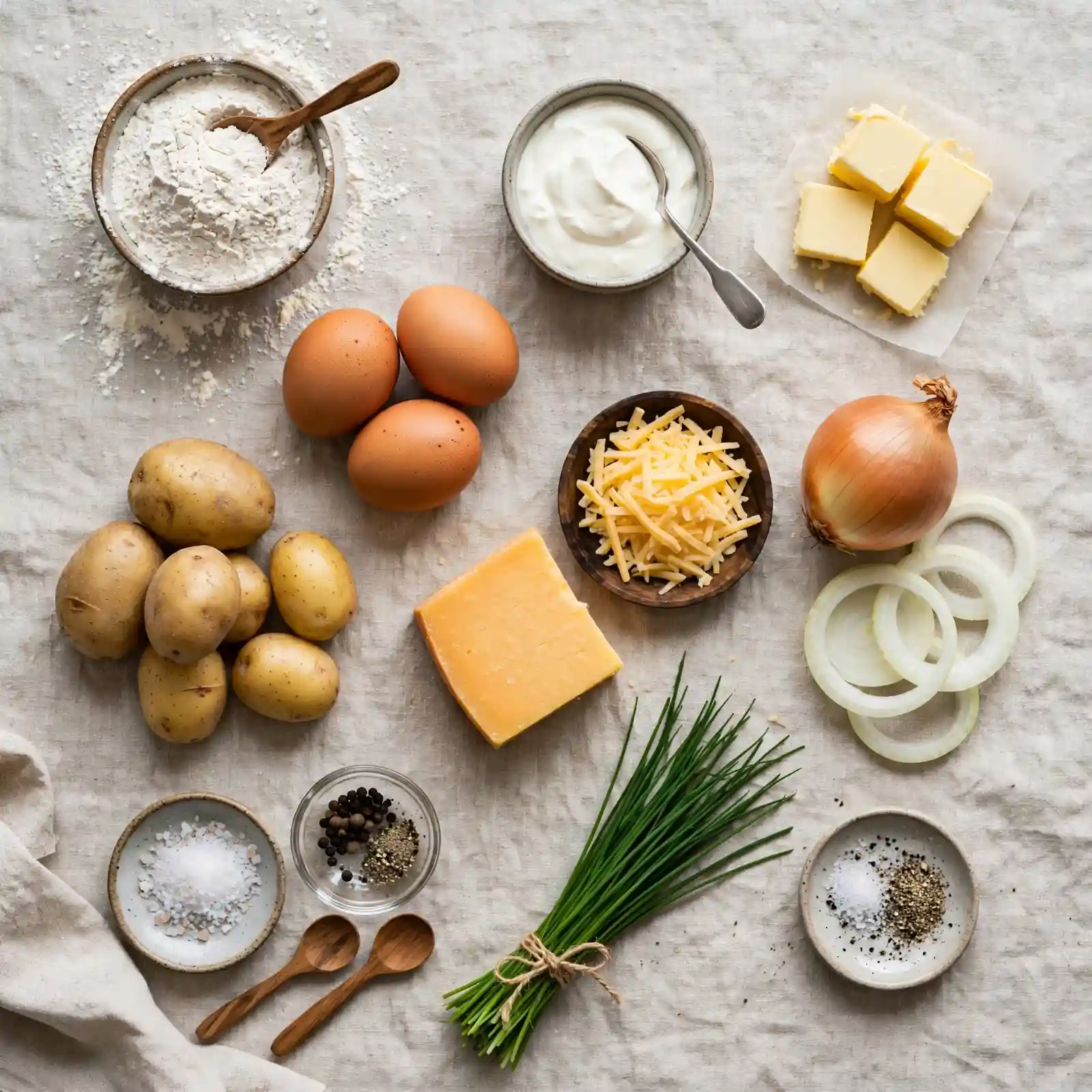
For the Dough
- 3 cups all-purpose flour (plus extra for dusting)
- 1 tsp salt
- 1 large egg
- 1 cup sour cream (full-fat works best for a tender dough)
- 4 tbsp unsalted butter, melted and slightly cooled
- 2-4 tbsp warm water, as needed
For the Filling
- 2 lbs russet potatoes, peeled and cubed
- 1 cup sharp cheddar cheese, shredded
- 1/2 cup farmer’s cheese or cream cheese (adds extra creaminess)
- 1 small onion, finely diced
- 2 tbsp butter, divided
- Salt and pepper, to taste
For the Topping
- 4 tbsp butter
- 1 small onion, thinly sliced (for that classic caramelized finish)
- Sour cream, for serving
The soft, slightly tangy dough wraps around a filling that’s creamy with a little bite from the sharp cheddar, and the browned butter and onions on top tie everything together with a rich, savory finish.
How to Make Pierogi — Step-by-Step
Step 1: Make the Dough
In a large bowl, whisk together the flour and salt. Add the egg, sour cream, and melted butter, then mix until a shaggy dough forms. Knead on a floured surface for about 5 minutes, until smooth and slightly elastic — it should feel soft but not sticky. Don’t worry if it seems a little dry at first; a splash of warm water will bring it together.
Step 2: Let the Dough Rest
Wrap the dough in plastic wrap and let it rest at room temperature for 30 minutes. This lets the gluten relax, which makes rolling much easier later on. The dough will feel noticeably smoother and more pliable once it’s rested.
Step 3: Cook and Mash the Filling
Boil the potatoes in salted water until fork-tender, about 15 minutes. Drain well and mash while still warm. In a small pan, soften the diced onion in 1 tablespoon of butter until translucent, then stir it into the potatoes along with the cheeses and remaining butter. Season generously with salt and pepper. Don’t worry if the filling looks a little loose — it firms up as it cools.
Step 4: Roll and Cut the Dough
On a floured surface, roll the dough out to about 1/8-inch thickness. Using a round cutter or a glass, cut circles roughly 3 inches across. Re-roll scraps as needed. The dough should feel smooth and slightly stretchy under your hands.
Step 5: Fill and Seal
Place a small spoonful of filling in the center of each circle. Fold the dough over into a half-moon shape and pinch the edges firmly to seal, crimping with a fork if you’d like a decorative edge. Make sure there are no gaps, or the filling may escape during boiling.
Step 6: Boil, Then Pan-Fry
Boil the pierogi in batches for 3-4 minutes, until they float to the top and look slightly puffed. Let them cool briefly on a towel-lined tray. In a skillet, melt the butter with the sliced onions and pan-fry the boiled pierogi until golden and crisp on both sides, about 2-3 minutes per side.
Perfecting This Recipe
- Keep the dough covered while you work so it doesn’t dry out and crack at the edges.
- Don’t overfill — a heaping teaspoon is usually the sweet spot for a clean seal.
- Press out any air pockets before crimping to prevent pierogi from bursting in the water.
- Let boiled pierogi cool slightly before pan-frying so they hold their shape better.
- A well-floured surface is your best friend; sticky dough is the most common cause of tearing.
- Resting the dough isn’t optional — it’s what keeps the pierogi tender instead of tough.
Common Mistakes to Avoid
- Skipping the dough rest — Rushing this step leads to a tighter, harder-to-roll dough that shrinks back when cut.
- Overfilling the pierogi — Too much filling makes sealing difficult and increases the chance they’ll split open while boiling.
- Boiling water that’s too aggressive — A rolling boil can knock pierogi around and tear the seams; keep it at a gentle simmer.
- Using cold filling — Filling straight from the fridge can crack the dough as you fold it; let it come closer to room temperature first.
- Crowding the pan while frying — Too many pierogi at once steams them instead of crisping the edges properly.
Add Your Touch
- Swap in mashed sweet potato and gouda for a slightly sweet, smoky twist.
- Try a sauerkraut and mushroom filling for a more traditional, savory variation.
- Stir a spoonful of caramelized onions right into the potato filling for extra depth.
- For a dessert version, fill with sweetened farmer’s cheese and a touch of vanilla.
- Add crumbled bacon on top just before serving for a smoky crunch.
Visit Also: Apple Bread Recipe
What to Serve With This
- A dollop of cold sour cream and a sprinkle of fresh chives never goes wrong here.
- Simple sautéed cabbage rounds out the plate with a nice bit of texture.
- A crisp cucumber and dill salad adds brightness against the richness of the pierogi.
- Kielbasa on the side turns this into a full, hearty dinner.
- A light beer or dry white wine pairs nicely with the buttery, savory flavors.
Storing and Serving
Fridge: Store cooked pierogi in an airtight container for up to 3 days.
Freezer: Freeze uncooked pierogi in a single layer until solid, then transfer to a freezer bag for up to 3 months; they hold their texture well and can be boiled straight from frozen.
Reheating: Reheat in a buttered skillet over medium heat for 3-4 minutes per side until warmed through and crisp again.
Make-Ahead Tip: The filling and dough can both be made up to 2 days ahead and stored separately in the fridge until you’re ready to assemble.
Servings: This recipe makes about 30-36 pierogi, serving 6 as a main dish.
Nutrition (Approximate Per Serving)
- Calories: 320
- Total Fat: 14g
- Saturated Fat: 8g
- Carbohydrates: 38g
- Sugar: 2g
- Protein: 9g
- Sodium: 410mg
Nutritional values are approximate and may vary based on specific ingredients and brands used.
Chef’s Helpful Tips
- Let your egg and sour cream come to room temperature before mixing for a smoother dough.
- Keep an eye on the pan while frying — butter can go from golden to burnt quickly over medium-high heat.
- Use a bench scraper to help lift and turn the dough without stretching it out of shape.
- Good sharp cheddar makes a real difference here, so reach for a block you’d actually snack on.
- If your filling feels too wet, stir in a spoonful of instant mashed potato flakes to firm it up.
Frequently Asked Questions
Q1. Can I use Greek yogurt instead of sour cream in the dough? Yes, full-fat Greek yogurt works as a solid substitute and keeps the dough just as tender. The flavor will be very slightly tangier, but it’s barely noticeable once cooked.
Q2. How does this compare to store-bought pierogi? Homemade pierogi have a noticeably softer, more delicate dough and a fresher, less salty filling than most frozen versions. Once you taste the difference, it’s hard to go back.
Q3. Is this recipe good for beginners? Absolutely — the dough is forgiving and the folding technique gets easier after just a few pierogi. Don’t stress about perfect crimping; they’ll taste just as good a little rustic.
Q4. Can I make these ahead for a potluck? Yes, pierogi are ideal for making ahead. Boil them in advance, toss lightly in butter to prevent sticking, then pan-fry just before serving for the best texture.
Q5. Can I freeze pierogi after they’re fully cooked? You can, though freezing them uncooked after sealing gives the best texture once reheated. If freezing cooked pierogi, reheat gently in a skillet rather than the microwave to keep the edges from turning soggy.
Conclusion
There’s something deeply satisfying about pulling a tray of golden, buttery pierogi off the stove and knowing every fold was made by hand. This pierogi recipe brings together a tender, slightly tangy dough and a rich potato filling in a way that feels both nostalgic and completely worth the effort, whether it’s your first batch or your fiftieth.
However you serve them — piled high with caramelized onions, dunked in sour cream, or tucked into the freezer for a busy weeknight — I hope this recipe becomes one you return to again and again. Give it a try, make it your own, and don’t be surprised if everyone at the table asks for the recipe before dinner’s even over.

Homemade Potato & Cheese Pierogi
Course: Trending Recipes6
servings45
minutes20
minutes320 per serving
kcal30
minutes1
hour35
minutesSoft, chewy dumplings filled with creamy potato and sharp cheddar, pan-fried in butter with onions until golden — perfect for family dinners or make-ahead freezer meals.
Ingredients
Dough:
3 cups all-purpose flour (plus extra for dusting)
1 tsp salt
1 large egg
1 cup sour cream (full-fat works best)
4 tbsp unsalted butter, melted and slightly cooled
2-4 tbsp warm water, as needed
Filling:
2 lbs russet potatoes, peeled and cubed
1 cup sharp cheddar cheese, shredded
1/2 cup farmer’s cheese or cream cheese
1 small onion, finely diced
2 tbsp butter, divided
Salt and pepper, to taste
Topping:
4 tbsp butter
1 small onion, thinly sliced
Sour cream, for serving
Directions
- Whisk flour and salt; mix in egg, sour cream, and melted butter until a dough forms.
- Knead 5 minutes until smooth. Wrap and rest 30 minutes.
- Boil potatoes until tender. Mash with softened onion, cheeses, and butter. Season well.
- Roll dough to 1/8-inch thick. Cut into 3-inch circles.
- Fill each circle, fold, and pinch edges to seal tightly.
- Boil in batches 3-4 minutes until they float.
- Pan-fry in butter and onions until golden on both sides.