The Most Irresistible Pineapple Upside Down Cake That Always Flips Perfectly
Most upside down cakes look stunning in photos and turn into a sticky, broken mess on the plate — and the culprit is almost always the same thing: the flip. Too late, and the caramel sets like glue. Too cold, and the fruit tears away from the cake. This Pineapple Upside Down Cake fixes that problem with a reliable method that gives you a clean, golden top every single time.
Once it comes out of the pan, you’ll understand why this cake has been a beloved classic for decades. The pineapple rings melt into a glossy, amber caramel that soaks gently into the edges of a soft, buttery crumb. The cherries nestle in like little jewels, the whole thing smells like warm brown sugar and vanilla, and each forkful is tender, just sweet enough, and deeply satisfying in a way that feels genuinely homemade.
This is the kind of cake you bring to a family Sunday dinner or a last-minute potluck and come home with an empty plate. It’s wonderful for holiday gatherings, cozy weeknight treats, and casual celebrations where you want something impressive without the stress. Whether you’re a first-time baker or someone who just wants a dependable classic caramelized pineapple cake in your rotation, this one delivers every time.
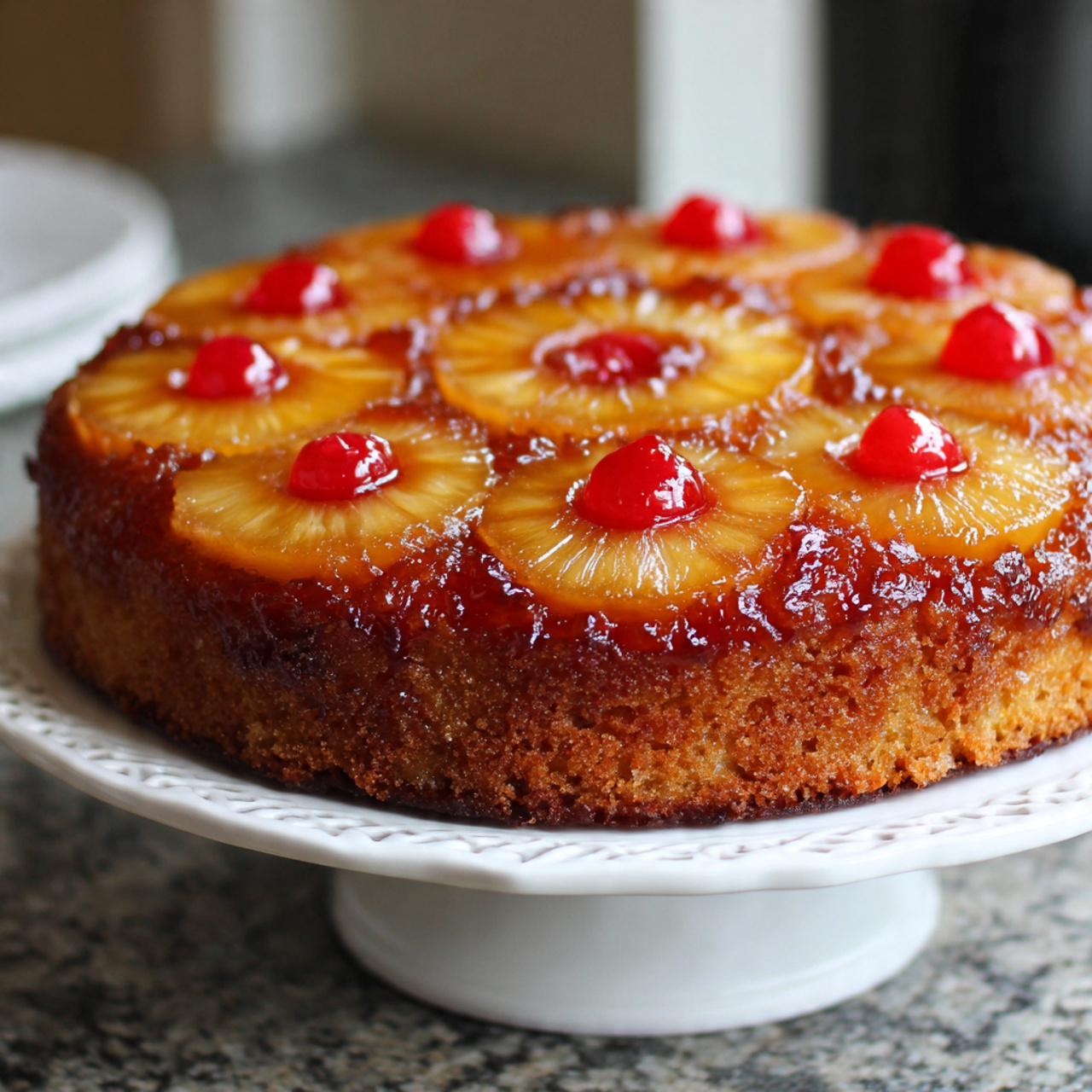
Why You’ll Love This Recipe
It Has That Perfect Caramel-Fruit Balance
The combination of brown sugar, butter, and pineapple creates a topping that’s rich without being cloying. The natural tartness of the fruit cuts through the sweetness just enough to keep every bite interesting and completely craveable.
The Crumb Is Soft and Stays Moist
This cake uses a straightforward batter that bakes up with a tender, even crumb — not too dense, not too airy. It holds moisture beautifully, which means it tastes just as good on day two as it does fresh from the oven.
It’s Genuinely Easy to Make
There’s nothing technical here. You don’t need a stand mixer, special equipment, or any advanced skills. If you can melt butter and stir a batter, you can make this cake — and it will look like you spent far more effort than you actually did.
It’s a Crowd-Pleaser Without the Fuss
This recipe scales easily, stores well, and can be baked ahead of time. It travels well to potlucks, looks beautiful on a dessert table, and works for guests of all ages. It’s the dependable dessert you reach for when you need something that never fails.
A Vintage Classic With Timeless Appeal
There’s something about this easy upside down cake that feels nostalgic and special at the same time. It connects people to memories of home kitchens and family tables, and that emotional warmth is part of what makes it so satisfying to share.
Ingredients
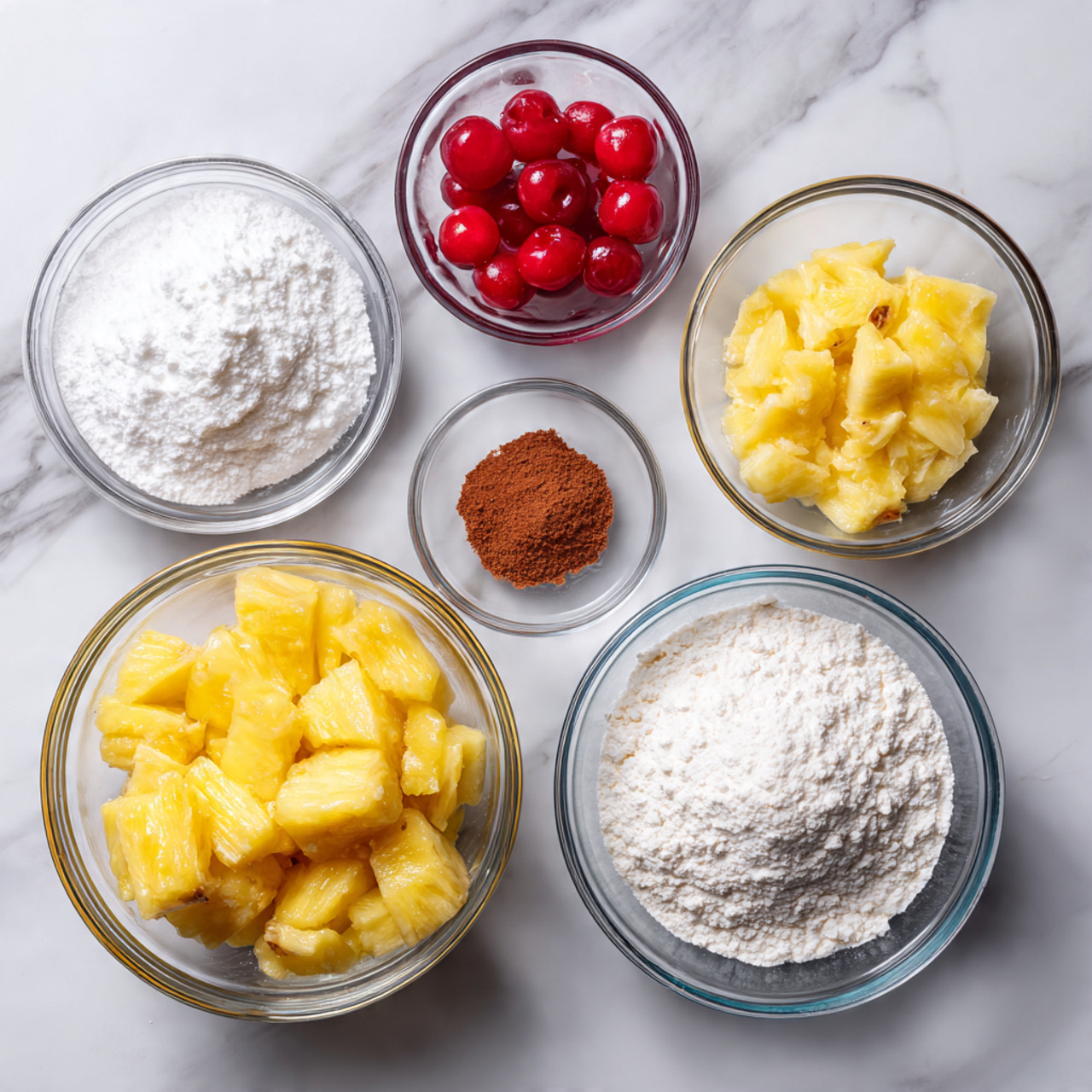
For the Caramel Topping
- ½ cup (115 g) unsalted butter (melted)
- ¾ cup (150 g) brown sugar (packed light or dark both work)
- 6 pineapple rings (canned in syrup, well-drained)
- 6–8 maraschino cherries
For the Cake Batter
- 1 cup (125 g) all-purpose flour
- 1 tsp baking powder
- ¼ tsp salt
- 2 large eggs (room temperature)
- ¾ cup (150 g) white sugar
- ½ cup (120 ml) whole milk (room temperature)
- 1 tsp vanilla extract (pure, not imitation)
The butter and brown sugar melt together into a soft caramel base that mingles with the pineapple juice as the cake bakes, creating that signature glossy, golden topping. The vanilla-scented batter underneath stays moist because the fruit layer essentially steams it from below — it’s a beautiful little kitchen science moment that produces a deeply satisfying result.
How to Make Pineapple Upside Down Cake — Step-by-Step
Step 1: Prep Your Pan and Build the Caramel Base
Preheat your oven to 180°C (350°F) and grease a 9-inch round cake pan generously — sides included. Pour the melted butter directly into the bottom of the pan, then sprinkle the brown sugar evenly over it. It will look uneven at first, but don’t worry — it settles into a smooth, glossy layer as it bakes.
Step 2: Arrange the Fruit
Place your drained pineapple rings in a single layer over the brown sugar base. Nestle a maraschino cherry into the center of each ring, and tuck a few extras into the gaps between rings if you have them. Press everything down gently so the fruit sits flat — this is what gives you that beautiful, symmetrical top when you flip it.
Step 3: Mix the Dry Ingredients
In a medium bowl, whisk together the flour, baking powder, and salt until evenly combined. This only takes about 30 seconds, but it’s worth doing properly — evenly distributed baking powder means an even rise across the whole cake.
Step 4: Make and Combine the Batter
In a separate bowl, whisk the eggs and white sugar together until slightly pale and smooth — about a minute by hand. Add the milk and vanilla extract and stir to combine. Pour the wet ingredients into the dry ingredients and mix gently until a smooth, slightly thick batter forms. Don’t worry if there are one or two small lumps; they’ll bake out. Overmixing is the bigger risk here, so stop as soon as it looks smooth.
Step 5: Pour, Bake, and Flip
Carefully pour the batter over the fruit layer and spread it to the edges with a spatula. Bake for 33–37 minutes, until the top is deep golden and a toothpick inserted in the center comes out clean. Here’s the key step: let the cake rest in the pan for exactly 5–8 minutes — no longer. Then place a large plate over the pan, hold both firmly, and flip in one confident motion. Lift the pan away slowly. The caramel top should be shiny and intact.
Perfecting This Recipe
- Drain your pineapple well. Excess syrup can make the caramel layer watery and prevent it from setting properly. Pat the rings dry with paper towels before placing them in the pan.
- Use room temperature eggs and milk. Cold ingredients can cause the batter to seize slightly and result in an uneven texture. Pull them out 20–30 minutes before you start.
- Don’t skip the butter coating on the pan sides. The caramel bubbles up slightly as it bakes, and ungreased sides will cause it to stick and tear when you flip.
- The flip timing matters more than anything. Five to eight minutes of resting is the sweet spot. Less, and the cake is too fragile; more, and the caramel starts to harden and grip the pan.
- Check at 33 minutes. Ovens vary, and overbaking dries out the crumb. Start checking early and look for a firm, golden top that springs back lightly when touched.
Common Mistakes to Avoid
- Using a non-greased or poorly prepped pan — Even the best caramel will stick to an undergreased pan. Use butter or cooking spray on every surface, including the sides, before adding anything.
- Skipping the drain on the pineapple — Canned pineapple in syrup holds a lot of liquid. If you skip draining, that moisture bleeds into the caramel layer and keeps it from setting, resulting in a soggy, slipping topping.
- Overmixing the batter — This develops the gluten in the flour and makes the crumb dense and chewy instead of light and soft. Stir just until the batter comes together and not a moment longer.
- Waiting too long to flip — After about 10 minutes, the brown sugar starts to firm back up and bonds to the pan. Flip at the 5–8 minute mark, while the caramel is still warm and fluid enough to release cleanly.
- Cutting the cake before it cools slightly — Slicing too soon can cause the interior to compress and look gummy. Give it at least 10 minutes after flipping before you cut into it.
Add Your Touch
- Swap the pineapple rings for canned peach halves or sliced mango for a tropical or summery variation — both caramelize beautifully.
- Add a pinch of cinnamon or cardamom to the batter for a warm, spiced depth that pairs wonderfully with the brown sugar topping.
- Stir a tablespoon of coconut cream into the milk for a subtle coconut flavor that leans into the tropical notes of the pineapple.
- Replace half the white sugar in the batter with brown sugar for a slightly richer, more caramel-forward cake.
- Add a splash of dark rum or bourbon to the caramel layer before adding the fruit for an adults-only version with serious depth.
- Use a cast iron skillet instead of a cake pan for crispier, more caramelized edges and a beautifully rustic presentation.
Visit Also: Dirt Cake
What to Serve With This
A scoop of good vanilla ice cream is the classic move here — the cold creaminess against the warm caramel topping is genuinely unbeatable. A dollop of lightly whipped cream works just as well if you want something a bit lighter. Warm slices are also lovely with a cup of strong black tea or a milky chai. For brunch settings, serve alongside a fruit salad to balance the richness. If you’re serving it as a celebration dessert, a small drizzle of warm caramel sauce over each slice takes it up a notch without much extra effort.
Storing and Serving
Fridge Store leftover cake in an airtight container in the refrigerator for up to 3 days. Slice it first so each piece is easy to grab and reheats evenly.
Freezer Wrap individual slices tightly in plastic wrap, then place in a freezer-safe bag or container. Freeze for up to 1 month. The caramel topping may soften slightly after thawing, but the flavor stays excellent.
Reheating Microwave individual slices for 20–30 seconds until just warm — you want the caramel topping to soften back to that glossy texture without the cake drying out. You can also warm slices in a 160°C oven for about 8 minutes.
Make-Ahead Tip You can bake this cake up to 6 hours in advance. Leave it covered at room temperature (after flipping) and serve at room temp or warm slightly before serving. It holds beautifully and the flavors actually deepen as it sits.
Servings This recipe yields approximately 8 generous slices from a standard 9-inch round pan.
Nutrition (Approximate Per Serving)
- Calories: 310
- Total Fat: 12 g
- Saturated Fat: 7 g
- Carbohydrates: 48 g
- Sugar: 34 g
- Protein: 4 g
- Sodium: 130 mg
Nutritional values are approximate and may vary based on specific ingredients and brands used.
Chef’s Helpful Tips
- Room temperature matters for the batter. Cold eggs and milk don’t incorporate as smoothly, and you can end up with a slightly uneven texture. A 20-minute rest on the counter makes a real difference.
- Quality vanilla extract is worth it here. Since the batter is simple, the vanilla is one of the few flavors that comes through clearly. Pure extract gives you a noticeably warmer, more rounded flavor than imitation.
- Line your pan if you’re nervous about sticking. A round of parchment paper placed on top of the buttered base — before the sugar goes in — adds an extra layer of security without affecting the caramel or the flip.
- For cleaner slices, use a sharp, wet knife. Run your knife under hot water and wipe it dry between cuts. The caramel topping can be sticky, and a warm blade glides through without dragging.
- If your topping looks pale, it’s okay. The caramelization happens underneath while baking, so the color you see after flipping may surprise you. Trust the process — it almost always comes out more golden than you expect.
Frequently Asked Questions
Q1. Can I make this cake ahead of time? Absolutely. You can bake it up to 6 hours in advance and leave it covered at room temperature. It holds up beautifully and actually gets slightly richer in flavor as it sits. Just give it a quick warm in the microwave before serving if you prefer it slightly warm.
Q2. Can I use fresh pineapple instead of canned? You can, but canned pineapple in syrup tends to give you more consistent sweetness and the right amount of moisture for the caramel layer. If you use fresh, slice it thin, make sure it’s fully ripe, and pat it very dry before using — fresh pineapple contains a lot more water and can make the topping too wet.
Q3. My topping stuck to the pan — what happened? This usually comes down to one of two things: the pan wasn’t greased thoroughly enough, or you waited too long to flip. Make sure butter coats the entire base and sides, and flip the cake at the 5–8 minute mark while the caramel is still warm and loose.
Q4. Is this recipe beginner-friendly? Very much so. The batter comes together in one bowl with basic whisking, and there’s no creaming, folding, or temperature-sensitive techniques involved. The only slightly tricky moment is the flip, and once you’ve done it once, it’s completely intuitive. It’s a great first cake for new bakers.
Q5. Can I freeze this cake? Yes, it freezes well for up to a month. Wrap individual slices tightly in plastic wrap and store in a freezer bag. Thaw at room temperature for a couple of hours or warm gently in the microwave. The texture stays soft and the caramel flavor comes back nicely once it’s warmed.
Conclusion
There’s a reason this homemade pineapple upside down cake has been on kitchen tables for generations — it’s the kind of dessert that’s simple to make, impossible to mess up once you know the steps, and deeply satisfying in a way that feels both nostalgic and completely timeless. Whether you make it for a Tuesday night treat or bring it to a gathering, it earns every compliment it gets.
Make it once and you’ll see why it earns a permanent spot in your regular baking rotation. Play with the fruit, adjust the spices, serve it warm with ice cream or cold with tea — it’s endlessly adaptable and always welcome. If you try it, I’d love to know how your flip went.
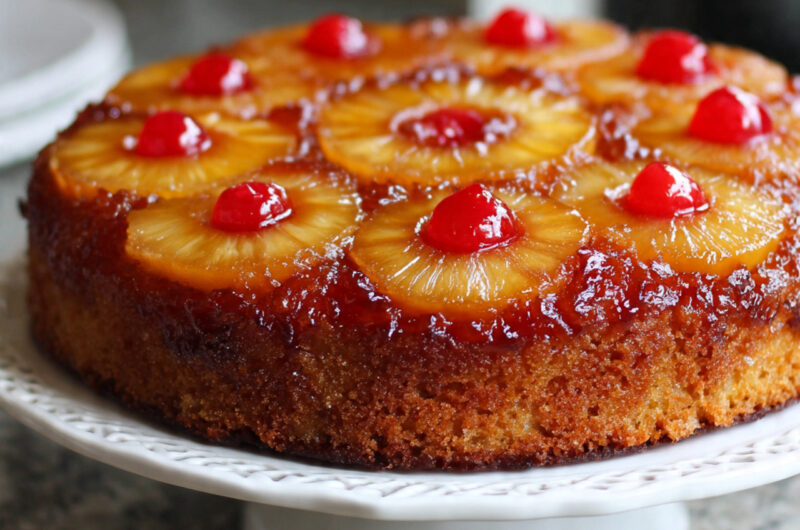
Pineapple Upside Down Cake
Course: Trending Cake4
servings15
minutes35
minutes310
kcal1
hourA soft, buttery cake topped with caramelized pineapple and cherries. Simple to make and perfect for cozy family desserts or small gatherings.
Ingredients
Caramel Topping
½ cup (115 g) unsalted butter, melted
¾ cup (150 g) brown sugar
6 pineapple rings, canned in syrup, well-drained
6–8 maraschino cherries
Cake Batter
1 cup (125 g) all-purpose flour
1 tsp baking powder
¼ tsp salt
2 large eggs, room temperature
¾ cup (150 g) white sugar
½ cup (120 ml) whole milk, room temperature
1 tsp pure vanilla extract
Directions
- Preheat oven to 180°C (350°F). Grease a 9-inch round pan, including sides.
- Pour melted butter into the pan base. Sprinkle brown sugar evenly over the butter.
- Arrange pineapple rings over the sugar layer. Place a cherry in the center of each ring.
- Whisk flour, baking powder, and salt together in a bowl.
- In a second bowl, whisk eggs and white sugar until smooth. Add milk and vanilla; stir to combine.
- Pour wet ingredients into dry ingredients. Mix gently until a smooth batter forms — do not overmix.
- Pour batter over the fruit layer and spread to edges.
- Bake 33–37 minutes until golden and a toothpick inserted in the center comes out clean.
- Rest in pan for 5–8 minutes. Flip onto a large serving plate while still warm.