The Fluffiest Angel Food Cake Recipe That Never Falls Flat
Most homemade angel food cakes collapse in the middle, sink on the sides, or come out dense and rubbery — and it almost always comes down to one of two things: a greasy pan or deflated egg whites. This recipe walks you through exactly how to avoid both, so your cake rises tall and stays that way every single time.
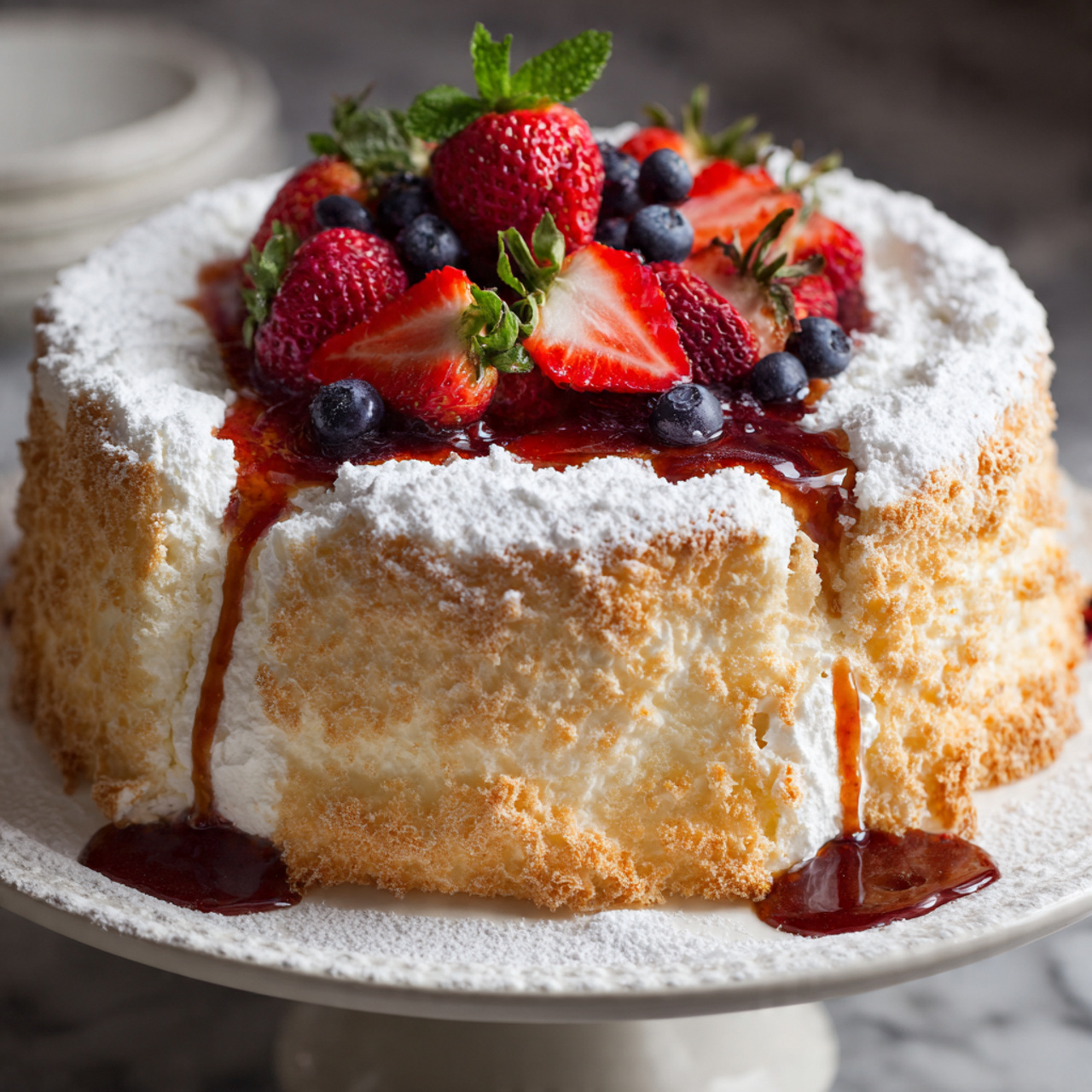
Picture pulling a golden, cloud-soft cake out of the oven and flipping it upside down while it cools. As it sets, the crumb firms into something impossibly tender — springy under your fingers, delicate on your tongue, with a clean sweetness and the faintest whisper of vanilla. It’s one of those desserts that feels lighter than air, like eating something that shouldn’t even exist.
This cake slides effortlessly into just about any occasion — a sunny Sunday brunch, a last-minute family dessert, a potluck where you want to bring something that looks impressive but wasn’t a stress to make. It pairs beautifully with fresh berries and whipped cream for something a bit more dressed up, or stands perfectly well on its own for a quiet evening treat. Whether you’re baking it for a crowd or keeping it simple for two, this easy angel food cake recipe is one you’ll find yourself reaching for again and again.
Why You’ll Love This Recipe
A Texture That’s Genuinely Like a Cloud
There’s nothing else quite like the crumb of a well-made angel food cake — soft, spongy, and so light it practically dissolves on your tongue. The combination of stiffly beaten egg whites and sifted cake flour is what creates that signature pillowy lift that denser cakes just can’t replicate.
Sweetness Without the Heaviness
Unlike most desserts, this one satisfies your sweet tooth without leaving you feeling sluggish afterward. The flavor is gently sweet and clean, which makes it a wonderful base for fresh fruit, a drizzle of honey, or a spoonful of lemon curd on the side.
Surprisingly Simple to Put Together
You don’t need a long ingredient list or hours in the kitchen. With just six pantry staples and a few straightforward steps, this is the kind of bake that’s genuinely accessible — even if you’ve never made it before. The technique matters more than the ingredients, and this recipe teaches you exactly what to look for.
Perfect for Sharing at Any Occasion
Homemade light sponge cake recipes don’t usually scale this gracefully, but this one does. Serve it plain at a weeknight dinner, layer it with cream and strawberries for a birthday, or bring it to a potluck and watch it disappear. It’s crowd-friendly without any extra effort.
A Lighter Spin on a Classic Baked Good
For anyone looking for airy baked goods that feel homemade and thoughtful without the richness of butter-based cakes, this is the one. It’s low in fat, high in satisfaction, and genuinely lovely to make.
Ingredients
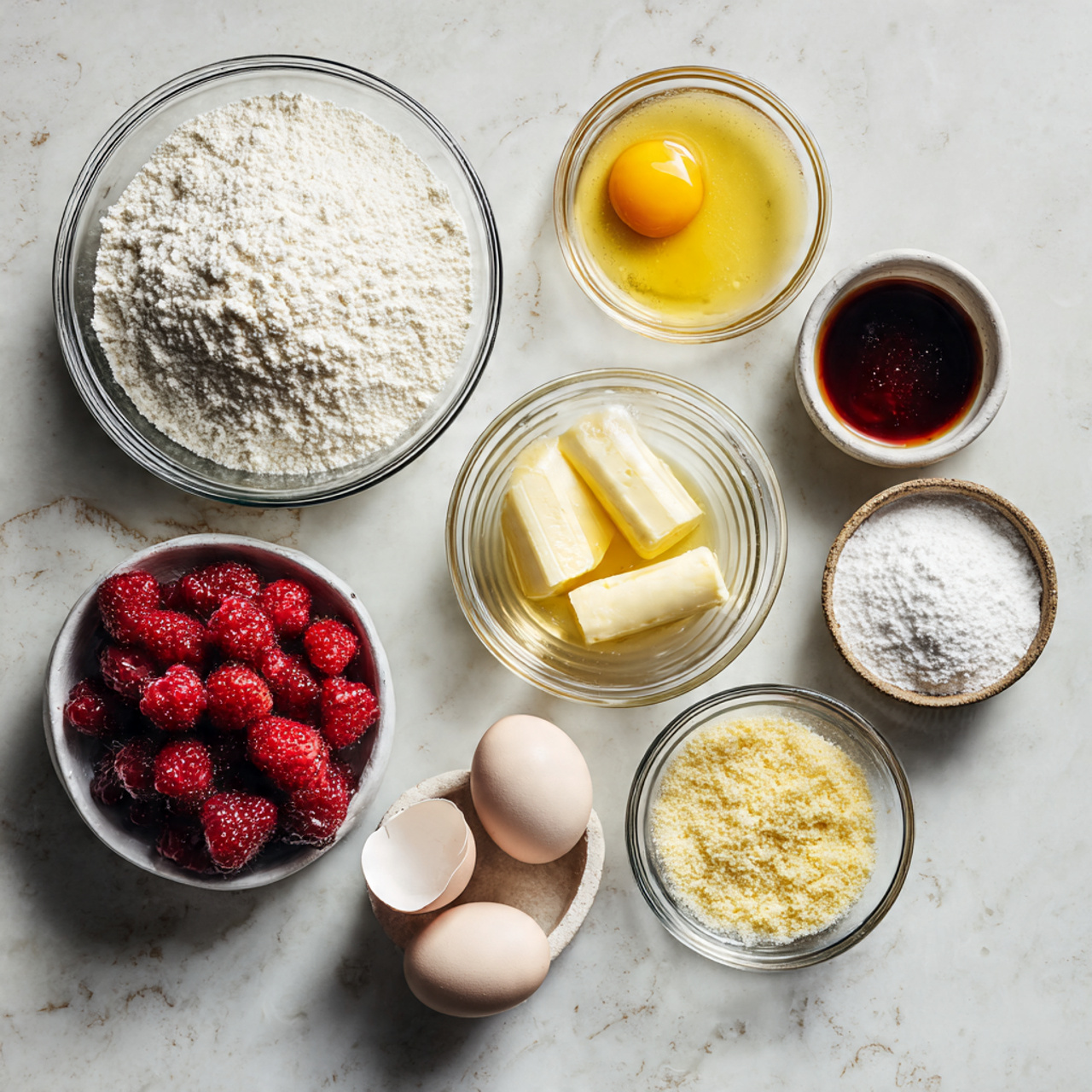
For the Egg White Base
- 1 cup egg whites (about 7–8 large eggs, at room temperature)
- ½ teaspoon cream of tartar
- ¼ teaspoon salt
For the Batter
- 1 cup granulated sugar, divided into two ½-cup portions
- ¾ cup cake flour (sifted — do not substitute with all-purpose without adjustment)
- 1 teaspoon pure vanilla extract (not imitation — the flavor is more delicate here)
The magic in this recipe is in the balance: the cream of tartar stabilizes those egg whites into a glossy, billowing foam, while the sifted flour and sugar fold in gently without weighing the batter down. Every ingredient earns its place here.
How to Make Angel Food Cake — Step-by-Step
Step 1: Prep Your Ingredients and Oven
Preheat your oven to 170°C (340°F) and position the rack in the lower third. Separate your egg whites carefully into a clean, completely grease-free bowl — even a tiny drop of yolk will prevent them from whipping properly. Let the whites sit at room temperature for about 15 minutes. Meanwhile, sift the cake flour together with half the sugar (½ cup) until the mixture looks uniformly fine and powdery. Don’t worry if it takes two or three passes through the sifter — that extra lightness is exactly what you’re after.
Step 2: Whip the Egg Whites to Soft Peaks
Add the cream of tartar and salt to your egg whites and beat on medium speed until the mixture looks foamy and opaque, like pale seafoam. Then, with the mixer still running, add the remaining ½ cup of sugar one tablespoon at a time — this slow addition is what gives the whites their structure. Keep beating until the mixture is glossy and holds soft peaks when you lift the beaters. The peaks should curl gently rather than stand completely stiff. Don’t worry if this takes a few minutes longer than you expect — patience here is worth it.
Step 3: Fold in the Flour Mixture
Add the sifted flour and sugar in three or four separate additions, folding gently with a wide spatula after each one. The motion should be slow and deliberate — scrape the bottom of the bowl, lift, and fold over. You’re looking for no visible streaks of flour without deflating all that beautiful air you just built. Add the vanilla extract with the last fold and mix just until it disappears into the batter.
Step 4: Pour and Bake
Gently pour the batter into an ungreased tube pan (angel food cake pan) — do not use a non-stick pan or one that has been greased. The batter needs to cling to the sides to rise properly. Smooth the top lightly and bake for about 35 minutes, until the surface is lightly golden and a toothpick inserted into the center comes out clean. The cake will have risen significantly and the top will look set and springy. Don’t worry if it cracks slightly on the surface — that’s completely normal and won’t affect the texture.
Step 5: Cool Upside Down — This Step Is Non-Negotiable
The moment the cake comes out of the oven, invert the pan immediately over a bottle or set it on its built-in feet if your pan has them. Leave it undisturbed for at least one full hour. This is what keeps the cake from collapsing under its own weight as it cools. Once it’s completely cool to the touch, run a thin knife around the edges and gently release the cake. It should slide out in one beautiful piece.
Perfecting This Recipe
- Always use room-temperature egg whites — they whip up faster and to a larger volume than cold ones.
- Make sure your bowl, whisk, and spatula are completely clean and dry. Any fat residue will prevent the whites from whipping at all.
- Sifting the flour and sugar together isn’t optional — it breaks up any lumps and ensures the mixture folds in without deflating the batter.
- Add the sugar to the egg whites slowly, one tablespoon at a time. Pouring it all in at once can collapse the foam before it has a chance to stabilize.
- Stop folding the moment the flour disappears. Two or three extra folds too many is all it takes to knock the air out of the batter.
- Cooling upside down isn’t just a technique — it’s the reason the cake holds its height. Skipping this step almost always results in a sunken top.
Common Mistakes to Avoid
- Using a greased or non-stick pan — Angel food cake needs to grip the sides of the pan to climb as it bakes. A greased or non-stick surface causes it to slide down and bake flat.
- Beating the egg whites too stiff — Stiff, dry peaks are harder to fold without deflating and can give you a crumbly, uneven crumb. You want glossy, soft peaks that just hold their shape.
- Overmixing when folding in the flour — The batter will look slightly underdeveloped when you stop, and that’s exactly right. Overmixing pushes out the air and turns a cloud into a brick.
- Getting yolk in the egg whites — Even a small trace of yolk acts like fat and will prevent your whites from whipping. Separate each egg into a small bowl first before adding to the main bowl, so one accident doesn’t ruin the whole batch.
- Opening the oven early — Angel food cake is sensitive to sudden temperature changes while baking. Resist the urge to check before the 30-minute mark, or the cake may sink in the center.
Add Your Touch
- Stir in ½ teaspoon of lemon or orange zest along with the vanilla for a bright, citrusy lift.
- A drop of almond extract (just ¼ teaspoon alongside the vanilla) adds a delicate floral depth.
- If you’re out of cake flour, replace it with all-purpose flour: for every ¾ cup, remove 1½ tablespoons and replace with an equal amount of cornstarch. This mimics the lower-protein softness of cake flour reasonably well.
- For a strawberries-and-cream version, slice the cooled cake horizontally into layers and fill with whipped cream and fresh berries — it turns into a gorgeous layered dessert with almost no extra effort.
- Serve warm slices with a scoop of vanilla ice cream and a drizzle of honey or caramel for something a little more indulgent.
Visit Also: Cake For Boyfriend
What to Serve With This
Fresh sliced strawberries or a quick berry compote are the classic companion here — their acidity is the perfect contrast to the cake’s gentle sweetness.
A generous spoonful of lightly sweetened whipped cream or coconut cream makes every bite feel just a little more special.
A drizzle of lemon curd over the top gives you brightness and a bit of tartness that pairs beautifully with the vanilla crumb.
For brunch, serve alongside a platter of seasonal fruit and a pot of good coffee — simple and lovely.
Storing and Serving
Fridge Store the cake in an airtight container or wrapped snugly in cling film for up to 3 days. Keep it whole if possible — individual slices dry out faster than an intact cake.
Freezer Slice the cooled cake and wrap individual portions tightly in cling film, then place in a freezer-safe bag. It keeps well for up to 2 months. Thaw slices at room temperature for about 30 minutes before serving.
Reheating This cake is best served at room temperature — no reheating needed. If it’s been in the fridge, just let it sit out for 10 to 15 minutes and it will soften right back to its natural texture.
Make-Ahead Tip You can bake this cake a full day ahead of serving. Store it wrapped at room temperature overnight, and it will actually slice more cleanly the next day once the crumb has settled.
Servings This recipe yields approximately 8 slices from a standard tube pan.
Nutrition (Approximate Per Serving)
- Calories: 155
- Total Fat: 0.1g
- Saturated Fat: 0g
- Carbohydrates: 34g
- Sugar: 26g
- Protein: 4g
- Sodium: 105mg
Nutritional values are approximate and may vary based on specific ingredients and brands used.
Chef’s Helpful Tips
- Room temperature egg whites are not a suggestion — they genuinely whip up to a larger volume than cold whites, which means more air and a lighter final texture.
- The sniff test is your friend: if you can smell the cake starting to turn golden, check it. Overbaking by even five minutes will dry out the crumb and make slicing messy.
- For the cleanest slices, use a serrated knife with a gentle sawing motion rather than pressing straight down. Angel food cake compresses easily under direct pressure.
- If your cake feels slightly sticky on top after cooling, it’s usually just humidity. Leave it uncovered in a dry spot for another 20 minutes before slicing or storing.
- If your finished cake feels dense rather than springy, it almost always points to overmixing during the flour fold — next time, fold a little less than feels comfortable.
Frequently Asked Questions
Q1. Can I make this cake ahead of time? Yes — this is actually one of the best make-ahead desserts around. Bake it the day before, wrap it well once fully cooled, and store it at room temperature. It slices even more cleanly after resting overnight, which makes it ideal for gatherings.
Q2. Why did my cake collapse or sink in the middle? The most common culprits are a greased pan, underwhipped egg whites, or cooling the cake right-side up. Make sure your pan is completely ungreased, beat the whites to glossy soft peaks, and always cool the cake inverted — these three things will solve the vast majority of sinking issues.
Q3. Can I substitute all-purpose flour for cake flour? You can, yes. For this recipe, measure out ¾ cup all-purpose flour, remove 1½ tablespoons, and replace with 1½ tablespoons of cornstarch. Sift them together twice before using. The texture will be very slightly denser but still delicious.
Q4. Is this a good recipe for a beginner baker? Genuinely, yes — with one caveat. The technique for whipping and folding the egg whites is new for many people, but it’s not difficult once you know what you’re looking for. Read through the steps before you start, watch the egg whites closely as you whip, and fold slowly. You’ll get it right the first time.
Q5. Can I freeze the whole cake rather than individual slices? You can, though slices are far more practical. If freezing whole, cool completely, wrap tightly in two layers of cling film and then foil, and freeze for up to 2 months. Thaw overnight at room temperature — don’t rush it in the microwave, as it will make the texture gummy.
Conclusion
There’s a reason angel food cake has been a kitchen staple for generations — it delivers something genuinely special with a short ingredient list and no complicated technique. Light enough to serve after a big meal, elegant enough for a celebration, and forgiving enough for a weeknight bake, this Angel Food Cake Recipe earns its place in your regular rotation. Once you nail the egg white technique, you’ll wonder why you ever felt intimidated by it.
So go ahead — separate those eggs, get your pan out, and make something that’ll have everyone asking for a second slice. Top it simply with fresh fruit, or dress it up for a party. Either way, this is one of those recipes that becomes yours the moment you make it. And if it turns out beautifully (it will), share it — food this good is always better with company.
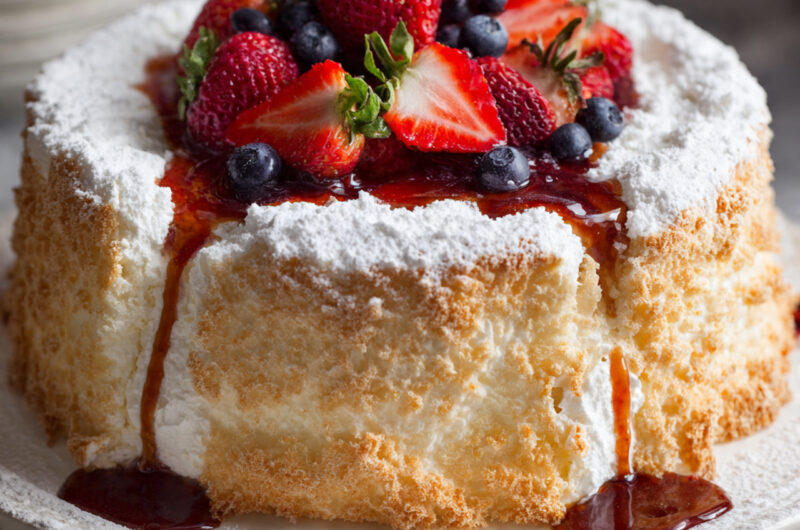
The Fluffiest Angel Food Cake
Course: Trending Cake4
servings15
minutes35
minutes155
kcal1
hour50
minutesThis cloud-light angel food cake bakes up tall, tender, and impossibly soft — with a clean vanilla sweetness that pairs beautifully with fresh fruit and whipped cream. It’s the perfect make-ahead dessert for gatherings, brunch, or any time you want something homemade without the heaviness.
Ingredients
Egg White Base
1 cup egg whites (about 7–8 large eggs, room temperature)
½ tsp cream of tartar
¼ tsp salt
Batter
1 cup granulated sugar (divided into two ½-cup portions)
¾ cup cake flour, sifted
1 tsp pure vanilla extract
Directions
- Preheat oven to 170°C. Position rack in lower third of oven. Do not grease the pan.
- Sift cake flour with ½ cup sugar two to three times until uniformly fine. Set aside.
- Beat egg whites with cream of tartar and salt on medium speed until foamy.
- With mixer running, add remaining ½ cup sugar one tablespoon at a time. Beat until glossy and soft peaks form.
- Fold flour mixture into egg whites in three to four additions, using slow, deliberate strokes.
- Add vanilla extract with the final fold. Mix just until incorporated.
- Pour batter into an ungreased tube pan and smooth the top gently.
- Bake 35 minutes, until lightly golden and a toothpick comes out clean.
- Immediately invert the pan and cool completely upside down, at least 1 hour.
- Run a knife around the edges to release, then turn out onto a serving plate.