The Lightest, Fluffiest Angel Food Cake You’ll Ever Bake
Angel Food Cake has a reputation for sinking into a dense, rubbery disc the moment it leaves the oven, and nine times out of ten it comes down to two quiet mistakes most home bakers never realize they’re making: knocking the air out of the egg whites, and greasing the pan. This recipe walks you past both of them, so your cake climbs tall and stays that way.
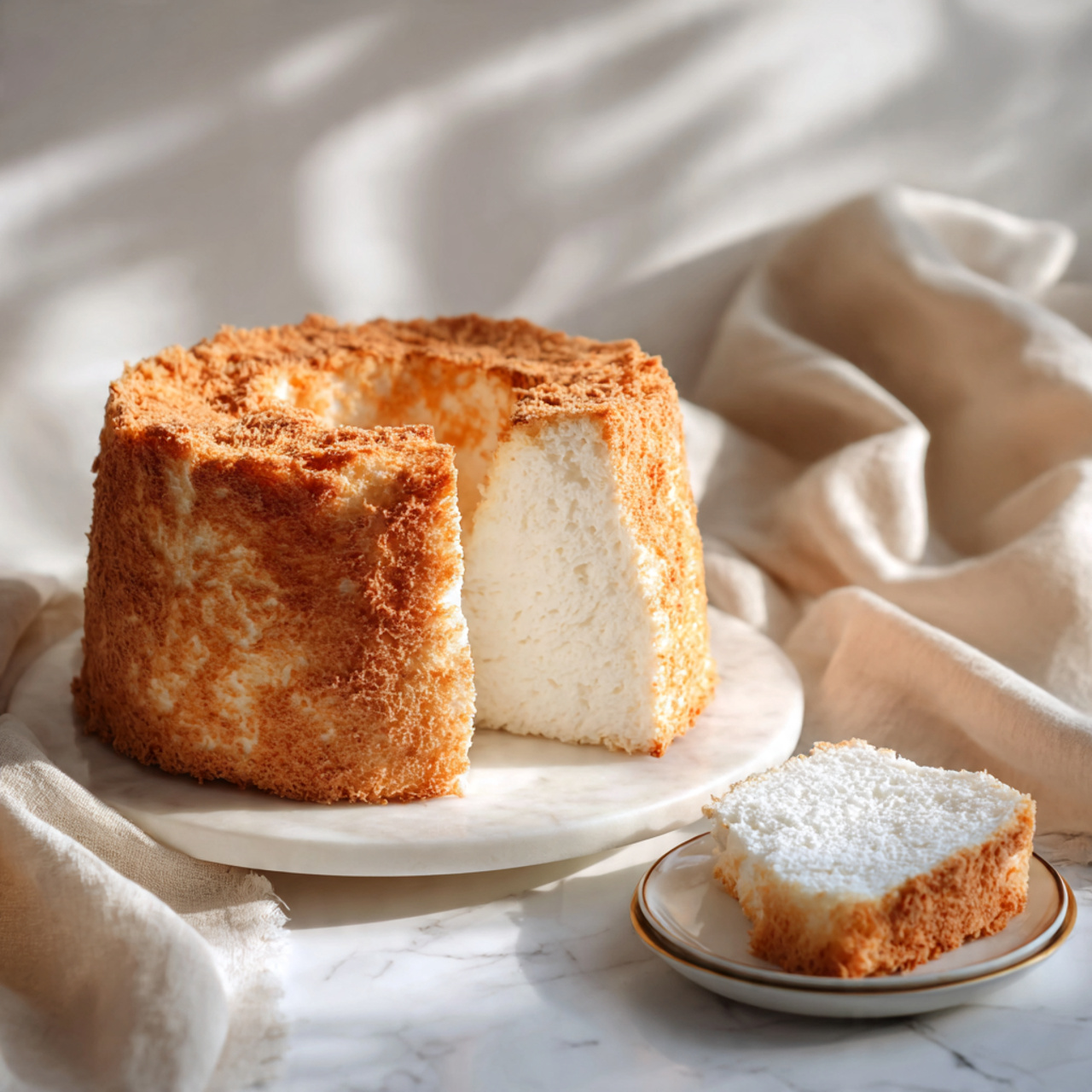
Picture slicing into something so airy it springs back under the knife, with a crumb that pulls apart in soft, snow-white tufts. The first bite barely needs chewing — it melts into a whisper of vanilla and clean, honest sweetness, light enough that you’ll reach for a second slice before the first one’s gone. While it bakes, the kitchen fills with the faint scent of toasted sugar and warm vanilla, the kind of smell that quietly draws everyone in.
It’s the dessert I reach for at spring brunches, crowded potluck tables, and on slow evenings when I want something sweet but never heavy beside a cup of tea. As a make-ahead dessert it only improves after a few hours of rest, and because this fluffy cake is naturally fat-free, everyone always seems to have room for more. Whether this is your first angel food cake or your fiftieth, here’s everything you need to get it right.
Why You’ll Love This Recipe
Impossibly Light Texture
This is the lightest dessert that ever earns a place on your table. The crumb is delicate and springy, almost like edible cloud, and it dissolves the second it hits your tongue. No heaviness, no sitting-like-a-brick feeling afterward.
Clean, Gentle Sweetness
The flavor leans soft and balanced rather than sugary-sweet. A single teaspoon of pure vanilla carries the whole cake, which is exactly why it pairs so beautifully with tart berries or a cloud of cream. It tastes like a treat without ever tipping into too-much territory.
Just Six Simple Ingredients
There’s nothing fancy hiding in this recipe — egg whites, sugar, flour, cream of tartar, salt, and vanilla. Everything is likely already in your pantry, which makes this the kind of bake you can decide on at the last minute and still pull off.
A Crowd-Pleaser That Travels Well
Because it holds its shape and tastes wonderful the next day, this cake is built for sharing. It slices cleanly for a buffet, survives a car ride to a gathering, and feeds a table without any fuss or decorating skill required.
Classic, With Room to Play
This cake is a timeless favorite on its own, but it’s also a blank canvas. A little lemon zest, a swap of almond extract, a pile of seasonal fruit — small touches turn the same trusted recipe into something that feels brand new every time.
Ingredients
For the Cake
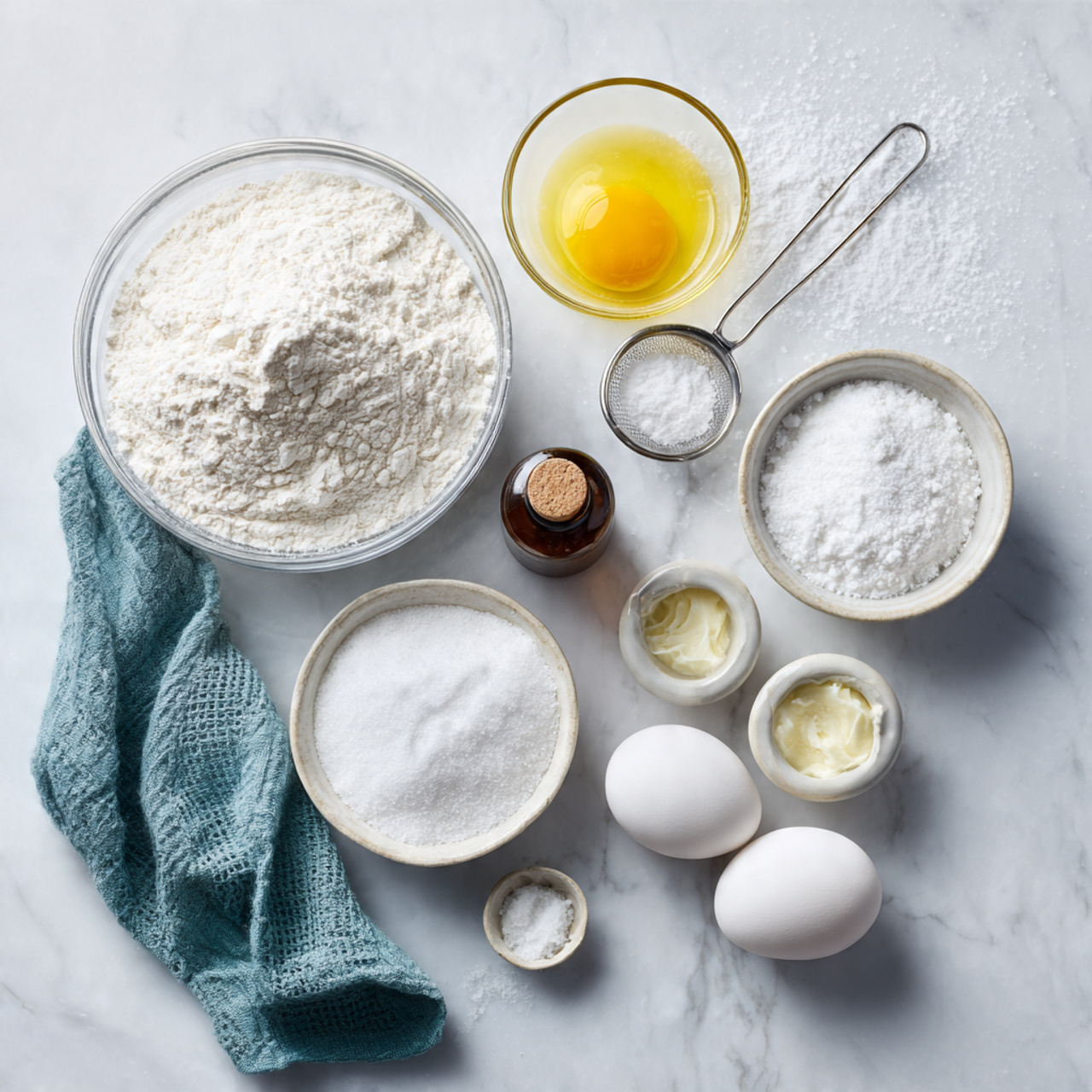
- 10 large egg whites (room temperature — they whip to nearly double the volume of cold whites)
- 1 cup granulated sugar (superfine, if you have it, dissolves more smoothly into the meringue)
- ¾ cup cake flour (not all-purpose — it keeps the crumb tender; sift before measuring)
- 1½ teaspoons cream of tartar (this stabilizes the whites, so please don’t skip it)
- ¼ teaspoon salt
- 1 teaspoon vanilla extract (pure, not imitation, for the cleanest flavor)
For Serving (Optional)
- Fresh berries or sliced mango
- A spoonful of lightly whipped cream
The magic here is in how little it takes. The whipped egg whites do all the heavy lifting, trapping air that gives the cake its rise, while the cake flour keeps things feather-soft and the cream of tartar holds the whole airy structure steady. Sugar adds tenderness and that toasty top, and the vanilla ties it together. Each piece has a job, and together they turn six humble ingredients into something genuinely special.
How to Make Angel Food Cake — Step-by-Step
Step 1: Heat the Oven and Ready Your Pan
Preheat your oven to 170°C (340°F) and set out an ungreased tube pan. This is the one time you’ll want to leave a pan completely bare — the batter needs to grip those dry sides to climb as it bakes. Don’t worry if leaving a pan ungreased feels wrong; it’s exactly what gives the cake its lift.
Step 2: Sift the Dry Ingredients
Sift the cake flour together with half of the sugar into a bowl. Sifting twice is even better — you’re chasing the airiest, most lump-free mix possible. The flour should feel powder-soft and weightless when you’re done.
Step 3: Whip the Egg Whites
In a spotlessly clean, dry bowl, beat the egg whites with the salt and cream of tartar until soft, billowy peaks form. Slowly rain in the remaining sugar while you keep mixing, and beat until the whites turn glossy and hold a gentle peak that curls at the tip. Don’t worry if it takes a few minutes — you’ll know it’s ready when the meringue looks satiny and you can lift the beaters without the peak flopping over completely.
Step 4: Fold in the Flour
Sprinkle the flour mixture over the whites in small batches, folding gently with a spatula in slow, sweeping motions. Cut down through the center, scoop up from the bottom, and turn the bowl as you go. Stop the moment the flour disappears — the batter should look thick, pale, and full of air, never runny.
Step 5: Bake
Spoon the batter into the ungreased pan and smooth the top lightly with the spatula. Bake for about 35 minutes, until the surface is golden and springs back when you press it gently. The cake is done when the top feels set and bounces beneath your fingertip rather than leaving a dent.
Step 6: Cool Upside Down
The instant it comes out, invert the pan and let the cake cool completely upside down — propped on its legs or balanced over a bottle neck. This keeps the delicate structure from collapsing under its own weight as it sets. Only once it’s fully cool should you run a thin knife around the edges and release it.
Perfecting This Recipe
- Bring your egg whites to room temperature before whipping; warm whites trap far more air than cold ones.
- Make sure every bowl and beater is completely free of grease or yolk — even a trace will keep the whites from whipping up.
- Beat to glossy soft-to-medium peaks, not stiff and dry; over-whipped whites turn grainy and harder to fold.
- Fold the flour by hand, gently and in stages. This is where most of the air is either kept or lost.
- Resist opening the oven door early — a rush of cool air can shock the cake and cause it to deflate.
- Cooling upside down isn’t optional. It’s the single step that protects all that hard-won height.
Common Mistakes to Avoid
- Greasing the pan — A slick pan gives the rising batter nothing to cling to, so the cake slides back down instead of climbing. Always bake this cake in a bare, ungreased tube pan.
- A trace of yolk or grease in the whites — Any fat at all prevents the egg whites from reaching full volume, leaving you with a flat, heavy cake. Crack each egg separately and use scrupulously clean tools.
- Overmixing while folding — Stirring too vigorously knocks the air right out of the batter and bakes into a dense, gummy crumb. Fold slowly and stop as soon as the flour vanishes.
- Pulling it out too soon — An underbaked center sinks and turns sticky as it cools. Wait for a springy, golden top that bounces back to the touch.
- Cooling right-side up — Letting the warm cake rest upright lets gravity flatten that airy structure. Flip it the second it leaves the oven.
Add Your Touch
- Fold a teaspoon of finely grated lemon or orange zest into the batter for a bright, citrusy lift.
- Swap the vanilla for almond or a half-teaspoon of coconut extract to change the whole personality of the cake.
- Pile the slices high with macerated strawberries and cream for an effortless shortcake-style dessert.
- Drizzle cooled slices with a thin lemon glaze or a dusting of powdered sugar for a prettier finish.
- Layer torn pieces with fruit and whipped cream in a glass for a quick, no-fuss trifle.
Visit Also: Lightning McQueen Cake
What to Serve With This
- A bowl of macerated strawberries or mixed summer berries
- Lightly sweetened whipped cream or a scoop of vanilla ice cream
- A pour of warm chocolate or salted caramel sauce
- Fresh sliced mango or peaches for a tropical lean
- A simple cup of black tea or a shot of espresso to balance the sweetness
Storing and Serving
Fridge Tuck the cake into an airtight container and refrigerate for up to 3 days. Wrap individual slices to keep cut edges from drying out, or cover the whole cake snugly if it’s still intact.
Freezer Wrap slices tightly in plastic and then foil, and freeze for up to 2 months. This makes it an easy treat to stash away for whenever a craving strikes. Thaw at room temperature before serving.
Reheating No reheating needed — this cake is at its best at room temperature. If it’s been chilled, let slices sit out for 15 to 20 minutes so the crumb softens back to its pillowy self.
Make-Ahead Tip Bake it a full day ahead and keep it covered at room temperature; the texture holds beautifully and the flavor settles in. That make-ahead ease is exactly what makes it such a stress-free choice for guests.
Servings This recipe yields one tube cake, about 12 generous slices.
Nutrition (Approximate Per Serving)
- Calories: 160
- Total Fat: 0 g
- Saturated Fat: 0 g
- Carbohydrates: 36 g
- Sugar: 24 g
- Protein: 4 g
- Sodium: 80 mg
Nutritional values are approximate and may vary based on specific ingredients and brands used.
Chef’s Helpful Tips
- Let your egg whites sit out for 30 minutes first; room-temperature whites whip higher and faster than cold ones.
- Watch the bake closely toward the end — this cake goes from perfectly springy to overbaked and dry quickly.
- For clean slices, use a serrated knife and a gentle sawing motion, or a sturdy thread pulled straight through.
- Splurge on real cake flour and pure vanilla; with so few ingredients, the quality of each one shows in every bite.
- If your cake turns out a little dense, your whites likely lost air during folding — go slower and gentler next time, and stop mixing the instant the flour disappears.
Frequently Asked Questions
Q1. I don’t have cake flour — can I still make this? Absolutely. Measure out ¾ cup all-purpose flour, remove 1½ tablespoons of it, and replace that with 1½ tablespoons of cornstarch, then sift it all together a couple of times. It lightens the flour beautifully and keeps the crumb soft.
Q2. What does angel food cake actually taste like? Think of it as the lighter, airier cousin of a classic sponge cake — gently sweet, faintly vanilla, and almost marshmallow-soft in texture. It’s far less rich than pound cake or butter cake, which is exactly why it pairs so well with fruit.
Q3. I’m a beginner — is this too tricky for me? Not at all, as long as you respect a few key steps. Keep your bowl grease-free, fold gently, and cool the cake upside down, and you’re most of the way there. It’s a wonderful first project for building confidence with egg whites.
Q4. Can I make this ahead for a potluck or party? Yes, and it’s one of the best make-ahead bakes around. Bake it a day early, keep it covered at room temperature, and slice just before serving. It travels and holds up far better than most delicate cakes.
Q5. Can I freeze it? You can. Wrap slices tightly in plastic and foil and freeze for up to 2 months, then thaw at room temperature. The texture comes back surprisingly close to fresh, which makes it a handy egg white cake to keep on hand.
Conclusion
There’s a quiet kind of joy in a cake this simple. Angel food cake asks for almost nothing — a handful of pantry staples and a little patience with the egg whites — and gives back a light dessert that feels airy, generous, and just a touch special. It bends easily to whatever you need, whether that’s a modest treat for two with tea or a tall centerpiece for a full table of guests.
Once you’ve watched it rise tall and tasted that cloud-soft crumb, I think it’ll quietly work its way into your regular rotation. Keep it plain, crown it with berries and cream, or make it your own with a hint of citrus — then share it with the people around your table and let it become a small tradition of yours.chen.
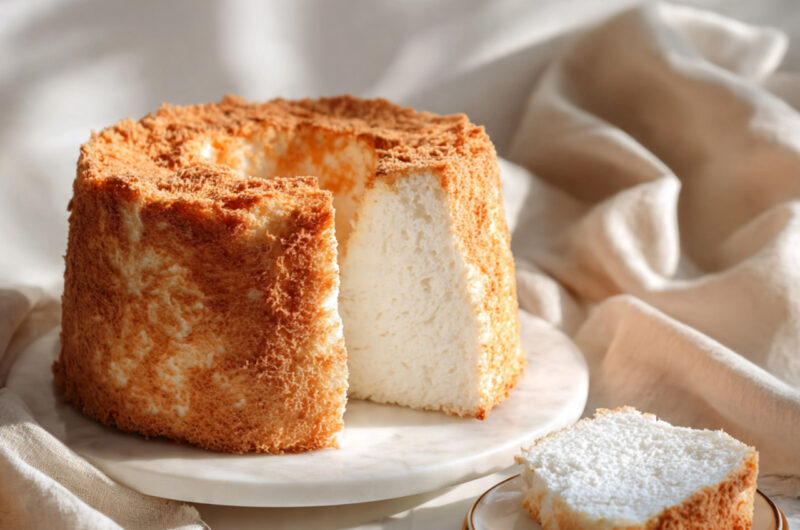
Light & Airy Angel Food Cake
Course: Cake4
servings15
minutes35
minutes160
kcal1
hour50
minutesA cloud-soft, fat-free cake with a springy crumb and gentle vanilla sweetness — the perfect light finish for brunches, potlucks, or a cozy tea-time slice.
Ingredients
For the Cake:
10 large egg whites (room temperature)
1 cup granulated sugar
¾ cup cake flour
1½ teaspoons cream of tartar
¼ teaspoon salt
1 teaspoon vanilla extract
For Serving (Optional):
Fresh berries or sliced mango
Lightly whipped cream
Directions
- Preheat oven to 170°C (340°F). Set out an ungreased tube pan.
- Sift cake flour with half the sugar; sift again for extra lift.
- Beat egg whites with salt and cream of tartar to soft peaks. Add remaining sugar gradually and beat until glossy.
- Fold in the flour mixture in small batches, gently, until just combined.
- Spoon batter into the pan and smooth the top. Bake about 35 minutes, until golden and springy.
- Invert the pan and cool completely upside down before releasing.