The Creamiest Homemade Hummus Recipe That’ll Ruin Store-Bought Forever
My grandmother kept a small ceramic bowl of hummus on the table almost every single day. She’d drizzle it with golden olive oil, dust it with paprika, and set it next to warm pita like it was the most natural thing in the world — because to her, it was. I didn’t fully appreciate it until I moved out and tried to recreate that bowl from memory.
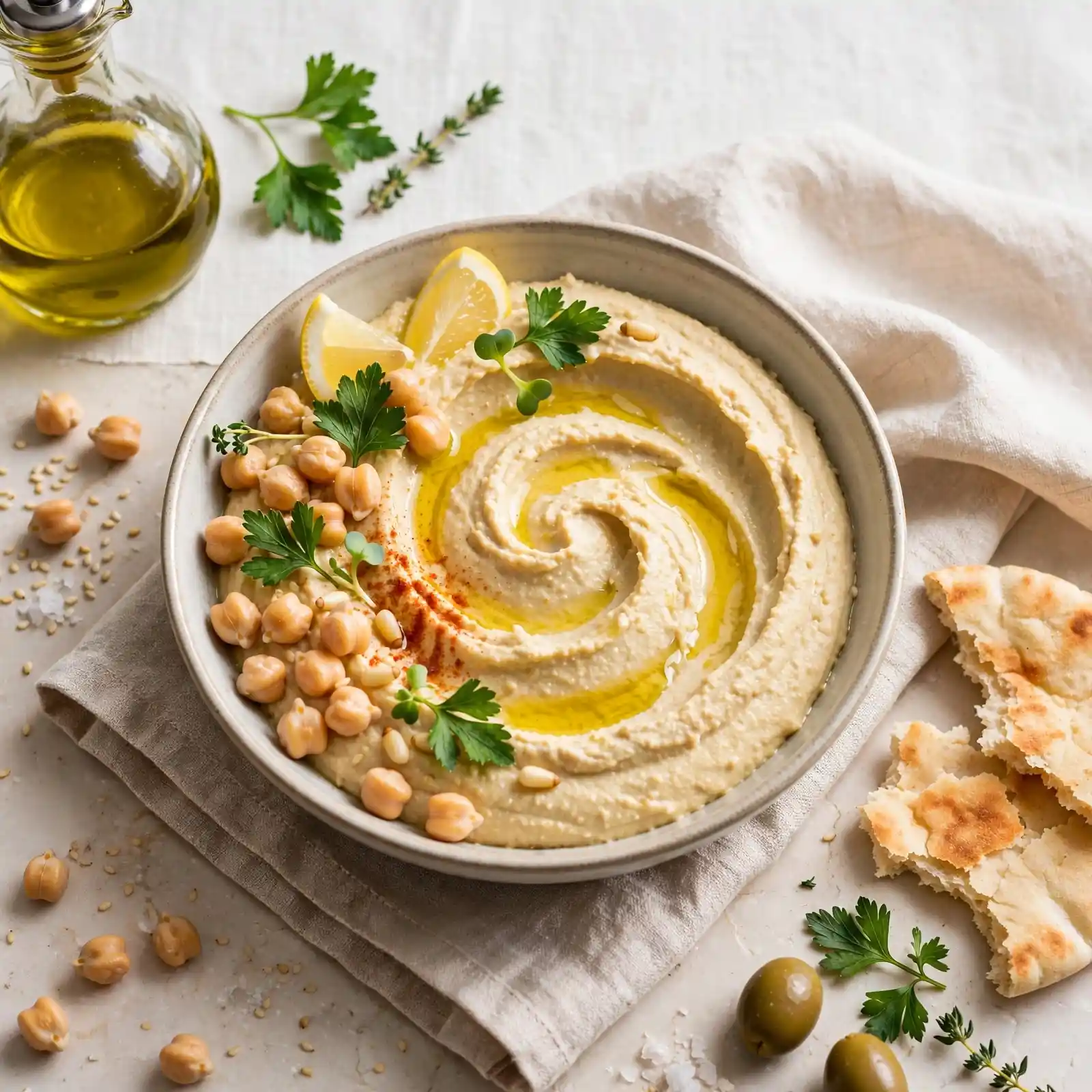
What makes a truly great hummus recipe is that first spoonful — the one where you drag a torn piece of bread through a silky, cloud-like dip and get hit with a warmth that’s nutty, lemony, and rich all at once. The texture should be smooth enough to feel luxurious, but thick enough to hold a generous pool of olive oil without running. That contrast is everything.
This homemade hummus is the kind of recipe you’ll reach for on a busy weeknight when you need something quick and satisfying, and again on a Friday when friends are coming over and you want to put out something genuinely impressive. It doubles as a creamy chickpea dip for a veggie platter, a spread inside wraps, or the star of a mezze board. Once you make it at home, the store-bought tub stays on the shelf.
Why You’ll Love This Recipe
It’s Incredibly Smooth and Silky
The secret is in how you handle the chickpeas — and this recipe walks you through it step by step. The result is a hummus so creamy it practically melts on your tongue, nothing like the grainy, dense versions you’ve had from a plastic container.
The Flavor Is Perfectly Balanced
Every element — the tahini’s nuttiness, the lemon’s brightness, the garlic’s gentle bite — plays its role without overpowering the others. It’s the kind of flavor balance that makes people ask, “What’s in this?” because they can’t quite put their finger on why it tastes so good.
It Comes Together in 10 Minutes
If you have a blender or food processor and one can of chickpeas, you’re already halfway there. No cooking required, no complicated technique — just blend, taste, and adjust.
Perfect for Any Occasion
Whether it’s a game day spread, a casual weeknight snack, a holiday appetizer table, or a simple lunchbox addition, this recipe fits every moment. It scales up easily for a crowd and still feels special when it’s just you and some crackers.
It’s Endlessly Customizable
The base recipe is a classic, but it’s also a blank canvas. A swirl of roasted red pepper, a handful of fresh herbs, a pinch of smoked paprika — you can make it your own every single time.
Ingredients
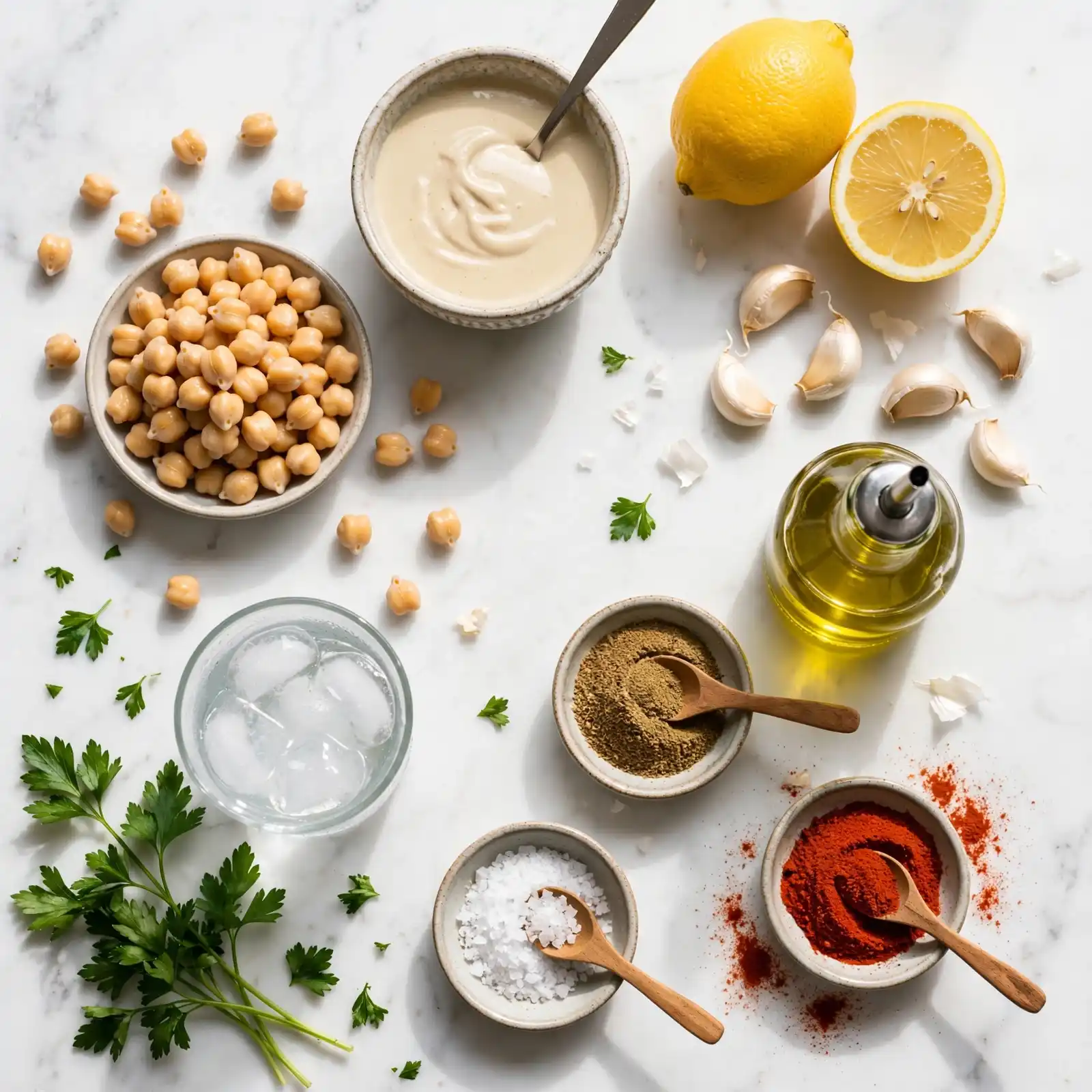
For the Hummus Base
- 1 can (15 oz / 400g) chickpeas, drained and rinsed (reserve 3–4 tbsp of the liquid)
- 3 tbsp tahini (well-stirred; natural, sesame-only tahini works best)
- 3 tbsp fresh lemon juice (about 1 large lemon — freshly squeezed makes a noticeable difference)
- 1 small garlic clove, roughly chopped (use half if you prefer a milder flavor)
- 2 tbsp extra virgin olive oil (plus more for serving)
- ½ tsp fine sea salt (adjust to taste)
- ½ tsp ground cumin
- 2–4 tbsp ice-cold water (added gradually to reach your preferred consistency)
For the Topping
- 1–2 tbsp extra virgin olive oil
- A pinch of smoked paprika or sumac
- A small handful of fresh parsley, roughly chopped (optional)
- A few whole chickpeas (reserved from the can, for visual appeal)
The tahini and lemon juice form the backbone of this recipe — one brings richness and depth, the other lifts everything with brightness. Together with the chickpeas, they create a dip that’s both hearty and refreshing at the same time.
How to Make Hummus Recipe — Step-by-Step
Step 1: Peel the Chickpeas (Optional but Worth It)
Drain and rinse your chickpeas, then gently squeeze each one between your fingers to slip off the thin outer skin. It takes about 5 minutes and is genuinely optional — but if you want that famously silky-smooth texture that feels restaurant-quality, this single step makes the biggest difference. Don’t worry if you don’t get every single skin; even removing most of them will noticeably improve the final texture.
Step 2: Blend the Tahini and Lemon First
Add the tahini and fresh lemon juice to your food processor and blend together for a full 60 seconds before adding anything else. The mixture will turn pale and thick — almost whipped-looking. This step aerates the tahini and is the real secret to ultra-creamy hummus. Don’t skip it thinking it won’t matter; it absolutely does.
Step 3: Add Garlic, Olive Oil, Salt, and Cumin
Add the chopped garlic, olive oil, salt, and cumin to the whipped tahini mixture. Blend for another 30 seconds. The garlic will break down and mellow into the base, losing its raw sharpness without disappearing entirely. Don’t worry if it smells quite garlicky at this stage — it softens as everything comes together.
Step 4: Add the Chickpeas and Blend
Add the chickpeas and start blending on high. With the processor running, drizzle in the reserved chickpea liquid (aquafaba) one tablespoon at a time, followed by the ice-cold water if you need more. Blend for a full 3–4 minutes — longer than you think is necessary. Watch for the texture to go from grainy and chunky to completely smooth and pale. That’s your sign it’s ready.
Step 5: Taste, Adjust, and Serve
Scoop the hummus into a wide shallow bowl. Taste it — does it need more lemon? More salt? A little more garlic? Adjust now, blend again briefly if needed. When you’re happy, use the back of a spoon to create a swooping well in the center, drizzle generously with olive oil, dust with smoked paprika, scatter the parsley and a few whole chickpeas on top, and serve immediately.
Perfecting This Recipe
- Blend longer than you think. Most home cooks stop too early. 3–4 full minutes in the food processor is what separates good hummus from great hummus.
- Use ice-cold water. Cold temperature keeps the tahini from seizing and helps achieve a lighter, creamier consistency.
- Balance lemon and tahini carefully. Add lemon a little at a time — it’s easier to add more than to correct over-lemon hummus.
- Let it rest before serving. Even 10–15 minutes at room temperature after blending allows the flavors to settle and deepen.
- The aquafaba matters. That starchy liquid from the chickpea can helps with creaminess and binds the mixture. Don’t throw it down the drain before reserving some.
- Quality tahini is non-negotiable. A bitter, separated tahini will make bitter, grainy hummus. Look for one that smells nutty and pours smoothly when stirred.
Common Mistakes to Avoid
- Using cold tahini straight from the fridge — Cold tahini is stiff and doesn’t blend well. Let it come to room temperature and stir it thoroughly before measuring.
- Not blending long enough — The most common mistake. Thirty seconds won’t do it. You need several minutes of continuous blending to break down the chickpea cell walls and achieve a silky result.
- Skipping the lemon-tahini pre-blend — Adding everything at once is tempting, but it skips the aeration step that gives the hummus its light, mousse-like texture.
- Using garlic powder instead of fresh — Garlic powder tastes flat here. Fresh garlic, even just a small clove, provides the right kind of sharpness that softens beautifully into the blend.
- Over-salting before tasting — The chickpeas and tahini both carry salt. Always taste before adding more — you can season up, but you can’t take it back.
Add Your Touch
- Roasted red pepper hummus: Blend in 1 large roasted red pepper (jarred is fine) with the chickpeas.
- Roasted garlic version: Replace the raw garlic clove with a full head of roasted garlic for something sweeter and more mellow.
- Herb hummus: Add a large handful of fresh cilantro, parsley, or basil before blending.
- Spiced hummus: Stir in ½ tsp harissa, a pinch of cayenne, or za’atar for a bolder flavor profile.
- Beet hummus: Add ½ cup of cooked beet for a stunning magenta color and a mildly earthy sweetness.
- Black bean swap: Replace the chickpeas with black beans for a darker, richer, slightly smokier variation.
Visit Also: Pumpkin Cookies
What to Serve With This
- Warm pita bread or pita chips — The classic pairing, always.
- A raw veggie platter — Carrots, cucumber, bell pepper strips, and radishes are all natural partners.
- Falafel — Tuck them into a wrap with hummus, pickled onions, and fresh tomatoes.
- Grilled flatbread or naan — Serve alongside soups or salads for an easy dinner upgrade.
- A mezze spread — Pair with olives, stuffed grape leaves, tabbouleh, and warm bread for an effortless entertaining platter.
Storing and Serving
Fridge:
Transfer to an airtight container and store in the refrigerator for up to 5 days. Press a piece of plastic wrap directly onto the surface before sealing to prevent a skin from forming.
Freezer:
Hummus freezes surprisingly well. Portion it into freezer-safe containers, leaving a little space at the top, and freeze for up to 3 months. The texture may be slightly less silky after thawing, but a quick blend or vigorous stir brings it back.
Reheating:
Hummus is best served at room temperature, not hot. If it’s been in the fridge, set it out for 20–30 minutes before serving, then re-drizzle with fresh olive oil and re-season if needed.
Make-Ahead Tip:
This recipe is ideal for making a day ahead — the flavors actually deepen and improve overnight. Make it, store it covered in the fridge, and pull it out 20 minutes before guests arrive.
Servings:
This recipe makes approximately 6–8 generous servings as a dip or appetizer, or about 1.5 cups of hummus total.
Nutrition (Approximate Per Serving)
- Calories: 145
- Total Fat: 9g
- Saturated Fat: 1.2g
- Carbohydrates: 12g
- Sugar: 1.5g
- Protein: 5g
- Sodium: 190mg
Nutritional values are approximate and may vary based on specific ingredients and brands used.
Chef’s Helpful Tips
- Room temperature ingredients blend better. Let your tahini and lemon juice sit out for a few minutes before starting — they emulsify more smoothly at room temp.
- Taste as you go. The best hummus is personalized. More lemon for brightness, more cumin for warmth, more garlic for bite — make it yours.
- For the cleanest presentation, use the back of a spoon in a single sweeping circular motion to create a center well, then pour the olive oil right into it so it pools beautifully.
- If your hummus is too thick, add ice water a teaspoon at a time and blend again. If it’s too thin, add a few more chickpeas and re-blend.
- Ingredient quality really shows here. With so few ingredients, a good extra virgin olive oil and a quality tahini will genuinely make the difference between average and exceptional.
Frequently Asked Questions
Q1. Can I use dried chickpeas instead of canned?
Absolutely — and many hummus purists prefer it. Soak 1 cup of dried chickpeas overnight, then boil until very tender (about 1–1.5 hours). The result is an even creamier, more flavorful hummus. Save the cooking liquid to use in place of the aquafaba.
Q2. What does homemade hummus taste like compared to store-bought?
Honestly? There’s no comparison. Store-bought tends to be starchy, flat, and overly thick. Homemade is brighter, nuttier, lighter, and far more flavorful — you’ll taste the lemon, the sesame, and the garlic as distinct and harmonious notes, not just a beige paste.
Q3. Is this recipe beginner-friendly?
It’s one of the most beginner-friendly recipes you’ll ever make. If you own a blender or food processor, you can make this. The only technique that matters is blending long enough — the machine does all the work.
Q4. Can I make this ahead for a party or potluck?
It’s actually better made ahead. Prepare it the night before, store it covered in the fridge, and bring it out to room temperature about 30 minutes before serving. Add fresh toppings right before guests arrive so it looks gorgeous and fresh.
Q5. Can I freeze leftover hummus?
You can! Freeze it in small portions in airtight containers for up to 3 months. Thaw in the fridge overnight and give it a good stir before serving. It might lose a touch of its silky texture, but the flavor holds up beautifully.
Conclusion
There’s a reason hummus has been a staple across kitchens for thousands of years — it is simple, nourishing, endlessly adaptable, and deeply satisfying in a way that feels both everyday and special. This hummus recipe won’t just feed your family or impress your friends; it’ll become one of those recipes that lives on your counter, in your fridge, and in your cooking rotation permanently.
So grab a can of chickpeas, squeeze that lemon, and give it a try. Spread it thick, serve it generously, and don’t be surprised when the bowl comes back empty before you’ve even sat down. That’s just what good hummus does — it disappears, and everyone asks when you’re making it again.
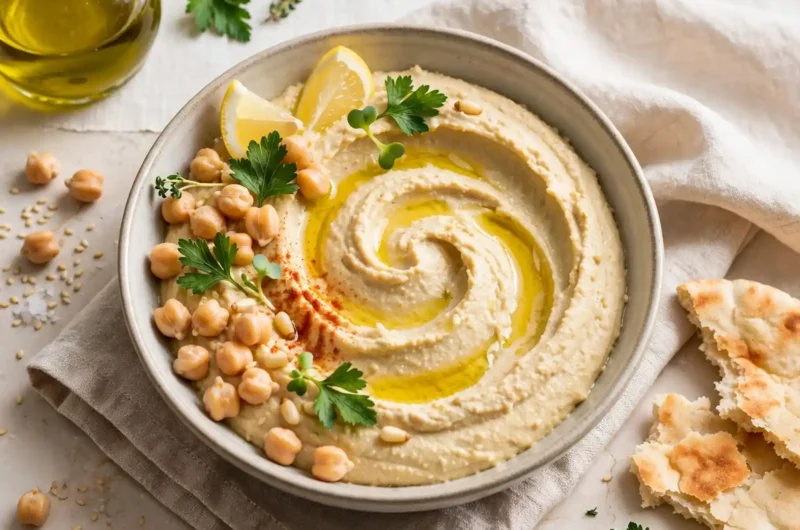
The Creamiest Homemade Hummus Recipe
Course: Trending Recipes6–8
servings10
minutes145
kcal10
minutesA silky-smooth, perfectly seasoned chickpea dip made from simple pantry staples in just 10 minutes. Ideal for snacking, entertaining, or building out a mezze spread — this is the only hummus recipe you’ll ever need.
Ingredients
For the Hummus Base:
1 can (15 oz / 400g) chickpeas, drained and rinsed (reserve 3–4 tbsp liquid)
3 tbsp tahini, well-stirred
3 tbsp fresh lemon juice
1 small garlic clove, roughly chopped
2 tbsp extra virgin olive oil
½ tsp fine sea salt
½ tsp ground cumin
2–4 tbsp ice-cold water
For the Topping:
1–2 tbsp extra virgin olive oil
Pinch of smoked paprika or sumac
Fresh parsley, roughly chopped (optional)
A few reserved whole chickpeas
Directions
- Drain and rinse chickpeas. Optionally peel by pinching off the thin outer skins for extra-smooth results.
- Add tahini and lemon juice to food processor. Blend for 60 seconds until pale and fluffy.
- Add garlic, olive oil, salt, and cumin. Blend for 30 seconds.
- Add chickpeas. Blend on high for 3–4 minutes, adding chickpea liquid and cold water one tablespoon at a time until smooth and creamy.
- Taste and adjust seasoning. Transfer to a serving bowl, swirl the top, drizzle with olive oil, and garnish with paprika, parsley, and whole chickpeas.