The Best Homemade Pizza Dough Recipe for a Perfectly Crispy, Chewy Crust
My grandmother never measured a thing. She’d plunge her hands straight into a mountain of flour, pour water she tested with her wrist, and start kneading without a second thought. I’d sit on the kitchen counter watching her hands work — pushing, folding, turning — until a shaggy mess became something smooth and alive. That dough became the pizza we ate every Friday, and I spent years chasing that exact feeling in my own kitchen.
What makes a truly great pizza dough recipe is deceptively simple: flour, water, yeast, salt, and olive oil. But when those five ingredients come together just right, the result is something almost miraculous — a crust that shatters at the edges, chews gently in the middle, and puffs into golden bubbles in the oven. The aroma alone, that warm, yeasty, slightly tangy smell drifting through your kitchen, is enough to make everyone drift toward the oven.
Whether you’re pulling this together for a lazy Sunday pizza from scratch, hosting a build-your-own pizza night with friends, or planning a weeknight dinner that the whole family will actually sit down for, this easy pizza dough comes together in minutes and only needs time — not skill — to become something spectacular. Once you feel the dough come to life under your hands, you’ll never reach for a store-bought crust again.
Why You’ll Love This Recipe
It Nails That Perfect Crust Texture
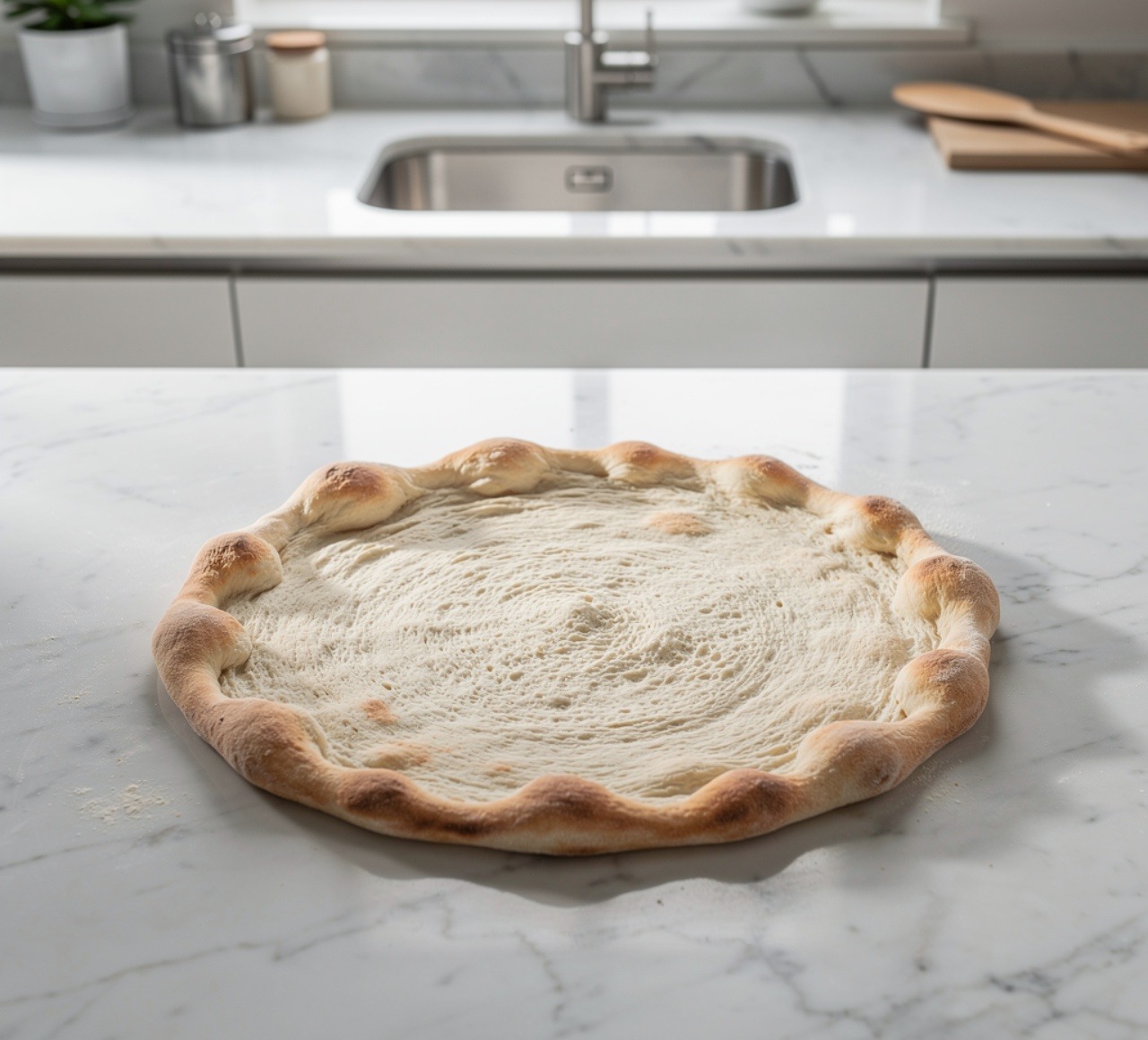
This dough bakes up with crispy, lacy edges and a tender, chewy center — the exact contrast that separates great pizza from average pizza. The hydration level is dialed in to give you that signature stretch without the dough snapping back every time you try to shape it.
The Flavor Is Genuinely Complex
Slow fermentation does the heavy lifting here. Even a short cold rest in the fridge develops a subtle tang and depth that instant pizza crusts simply cannot replicate. You get flavor that tastes like it came from a wood-fired oven, even if it came from your regular home oven.
It’s Incredibly Beginner-Friendly
No stand mixer required, no special equipment, and no advanced bread-making skills needed. If you can stir and knead for eight minutes, you can make this dough. The process is forgiving, and the recipe tells you exactly what to look and feel for at every stage.
It’s Perfect for Feeding a Crowd
This recipe makes two generous 12-inch pizza bases, and it doubles effortlessly. Prep the dough in the morning, refrigerate it, and pull it out when guests arrive — it’s one of the best make-ahead moves for a relaxed, crowd-pleasing dinner party.
It Works Every Single Time
No guessing, no crossed fingers. The ratios here have been tested and refined to be reliable across different flour brands, kitchen temperatures, and even high-altitude kitchens. Follow the feel cues in the steps and you’ll get a consistent result, every bake.
Ingredients
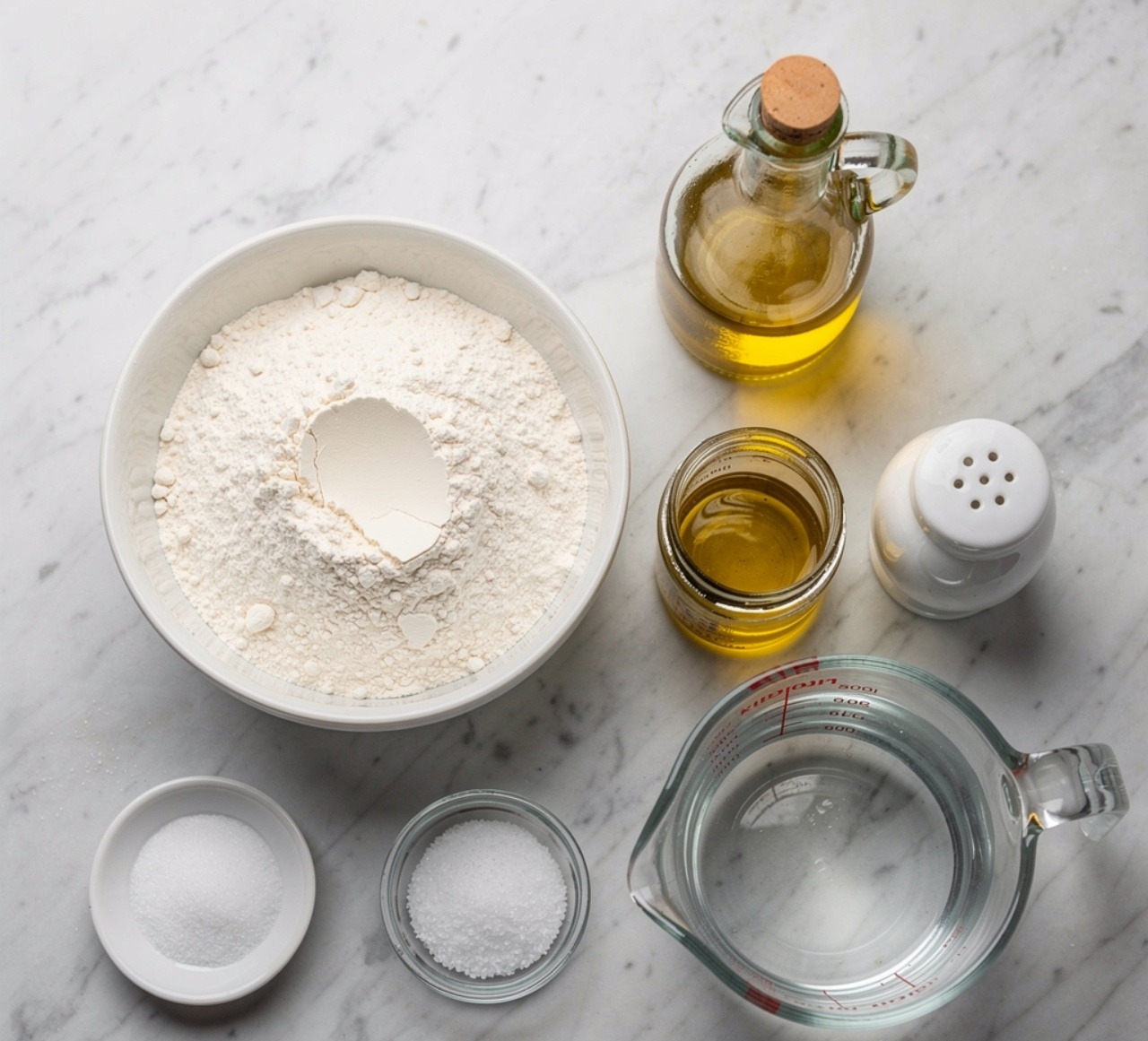
For the Dough Base
- 3 ½ cups (440g) all-purpose flour or bread flour (bread flour gives a chewier bite; all-purpose gives a slightly softer crust)
- 1 packet (2 ¼ tsp) active dry yeast (or instant yeast — see notes)
- 1 tsp granulated sugar (feeds the yeast and helps with browning)
- 1 ¼ cups (300ml) warm water (between 100–110°F / 38–43°C — warm to the touch but not hot)
- 2 tbsp extra-virgin olive oil (plus more for coating the bowl)
- 1 ½ tsp fine sea salt (do not skip — salt controls yeast activity and builds flavor)
For the Topping (Optional Assembly)
- ½ cup pizza sauce per pizza
- 1 ½ cups shredded low-moisture mozzarella per pizza
- Toppings of your choice
The combination of olive oil and high-protein flour is what gives this crust its characteristic chew and golden color. The olive oil coats the gluten strands, keeping the crust tender where it needs to be and crispy where it meets the heat of the pan.
How to Make Pizza Dough Recipe — Step-by-Step
Step 1: Activate the Yeast
Pour the warm water into a large bowl and sprinkle in the sugar and yeast. Give it a gentle stir and let it sit for 5–10 minutes. You’re looking for a foamy, bubbly cap to form on the surface — that’s your signal the yeast is alive and ready to work. Don’t worry if it doesn’t look dramatically frothy; as long as there’s some activity and a yeasty, slightly sweet smell, you’re good to go.
Step 2: Mix the Dough
Add the olive oil and salt to the yeast mixture, then add the flour one cup at a time, stirring with a wooden spoon or your hands as you go. The dough will look rough and shaggy at first — that’s completely normal. Once it starts pulling away from the sides of the bowl, turn it out onto a lightly floured surface.
Step 3: Knead Until Smooth
Knead the dough for 8–10 minutes, pushing it away with the heel of your hand, folding it back, and rotating it a quarter turn each time. You’re done when the dough feels smooth, elastic, and slightly tacky but doesn’t stick to your hands. Don’t worry if it seems a little sticky at the start — resist adding too much extra flour, as this can make the crust dense. The dough will come together as you work it.
Step 4: First Rise
Shape the dough into a ball and place it in a lightly oiled bowl, turning it once to coat the surface. Cover the bowl with a clean kitchen towel or plastic wrap and let it rise in a warm spot for 1 to 1 ½ hours, until it has doubled in size. A good warm spot is a turned-off oven with just the oven light on, which gives a gentle, consistent heat. The dough should feel pillowy and airy when you press a floured finger gently into it.
Step 5: Divide and Shape
Punch the dough down gently to release the air, then turn it onto a lightly floured surface. Divide it into two equal portions. For each portion, shape it into a ball, cover loosely, and let it rest for 10–15 minutes — this short rest relaxes the gluten and makes the dough far easier to stretch. Then use your hands to press and stretch each ball into a 12-inch round, working from the center outward and leaving the edges slightly thicker for a raised crust. Don’t worry if it’s not a perfect circle; a rustic, slightly uneven shape has its own charm.
Step 6: Top and Bake
Preheat your oven to 475°F (245°C) — or as hot as your oven will go — for at least 30 minutes before baking. Transfer the shaped dough to a lightly oiled baking sheet or a preheated pizza stone. Add your sauce, cheese, and toppings, then bake for 12–15 minutes until the crust is deep golden at the edges and the cheese is bubbling and spotted brown. The bottom should be firm and crisp when you lift a corner with a spatula.
Perfecting This Recipe
- Use bread flour when you want a chewier, more restaurant-style crust; all-purpose gives a slightly more tender result.
- Water temperature is the most common place things go wrong — too hot and you’ll kill the yeast, too cold and it won’t activate. Aim for the temperature of a comfortable warm bath.
- Kneading builds the gluten network that gives the crust its structure and chew. Eight minutes of steady kneading makes a real difference to the final texture.
- A longer, slower cold rise in the fridge (up to 72 hours) dramatically improves flavor. If you have the time, make the dough the day before and let it ferment in the refrigerator overnight.
- Letting the dough rest for 10–15 minutes after dividing is not optional — it’s what prevents the dough from springing back when you try to stretch it.
- A very hot oven is non-negotiable for a great crust. Give your oven the full 30-minute preheat, and if you have a pizza stone, let it heat too.
- Avoid overloading the pizza with toppings. Heavy toppings trap moisture and lead to a soggy center.
Common Mistakes to Avoid
- Using water that’s too hot — Anything above 115°F will kill the yeast before it can do its job. Always test the water temperature with a thermometer or trust the “warm bath” feeling on your wrist.
- Adding too much flour during kneading — A slightly sticky dough is correct. Piling in extra flour to stop the sticking results in a tough, dry crust that doesn’t puff properly.
- Skipping the rest period after dividing — Stretching dough that hasn’t rested is a battle. The gluten is too tense and the dough will keep shrinking back. Let it rest and it becomes completely cooperative.
- Rushing the rise — A fast rise from too much heat produces large, irregular bubbles and dough that smells yeasty rather than complex. A slower rise builds better flavor and a more even crumb.
- Baking on a cold or lukewarm pan — The blast of initial heat from a hot surface is what creates a crispy bottom. Preheat your pan or stone properly, every time.
Add Your Touch
- Brush the crust edge with garlic butter and a pinch of dried oregano before baking for a flavor-loaded outer ring.
- Swap up to half the all-purpose flour for whole wheat flour for a nuttier, earthier crust with more nutritional depth.
- Add 1 tsp of dried herbs — rosemary, thyme, or Italian seasoning — directly into the dough for an aromatic base.
- For a gluten-free version, use a tested 1:1 gluten-free bread flour blend; the texture will differ but the method stays the same.
- Shape the dough into mini personal pizzas or calzone instead of large rounds — great for kids and casual gatherings.
- Use this same dough as a base for focaccia: press it into an oiled 9×13 pan, dimple generously with your fingers, drizzle with olive oil, and top with flaky salt and fresh rosemary before baking.
Visit Also: Meatball Recipes
What to Serve With This
- A simple arugula salad dressed with lemon and shaved Parmesan — the peppery bite cuts through the richness of the cheese perfectly.
- Garlic knots made from leftover dough scraps, brushed with butter and herbs right out of the oven.
- A cold Italian soda or a glass of Chianti for the adults — both pair beautifully with a classic Margherita.
- Creamy burrata served beside the pizza rather than on it — scoop a little onto each slice as you eat.
- A big bowl of tomato soup for a cozy, dunkable combination that works especially well in colder months.
Storing and Serving
Fridge: Wrap individual dough balls tightly in plastic wrap or store in airtight zip-lock bags. The dough keeps beautifully in the refrigerator for up to 3 days, and the flavor only improves with time.
Freezer: Freeze dough balls after the first rise. Wrap each one tightly in plastic, then store in a freezer bag. Frozen dough keeps well for up to 3 months. Thaw overnight in the fridge, then bring to room temperature before shaping — about 30–45 minutes on the counter.
Reheating: Leftover baked pizza reheats best in a dry skillet over medium heat for 3–4 minutes with a lid on, which crisps the bottom and melts the cheese without making it rubbery. Avoid the microwave if you care about texture.
Make-Ahead Tip: The dough can be made up to 3 days in advance and stored in the refrigerator. The cold fermentation improves the flavor, so making it ahead is actually encouraged. Remove it from the fridge 45 minutes before shaping.
Servings: Makes 2 pizzas (12-inch each), serving approximately 4–6 people total.
Nutrition (Approximate Per Serving — Based on 1 of 8 Slices, Dough Only)
- Calories: 195
- Total Fat: 4g
- Saturated Fat: 0.5g
- Carbohydrates: 34g
- Sugar: 1g
- Protein: 5g
- Sodium: 220mg
Nutritional values are approximate and may vary based on specific ingredients and brands used.
Chef’s Helpful Tips
- Always bring refrigerated dough to room temperature before shaping. Cold dough is stiff, resistant to stretching, and bakes unevenly. Give it 30–45 minutes on the counter.
- Watch the edges rather than the clock — oven temperatures vary. Pull the pizza when the crust rim is deep golden and the cheese has color, not when the timer goes off.
- For ultra-clean slices, let the pizza rest on a wire rack for 2–3 minutes after coming out of the oven. Cutting immediately causes toppings to slide and steam escapes in a rush.
- Using high-quality olive oil makes a noticeable difference in both the dough flavor and the final crust color. It’s a small investment with a real payoff.
- If your crust turns out too dense, the most likely causes are under-kneading, not enough rise time, or water that was too cool to properly activate the yeast. Check all three before your next bake.
Frequently Asked Questions
Q1. Can I use instant yeast instead of active dry yeast? Yes — and it actually speeds things up a little. With instant yeast, you can skip the activation step and mix it directly into the flour. The rise time may be slightly shorter, so keep an eye on the dough rather than going purely by the clock.
Q2. How does homemade pizza dough compare to store-bought? Homemade is in a completely different league. Store-bought dough is convenient, but it tends to be dense and bread-like without the elasticity and complex flavor you get from a properly fermented homemade dough. The chew, the char on the crust edge, the subtle tang — those only come from making it yourself.
Q3. I’ve never made bread before. Is this yeast pizza dough too difficult for a beginner? Honestly, this is one of the best places to start. The dough is very forgiving, there’s no tricky shaping technique, and the recipe gives you clear sensory cues at every stage so you’re not guessing. Most first-timers are genuinely surprised by how well it turns out.
Q4. Can I make this ahead for a party or potluck? Absolutely — and it’s actually better made ahead. Prepare the dough up to three days before your event, keep it in the fridge, and stretch and bake on the day. You can also pre-bake the crusts halfway, refrigerate them, and finish with toppings when guests arrive.
Q5. Can the dough be frozen after the first rise? Yes, this freezes wonderfully. Shape the risen dough into balls, wrap each one tightly, and freeze for up to three months. Thaw overnight in the refrigerator and allow 45 minutes at room temperature before stretching. The texture holds up remarkably well after freezing.
Conclusion
There’s a reason this pizza dough recipe keeps coming back to kitchens, weekends, and tables around the world. It’s not complicated, but it delivers something genuinely special — a crust that tastes like it took effort even when it didn’t, a texture that crackles and chews in all the right places, and a process that fills your kitchen with one of the best smells in existence. It’s the kind of recipe that becomes a ritual, something you make on autopilot while talking with whoever’s hanging around the kitchen.
So clear off your counter, dust it with flour, and give this a try. Invite someone over or make it a solo act. Load it up with your favorite toppings or keep it classically simple with nothing but sauce, mozzarella, and fresh basil. However you make it, this is your pizza now — and it’s going to be very good.
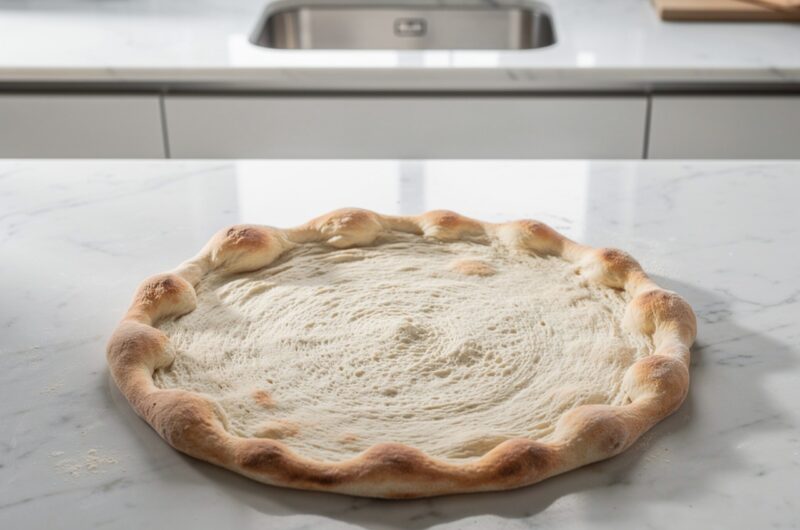
Easy Homemade Pizza Dough Recipe
8 slices
servings15
minutes12
minutes195
kcal90
2
hoursA simple, reliable pizza dough that produces a crispy, golden crust with a satisfying chew. Perfect for weekend family dinners, build-your-own pizza nights, or any occasion that calls for real, from-scratch pizza.
Ingredients
Dough Base:
3 ½ cups (440g) all-purpose flour or bread flour
1 packet (2 ¼ tsp) active dry yeast
1 tsp granulated sugar
1 ¼ cups (300ml) warm water (100–110°F)
2 tbsp extra-virgin olive oil
1 ½ tsp fine sea salt
Directions
- Combine warm water, sugar, and yeast in a large bowl. Let sit 5–10 minutes until foamy.
- Stir in olive oil and salt, then add flour one cup at a time until a shaggy dough forms.
- Turn onto a floured surface and knead for 8–10 minutes until smooth and elastic.
- Place in an oiled bowl, cover, and let rise in a warm spot for 1 to 1 ½ hours until doubled.
- Punch down, divide into two balls, and rest 10–15 minutes.
- Preheat oven to 475°F (245°C) for at least 30 minutes.
- Stretch each dough ball into a 12-inch round on an oiled baking sheet.
- Add toppings and bake 12–15 minutes until the crust is deep golden and cheese is bubbling.