The Coziest French Toast Recipe That’ll Make Your Mornings Feel Like a Hug
My grandmother never measured anything. She’d crack two eggs into a shallow bowl, splash in some milk, dust in a pinch of cinnamon, and drop a thick slice of bread into the pan like she’d done it a thousand times — because she had. The smell alone was enough to pull everyone out of bed. That golden, vanilla-kissed aroma curling through the house on a Saturday morning is one of the clearest food memories I carry with me.
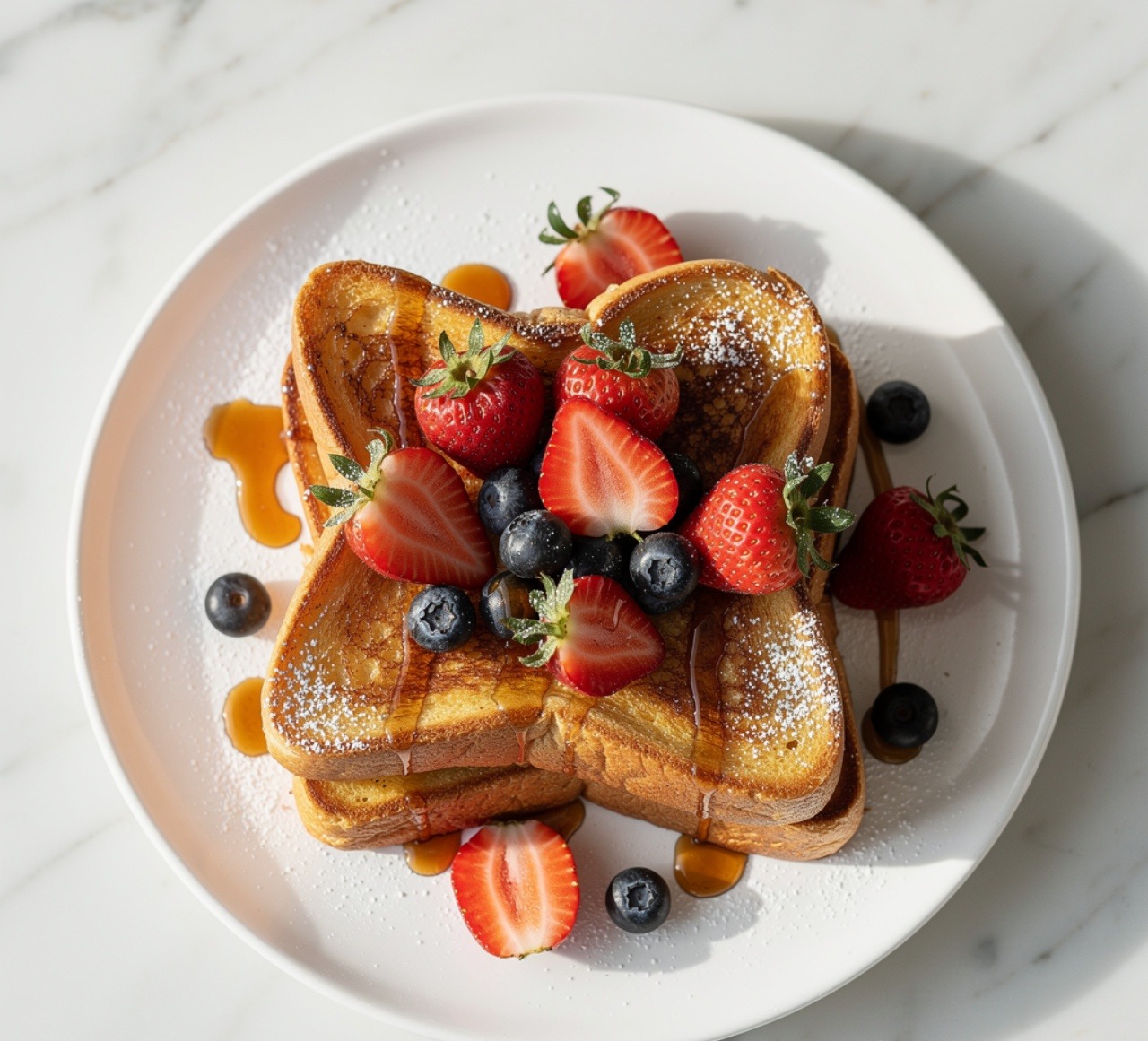
Each bite is everything you want from a proper breakfast: crispy, caramelized edges giving way to a soft, custardy center with just the right hint of sweetness and warm spice. The outside has that satisfying golden crust, the inside stays tender and rich, and when you drizzle real maple syrup on top? It pools into every ridge and soaks down into that pillowy bread like it belongs there.
This classic French toast is the kind of recipe that works for absolutely everything — lazy Sunday mornings, a cozy holiday brunch, feeding a hungry crowd at a potluck breakfast spread, or just treating yourself after a long week. It’s as at home on a festive holiday table as it is on your kitchen counter at 8am in your pajamas. Once you try this homemade French toast, you’ll wonder why you ever skipped breakfast.
Why You’ll Love This Recipe
It Tastes Like Pure Comfort
There’s a reason this dish has endured for centuries. The combination of cinnamon, vanilla, and golden-fried bread hits every single comfort note. It’s warm, sweet, and satisfying without being heavy.
The Texture Is Absolutely Perfect
The custard soak creates a soft, egg-rich interior while the butter in the pan builds that crave-worthy crispy outer layer. You get both in every single bite.
It Comes Together in Under 20 Minutes
No special equipment, no advanced technique, no waiting. This is a true weekday-friendly recipe that delivers serious flavor with minimal effort and a short ingredient list.
The Whole Family Will Ask for Seconds
Kids love it, adults love it, and picky eaters always come around once they see that golden stack on the plate. It’s one of those crowd-pleasing dishes that never disappoints.
Classic Flavor With a Bakery-Worthy Twist
Using thick-cut brioche or challah bread instead of sandwich bread makes a noticeable difference. The bread absorbs the custard beautifully and stays pillowy without going soggy — a small upgrade with a big payoff.
Ingredients
For the Custard Soak
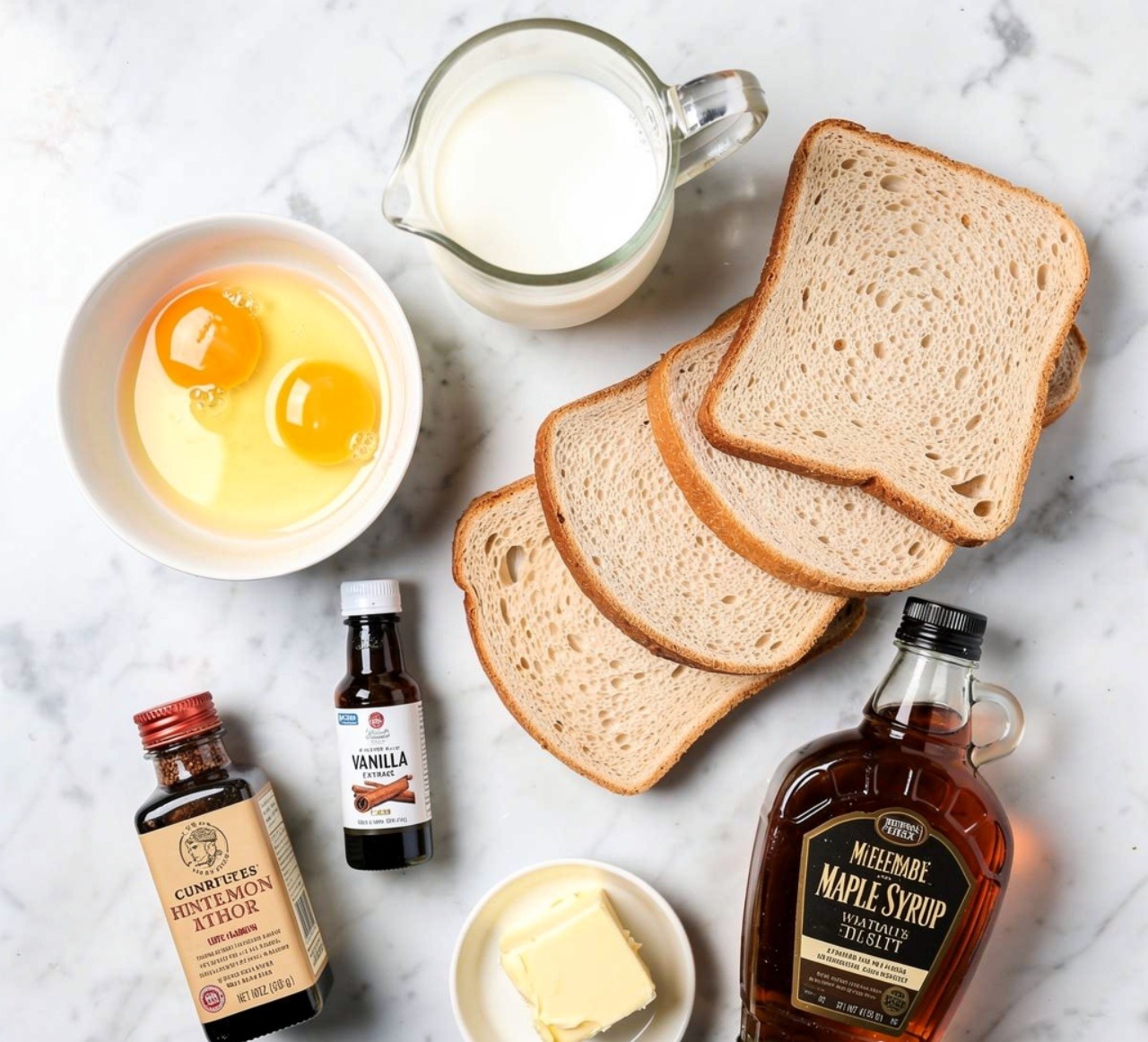
- 3 large eggs (room temperature preferred)
- ¾ cup whole milk (or half-and-half for extra richness)
- 1 tbsp granulated sugar
- 1 tsp pure vanilla extract (not imitation — the flavor difference is real)
- 1 tsp ground cinnamon
- ¼ tsp ground nutmeg (freshly grated adds warmth, but pre-ground works fine)
- Pinch of salt
For the Bread
- 6 thick slices brioche, challah, or Texas toast (about ¾ to 1 inch thick — thin sandwich bread goes soggy too easily)
- 2 tbsp unsalted butter (divided, for frying — don’t skip this)
For Serving (Optional but Encouraged)
- Pure maple syrup
- Powdered sugar for dusting
- Fresh berries or sliced banana
- A dollop of whipped cream or crème fraîche
The custard soak is the soul of this recipe — the eggs give richness and structure, the milk keeps it tender, and the cinnamon and vanilla round everything out into that unmistakably cozy, warm flavor you’re after.
How to Make French Toast Recipe — Step-by-Step
Step 1: Whisk the Custard
Crack the eggs into a wide, shallow bowl — a pie dish or pasta bowl works perfectly. Add the milk, sugar, vanilla, cinnamon, nutmeg, and salt, then whisk vigorously until fully combined and slightly frothy. The mixture should look uniform in color with no streaks of egg white. Don’t worry if a few bubbles form on top — that’s totally normal and won’t affect your results.
Step 2: Warm Your Pan
Set a large non-stick skillet or cast iron pan over medium heat. Let it warm for about 1–2 minutes before adding butter. You want the pan hot enough that the butter sizzles and foams gently when it hits the surface — but not so hot that it browns immediately. If your butter turns dark brown in under 10 seconds, lower the heat slightly.
Step 3: Soak the Bread
Place one or two slices of bread into the custard mixture and let them soak for 20–30 seconds per side. Press gently with a fork so the bread absorbs evenly. Thick brioche can handle a slightly longer soak — up to 45 seconds per side. Don’t worry if the bread looks very wet going into the pan; that custard will cook into the bread and create that gorgeous soft center.
Step 4: Cook Until Golden
Add ½ tablespoon of butter to the pan, then lay the soaked bread in. Cook undisturbed for 2–3 minutes on the first side until you see a deep golden-brown crust forming at the edges. Flip carefully and cook another 2 minutes on the second side. The bread should look evenly golden all over and feel slightly firm when pressed — not squishy. Work in batches and add fresh butter for each round.
Step 5: Serve Immediately
Transfer finished slices to a warm plate (or a low oven at 200°F to keep warm while you finish the batch). Dust with powdered sugar, stack generously, drizzle with real maple syrup, and serve while still hot. The contrast of the crispy edges against the warm, soft center is best enjoyed the moment it hits the plate.
Perfecting This Recipe
- Use day-old bread whenever possible. Slightly stale bread is drier and absorbs the custard more evenly without getting soggy.
- Thick slices are non-negotiable for the best texture. Anything thinner than ½ inch will soak through too fast and fall apart.
- Whole milk or half-and-half produces a noticeably richer custard than skim milk. The fat content matters here.
- Don’t rush the soak. Giving the bread adequate time to absorb the egg mixture is what creates that custardy, pudding-like interior.
- Keep the heat at medium throughout. High heat will burn the outside before the inside cooks through.
- Replace the butter between batches so every slice gets that clean, golden fry without any burned residue affecting flavor.
- Let the cooked slices rest for 60 seconds before serving — they firm up slightly and the center sets beautifully.
Common Mistakes to Avoid
- Using thin sandwich bread — It soaks through in seconds and tears apart in the pan. Always go for a sturdy, thick-cut loaf like brioche or Texas toast.
- Not whisking the custard thoroughly — Unmixed egg whites create streaky, rubbery patches on the bread. Whisk until the mixture is completely smooth and uniform.
- Cooking on too-high heat — You’ll end up with a dark, almost burnt crust and a wet, undercooked interior. Medium heat gives you control and an even golden finish.
- Overcrowding the pan — Cramming in too many slices drops the pan temperature and causes steaming instead of frying. Fry in small batches with enough space between each piece.
- Skipping the butter between batches — The residual heat burns off previous butter quickly. Fresh butter for each round keeps flavor clean and ensures proper browning.
Add Your Touch
- Swap cinnamon and nutmeg for cardamom and orange zest for a fragrant, Moroccan-inspired version
- Stir 1 tbsp of cream cheese into the custard for an ultra-rich, New York-style flavor
- Add a teaspoon of espresso powder to the egg mixture for a subtle mocha note that pairs beautifully with maple syrup
- Use coconut milk in place of dairy milk for a tropical twist
- Stuff two slices with Nutella and sliced strawberries before soaking, then cook as a filled “sandwich” version
- Roll finished slices in cinnamon sugar straight out of the pan for a churro-inspired coating
- Top with sautéed cinnamon apples or a warm berry compote instead of plain syrup
Visit Also: Fried Rice
What to Serve With This
- Crispy bacon or breakfast sausage — The salty, savory contrast cuts through the sweetness perfectly.
- Scrambled eggs — A protein-forward side that rounds out the plate into a proper, balanced breakfast.
- Fresh fruit salad — Bright, acidic fruit like raspberries or citrus segments wake up the palate alongside the rich custard.
- Freshly brewed coffee or a café au lait — Absolutely non-negotiable. The bitterness of coffee is the ideal companion to sweet, syrupy French toast.
- A mimosa or fresh orange juice — For weekend brunch, a glass of something bubbly alongside a golden stack of French toast is as good as mornings get.
Storing and Serving
Fridge:
Store cooled leftovers in an airtight container or wrapped tightly in foil for up to 3 days. Layer parchment between slices to prevent sticking.
Freezer:
Freeze individual slices in a single layer on a baking sheet until solid, then transfer to a zip-top freezer bag. Keeps well for up to 2 months. Quality stays best within the first month.
Reheating:
Skip the microwave — it makes the bread rubbery. Instead, reheat in a skillet over medium-low heat for 2–3 minutes per side, or in a 350°F oven for 8–10 minutes until warmed through and the edges crisp back up.
Make-Ahead Tip:
Whisk the custard the night before and refrigerate it covered. In the morning, soak and cook fresh — it takes less than 20 minutes from fridge to plate.
Servings:
This recipe makes approximately 6 thick slices, serving 2–3 people generously.
Nutrition (Approximate Per Serving — 2 slices)
- Calories: 320
- Total Fat: 14g
- Saturated Fat: 7g
- Carbohydrates: 38g
- Sugar: 11g
- Protein: 10g
- Sodium: 290mg
Nutritional values are approximate and may vary based on specific ingredients and brands used.
Chef’s Helpful Tips
- Room temperature eggs blend more smoothly into the custard and help the mixture coat the bread more evenly — take them out 15 minutes before you start.
- A cast iron skillet holds heat more consistently than most non-stick pans, which means more even browning and less need to adjust the flame.
- To get clean, picture-perfect slices when serving, cut with a serrated bread knife in a single sawing motion rather than pressing straight down.
- If your French toast turns out too eggy in flavor, you likely soaked the bread too long or used a ratio with too many eggs. Stick to 3 eggs per ¾ cup of milk for a balanced custard.
- If the center feels underdone after frying, place the slices on a baking sheet and finish in a 325°F oven for 5 minutes — they’ll cook through without burning the outside.
Frequently Asked Questions
Q1. Can I make this French Toast Recipe without dairy milk?
Absolutely — oat milk and full-fat coconut milk are both excellent swaps and produce a very similar texture. Almond milk works too, though the custard will be slightly thinner. Avoid rice milk as it’s too watery to create a proper soak.
Q2. What type of bread works best if I don’t have brioche?
Texas toast, challah, sourdough, or even a thick-cut white sandwich bread all work beautifully. The key is thickness — you want at least ¾ inch so the bread holds its structure through the soak and fry without falling apart.
Q3. Is this recipe beginner-friendly?
It genuinely is one of the most beginner-friendly breakfasts out there. As long as you keep the heat at medium and don’t rush the soak, you’ll get great results on your very first try. There’s very little that can go wrong.
Q4. Can I make this ahead for a brunch party?
Yes — cook all the slices, let them cool, and refrigerate in a single layer. Before serving, reheat on a baking sheet at 375°F for about 8 minutes. They come back beautifully and you won’t be stuck at the stove while your guests are waiting.
Q5. Can I freeze leftovers?
Definitely. Freeze in a single layer first so the slices don’t stick together, then transfer to a freezer bag once solid. Reheat straight from frozen in a 350°F oven for 12–15 minutes and they’ll taste nearly as good as fresh off the pan.
Conclusion
There’s something quietly powerful about a recipe this simple bringing so much joy to a table. This French Toast Recipe isn’t trying to be complicated or trendy — it’s just honest, delicious food made with care, the kind that reminds you why cooking for the people you love is always worth it. Whether you’re making it for a slow Sunday with nowhere to be or pulling it together on a weekday morning when time is short, it delivers every single time.
So get out your skillet, grab that loaf of bread, and give this a go. Make it yours — add the orange zest, skip the nutmeg, pile on the berries, or keep it classic with just maple syrup and powdered sugar. However you serve it, I really hope it brings the same warmth to your kitchen that it’s always brought to mine.
Fluffy Golden French Toast Recipe
Course: Trending Recipes2–3
servings5
minutes12
minutes320
kcal20
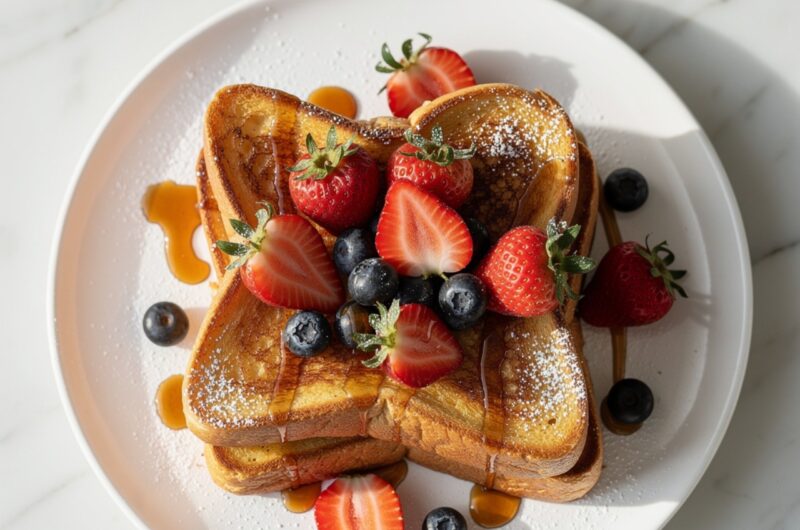
minutesA rich, custardy French Toast Recipe made with thick-cut bread soaked in a cinnamon-vanilla egg mixture and pan-fried to golden perfection. Perfect for weekend brunch, holiday mornings, or anytime you need a comforting breakfast in under 20 minutes.
Ingredients
Custard Soak:
3 large eggs
¾ cup whole milk
1 tbsp granulated sugar
1 tsp pure vanilla extract
1 tsp ground cinnamon
¼ tsp ground nutmeg
Pinch of salt
Bread:
6 thick slices brioche, challah, or Texas toast
2 tbsp unsalted butter, divided
To Serve:
Maple syrup, powdered sugar, fresh berries
Directions
- Whisk eggs, milk, sugar, vanilla, cinnamon, nutmeg, and salt in a wide shallow bowl until smooth and uniform.
- Heat a non-stick skillet over medium heat for 1–2 minutes.
- Soak bread slices for 20–45 seconds per side, pressing gently to absorb.
- Melt ½ tbsp butter in the pan, add soaked bread, and cook 2–3 minutes per side until deep golden.
- Repeat with remaining slices, adding fresh butter each batch.
- Serve immediately with maple syrup and toppings of choice.