Fresh, Vibrant Greek Salad That Tastes Like a Summer Escape
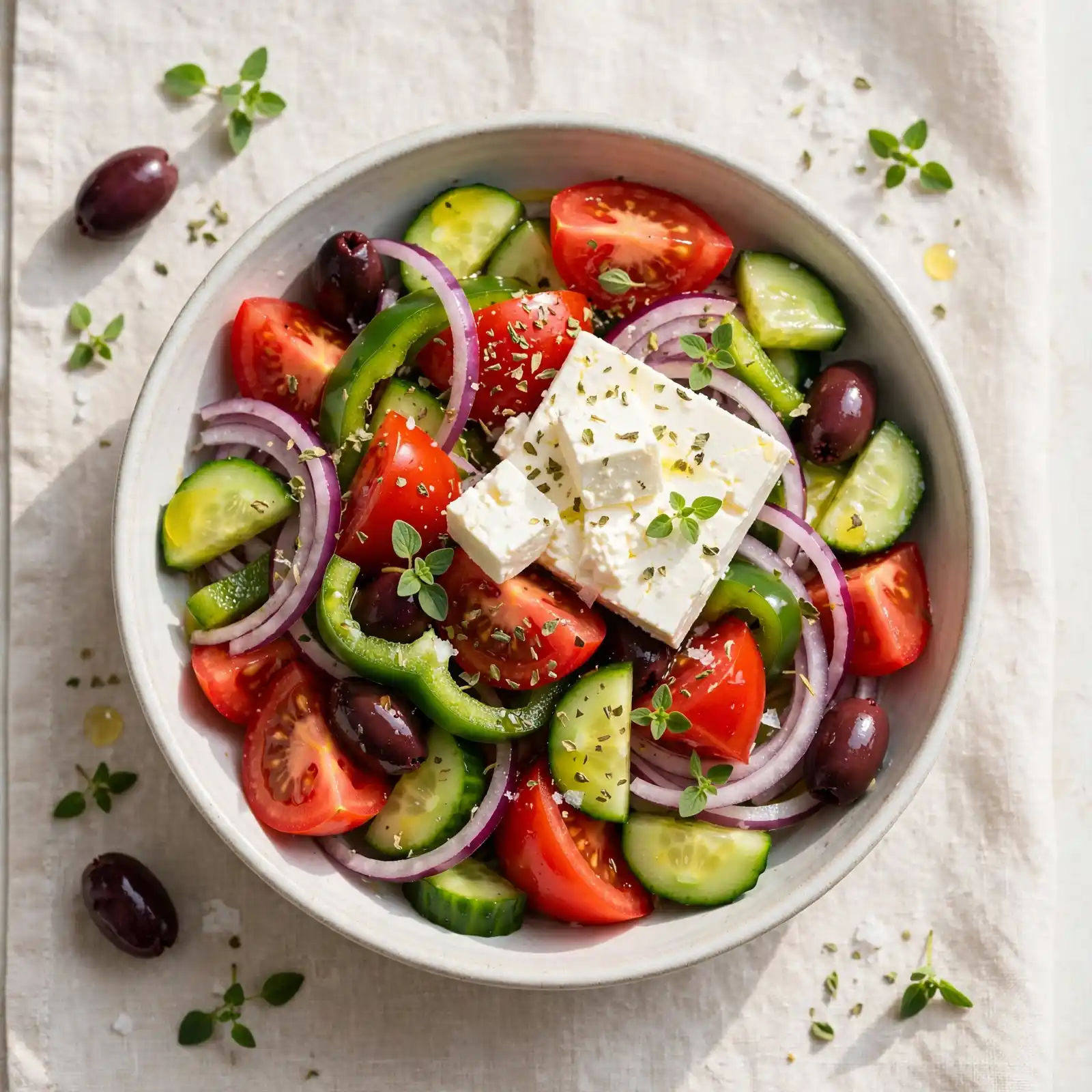
Picture this: a table set outside, the air still warm from the afternoon sun, a cold glass of something refreshing in your hand — and a big bowl of Greek Salad sitting right in the center, glistening with olive oil and dotted with snowy white feta. That was every summer Sunday at my grandmother’s table, and one bite of this salad still takes me straight back there.
Every element earns its place. The cucumbers are cool and crisp, the tomatoes burst with juicy sweetness, the olives bring a briny punch, and the red onion adds just enough sharp bite to keep everything interesting. Then that dressing — olive oil, red wine vinegar, dried oregano — pulls it all together in the most effortless, sun-soaked way.
This is the kind of recipe that works for a lazy Tuesday dinner just as easily as it does for a holiday spread or a neighborhood potluck. It comes together in under fifteen minutes, requires zero cooking, and somehow manages to taste even better after it sits for a bit. Whether you’re serving it alongside grilled chicken or packing it up as a fresh vegetable salad for a picnic, this one is a keeper. Let’s get into it.
Why You’ll Love Greek Salad
It’s Packed With Bold, Balanced Flavor
Every bite brings a little something different — salty, tangy, herby, and fresh all at once. The olives and feta handle the salt, the dressing handles the tang, and the oregano ties everything together in that unmistakably Mediterranean way.
The Textures Are Incredibly Satisfying
You get crunch from the cucumbers, creaminess from the feta, chewiness from the olives, and a juicy burst from the tomatoes. It never feels one-note or flat — every forkful is an experience.
It Comes Together in Minutes
No cooking, no complicated prep, no fancy equipment. Just chop, toss, drizzle, and done. On a busy weeknight, this is the kind of recipe that feels like a gift.
It’s Built for Sharing
This Greek Salad is naturally crowd-friendly — it scales up beautifully, looks gorgeous on the table, and holds up well over time, making it ideal for potlucks, cookouts, or big family gatherings.
It’s a Classic That Never Gets Old
There’s a reason this salad has been a staple for generations. Simple, honest ingredients treated with respect. No shortcuts, no gimmicks — just a recipe that delivers every single time with its own quiet, confident charm.
Ingredients
For the Salad Base
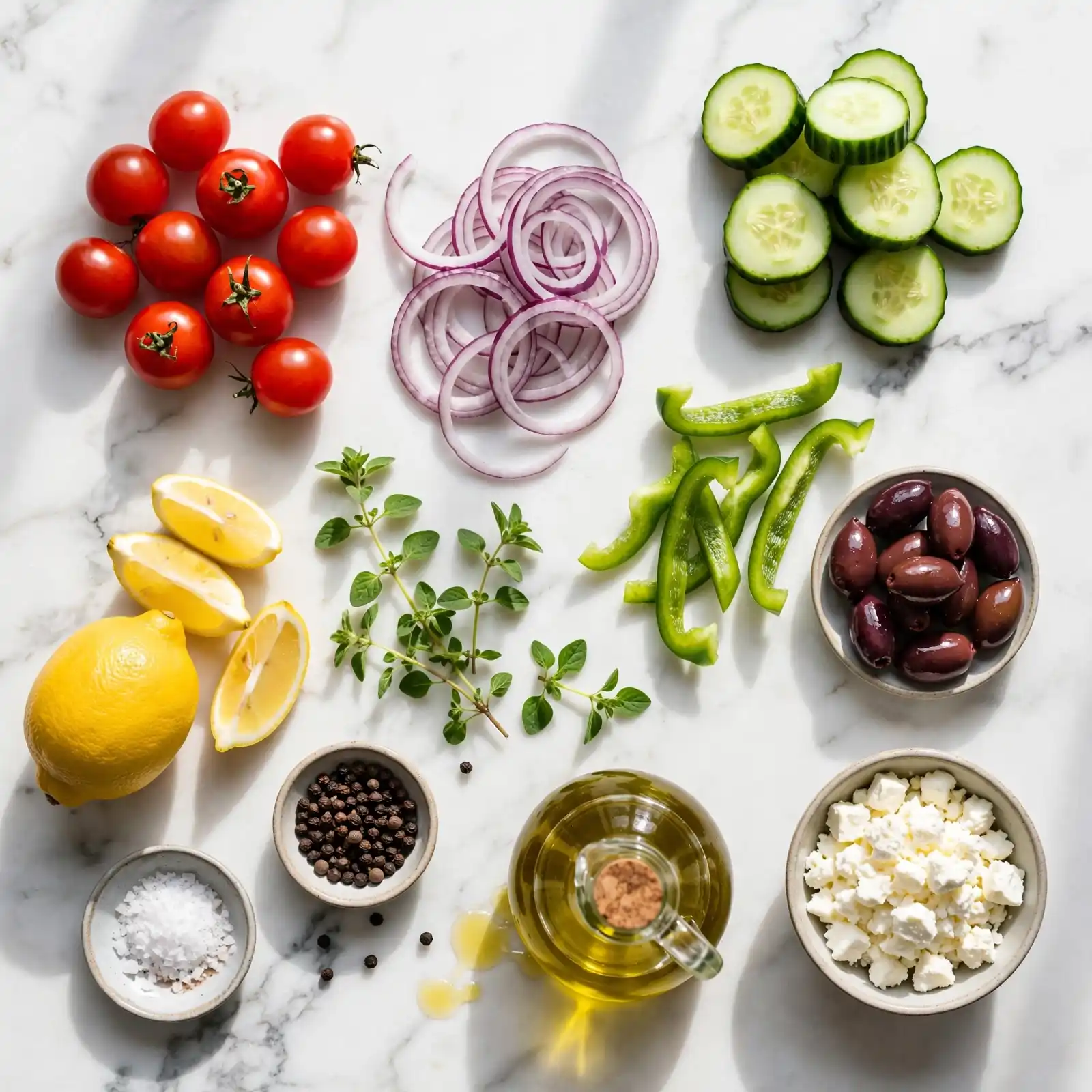
- 2 large English cucumbers, cut into half-moons or chunky wedges
- 3 medium ripe tomatoes, cut into wedges (or 1½ cups cherry tomatoes, halved)
- ½ medium red onion, thinly sliced
- 1 large green bell pepper, cut into strips or chunks
- 1 cup Kalamata olives (pitted, whole or halved)
- 6 oz block feta cheese (cut into cubes or crumbled — block feta is creamier and holds up better)
For the Dressing
- 3 tbsp extra-virgin olive oil (use a good quality one — it really shows here)
- 1½ tbsp red wine vinegar
- 1 tsp dried oregano (Greek or Mediterranean oregano has the best flavor)
- ½ tsp garlic powder (or 1 small garlic clove, finely grated)
- ¼ tsp sea salt, or to taste
- ¼ tsp freshly cracked black pepper
For Finishing
- A pinch of dried oregano, sprinkled over the top just before serving
- A drizzle of extra-virgin olive oil over the feta
The magic of this salad is in how the salty feta softens slightly in the dressing while the cucumbers and peppers stay crisp — creating a contrast of textures and flavors that keeps every bite interesting.
How to Make Greek Salad — Step-by-Step
Step 1: Prep Your Vegetables
Wash and dry all your vegetables thoroughly — any excess water will dilute the dressing. Cut the cucumbers into thick half-moons (about ½ inch), slice the tomatoes into generous wedges, and slice the red onion as thin as you can manage. Thin onion slices mellow out faster in the dressing and blend into each bite rather than overpowering it. Don’t worry if your cuts aren’t perfectly uniform — rustic and chunky is actually the goal here.
Step 2: Mix the Dressing
In a small bowl or jar, whisk together the olive oil, red wine vinegar, dried oregano, garlic powder, salt, and pepper. Give it a taste before adding it to the salad — the dressing should be punchy and well-seasoned on its own, because it’ll be coating a lot of vegetables. Don’t worry if it looks like a lot of oil; it coats everything beautifully and brings the whole salad together.
Step 3: Combine the Salad
Add the cucumbers, tomatoes, red onion, bell pepper, and olives to a large serving bowl. Pour the dressing over the top and toss gently — you want everything coated without breaking up the tomatoes. At this point, the salad should smell absolutely vibrant, herby, and fresh.
Step 4: Add the Feta
Lay the feta cubes on top rather than mixing them in. This keeps the pieces intact so you get those gorgeous creamy bites scattered throughout. Drizzle a little extra olive oil over the feta and sprinkle with a pinch more dried oregano for that classic finish.
Step 5: Rest and Serve
Let the salad sit for at least 10 minutes before serving — this is where the magic happens. The tomatoes release a little of their juice, which mingles with the dressing and creates a beautiful pool of flavored liquid at the bottom of the bowl. Don’t worry if the onions look a little pink and softened; that’s exactly right. Give it one final gentle toss and serve immediately.
Perfecting This Recipe
- Use full-fat, block feta packed in brine. Pre-crumbled feta is drier and saltier — block feta has a creamier texture that melts slightly into the dressing.
- Kalamata olives are non-negotiable for the most authentic flavor. Their fruity, tangy depth is what separates a great Greek Salad from a good one.
- Don’t skip the resting time. Even 10 minutes allows the vegetables to release their juices and absorb the dressing, making every bite more flavorful.
- Salt your cucumbers lightly and let them sit for 5 minutes if they tend to be watery, then pat dry before adding to the bowl.
- Red wine vinegar is the classic choice and can’t really be swapped without changing the character of the salad. Avoid balsamic — it’s too sweet and will overpower everything.
- Dress the salad right before resting, not hours ahead. Tomatoes turn mushy and cucumbers lose their snap if they sit in dressing for too long.
Common Mistakes to Avoid
- Using pre-crumbled feta — It’s drier, saltier, and crumbles to dust the moment it hits the dressing. Always buy a block of feta in brine for the best texture and flavor.
- Cutting vegetables too small — Greek Salad is rustic and chunky by nature. Tiny pieces get soggy quickly and lose that satisfying bite. Keep your cuts generous.
- Overdressing the salad — Too much dressing and the vegetables drown. Start with the amount listed and adjust after tasting — the tomatoes add natural liquid as they sit.
- Skipping the resting step — Tossing and serving immediately means you miss the beautiful melding of flavors. Even a short 10-minute rest makes a noticeable difference.
- Using dried-out or low-quality olives — This is not the place for canned black olives. Good Kalamata olives from a jar or olive bar are worth every penny.
Add Your Touch
- Add a handful of capers for an extra briny, punchy kick.
- Swap the green bell pepper for a roasted red pepper for a slightly sweeter, smokier variation.
- Toss in some cooked chickpeas or white beans to turn this into a more filling, protein-packed meal.
- Add sliced pepperoncini or banana peppers for gentle heat.
- Fresh herbs like flat-leaf parsley or fresh mint make a beautiful seasonal addition.
- For a Horiatiki salad experience (the traditional Greek village version), serve the feta as one whole slab on top rather than cubed.
- Use heirloom tomatoes in summer for an even more colorful, flavor-forward version.
Visit Also: Chocolate Covered Strawberries
What to Serve With This
This salad was practically made to sit next to grilled lemon chicken or herb-marinated lamb chops — the freshness cuts right through the richness of the meat. It’s equally at home beside warm pita bread with hummus and tzatziki for a full Mediterranean spread. A simple pasta with olive oil and garlic is a lovely vegetarian pairing. For drinks, a crisp white wine like a Sauvignon Blanc or a cold sparkling water with lemon complements the flavors perfectly. And honestly, a slice of crusty sourdough for mopping up the dressing at the bottom of the bowl is never a bad idea.
Storing and Serving
Fridge: Store leftovers in an airtight container in the refrigerator for up to 2 days. The vegetables will soften slightly over time, but the flavors only deepen. Keep undressed portions separate if you’re planning ahead.
Freezer: Freezing is not recommended — cucumber, tomato, and feta do not freeze well and will turn mushy and watery upon thawing.
Reheating: This salad is served cold or at room temperature — no reheating needed. Pull it from the fridge about 15 minutes before serving to take the chill off.
Make-Ahead Tip: You can chop all the vegetables and make the dressing up to 24 hours ahead — just store them separately and combine 15–20 minutes before serving. Add the feta at the last moment.
Servings: This recipe serves 4 as a side salad or 2 as a generous main dish.
Nutrition (Approximate Per Serving)
- Calories: 280
- Total Fat: 22g
- Saturated Fat: 7g
- Carbohydrates: 14g
- Sugar: 7g
- Protein: 8g
- Sodium: 720mg
Nutritional values are approximate and may vary based on specific ingredients and brands used.
Chef’s Helpful Tips
- Let your feta come to room temperature before serving — it softens slightly and the flavor blooms beautifully.
- If your tomatoes aren’t very ripe, sprinkle them with a small pinch of sugar before adding to the bowl. It draws out their natural sweetness.
- To get clean, even slices of red onion without tears, chill it in the fridge for 30 minutes beforehand.
- Always use good quality extra-virgin olive oil here. It’s one of the main flavoring elements, not just a carrier, so it really does matter.
- If the salad tastes flat after tossing, it almost always needs more salt or a splash more red wine vinegar — taste and adjust before serving.
Frequently Asked Questions
Q1. Can I make Greek Salad ahead of time? Yes, but with a small caveat — prep and store the vegetables and dressing separately, then combine about 15–20 minutes before serving. This keeps everything crisp and fresh. If you dress it too far ahead, the cucumbers and tomatoes release too much liquid and the salad becomes watery.
Q2. What can I substitute if I don’t like olives? You can simply leave them out — the salad still works beautifully without them. If you want to replace that briny element, try capers instead. They’re smaller but bring a similar tangy, salty punch without the texture of a whole olive.
Q3. Is this salad beginner-friendly? Absolutely — it might actually be one of the most beginner-friendly recipes out there. There’s no cooking involved, no tricky techniques, and very little that can go wrong. If you can use a knife and toss a bowl, you can make this perfectly.
Q4. Can I bring this to a potluck? It’s honestly one of the best potluck dishes you can bring. It travels well, doesn’t need to be warm, looks impressive, and appeals to almost everyone. Just dress it at the venue rather than before traveling so it stays at its best.
Q5. Can I freeze leftover Greek Salad? Unfortunately not — freezing turns the cucumbers mushy, the tomatoes watery, and the feta grainy. Leftovers keep well in the fridge for up to 2 days, but this is one recipe best made fresh and enjoyed within a couple of days.
Conclusion
There is something wonderfully timeless about a great Greek Salad — the way it manages to be both simple and deeply satisfying, both light and full of flavor. It doesn’t demand much from you, and in return, it gives you something that feels genuinely special every single time. Whether you’re making it for a quick solo lunch, a weeknight side dish, or a big summer gathering, it has that rare ability to feel perfectly suited to the moment.
So go ahead — grab a block of good feta, pick up some Kalamata olives, and make this your own. Add the capers if you’re feeling adventurous, serve it with whatever’s on the grill, and don’t forget to mop up that gorgeous pool of oregano-scented dressing at the bottom of the bowl. That part might just be the best bite of all.
The Most Vibrant Greek Salad
Course: Trending Recipes4
servings12
minutes280
kcal10
22
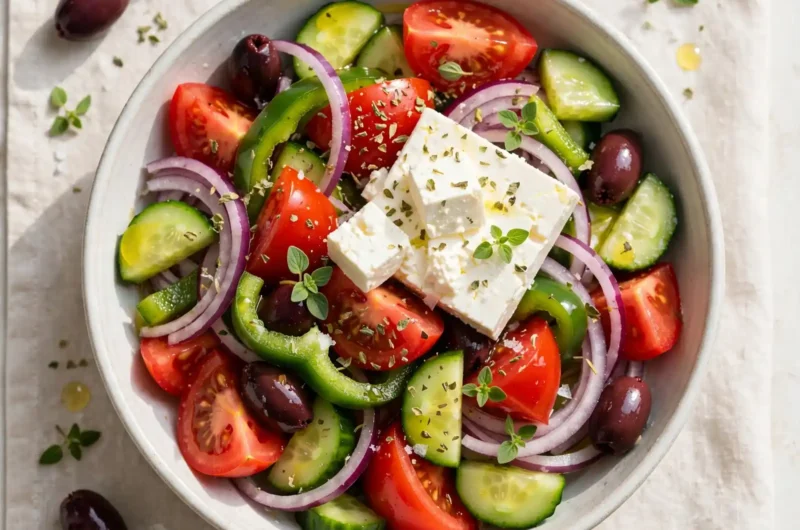
minutesA crisp, refreshing Mediterranean-style salad packed with chunky vegetables, creamy feta, and Kalamata olives — all tossed in a bright oregano and red wine vinegar dressing. Perfect for weeknight dinners, potlucks, and everything in between.
Ingredients
For the Salad Base:
2 large English cucumbers, cut into half-moons
3 medium ripe tomatoes, cut into wedges
½ medium red onion, thinly sliced
1 large green bell pepper, cut into strips or chunks
1 cup Kalamata olives, pitted
6 oz block feta cheese, cut into cubes
For the Dressing:
3 tbsp extra-virgin olive oil
1½ tbsp red wine vinegar
1 tsp dried oregano
½ tsp garlic powder
¼ tsp sea salt
¼ tsp freshly cracked black pepper
For Finishing:
Pinch of dried oregano
Drizzle of extra-virgin olive oil
Directions
- Wash and dry all vegetables. Cut cucumbers into thick half-moons, tomatoes into wedges, and onion into thin slices.
- Whisk together olive oil, red wine vinegar, oregano, garlic powder, salt, and pepper in a small bowl.
- Add cucumbers, tomatoes, red onion, bell pepper, and olives to a large bowl. Pour dressing over and toss gently to coat.
- Arrange feta cubes on top. Drizzle with extra olive oil and sprinkle with oregano.
- Let rest 10 minutes, then toss gently once more and serve.