The Most Irresistible Baklava Recipe That Will Make You Famous at Every Gathering
The first time I made baklava from scratch, it was a cold Sunday afternoon and my grandmother was standing behind me with her arms crossed, watching every brush of butter like a hawk. “More butter,” she kept saying. “Always more butter.” I didn’t understand then — I do now.
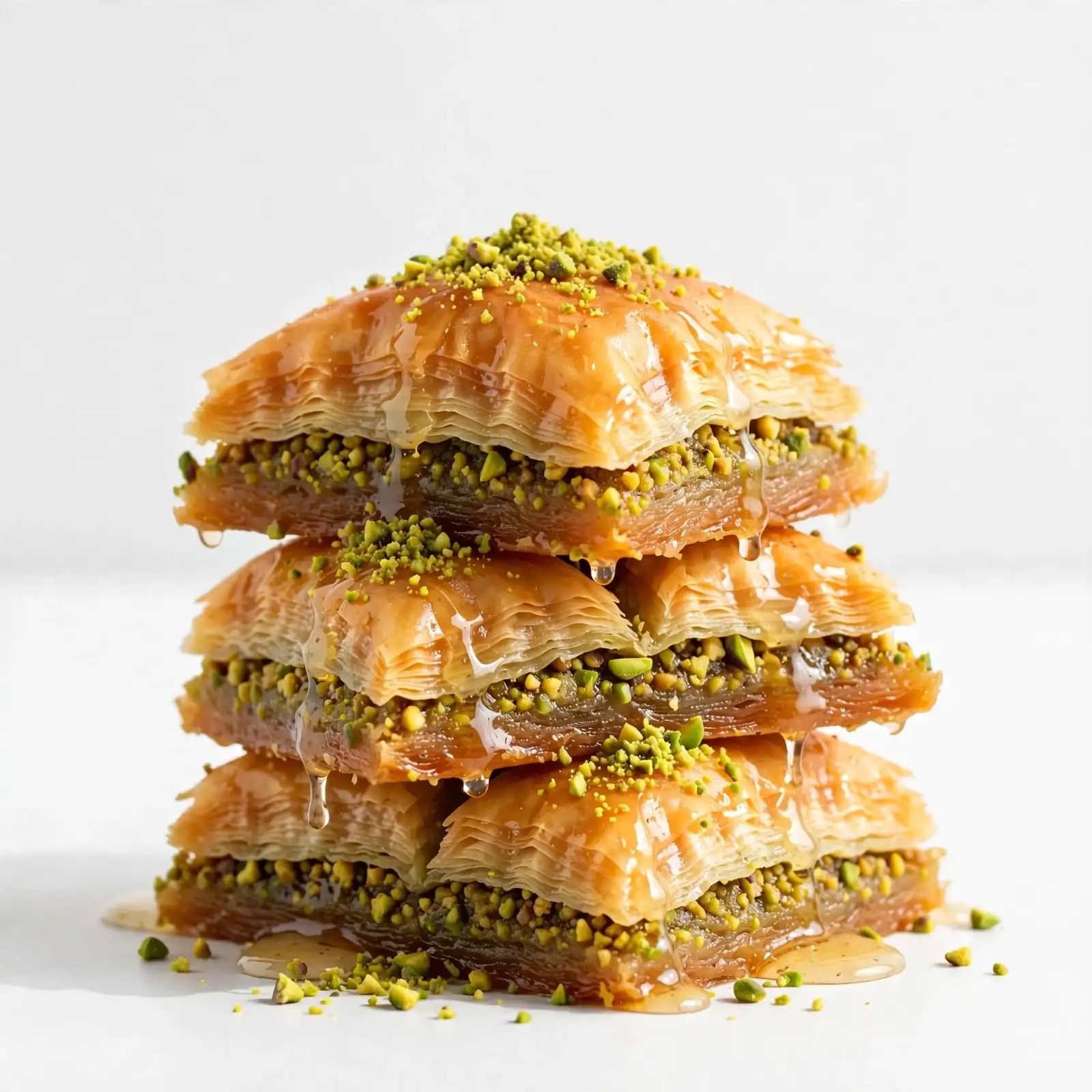
Pull a piece of this apart and you’ll hear it before you taste it: that sharp, satisfying shatter of paper-thin phyllo giving way to a sticky-sweet filling of toasted walnuts and pistachios, all of it soaked through with warm honey syrup kissed with rose water and cinnamon. The contrast is everything — crunchy and soft, floral and nutty, rich but somehow never too much.
This homemade baklava is the kind of recipe people request by name. It’s stunning enough to bring to holiday parties, special enough for Eid or Christmas dessert tables, and genuinely simple enough that a first-timer can pull it off on a quiet weekend afternoon. Whether you’ve been searching for an authentic Middle Eastern dessert to add to your repertoire or you’re just ready to try something truly spectacular, this is the one.
Why You’ll Love This Recipe
The Flavor Is Deeply Layered and Balanced
Every bite carries warmth from cinnamon, earthiness from walnuts, a bright floral note from rose water, and the deep sweetness of honey. Nothing overpowers anything else — it’s a perfectly tuned combination.
The Texture Is Pure Contrast
Shatteringly crisp phyllo on the outside, soft and chewy nut filling in the middle, syrup soaked all the way through without turning it soggy. Getting that balance right is what sets a great baklava recipe apart.
It’s More Beginner-Friendly Than It Looks
Working with phyllo dough sounds intimidating, but once you understand a few key techniques — keeping it covered, brushing generously with butter, not stressing about small tears — it becomes surprisingly manageable.
It’s Made for Sharing and Impressing
This yields a full 9×13 pan of baklava, enough to serve a crowd. It’s the dessert people linger over, cut a second piece of, and ask you to bring again next time.
It Actually Gets Better the Next Day
The syrup continues to soak and settle overnight, which means the flavor deepens and the texture becomes even more luxurious. It’s the rare dessert that rewards patience.
Ingredients
For the Nut Filling
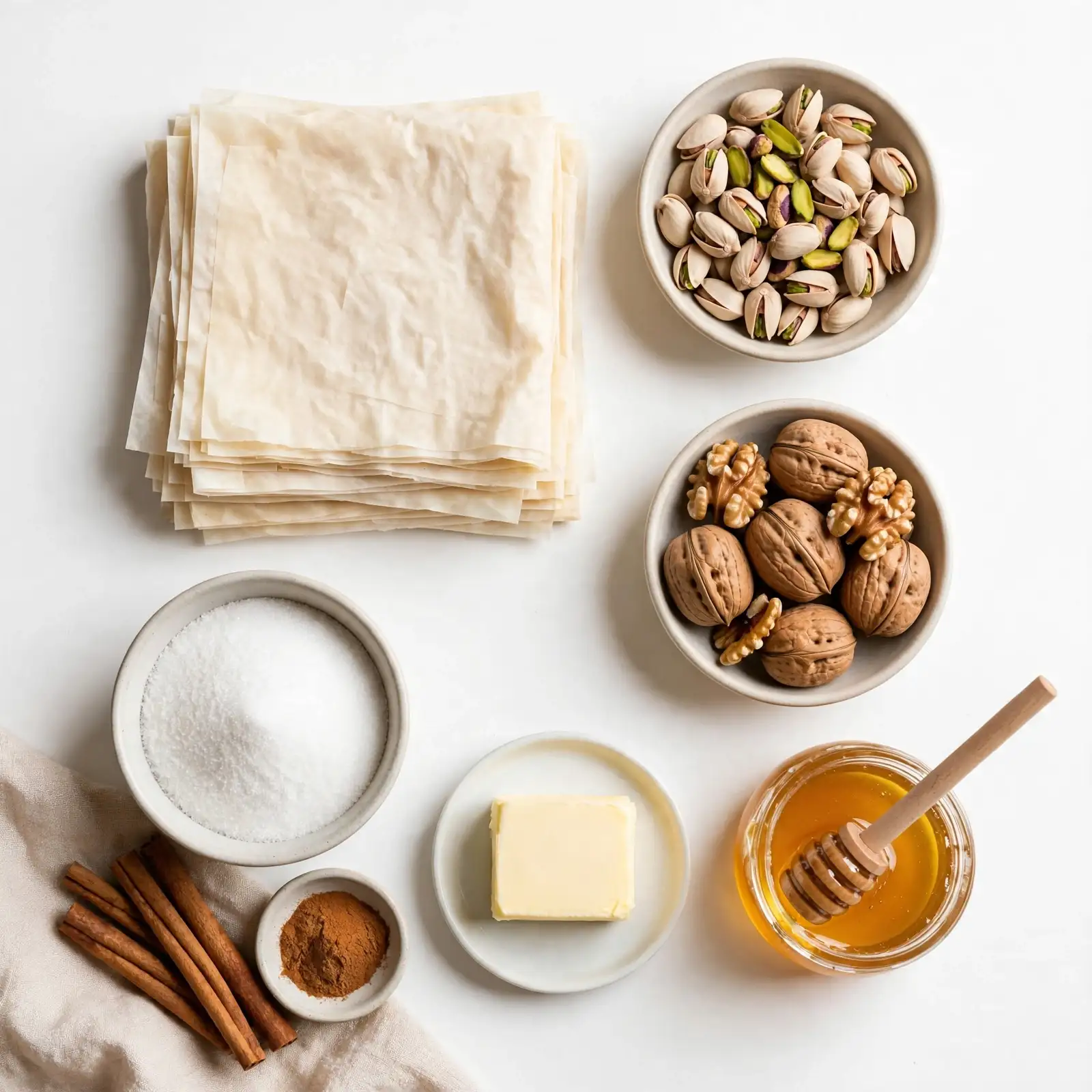
- 2 cups raw walnuts, finely chopped
- 1 cup shelled pistachios, finely chopped
- 2 tablespoons granulated sugar
- 1½ teaspoons ground cinnamon
- ¼ teaspoon ground cardamom
- ⅛ teaspoon fine sea salt
For the Phyllo Layers
- 1 lb (16 oz) package frozen phyllo dough, thawed overnight in the fridge
- 1½ cups (3 sticks) unsalted butter, melted and clarified (clarifying removes the milk solids and prevents burning)
For the Honey Syrup
- 1 cup water
- 1 cup granulated sugar
- ¾ cup pure honey (a mild variety like clover or wildflower works best)
- 2 tablespoons fresh lemon juice
- 1 teaspoon rose water (optional but highly recommended — adds a gentle floral depth)
- 1 cinnamon stick
- 3 whole cloves
The syrup is what makes this baklava recipe truly special — the honey and lemon keep it from being cloyingly sweet, while the cinnamon stick and cloves infuse a subtle spiced warmth that ties everything together.
How to Make Baklava — Step-by-Step
Step 1: Prepare Your Filling and Tools
Pulse the walnuts and pistachios in a food processor until finely chopped but not powdery — you want texture, not paste. Toss with sugar, cinnamon, cardamom, and salt. Set aside. Melt your butter and keep it warm. Unroll your phyllo dough and cover it immediately with a slightly damp kitchen towel — this is the single most important trick, since phyllo dries out within minutes and becomes impossible to work with.
Don’t worry if a few sheets tear when you unroll them — small tears are completely invisible once the baklava is assembled and baked.
Step 2: Layer the Bottom Phyllo
Brush the bottom and sides of a 9×13-inch baking pan generously with melted butter. Lay one sheet of phyllo flat in the pan, brush the entire surface with butter, then lay another sheet on top. Continue until you have 8–10 buttered layers. Be generous — this buttery base is what creates that golden, shatteringly crisp bottom.
Step 3: Add the Nut Filling
Spread roughly one-third of the nut mixture in an even layer over the phyllo base. Top with 4–5 buttered phyllo sheets, then another third of the nuts, then another 4–5 sheets and the final third of nuts. Finish with a final top layer of 8–10 buttered phyllo sheets, making sure the very top sheet gets a generous coating of butter — this is what turns a deep, burnished golden brown in the oven.
Don’t worry if your phyllo sheets are slightly bigger than the pan — just fold the edges in or trim them with kitchen scissors.
Step 4: Score and Bake
Using a sharp knife, cut the unbaked baklava into diamonds or squares, cutting all the way through to the bottom of the pan. This is essential — you cannot cut cleanly after baking. Bake at 325°F (165°C) for 45–55 minutes, until the top is a deep, even golden brown. The kitchen should smell intensely nutty and buttery. If it’s browning too fast, tent loosely with foil for the last 15 minutes.
Step 5: Make the Syrup and Soak
While the baklava bakes, combine water, sugar, honey, lemon juice, cinnamon stick, and cloves in a saucepan over medium heat. Stir until sugar dissolves, then simmer gently for 10 minutes without stirring. Remove from heat, discard the cinnamon stick and cloves, and stir in rose water. The moment the baklava comes out of the oven, pour the warm syrup slowly and evenly over the entire hot pan — you’ll hear it sizzle and hiss, which is exactly right.
Step 6: Rest and Serve
Allow the baklava to cool completely and uncovered at room temperature for at least 4 hours, ideally overnight. This rest period is non-negotiable — it gives the syrup time to soak into every layer and the texture time to set properly. Serve at room temperature in the pre-scored pieces.
Perfecting This Recipe
- Toast your nuts first for 5–6 minutes at 350°F before chopping — it deepens the flavor dramatically.
- Work quickly with phyllo — keep the unused stack covered at all times and don’t stop mid-layer to answer your phone.
- Use clarified butter (ghee) if possible; the higher smoke point means crispier, more evenly golden layers.
- Hot baklava, warm syrup — this temperature pairing ensures the syrup penetrates every layer without making things soggy. Cold syrup on hot baklava creates a steamed, soft texture instead.
- Cut before baking, not after — once baked, phyllo shatters when cut and makes a mess.
- Don’t cover while cooling — trapping steam makes the top layer soft instead of crisp.
Common Mistakes to Avoid
- Letting the phyllo dry out — Dry phyllo cracks, tears, and crumbles into a pile of nothing. Keep it covered with a damp towel from the moment you open the package.
- Skimping on butter — Under-buttered layers don’t crisp properly and can fuse together awkwardly. If in doubt, add more.
- Using cold syrup on hot baklava — This creates a steamed, soggy texture rather than a properly soaked one. Make the syrup right before the baklava comes out of the oven.
- Cutting after baking — Baked phyllo shatters under a knife. Always pre-score before it goes in the oven.
- Covering the pan while it cools — Steam gets trapped and turns the gorgeous, crisp top layer soft. Leave it fully uncovered until completely cool.
Add Your Touch
- Swap walnuts for pecans or blanched almonds for a Southern or Mediterranean spin.
- Add a tablespoon of orange zest to the syrup for a bright citrus note.
- Use all pistachios for a more traditional Turkish baklava flavor profile.
- Stir a tablespoon of tahini into the nut filling for a subtle, nutty depth.
- Replace rose water with orange blossom water for a different floral character.
- Add a pinch of ground cloves or nutmeg to the nut mixture for extra warmth.
- Drizzle the finished baklava with dark chocolate for a modern twist.
Visit Also: Chicken Noodle Soup Recipe
What to Serve With This
- Strong black tea or Turkish coffee — The bitterness cuts through the sweetness perfectly and is the classic pairing.
- A scoop of vanilla bean ice cream — Warm baklava plus cold ice cream is a genuinely wonderful combination.
- Fresh fruit plate — Sliced oranges or pomegranate seeds offer a fresh, tart contrast.
- Greek yogurt with honey — Light and tangy alongside the rich pastry.
- Mint tea — Bright, herbal, and refreshing — a lovely palate cleanser between bites.
Storing and Serving
Fridge:
Store in an airtight container at room temperature for up to 2 weeks. The flavor and texture actually improve over the first 2–3 days. Refrigerating is not recommended — it causes the phyllo to soften and lose its crispness.
Freezer:
Baklava freezes beautifully for up to 3 months. Freeze it in a single layer first, then transfer to an airtight container with parchment between layers. Thaw at room temperature for several hours before serving.
Reheating:
Baklava is best served at room temperature. If you prefer it slightly warm, place individual pieces on a baking sheet and warm at 300°F for 5–7 minutes. Avoid the microwave — it turns the phyllo chewy.
Make-Ahead Tip:
This is an ideal make-ahead dessert. Prepare it 1–2 days before your event, store uncovered or loosely tented at room temperature, and it will be at its absolute best by serving time.
Servings:
Makes approximately 24–30 pieces from a 9×13 pan, depending on how you cut it.
Nutrition (Approximate Per Serving)
- Calories: 280
- Total Fat: 17g
- Saturated Fat: 6g
- Carbohydrates: 31g
- Sugar: 20g
- Protein: 4g
- Sodium: 95mg
Nutritional values are approximate and may vary based on specific ingredients and brands used.
Chef’s Helpful Tips
- Room temperature doesn’t apply here, but melted butter temperature does — keep it warm and fluid throughout assembly so it spreads easily without tearing the phyllo.
- Sharp knife = clean cuts — use a long, thin-bladed knife and press straight down rather than sawing, to avoid tearing the phyllo layers.
- Don’t rush the cool-down — 4 hours minimum, overnight ideally. The patience pays off enormously in texture and flavor.
- Honey quality matters — a good-quality, mild honey makes a noticeable difference in the syrup. Avoid strongly flavored honeys like buckwheat, which can overpower the delicate nut filling.
- If your top layer looks pale after 45 minutes, increase the temperature to 350°F for the final 5–10 minutes rather than extending bake time at a lower temp.
Frequently Asked Questions
Q1. Can I use store-bought phyllo dough?
Absolutely — most baklava, even in bakeries, is made with store-bought phyllo. Look for it in the freezer section, and always thaw it overnight in the refrigerator rather than on the counter so it stays pliable and doesn’t become gummy.
Q2. What does homemade baklava taste like compared to store-bought?
It’s genuinely in a different category. Store-bought versions are often over-sweetened and under-nutted, with a slightly waxy texture. Homemade baklava has real depth — the nuttiness comes through, the syrup is fragrant, and the contrast between the crisp layers and the chewy filling is far more pronounced.
Q3. Is this baklava recipe difficult for beginners?
It’s more of a patience project than a skill project. The techniques are simple — brush, layer, fill, repeat — and the only real learning curve is working quickly with phyllo. Follow the damp towel tip and you’ll be absolutely fine.
Q4. Can I make this ahead for a party or potluck?
It’s actually one of the best make-ahead desserts you can bring. Make it 1–2 days in advance, leave it uncovered at room temperature, and it will be perfectly settled and at peak flavor by the time you serve it.
Q5. Can I freeze this baklava recipe?
Yes, and it freezes remarkably well. Once fully cooled, freeze individual pieces on a tray, then transfer to a freezer bag or container. Thaw at room temperature for a few hours and it comes back almost exactly as it was — crisp, sticky, and delicious.
Conclusion
There’s a reason baklava has been made and shared across cultures for centuries — it’s one of those rare desserts that feels both festive and deeply comforting at the same time. This baklava recipe is a love letter to that tradition, built with simple ingredients, a little patience, and a whole lot of butter. Once you’ve made it at home, you’ll understand why nothing else quite compares.
So clear an afternoon, put on some music, and give yourself the pleasure of making something truly beautiful. Whether you serve it at a holiday table, bring it to a neighbor, or eat a piece standing over the kitchen counter at midnight — that first bite is always worth it. Make it yours, share it generously, and don’t be surprised when everyone asks for the recipe.
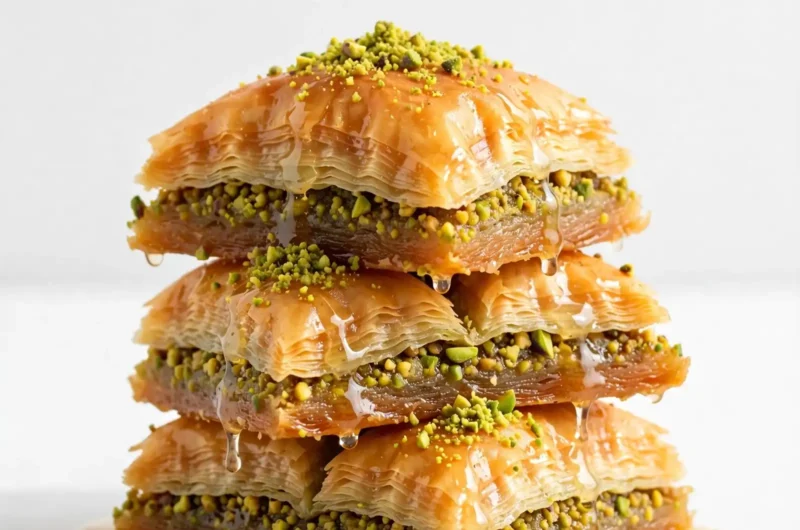
Classic Homemade Baklava
Course: Trending Recipes24–30 pieces
servings30
minutes50
minutes280 per serving
kcal240
minutes5
hours20
minutesShatteringly crisp phyllo dough layered with spiced walnuts and pistachios, soaked in honey and rose water syrup — the ultimate Middle Eastern dessert for celebrations, gatherings, or any moment that deserves something extraordinary.
Ingredients
Nut Filling:
2 cups raw walnuts, finely chopped
1 cup shelled pistachios, finely chopped
2 tablespoons granulated sugar
1½ teaspoons ground cinnamon
¼ teaspoon ground cardamom
⅛ teaspoon fine sea salt
Phyllo Layers:
1 lb (16 oz) frozen phyllo dough, thawed overnight
1½ cups (3 sticks) unsalted butter, melted and clarified
Honey Syrup:
1 cup water
1 cup granulated sugar
¾ cup pure honey
2 tablespoons fresh lemon juice
1 teaspoon rose water
1 cinnamon stick
3 whole cloves
Directions
- Preheat oven to 325°F (165°C). Melt butter and keep warm. Cover thawed phyllo with a damp towel.
- Pulse walnuts and pistachios until finely chopped. Toss with sugar, cinnamon, cardamom, and salt.
- Butter a 9×13 pan. Layer 8–10 sheets of phyllo, brushing each with melted butter.
- Spread one-third of the nut mixture evenly. Top with 4–5 buttered phyllo sheets. Repeat twice, finishing with 8–10 buttered phyllo sheets on top.
- Using a sharp knife, cut all the way through into diamond or square shapes before baking.
- Bake 45–55 minutes until deep golden brown.
- While baklava bakes, simmer syrup ingredients 10 minutes. Remove cinnamon stick and cloves. Stir in rose water.
- Pour hot syrup over hot baklava immediately out of the oven. Cool uncovered at least 4 hours before serving.