Soft and Fluffy Rainbow Cake That Makes Every Celebration Sweeter
Most rainbow cakes end up looking nothing like the vibrant, stacked slices you see in photos — the colors come out pale, the layers bleed into each other, or the cake itself bakes up dense and disappointing. The real problem is almost always a combination of overmixed batter and the wrong food coloring technique. This recipe takes care of both from the very first step, so your layers bake up tall, soft, and every bit as colorful as you imagined.
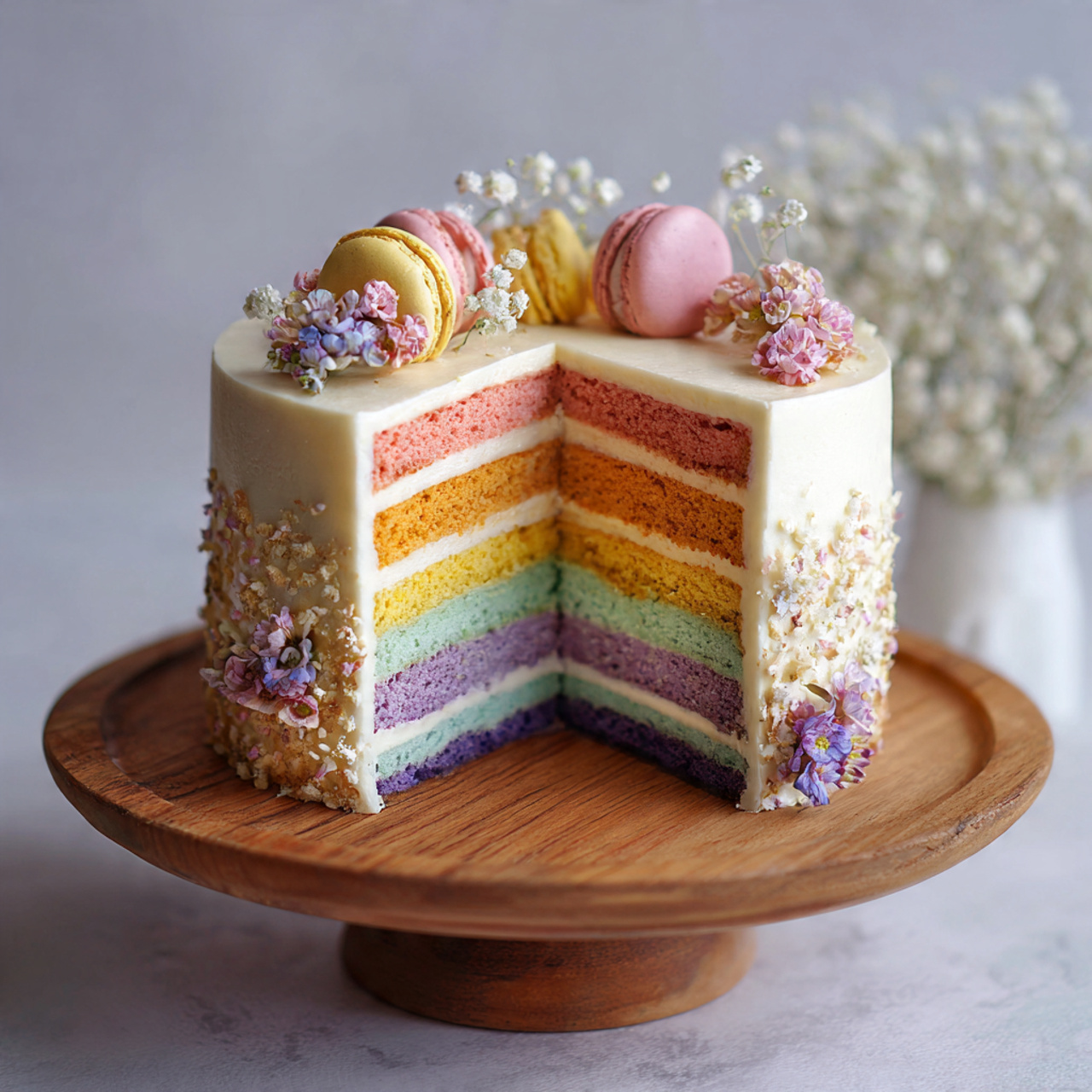
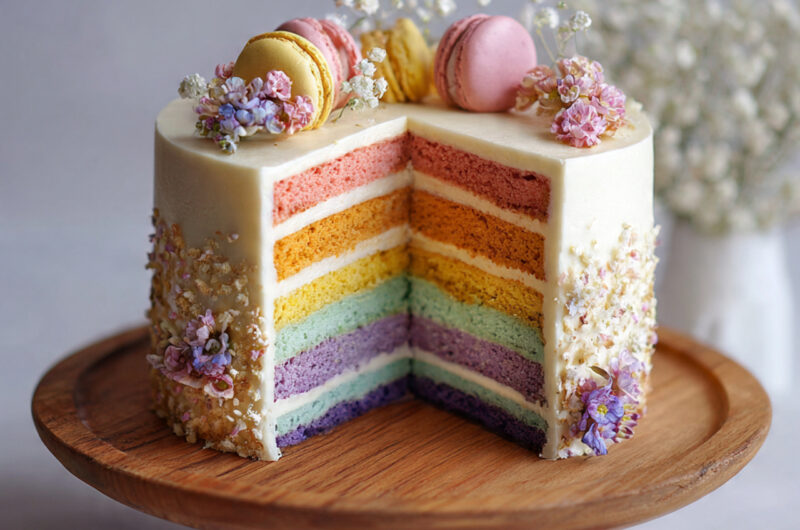
Picture slicing through a frosted cake and watching six bold, beautiful layers fan out — red, orange, yellow, green, blue, and purple, each one soft and tender with a fine, even crumb. The vanilla fragrance fills your kitchen while it bakes, and the flavor is that perfect balance of lightly sweet and buttery — rich enough to feel indulgent without ever feeling heavy. Every bite is moist, springy, and genuinely satisfying in a way that makes it hard to stop at just one slice.
This homemade rainbow cake is the kind of recipe you pull out for birthdays, bring to school celebrations, or make on a rainy weekend just because the kids deserve something magical. It works beautifully as a centerpiece for potlucks and holiday tables, and it’s easy enough for a busy weeknight if you bake the layers ahead of time. Whether you’re making this easy colorful layered cake for two or for a whole party, it scales beautifully — and once you see those first brilliant slices, you’ll understand exactly why it earns a permanent spot in your recipe collection.
Why You’ll Love This Recipe
The Flavor Is Lightly Sweet and Genuinely Satisfying
This isn’t just a cake that looks impressive — it tastes wonderful, too. The vanilla-forward batter is balanced and not overly sweet, which means it complements virtually any frosting you pair it with. Each layer has that classic homemade flavor that keeps people reaching for seconds.
Those Layers Are Seriously Soft
The batter is built around properly creamed butter, eggs, and whole milk, which gives every layer a fine, tender crumb that holds its color and shape after baking. You don’t get a dry or crumbly texture here — just soft, springy cake from top to bottom.
It’s More Approachable Than It Looks
Six layers sounds like a lot, but the process is far more straightforward than the result suggests. The batter comes together in one bowl, the colors are simply divided out, and the baking time is short. The impressive visual payoff far outweighs the effort involved.
It’s a Guaranteed Crowd-Pleaser
Bring this cake to a birthday party, potluck, or any gathering, and watch the room go quiet the moment it’s sliced. Both kids and adults are drawn to those bold, colorful layers — and the fact that it tastes as good as it looks makes it one of those rare recipes people request again and again.
The Recipe Is Completely Customizable
The base recipe is a blank canvas. You can change the frosting, swap the colors to suit a theme or season, fold extras into the batter, or scale the layers up or down to fit any occasion. It truly adapts to whatever you have in mind.
Ingredients
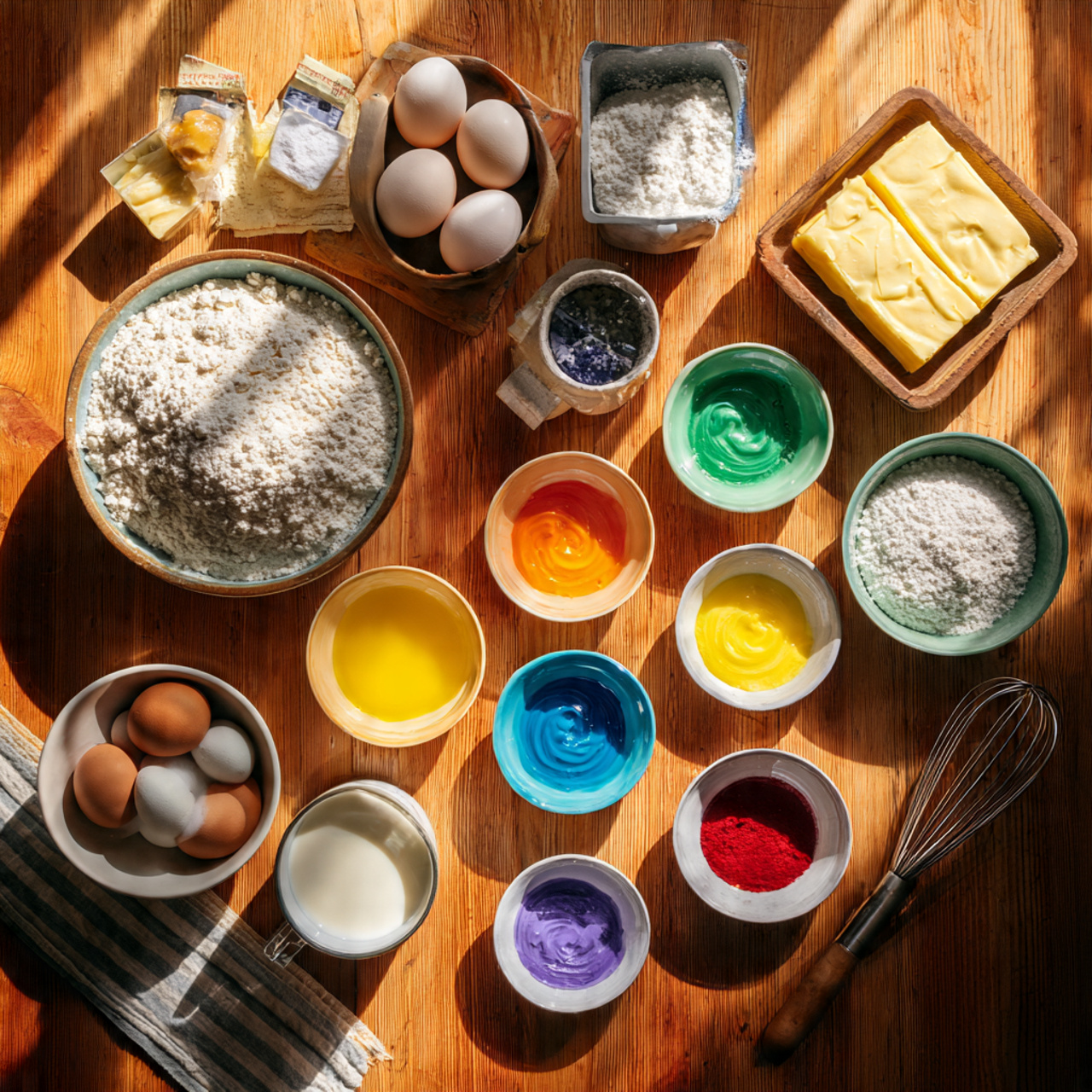
For the Cake Batter
- 2 cups all-purpose flour
- 1½ cups granulated sugar
- 1 cup unsalted butter, softened (room temperature is essential — cold butter won’t cream correctly)
- 4 large eggs
- 1 cup whole milk
- 2 tsp baking powder
- ½ tsp salt
- 2 tsp vanilla extract (pure, not imitation, for the cleanest, truest flavor)
- Food coloring in red, orange, yellow, green, blue, and purple (gel food coloring gives the most vibrant, true-to-color results without thinning the batter)
For the Frosting
Use your preferred frosting — a simple vanilla buttercream, cream cheese frosting, or lightly sweetened whipped cream all pair beautifully with these layers. Prepare enough to frost between each layer and coat the outside of the cake generously.
The batter’s gentle vanilla sweetness plays well against the slight tang of cream cheese frosting, while a classic buttercream keeps things simple and lets the colors take center stage. Whichever you choose, the layers hold their structure well once cooled and stack cleanly for a polished finish.
How to Make Rainbow Cake — Step-by-Step
Step 1: Prepare Your Pans and Preheat the Oven
Preheat your oven to 350°F (175°C) and line six 8-inch cake pans with parchment paper circles, then lightly grease the sides. If you only have two or three pans, plan to bake in batches and keep any leftover batter covered at room temperature while you wait — it holds up well for up to an hour.
Step 2: Cream the Butter and Sugar Until Pale and Fluffy
Beat the softened butter and granulated sugar together on medium-high speed until the mixture turns pale, light, and noticeably increased in volume — this takes about 3 to 4 minutes. Don’t rush this step; the air you work into the mixture here is what gives each layer its soft, airy lift. Add the eggs one at a time, mixing well after each addition, then stir in the vanilla extract until combined.
Step 3: Add the Dry Ingredients and Milk
With the mixer on low, alternately add the flour mixture — flour, baking powder, and salt combined — and the milk, beginning and ending with the flour. Mix until just combined and the batter looks smooth. Don’t worry if the batter seems a little thicker than what you’re used to for cake; that’s completely normal here and actually helps the layers hold their height during baking.
Step 4: Divide, Color, and Pour
Divide the batter as evenly as possible into six bowls — a kitchen scale makes this precise, but eyeballing works fine too. Stir the food coloring into each bowl until the color is uniform, starting with a small amount and building up gradually. Don’t worry if the colors look a shade or two darker in the bowl than you want; they naturally lighten slightly during baking, so go bolder than you think you need to.
Step 5: Bake Until the Tops Are Set and a Toothpick Comes Out Clean
Pour each colored batter into its prepared pan and smooth the top gently with a spatula. Bake for 18 to 22 minutes, checking at the 18-minute mark. The tops should feel set and spring back lightly when pressed, and a toothpick inserted in the center should come out clean with no wet batter attached. Let the layers cool in their pans for 10 minutes, then turn them out onto a wire rack to cool completely before assembling.
Step 6: Stack, Frost, and Reveal
Once all six layers are completely cool, stack them in rainbow order — red on the bottom, through to purple on top — spreading an even layer of frosting between each one. Apply a thin crumb coat all around the outside and chill the cake for about 15 minutes, then add your final layer of frosting. When you’re ready to serve, use a serrated knife for slicing and watch those colors reveal themselves. Don’t worry if the first slice isn’t perfectly clean — every slice after that will be neater and more beautiful.
Perfecting This Recipe
- Cream butter and sugar longer than feels necessary. Three to four full minutes of beating creates the aeration that gives these layers their soft, springy crumb.
- Always use room-temperature eggs and milk alongside the softened butter. Cold ingredients resist combining evenly and can affect the final texture of each layer.
- Level any domed layers before stacking. A serrated knife drawn gently across the top creates a flat surface that makes the whole stack more stable and easier to frost evenly.
- Cool the layers all the way before assembling. Even a slightly warm layer will melt your frosting and cause the stack to shift, no matter how carefully you work.
- Use gel food coloring rather than liquid varieties. Liquid coloring adds extra water to the batter and can dilute the color’s vibrancy; gel gives you bold, true hues without changing the batter’s consistency at all.
- Mix only until the flour disappears after adding it. Overworking the batter develops gluten and leads to a tougher, denser crumb — stop as soon as everything looks smooth.
Common Mistakes to Avoid
Starting with cold butter — Room-temperature butter is the foundation of this recipe. Cold butter won’t cream properly with the sugar, and the resulting batter will be heavy and poorly aerated. Leave it out for at least an hour before you begin.
Skipping the parchment paper — Greasing alone isn’t enough for these thin layers. Parchment circles ensure each layer releases cleanly and intact, which is especially important when you have six of them to stack.
Adding too much food coloring at once — Going all-in on color from the start can overwhelm the batter or push the hue in unexpected directions. Build the color gradually, check after each addition, and adjust from there.
Assembling before the layers are fully cooled — Warm layers cause frosting to melt and the stack to slide, making even a carefully built cake look messy. Give the layers plenty of time on the wire rack before you start building.
Overbaking — Thin layers bake much faster than a standard single-layer cake, and they can go from done to dry in just a few extra minutes. Start checking at the 18-minute mark and pull them as soon as the toothpick test passes.
Add Your Touch
- Replace vanilla extract with almond or orange extract for a flavor twist that pairs especially well with cream cheese or citrus frosting.
- Spread a thin layer of fruit jam or lemon curd between a few layers for a fruity surprise inside every slice.
- Use a cream cheese frosting between the layers for a gentle tang that contrasts beautifully with the sweet vanilla cake.
- Try a pastel color palette for spring celebrations, baby showers, or Easter gatherings — soft hues are just as striking when the cake is sliced.
- Reduce the recipe to three layers for a smaller, more casual version using any color combination you like.
- Replace the butter with melted coconut oil for a subtle tropical undertone that pairs nicely with a mango or coconut whipped cream frosting.
Visit Also: Enhypen Jake
What to Serve With This
A scoop of vanilla bean ice cream alongside a slice turns dessert into a full celebration moment.
Fresh berries — particularly strawberries or raspberries — add a bright, tart contrast to the sweet vanilla layers and double down on the color.
A warm cup of tea or milky coffee is a natural companion for an afternoon slice and keeps things cozy and unhurried.
For birthdays and parties, a fruity punch or homemade lemonade keeps the festive energy going beautifully alongside the cake.
Light sparkling water with fresh mint is a simple, refreshing option that doesn’t compete with the cake’s sweetness.
Storing and Serving
Fridge Store the frosted cake covered or in an airtight container in the refrigerator for up to 5 days. The layers stay moist and the colors remain vibrant throughout.
Freezer Freeze individual cake layers (unfrosted) for up to 2 months. Wrap each layer tightly in plastic wrap, then in aluminum foil, and store flat. Thaw in the refrigerator overnight before assembling and frosting.
Reheating The assembled cake doesn’t need reheating, but if you prefer a slightly warmer slice, microwave a single piece for 10 to 15 seconds to refresh the crumb without melting the frosting.
Make-Ahead Tip Bake all six layers up to two days in advance and store them tightly wrapped at room temperature or in the refrigerator. Frost and assemble on the day you plan to serve for the freshest colors and cleanest presentation.
Servings This recipe yields approximately 12 generous slices.
Nutrition (Approximate Per Serving)
- Calories: 450
- Total Fat: 22g
- Saturated Fat: 13g
- Carbohydrates: 58g
- Sugar: 38g
- Protein: 6g
- Sodium: 220mg
Nutritional values are approximate and may vary based on specific ingredients and brands used.
Chef’s Helpful Tips
- Always start with room-temperature butter, eggs, and milk. Cold dairy and eggs don’t incorporate smoothly, which can lead to an uneven batter and affect the final texture of each layer.
- Check your layers at the 18-minute mark — these are thin, and they can go from perfectly done to overbaked in just a few extra minutes.
- For clean, even slices, refrigerate the assembled cake for at least 30 minutes before cutting, then use a sharp serrated knife warmed briefly under hot water and wiped dry between each cut.
- Gel food coloring is worth using for this recipe specifically — it produces bolder, truer colors without adding excess liquid to the batter, and a small jar goes a long way.
- If a layer domed during baking, use a serrated knife to level the top before stacking. A flat layer is easier to frost, more stable, and makes the finished cake look far more polished.
Frequently Asked Questions
Q1. Can I make this rainbow cake ahead of time? Absolutely — the layers freeze beautifully when wrapped individually in plastic and foil, and they can also be baked up to two days in advance and stored at room temperature. Frost and assemble on the day you plan to serve for the most vibrant colors and freshest texture.
Q2. Is this recipe beginner-friendly? Yes, very much so. The batter comes together in one bowl using a straightforward creaming method, and each step is easy to follow. The trickiest part is patience — letting the layers cool completely before assembling — but that’s more about timing than skill.
Q3. Can I substitute the eggs in this recipe? You can use four egg replacers or an equivalent amount of unsweetened applesauce. If using applesauce, reduce the milk slightly since applesauce adds its own moisture. The texture will be a little denser, but the cake still bakes up nicely.
Q4. What does this cake taste like compared to a regular vanilla layer cake? The flavor is essentially the same as a well-made vanilla layer cake — lightly sweet, buttery, and soft. The food coloring doesn’t affect the taste at all. The real difference is entirely visual: those six vibrant layers make every single slice feel like a little celebration.
Q5. Can I freeze the finished cake once it’s frosted? It’s best to freeze the layers before frosting, since assembled cakes with buttercream don’t freeze as cleanly. If you do need to freeze the finished cake, wrap it well and thaw in the refrigerator overnight — it’ll still taste great, though the frosting texture may shift slightly.
Conclusion
There’s something genuinely lovely about a cake that makes everyone gasp the moment it’s sliced. This rainbow cake does exactly that — and then it delivers on flavor, too. It’s the kind of dessert that turns an ordinary Tuesday into something worth remembering, whether you’re celebrating a birthday, a milestone, or simply the fact that someone you love deserves a little color today. The layers are forgiving, the recipe is approachable, and the result is always worth every minute spent in the kitchen.
Make it your own — try different frostings, play with the color palette, or tuck something extra between the layers to make each slice a little discovery. Share it at your next gathering, or keep it to yourselves and enjoy it slice by slice over the week. Either way, you’ll find yourself coming back to this recipe every time you want to make something that feels genuinely special.
Rainbow Cake
Course: Cake, Trending Cake12
servings20
minutes20
minutes450
kcal55
minutesSix soft, vibrant layers in every color of the rainbow, stacked high and frosted to a beautiful finish. This easy, crowd-pleasing cake is perfect for birthdays, celebrations, and any day that deserves a little extra color on the table.
Ingredients
For the Cake Batter:
2 cups all-purpose flour
1½ cups granulated sugar
1 cup unsalted butter, softened
4 large eggs
1 cup whole milk
2 tsp baking powder
½ tsp salt
2 tsp vanilla extract
Food coloring: red, orange, yellow, green, blue, and purple
For the Frosting:
Your preferred frosting — vanilla buttercream, cream cheese frosting, or whipped cream (enough to fill between layers and coat the outside)
Directions
- Preheat oven to 350°F (175°C). Line six 8-inch cake pans with parchment and lightly grease the sides.
- Beat softened butter and sugar until pale and fluffy, about 3–4 minutes. Add eggs one at a time, then stir in vanilla.
- Alternately add the flour mixture (flour, baking powder, salt) and milk, beginning and ending with flour. Mix until just combined.
- Divide batter evenly into six bowls. Stir food coloring into each until vibrant, building color gradually.
- Pour each colored batter into its prepared pan. Bake 18–22 minutes or until a toothpick comes out clean.
- Cool in pans for 10 minutes, then transfer to a wire rack and cool completely.
- Stack layers in rainbow order with frosting between each. Apply a crumb coat, chill 15 minutes, then add the final layer of frosting.