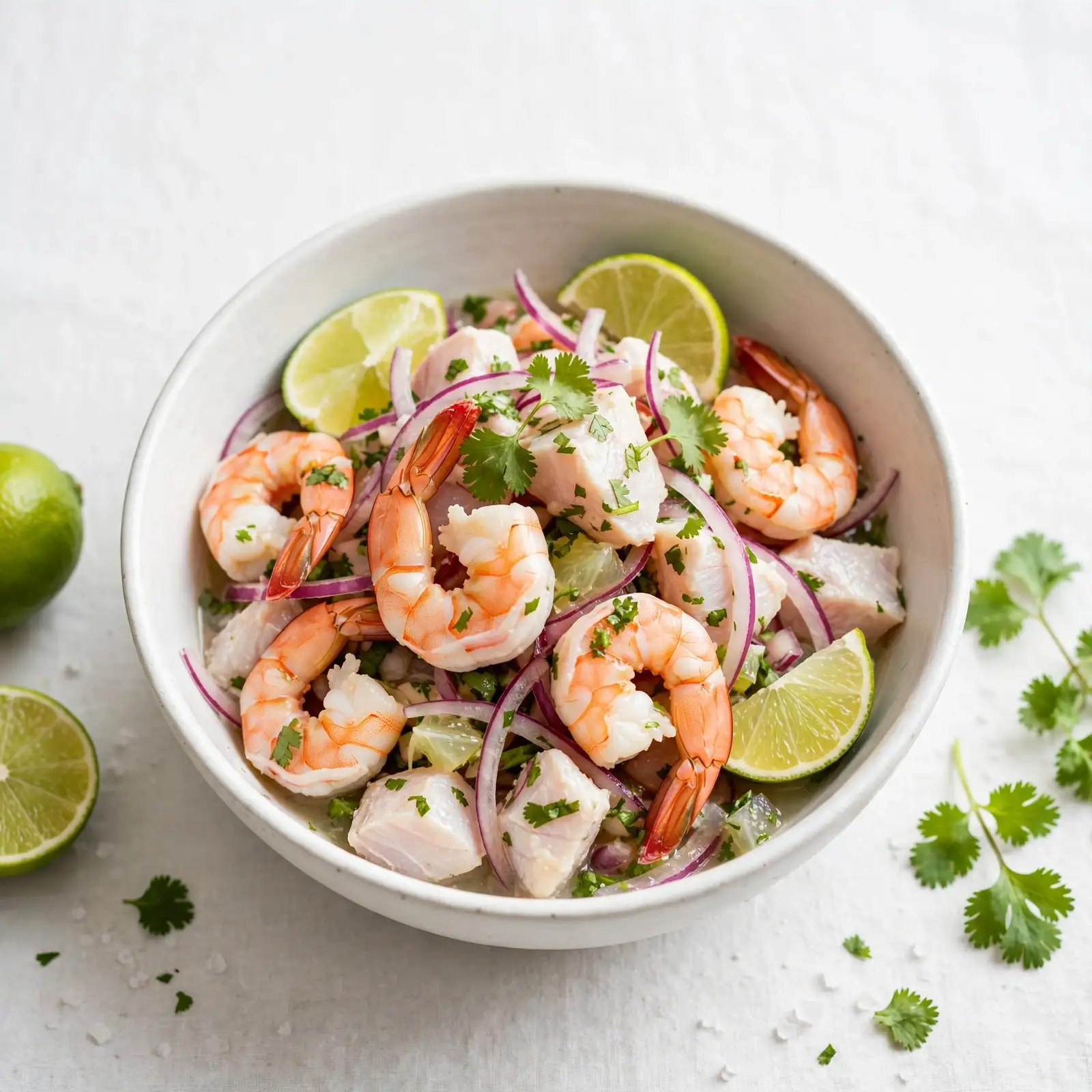
Bright and Zesty Ceviche Recipe That Tastes Like a Day at the Beach
My grandmother kept a small ceramic bowl in the fridge every summer — always filled with something cold, lime-soaked, and impossibly fresh. The first time I reached in and popped a piece of citrus-cured fish into my mouth at age seven, I didn’t have a word for it. Now I do: ceviche. And I’ve been chasing that flavor ever since.
This dish hits every note at once — the tender, silky bite of fresh fish, the sharp pop of lime, the crunch of red onion, the slow heat of jalapeño creeping in after you’ve already swallowed. The cilantro ties it all together with that herby, almost floral finish that makes you reach for another chip before you’ve finished thinking about the last bite.
Whether you’re hosting a backyard cookout, bringing something impressive to a potluck, or just want a light, refreshing dinner on a hot weeknight, this ceviche recipe delivers every single time. It’s the kind of dish that feels effortlessly fancy but comes together in under 30 minutes of hands-on time. Naturally, it doubles beautifully as a make-ahead option — the longer it sits, the more the flavors bloom.
Why You’ll Love This Recipe
It’s Explosively Bright and Flavorful
Every ingredient in this dish earns its place. Fresh lime juice does double duty — curing the fish and building the tangy backbone that makes each bite sing. The balance of acid, heat, and herby freshness is the kind of thing people ask you about at parties.
The Texture Is Absolutely Perfect
When done right, the fish becomes opaque and just-firm on the outside while staying delicate and silky in the center. It’s not rubbery. It’s not mushy. It’s exactly what fresh ceviche should feel like in your mouth.
It Requires Zero Cooking
There’s no stove, no oven, and no sweating over a hot pan. The lime juice does all the work. This makes it one of the most genuinely easy ceviche dishes you’ll ever pull off — and it frees you up to focus on your guests or the rest of your menu.
It’s Built for a Crowd
Scale it up easily, serve it in a big bowl with chips on the side, and watch it disappear in minutes. This is the kind of appetizer that makes people think you spent hours in the kitchen — when really you spent 25 minutes and went to relax.
Classic Flavor With a Personality of Its Own
While this recipe stays true to the spirit of Mexican ceviche — fresh fish, lime, onion, chile, cilantro — a few small choices (the ratio of lime to fish, the resting time, a touch of orange juice) elevate it from basic to genuinely memorable.
Ingredients
For the Fish Base
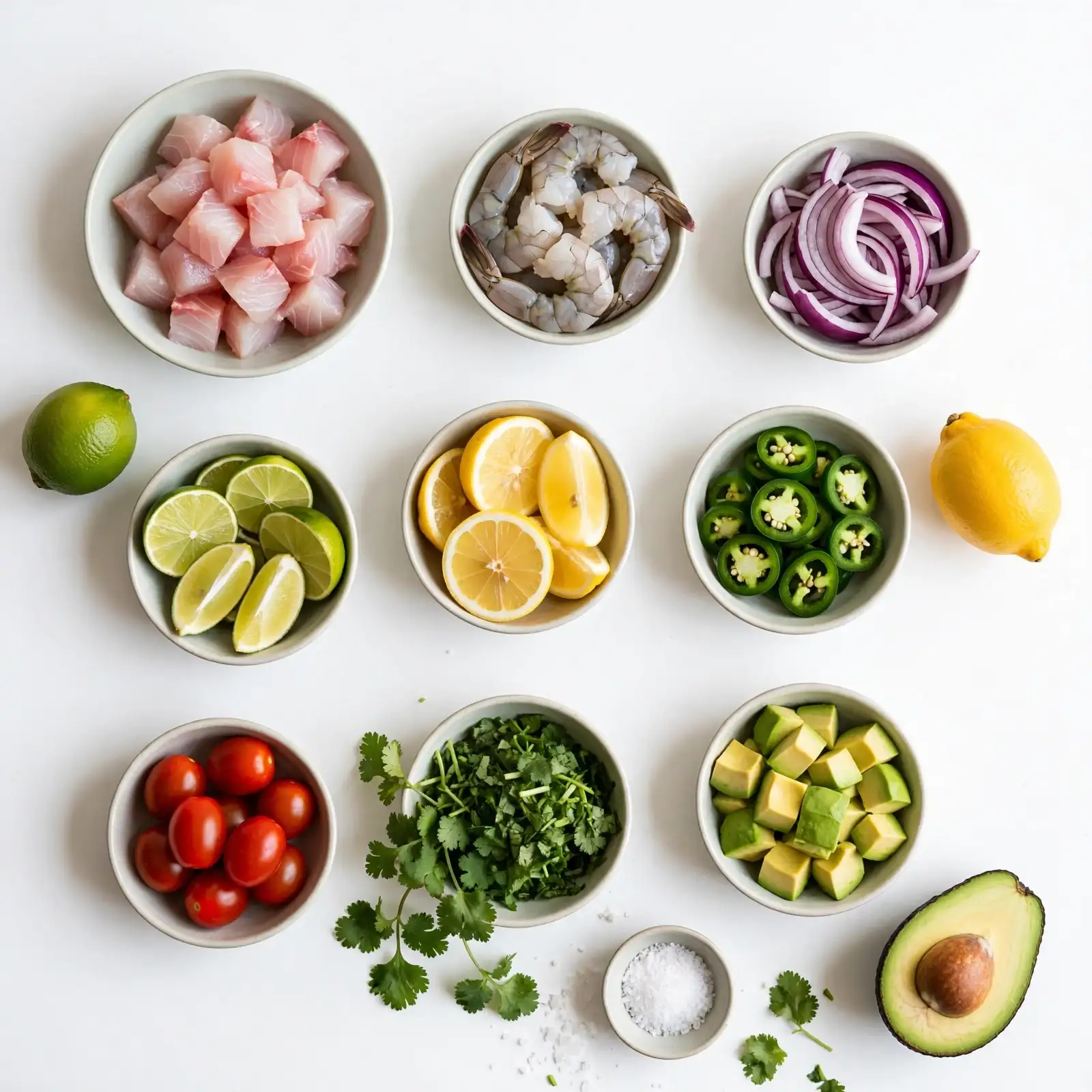
- 1 lb fresh white fish, cut into ½-inch cubes (sea bass, halibut, or tilapia work beautifully)
- ¾ cup fresh lime juice (from approximately 6–7 limes — bottled juice will not work here)
- ¼ cup fresh orange juice (this softens the acidity and adds a subtle sweetness)
- 1 tsp fine sea salt
For the Ceviche Mix
- ½ cup red onion, finely diced (soak in cold water for 10 minutes to mellow the sharpness)
- 1–2 jalapeños, seeded and finely minced (use both if you love heat)
- 1 cup cherry tomatoes, quartered (or 2 medium Roma tomatoes, seeded and diced)
- 1 large cucumber, peeled, seeded, and diced small
- ¼ cup fresh cilantro, roughly chopped (packed but not pressed)
- 1 tsp olive oil (optional but adds a lovely richness)
For Serving
- 1 ripe avocado, diced just before serving (adds creaminess and body)
- Tortilla chips or tostadas
- Lime wedges for squeezing
- Flaky salt for finishing
The lime juice and salt draw moisture out of the fish as it cures, creating a light, naturally tangy liquid that becomes part of the sauce. Combined with the crunch of cucumber and the sweetness of tomato, the result is a bowl with every texture and flavor working in harmony.
How to Make Ceviche Recipe — Step-by-Step
Step 1: Cut and Cure the Fish
Slice your fish into clean ½-inch cubes — uniform size ensures even curing. Place the cubes in a non-reactive glass or ceramic bowl, pour the lime and orange juice over the top, and sprinkle with sea salt. Toss gently to coat every piece. The flesh will look raw and translucent at first — that’s completely normal. Don’t worry if it looks like nothing is happening; within 15 minutes you’ll start to see the edges turn white and opaque as the citric acid begins its work.
Step 2: Prep and Soak the Onion
While the fish cures, dice your red onion finely and submerge it in a small bowl of ice-cold water. Let it soak for at least 10 minutes. This simple trick pulls out that aggressive raw bite and leaves you with onion that’s crisp, mild, and pleasant. Drain and pat dry before adding to the ceviche.
Step 3: Chop All the Vegetables
Dice your tomatoes, cucumber, and jalapeño while the fish is curing — this is the perfect multitasking window. Chop the cilantro last to keep it fresh and fragrant. Don’t worry if your vegetable pieces aren’t perfectly uniform; rustic cuts actually give this dish character and visual appeal.
Step 4: Let the Fish Cure to Your Preference
For a texture closer to lightly cooked fish with a tender center, cure for 20–25 minutes total. For a more fully “cooked” texture all the way through, cure for 45 minutes to 1 hour. Taste a piece — it should feel firm on the outside, not mushy, and the center should have just a hint of give. When it looks opaque and smells clean and citrusy rather than raw, it’s ready. Drain off about half the curing liquid before mixing in the vegetables.
Step 5: Combine, Rest, and Serve
Gently fold in the drained red onion, tomatoes, cucumber, jalapeño, and cilantro. Add the olive oil if using. Taste and adjust — more lime if it needs brightness, more salt if it feels flat, more jalapeño if you want heat. Let the combined ceviche rest for 5–10 minutes so the flavors can meld. Right before serving, fold in the diced avocado and finish with flaky salt. Serve immediately alongside chips or tostadas with fresh lime wedges on the side.
Perfecting This Recipe
- Use the freshest fish you can find — sushi-grade is ideal, and your fishmonger can point you in the right direction. Fresh fish should smell like the ocean, not like “fish.”
- Cut pieces uniformly so they cure at the same rate. Inconsistent sizes mean some pieces are over-cured while others are underdone.
- Don’t skip soaking the red onion. It makes a genuine difference in the final flavor.
- The orange juice isn’t traditional everywhere, but it rounds out the sharpness of straight lime and prevents the dish from tasting one-note.
- If you’re serving this at a party, prep the cured fish and all the vegetables separately and combine them 10–15 minutes before guests arrive — this gives you maximum control over texture.
- Add the avocado at the absolute last moment. It oxidizes quickly and turns brown if it sits in the acid for too long.
- Taste as you go. Every lime is different. Every jalapeño has its own heat level. This dish rewards attention.
Common Mistakes to Avoid
- Using bottled lime juice — The flavor of bottled lime is flat and slightly bitter compared to fresh. Since lime juice is the entire foundation of this recipe, this shortcut will noticeably affect the final result.
- Curing the fish for too long — Over-curing past 90 minutes makes the fish tough, rubbery, and unpleasantly chewy. Set a timer and check early.
- Skipping the onion soak — Raw red onion can completely overpower a ceviche if not mellowed. Ten minutes in cold water is all it takes to transform it.
- Adding avocado too early — Avocado breaks down quickly in acid and turns mushy and grey. Always fold it in right before plating.
- Using previously frozen fish without thawing properly — Thaw in the refrigerator overnight, never at room temperature. Improperly thawed fish can cure unevenly and develop an off texture.
Add Your Touch
- Swap white fish for shrimp ceviche by using small cooked or raw shrimp — raw shrimp only needs about 20 minutes to cure through.
- Add diced mango or pineapple for a tropical, sweet-heat version that pairs beautifully with spicy jalapeño.
- Stir in a splash of hot sauce (Cholula or Valentina) for deeper, more complex heat.
- Use serrano peppers instead of jalapeño for a sharper, more intense kick.
- Try adding a small amount of coconut milk for a Peruvian-leaning “leche de tigre” style variation.
- Toss in roasted corn kernels or a handful of radishes for extra crunch and color.
- Make it gluten-free automatically — this recipe already is, as written.
Visit Also: Hollandaise Sauce
What to Serve With This
- Tortilla chips or tostadas — The classic choice, and for good reason. The crunch is non-negotiable.
- Micheladas or a cold Mexican lager — A salty, citrusy beer cocktail mirrors all the best flavors in the bowl.
- Guacamole — Creamy, rich guacamole next to bright ceviche is a combination that absolutely works.
- Black bean soup — A warm, hearty soup makes a surprising and satisfying contrast to the cold, refreshing ceviche.
- Agua fresca — Hibiscus or tamarind agua fresca keeps the meal light and complements the citrus beautifully for a non-alcoholic option.
Storing and Serving
Fridge:
Store leftover ceviche in an airtight container for up to 24 hours. The texture of the fish will continue to firm as it sits, and the flavors will deepen — though the avocado should be stored separately and added fresh when you serve the leftovers.
Freezer:
Ceviche does not freeze well. The cured fish becomes grainy and the vegetables turn mushy upon thawing. Make only what you plan to eat within a day.
Reheating:
Ceviche is served cold — no reheating required or recommended. Simply remove from the fridge 5–10 minutes before serving to take the chill off slightly.
Make-Ahead Tip:
You can cure the fish up to 1 hour ahead and prep all the vegetables separately. Combine them 10–15 minutes before serving for the freshest results. This makes it an excellent party appetizer you can mostly set up in advance.
Servings:
This recipe yields approximately 4–6 generous appetizer portions or 3–4 light main dish servings.
Nutrition (Approximate Per Serving)
- Calories: 185
- Total Fat: 7g
- Saturated Fat: 1g
- Carbohydrates: 10g
- Sugar: 4g
- Protein: 22g
- Sodium: 390mg
Nutritional values are approximate and may vary based on specific ingredients and brands used.
Chef’s Helpful Tips
- Use a glass or ceramic bowl for curing — metal bowls react with the citrus acid and can give the fish a metallic undertone.
- If you’re serving to guests who are nervous about “raw” fish, cure for the full 45–60 minutes so the texture is unmistakably firm throughout.
- Roll your limes firmly on the counter before cutting them — this breaks down the interior and doubles the juice you can squeeze out.
- For clean, beautiful dicing on the avocado, cut it in the skin in a crosshatch pattern and scoop it out with a spoon rather than trying to dice it on the cutting board.
- If your ceviche tastes flat, it almost always needs more salt — not more lime. Add a small pinch, toss, taste again.
Frequently Asked Questions
Q1. Can I use frozen fish for this ceviche recipe?
Yes, you can — and in some cases it’s actually recommended for food safety, since freezing fish at low temperatures kills certain parasites. Thaw it completely in the refrigerator overnight before using. Just avoid fish that has been thawed and refrozen, as the texture will suffer.
Q2. Is ceviche actually cooked, or is it raw?
The citric acid in the lime juice denatures the proteins in the fish, which changes its texture and appearance to look and feel very similar to heat-cooked fish. It’s technically not “cooked” in the traditional sense, but the acid does significantly change the fish’s structure. If you have concerns about eating raw seafood, use sushi-grade fish or cook the fish lightly before marinating.
Q3. I’ve never made ceviche — is this beginner-friendly?
Absolutely. This homemade ceviche requires no heat, no special equipment, and no advanced technique. If you can dice vegetables and squeeze limes, you can make this dish. The most important thing is using fresh, quality fish — the recipe takes care of the rest.
Q4. Can I make this ahead for a party?
Yes, and it’s actually one of the best appetizers for entertaining. Cure the fish and prep your vegetables separately up to an hour before guests arrive, then combine and add the avocado 10–15 minutes before serving. It looks impressive, tastes fresh, and requires no last-minute cooking.
Q5. Can I substitute the fish with shrimp?
Shrimp ceviche is a wonderful variation. Use small or medium raw shrimp, deveined and cut in half. They cure beautifully in about 20–25 minutes and turn pink and opaque just like the fish. Cooked shrimp can also be used — just marinate for 15 minutes to absorb the flavors without over-curing.
Conclusion
There’s a reason this ceviche recipe keeps showing up at every summer gathering, every coastal vacation meal, and every impromptu backyard hang — it’s the kind of dish that feels like an occasion all on its own. Bright, cold, and impossibly fresh, it asks almost nothing of you and gives back everything in return. Once you’ve made it once, you’ll find yourself craving it every time the temperature climbs or you want something that feels light, lively, and a little bit special.
So squeeze those limes, dice that cucumber, and trust the process. Ceviche has been made this way for generations, and the simplicity is exactly what makes it extraordinary. Serve it to friends, bring it to the next potluck, or eat it standing over the counter with a bag of chips — there is no wrong way. Make it yours.
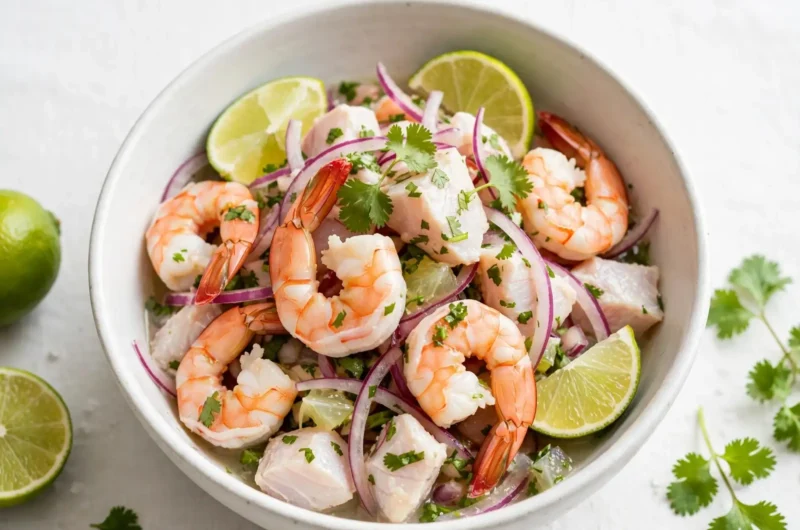
Bright and Zesty Ceviche Recipe
Course: Trending Recipes4-6
servings20
minutes25
minutes185
kcal45
minutesA fresh, citrus-cured seafood dish with tender fish, crisp vegetables, and bold lime flavor — ready in under 30 minutes of hands-on time and perfect for warm-weather entertaining or a light weeknight meal.
Ingredients
Fish Base:
1 lb fresh white fish, cut into ½-inch cubes
¾ cup fresh lime juice
¼ cup fresh orange juice
1 tsp fine sea salt
Ceviche Mix:
½ cup red onion, finely diced (soaked in cold water 10 min)
1–2 jalapeños, seeded and minced
1 cup cherry tomatoes, quartered
1 large cucumber, peeled, seeded, and diced
¼ cup fresh cilantro, roughly chopped
1 tsp olive oil (optional)
For Serving:
1 ripe avocado, diced
Tortilla chips or tostadas
Lime wedges
Flaky salt
Directions
- Combine fish, lime juice, orange juice, and salt in a glass bowl. Toss to coat. Let cure 20–45 minutes, until fish is opaque.
- Soak diced red onion in cold water for 10 minutes. Drain and pat dry.
- Chop tomatoes, cucumber, jalapeño, and cilantro while fish cures.
- Drain half the curing liquid from the fish. Fold in all vegetables and olive oil.
- Taste and adjust salt, lime, or heat as needed. Rest 5 minutes.
- Fold in avocado, finish with flaky salt, and serve immediately with chips.