The Silkiest Homemade Marinara Sauce You’ll Ever Simmer
The jar of tomatoes hits the pan with a hiss, and within seconds the kitchen fills with garlic, warm olive oil, and that first whiff of something simmering low and slow. My grandmother stood at this same stove for forty years, wooden spoon in hand, never once measuring anything, and somehow the sauce always tasted like it had been simmering since noon even when she started it at five.
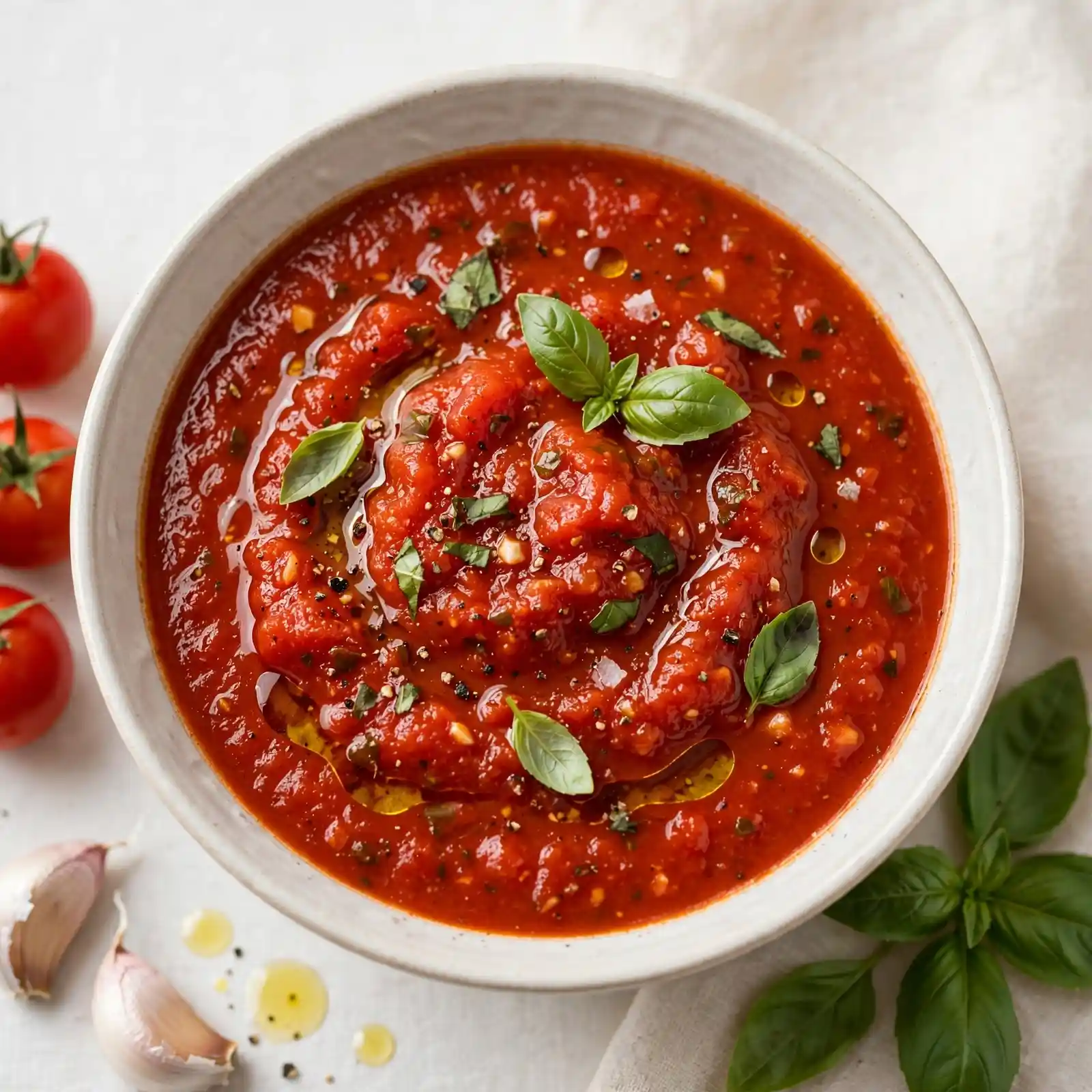
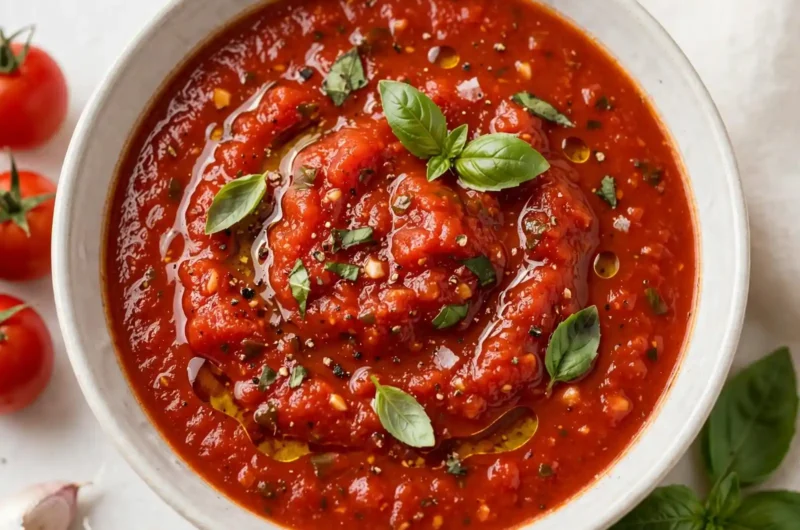
This marinara sauce is deeply savory, a little sweet from the tomatoes, and rounded out with just enough garlic and basil to make the whole pot smell like a trattoria on a Sunday afternoon. The texture is silky but still has body — thick enough to cling to noodles, never watery, never bland. A slow simmer coaxes out natural sweetness while the acidity mellows into something warm and rounded.
Whether you’re making a quick weeknight pasta, prepping a big batch for meal planning, or building the base for a Sunday family dinner, this easy pasta sauce comes together with pantry staples and very little hands-on time. It’s the kind of Italian tomato sauce you’ll want to double, just so there’s extra in the freezer for later.
Why You’ll Love This Recipe
Perfectly Balanced Flavor
This marinara recipe strikes that ideal line between sweet and savory — ripe tomatoes, a touch of sugar to smooth out acidity, and garlic that mellows as it simmers instead of overpowering the sauce.
Rich, Silky Texture
Simmering low and slow breaks the tomatoes down into a sauce that’s thick and velvety, never thin or watery, so it coats pasta beautifully instead of pooling at the bottom of the bowl.
Ready in About 30 Minutes
No all-day simmering required. This comes together fast enough for a weeknight, but tastes like it’s been on the stove for hours.
Crowd-Pleasing and Versatile
It works on pasta, spooned over meatballs, layered into lasagna, or used as a dipping sauce, which makes it a reliable go-to for potlucks and family dinners alike.
Classic Base With Room to Twist
It’s a timeless marinara sauce at heart, but it welcomes add-ins — a pinch of red pepper flakes, a splash of red wine, extra herbs — so you can make it your own every time.
Ingredients
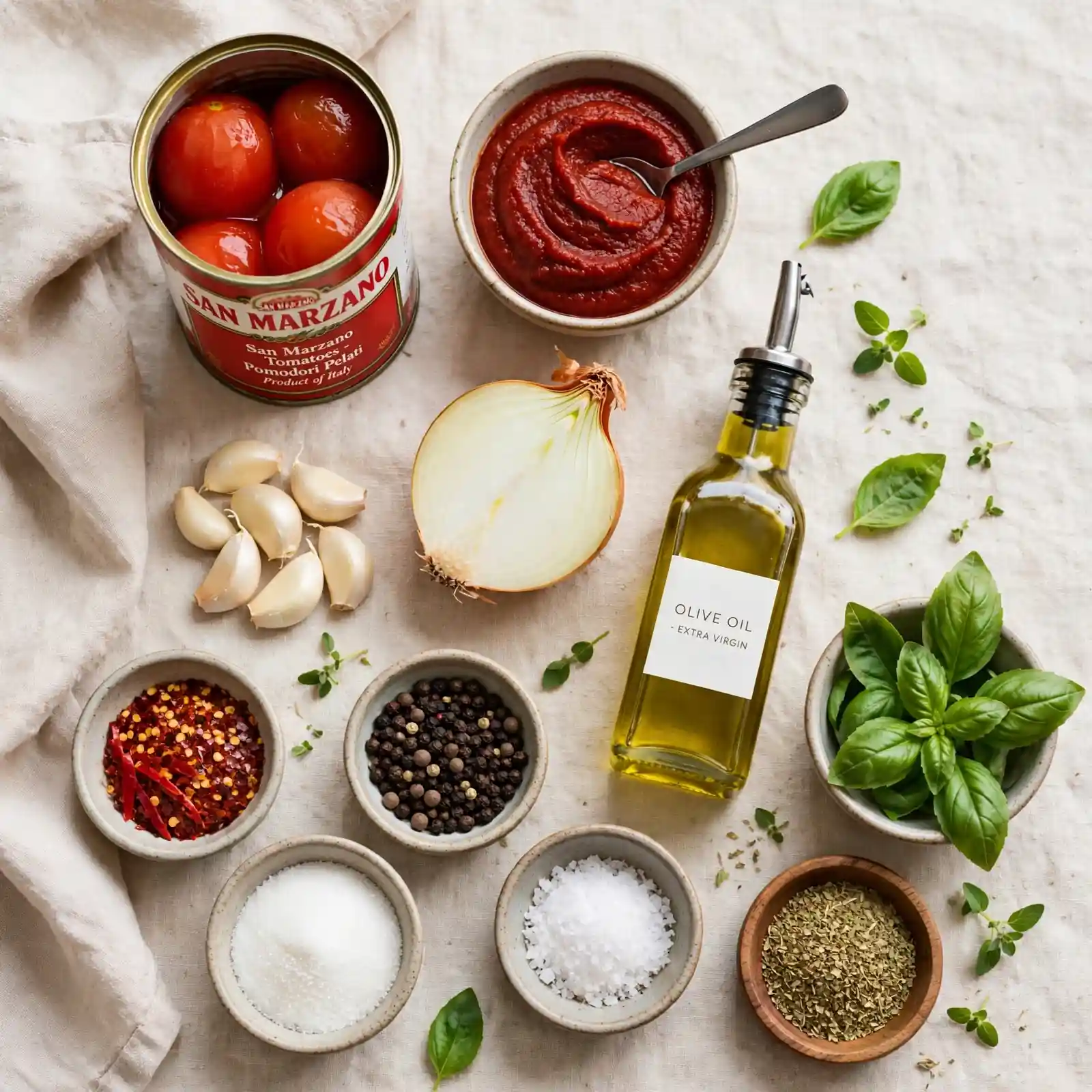
For the Sauce Base
- 3 tbsp olive oil (extra-virgin for the best flavor)
- 6 cloves garlic, minced
- 1 small yellow onion, finely diced
- 1/4 tsp red pepper flakes (optional, adjust to taste)
- 2 (28 oz) cans whole peeled tomatoes (San Marzano if available)
- 1 (6 oz) can tomato paste
For the Seasoning
- 1 tsp dried oregano
- 1/2 cup fresh basil leaves, torn (plus extra for garnish)
- 1 tsp sugar (balances acidity, adjust to taste)
- 1 tsp salt, plus more to taste
- 1/2 tsp black pepper
- 1 bay leaf
For the Finish
- 2 tbsp butter (adds richness and smooths the sauce)
- 2 tbsp freshly grated Parmesan (optional, for depth)
The olive oil and garlic build the aromatic base, the whole tomatoes and paste create body and richness, and the butter at the end rounds out the acidity so every bite feels smooth rather than sharp.
How to Make Marinara Sauce — Step-by-Step
Step 1: Warm the Oil and Soften the Aromatics
Heat the olive oil in a large pot over medium heat. Add the onion and cook until soft and translucent, about 4–5 minutes. Stir in the garlic and red pepper flakes and cook just until fragrant — you’ll notice the smell turn nutty and warm.
Step 2: Build the Tomato Base
Add the tomato paste and stir it into the oil and aromatics, letting it cook for a minute or two until it darkens slightly and smells rich. Don’t worry if it looks thick and pasty at this stage — that’s exactly right, and it’ll loosen up once the tomatoes go in.
Step 3: Add the Tomatoes and Season
Pour in the whole tomatoes, crushing them with a spoon or your hands as you go. Stir in the oregano, sugar, salt, pepper, and bay leaf. Bring the sauce to a gentle simmer.
Step 4: Simmer Low and Slow
Reduce the heat to low and let the sauce simmer uncovered for 20–25 minutes, stirring occasionally. The sauce is ready when it’s thickened and coats the back of a spoon, with a deep red color and a glossy sheen. Don’t worry if it looks a little chunky — you’ll smooth it out in the next step.
Step 5: Finish and Blend
Remove the bay leaf. If you prefer a smoother sauce, use an immersion blender for a few short pulses, leaving some texture. Stir in the butter, torn basil, and Parmesan if using, and let it melt into the sauce off the heat. Taste and adjust salt as needed before serving.
Perfecting This Recipe
- Crush the tomatoes by hand for better texture control than a food processor, which can make the sauce too smooth and lose body.
- Keep the simmer low — a gentle bubble, not a rolling boil, prevents the sauce from splattering and scorching on the bottom.
- Taste as you go; canned tomatoes vary in acidity, so the amount of sugar needed can shift from batch to batch.
- Let the sauce rest for 5–10 minutes off heat before serving; the flavors continue to meld and deepen as it cools slightly.
- Avoid rushing the aromatics — undercooked garlic and onion can leave the sauce tasting sharp instead of rounded.
Common Mistakes to Avoid
- Using cold tomatoes straight from the fridge — This can shock the hot oil and slow down the simmer, so let canned tomatoes come closer to room temperature first if you have time.
- Burning the garlic — Garlic turns bitter fast once it browns, so keep the heat at medium and stir constantly during that step.
- Skipping the sugar — Even a small pinch balances the natural acidity of canned tomatoes and keeps the sauce from tasting sharp or metallic.
- Simmering too hot or too fast — A rolling boil breaks down the sauce unevenly and can leave it watery instead of thick and glossy.
- Adding fresh basil too early — Basil loses its bright flavor with long cooking, so stir it in at the end for the freshest taste.
Add Your Touch
- Stir in a splash of red wine after the tomato paste for extra depth.
- Add a handful of sautéed mushrooms or diced bell pepper for a heartier sauce.
- Swap red pepper flakes for a diced fresh chili if you like more heat.
- Blend in a spoonful of roasted red peppers for natural sweetness.
- Finish with a swirl of heavy cream for a rosé-style twist.
Visit Also: Honey Butter Recipe
What to Serve With This
- Toss it with spaghetti or rigatoni for a classic, comforting dinner.
- Spoon it over baked meatballs for an easy weeknight main.
- Use it as a dipping sauce alongside warm, crusty garlic bread.
- Layer it into lasagna or baked ziti for a cozy casserole night.
- Pair with a simple green salad and a glass of red wine for a full Italian-style meal.
Storing and Serving
Fridge: Store in an airtight container for up to 5 days.
Freezer: Freeze in a freezer-safe container or bag for up to 3 months; the texture stays great after thawing, though a quick stir helps re-emulsify the sauce.
Reheating: Warm gently on the stovetop over low heat, stirring occasionally, until heated through — about 5–7 minutes. Avoid high heat, which can cause splattering.
Make-Ahead Tip: This sauce can be made up to 3 days ahead and stored in the fridge; the flavor actually deepens after a day or two.
Servings: Makes about 5 cups, enough for 6–8 servings over pasta.
Nutrition (Approximate Per Serving)
- Calories: 110
- Total Fat: 7g
- Saturated Fat: 2g
- Carbohydrates: 10g
- Sugar: 5g
- Protein: 2g
- Sodium: 430mg
Nutritional values are approximate and may vary based on specific ingredients and brands used.
Chef’s Helpful Tips
- Use canned whole tomatoes rather than pre-crushed or diced when possible — the flavor is fresher and you control the texture.
- Don’t skip letting the tomato paste cook briefly in the oil; this step deepens the flavor significantly.
- For easy portioning, freeze the sauce in individual containers or muffin tins, then pop out and reheat as needed.
- If the sauce turns out too thin, simmer it uncovered a little longer to reduce and thicken.
- If it turns out too thick, thin it with a splash of pasta water or vegetable broth until it reaches the consistency you like.
Frequently Asked Questions
Q1. Can I use fresh tomatoes instead of canned? Yes, you can substitute about 3 pounds of ripe, peeled fresh tomatoes for the canned ones. Just know the flavor and consistency may vary slightly depending on how ripe and juicy they are.
Q2. How does this compare to store-bought marinara? This homemade marinara sauce is richer, less sweet, and has more depth than most jarred versions, since you control the salt, sugar, and cook time. It also has a fresher, more vibrant tomato flavor overall.
Q3. Is this recipe beginner-friendly? Absolutely — it’s mostly simmering and stirring, with no tricky techniques involved. Even a first-time cook can follow the steps and end up with a great sauce.
Q4. Can I make this ahead for a potluck? Yes, this sauce actually tastes better the next day, making it an ideal make-ahead dish. Just reheat it gently on the stove before serving.
Q5. Can I freeze this sauce? Yes, it freezes beautifully for up to 3 months in an airtight container. Thaw it in the fridge overnight and give it a good stir when reheating.
Conclusion
There’s a reason marinara sauce has stayed a kitchen staple for generations — it’s simple, forgiving, and endlessly comforting, whether it’s simmering on a lazy Sunday or coming together fast on a Tuesday night. Once you make it from scratch, it’s hard to go back to the jarred stuff; the flavor is deeper, the texture silkier, and the whole house smells like something worth gathering around.
Make a big batch, freeze what you don’t use, and let this sauce become the base for whatever you’re craving next — pasta night, meatball subs, or a cozy bowl of lasagna. However you serve it, I hope it becomes a regular in your kitchen the way it has been in mine.
Silky Homemade Marinara Sauce
Course: Trending Recipes6–8
servings10
minutes30
minutes110 per serving
kcal40
minutesA rich, velvety tomato sauce with balanced sweetness and deep garlic flavor — perfect over pasta, for meal prep, or as the base for your favorite Italian dishes.
Ingredients
Sauce Base:
3 tbsp olive oil
6 cloves garlic, minced
1 small yellow onion, finely diced
1/4 tsp red pepper flakes (optional)
2 (28 oz) cans whole peeled tomatoes
1 (6 oz) can tomato paste
Seasoning:
1 tsp dried oregano
1/2 cup fresh basil leaves, torn
1 tsp sugar
1 tsp salt
1/2 tsp black pepper
1 bay leaf
Finish:
2 tbsp butter
2 tbsp freshly grated Parmesan (optional)
Directions
- Sauté onion in olive oil until soft, about 5 minutes.
- Add garlic and red pepper flakes; cook until fragrant.
- Stir in tomato paste and cook 1–2 minutes.
- Crush in whole tomatoes; add oregano, sugar, salt, pepper, and bay leaf.
- Simmer uncovered 20–25 minutes, stirring occasionally.
- Remove bay leaf; blend lightly if desired.
- Stir in butter, basil, and Parmesan off heat. Adjust salt and serve.