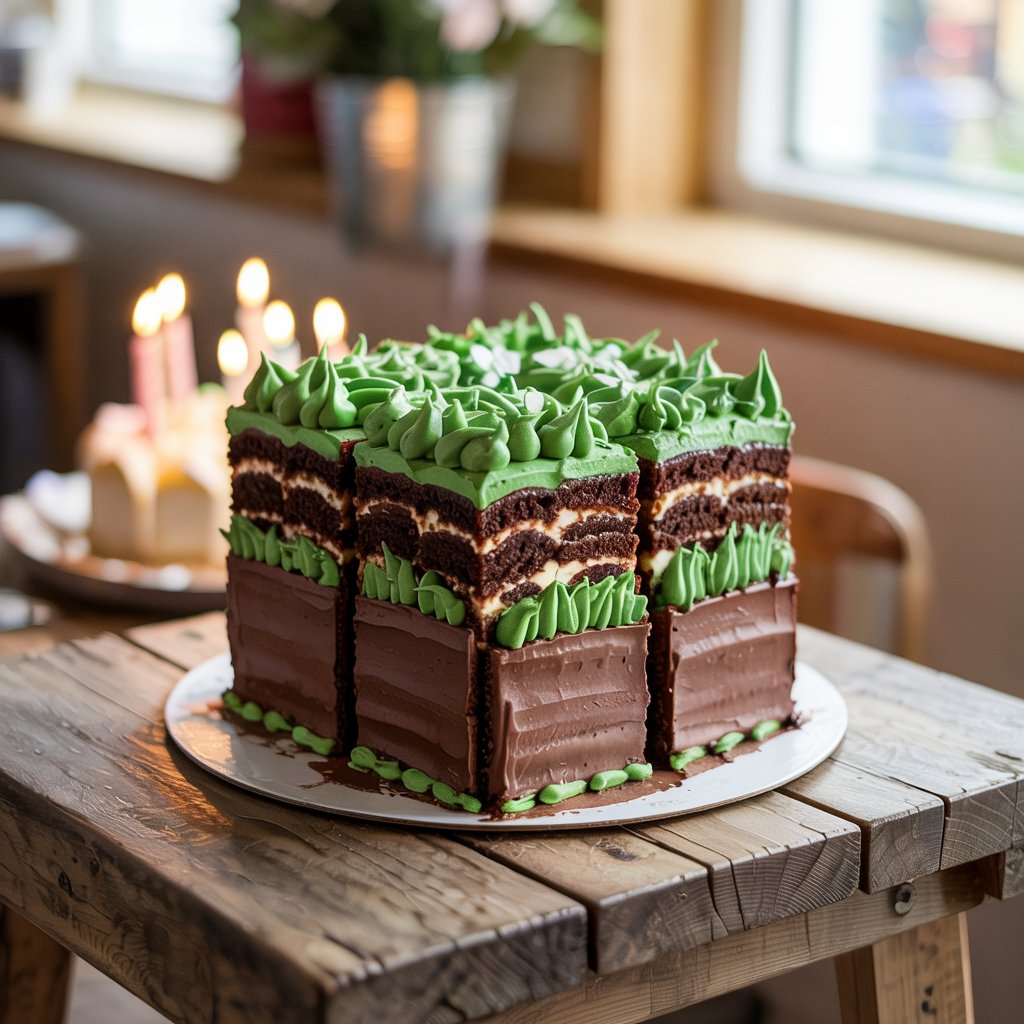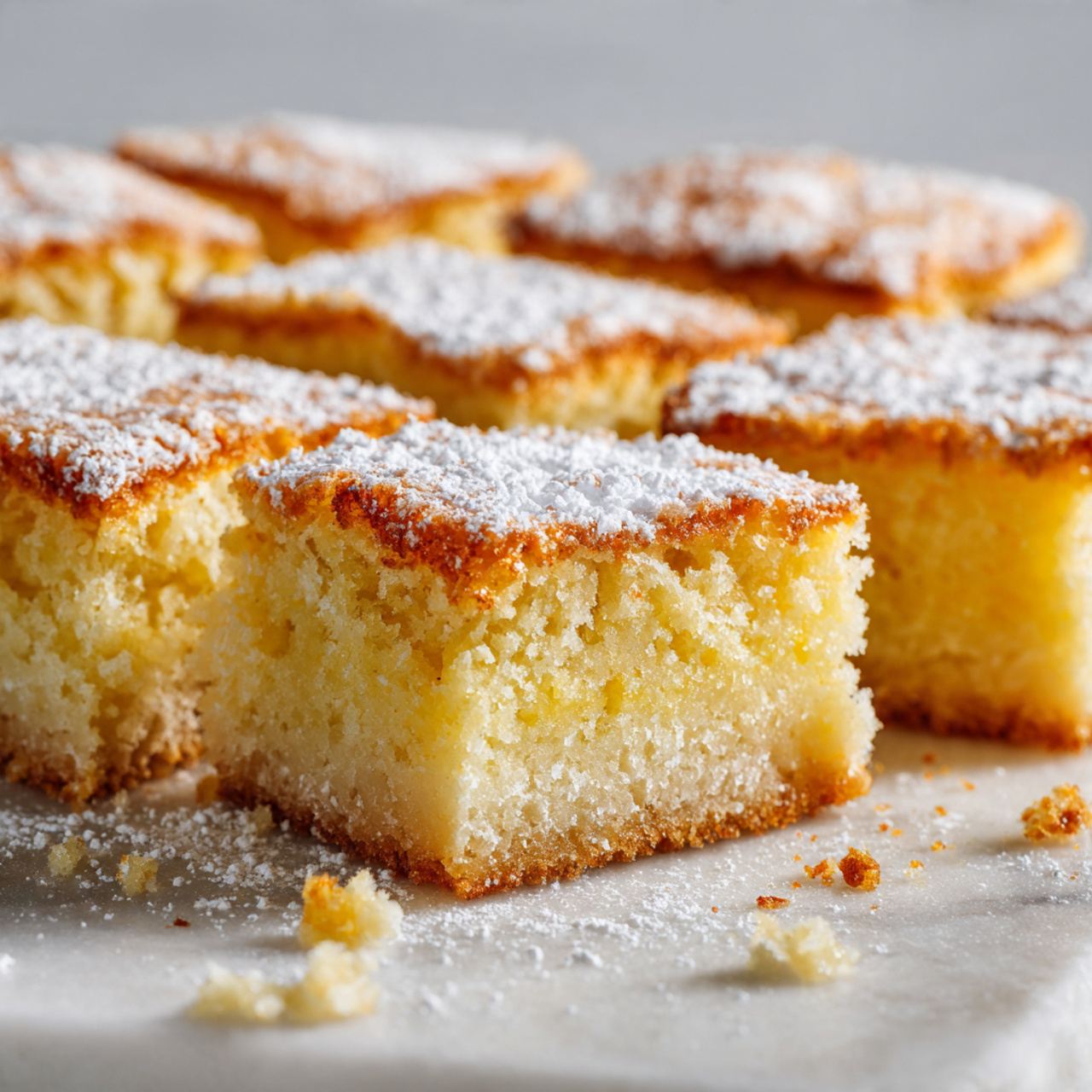
The Richest German Chocolate Cake with Silky Coconut-Pecan Frosting
That sticky, glossy topping is the whole reason people fall in love with German Chocolate Cake — and it’s also the thing that goes wrong most often. Too thin, too grainy, or sliding right off the cake before it even makes it to the table. The problem is almost always heat: most home bakers rush the stovetop step, and the result is a topping that never quite sets. This recipe solves it with one simple technique, and the difference is night and day.
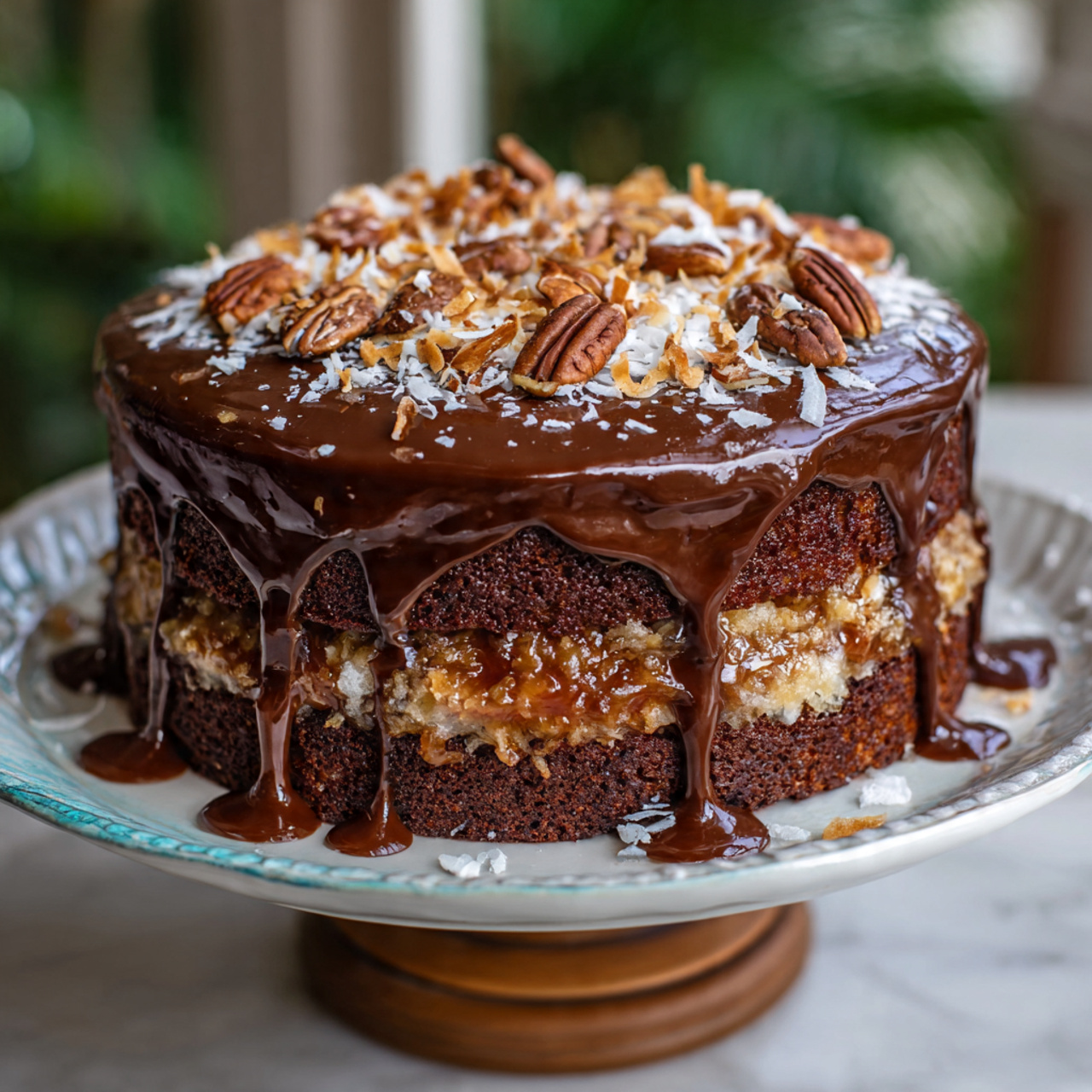
When you do it right, every bite delivers something deeply satisfying. The cake itself is tender and fudgy with a soft, open crumb that practically melts under your fork. The cocoa flavor is gentle — warm and rounded, not bitter — and the coconut-pecan frosting on top is thick, caramelized, and just sweet enough to balance it. The toasted pecans add a subtle crunch, and the shredded coconut pulls the whole thing into something that tastes unmistakably homemade.
This is the kind of easy chocolate cake recipe that earns a permanent spot in your rotation. It works beautifully for a weekend family dinner, a casual birthday celebration, or a lazy Sunday afternoon when you just want something warm and comforting from your own kitchen. If you’ve been searching for a reliable layered chocolate cake that doesn’t demand pastry school skills, this is it. Let’s get baking.
Why You’ll Love This Recipe
The Flavor Balance Is Exactly Right
The unsweetened cocoa keeps the cake itself on the deeper, slightly darker end of the flavor spectrum, which means the sweet coconut-pecan frosting doesn’t tip the whole thing into sugar overload. Every bite has contrast: rich chocolate underneath, caramel-sweet topping on top. It’s that balance that makes you reach for a second slice without really meaning to.
The Texture Stays Soft for Days
Most homemade chocolate cakes dry out overnight and taste like a sponge by day two. Not this one. The vegetable oil in the batter keeps the crumb moist and tender long after it’s cooled, and the thin batter — which looks alarming when you first mix it — is exactly what creates that soft, fudgy interior. Trust the process.
You Don’t Need Special Equipment
No stand mixer, no double boiler, no special cake flour. This moist chocolate cake comes together in two bowls and a saucepan, using ingredients most home kitchens already have. If you can measure, stir, and set a timer, you can make this.
It Travels and Stores Beautifully
The frosting firms up as it cools, which makes this a surprisingly sturdy cake for potlucks and celebrations. Cover it, refrigerate it, and it still looks and tastes great the next day — sometimes even better once the flavors have had time to settle.
It Tastes Like Something Special Without Being Complicated
There’s a reason German Chocolate Cake shows up at birthdays, holidays, and Sunday dinners across generations. It has that nostalgic, made-with-love quality that fancy layered cakes often lack. Simple to make, impossible to forget.
Ingredients
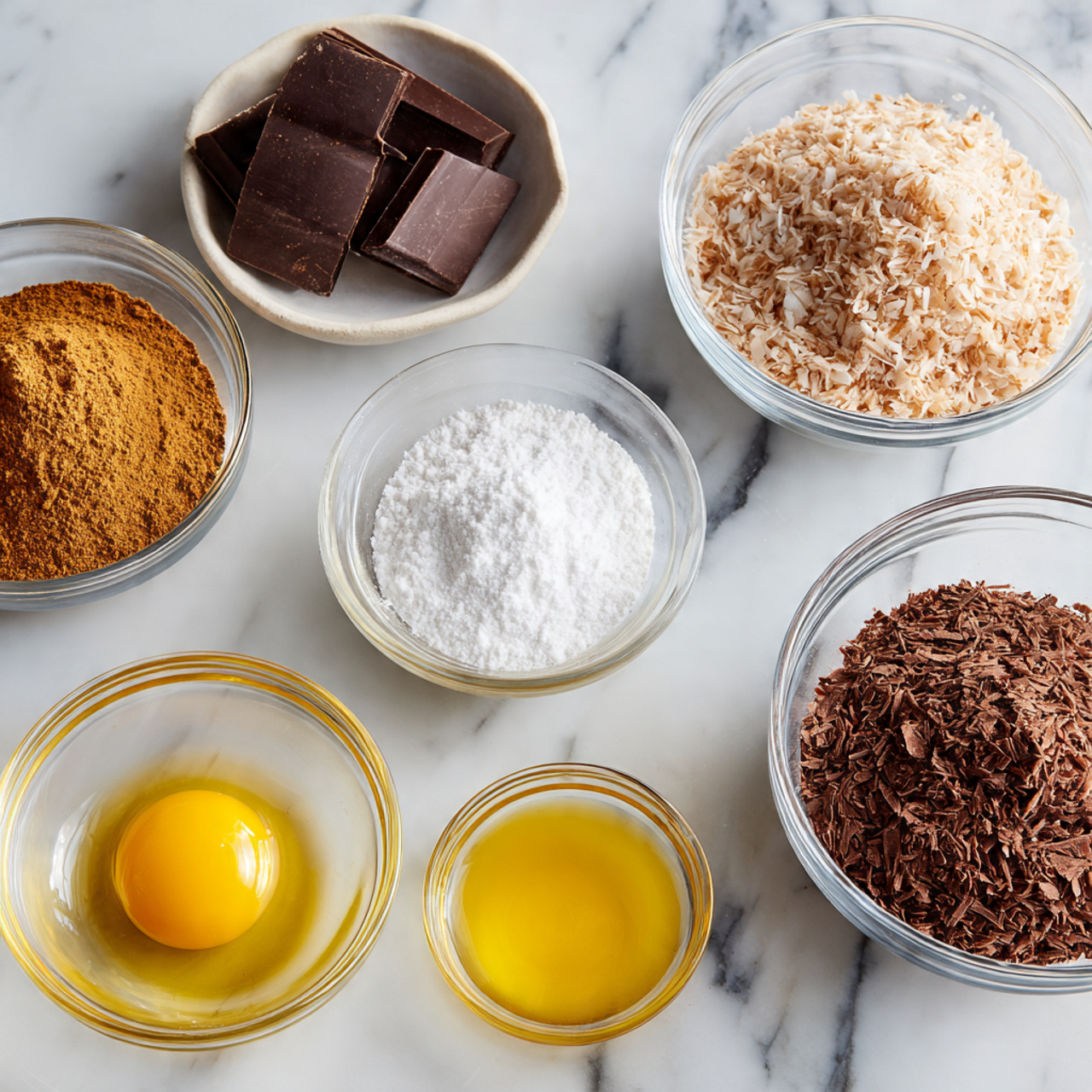
WonFor the Cake Batter
- 1 cup all-purpose flour
- 1 cup sugar
- ½ cup unsweetened cocoa powder (use a good-quality brand for deeper flavor)
- 1 teaspoon baking soda
- ½ teaspoon salt
- 2 eggs (room temperature if possible)
- ½ cup milk
- ½ cup vegetable oil (keeps the cake moist — don’t substitute with butter here)
- 1 teaspoon vanilla extract (pure, not imitation)
- ½ cup hot water (this is what activates the cocoa and creates that soft crumb)
For the Coconut-Pecan Frosting
- ½ cup evaporated milk (not regular milk — it creates the thick, fudgy consistency)
- ½ cup brown sugar (packed)
- 2 tablespoons butter
- 1 egg yolk (helps the frosting set and gives it that custard-like richness)
- ½ cup shredded coconut
- ¼ cup chopped pecans
The magic of this recipe is in how these two components balance each other. The cake leans darker and less sweet, while the frosting is deeply caramelized and nutty — together, they create something far more interesting than either part alone.
How to Make German Chocolate Cake — Step-by-Step
Step 1: Prep Your Pan and Oven
Preheat your oven to 180°C (350°F) and grease your baking pan generously, then dust it lightly with flour or cocoa powder. This step matters more than most people realize — a well-prepared pan is the difference between a cake that releases cleanly and one that comes out in pieces. Don’t rush it.
Step 2: Mix the Dry Ingredients
In a large bowl, whisk together the flour, cocoa powder, sugar, baking soda, and salt until the mixture is uniform with no visible streaks or lumps. The cocoa tends to clump, so take a moment to break any clusters apart. This even distribution means every bite of your finished cake will taste the same — no pockets of salty or bitter surprise.
Step 3: Build the Batter
Add the eggs, milk, vegetable oil, and vanilla extract to the dry ingredients and stir until smooth. Then pour in the hot water and mix gently. Don’t worry if the batter looks very thin at this point — that’s exactly how it should look. The hot water blooms the cocoa and creates that moist, fudgy crumb you’re after. Pour it straight into your prepared pan and get it in the oven.
Step 4: Bake Until a Toothpick Comes Out Clean
Bake for 25–30 minutes. Around the 25-minute mark, insert a toothpick into the center — if it comes out with just a few moist crumbs (not wet batter), it’s done. The edges will have pulled slightly away from the sides of the pan and the top will look set. Don’t worry if the center looks a little softer than the edges while it’s baking; it firms up as it cools. Remove from the oven and let it cool completely before you touch the frosting.
Step 5: Make the Coconut-Pecan Frosting
While the cake cools, combine the evaporated milk, brown sugar, butter, and egg yolk in a small saucepan over low heat. Stir constantly and let it cook slowly — this is the step most people rush, and rushing is what causes the topping to stay thin or turn grainy. After about 8–10 minutes, it will thicken to a glossy, pudding-like consistency that coats the back of your spoon. Remove from heat, stir in the shredded coconut and chopped pecans, and let it cool slightly before spreading it over the fully cooled cake.
Perfecting This Recipe
- Mix your wet and dry ingredients until just combined — overworking the batter develops gluten and leads to a tougher, denser cake.
- Hot water is non-negotiable. It blooms the cocoa and creates the soft crumb. Cold water won’t have the same effect.
- Never frost a warm cake. Even slightly warm layers will cause the topping to run and lose its glossy, set texture.
- Keep the frosting heat low and consistent. Patience on the stovetop is the single biggest factor in getting a thick, caramelized topping.
- If your frosting thickens too much before you spread it, add a splash of evaporated milk and stir over very low heat for 30 seconds.
- The cake is at peak flavor 4–6 hours after baking, once the frosting has fully set and the layers have had time to settle together.
Common Mistakes to Avoid
- Overbaking the cake — Even a few extra minutes at the wrong temperature can dry this cake out. Start checking at 25 minutes and pull it as soon as the toothpick test passes.
- Using cold eggs straight from the fridge — Cold eggs don’t incorporate smoothly into the batter and can cause uneven mixing. Give them 15 minutes on the counter before you start.
- Rushing the frosting — Cooking it on medium or high heat may seem faster, but it scorches the sugar and splits the egg yolk. Low and slow is the only way.
- Frosting a warm cake — The topping will slide, pool at the edges, and lose its texture. Full cooling is mandatory — at least 45 minutes to an hour.
- Skimping on the pan prep — A lightly greased pan is asking for trouble. Grease it, dust it, and your cake will release cleanly every time.
Add Your Touch
- Stir a teaspoon of instant espresso powder into the dry ingredients to deepen the chocolate flavor without making it taste like coffee.
- Add a thin layer of chocolate ganache between the cake and the frosting for extra richness and a beautiful visual layer.
- Swap the pecans for toasted walnuts or slivered almonds if that’s what you have on hand — the texture change is subtle and still delicious.
- Fold a pinch of cinnamon into the batter for a warm, spiced undertone that pairs beautifully with the caramel notes in the frosting.
- For a seasonal twist, fold in a handful of dried cranberries with the coconut and pecans to brighten the topping with a little tartness.
Visit Also: Jellycat Cake
What to Serve With This
A strong cup of black coffee or a spiced chai is the classic pairing — the bitterness cuts through the sweetness of the frosting perfectly. A scoop of vanilla bean ice cream alongside a warm slice is simple, elegant, and never wrong. If you’re serving this at a gathering, a little bowl of whipped cream on the side lets guests customize their portion. For something lighter, a sliced pear or a handful of fresh raspberries on the plate adds freshness that balances the richness.
Storing and Serving
Fridge Store the finished cake in an airtight container or tightly covered with plastic wrap in the refrigerator for up to 4 days. The frosting actually firms up nicely overnight, making slices easier to cut cleanly on day two.
Freezer Freeze unfrosted cake layers wrapped tightly in plastic wrap and then foil for up to 2 months. Thaw overnight in the refrigerator before frosting and serving. Avoid freezing the frosted cake — the coconut-pecan topping doesn’t hold up well to freezing and thawing.
Reheating A refrigerated slice can be brought to room temperature naturally in about 20 minutes, or warmed in the microwave for 10–15 seconds if you prefer it slightly warm. Don’t overheat — it dries the cake out quickly.
Make-Ahead Tip You can bake the cake a full day ahead and store it unfrosted, covered, at room temperature. Make the frosting fresh on the day you plan to serve it for the best texture and flavor.
Servings This recipe yields approximately 8–10 servings depending on slice size.
Nutrition (Approximate Per Serving)
- Calories: ~310
- Total Fat: 14g
- Saturated Fat: 4g
- Carbohydrates: 42g
- Sugar: 28g
- Protein: 5g
- Sodium: 220mg
Nutritional values are approximate and may vary based on specific ingredients and brands used.
Chef’s Helpful Tips
- Use room temperature eggs and milk — they blend into the batter more evenly and help the cake rise uniformly.
- To get clean, bakery-style slices, run your knife under hot water, wipe it dry, then cut. Repeat between slices.
- If the top of your cake starts browning too quickly before the center is done, loosely tent a piece of foil over the pan for the last 5 minutes.
- Always taste your frosting before you spread it. If the sweetness feels off, a pinch of salt stirred in at the end brings everything into balance.
- Good-quality cocoa powder genuinely makes a difference here. Dutch-process cocoa gives a smoother, less acidic chocolate flavor if you want to elevate the recipe.
Frequently Asked Questions
Q1. Can I make this German Chocolate Cake the day before a party? Absolutely — it’s actually better the next day. Bake the cake and make the frosting the day before, assemble it, cover it, and refrigerate overnight. By the time you serve it, the frosting will have set beautifully and the flavors will have deepened.
Q2. My frosting turned out too thin and runny. What went wrong? It needed more time on the heat. The frosting thickens through slow, steady cooking — if it still looks loose after 8 minutes, keep it on low heat and stir patiently for another 3–5 minutes. It will get there.
Q3. Can I replace the pecans or coconut if I don’t have them? Yes, easily. Walnuts or toasted almonds work in place of pecans with a similar crunch. For the coconut, you can use finely crushed digestive biscuits or graham crackers — the texture is different but still delicious.
Q4. Is this a good recipe for beginner bakers? It really is. The batter comes together in one bowl without any special technique, and the frosting just requires patience on the stovetop. If you’ve made a box cake before, you can absolutely make this from scratch.
Q5. Can I double the recipe for a larger crowd? Yes — double all the ingredients evenly and bake in two separate pans rather than one large one. Start checking for doneness around the 25-minute mark, as cooking time may vary slightly depending on your pan size and oven.
Conclusion
Some recipes you make once and move on. German Chocolate Cake is not one of them. There’s something about that combination — the tender, fudgy chocolate layers and the sticky, caramelized coconut-pecan frosting — that brings people back to the table again and again. It has that rare quality of feeling both special and entirely achievable, like something you’d find at a grandmother’s Sunday table rather than a bakery counter.
Whether you’re baking it for a birthday, a holiday, or just because it’s a quiet evening and you want something warm from your own oven, this recipe delivers every single time. Make it once, share a slice, and watch how quickly it becomes one of those recipes people ask you for. Then make it yours — with your own little twists, your own family table, your own memories. can come back to again and again? This recipe fits quiet evenings, family moments, and even small celebrations without feeling complicated. Bake it once, and it quickly becomes one of those recipes you keep close.
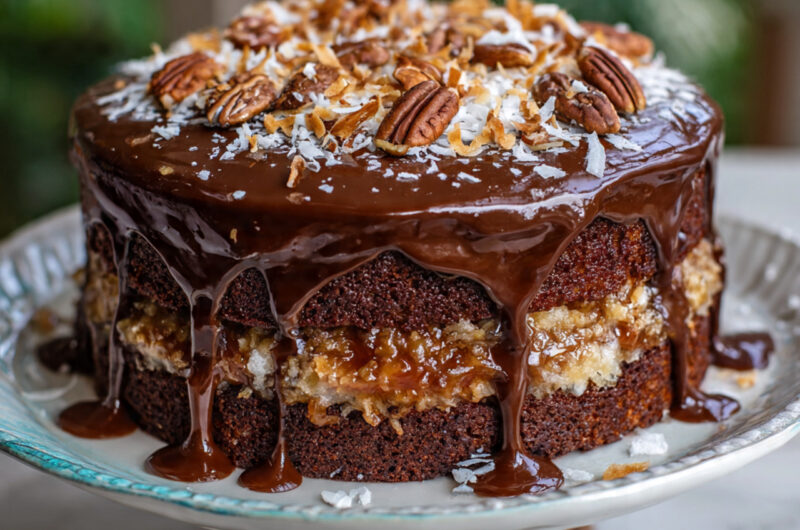
German Chocolate Cake with Coconut-Pecan Frosting
Course: Trending Cake4
servings15
minutes30
minutes310
kcal1
hour5
minutesA fudgy, tender chocolate cake topped with a thick, caramelized coconut-pecan frosting — deeply satisfying, surprisingly simple, and perfect for celebrations and cozy evenings alike.
Ingredients
For the Cake Batter
1 cup all-purpose flour
1 cup sugar
½ cup unsweetened cocoa powder
1 teaspoon baking soda
½ teaspoon salt
2 eggs
½ cup milk
½ cup vegetable oil
1 teaspoon vanilla extract
½ cup hot water
For the Coconut-Pecan Frosting
½ cup evaporated milk
½ cup brown sugar
2 tablespoons butter
1 egg yolk
½ cup shredded coconut
¼ cup chopped pecans
Directions
- Preheat oven to 180°C (350°F). Grease and flour a baking pan.
- Whisk together flour, cocoa powder, sugar, baking soda, and salt in a large bowl.
- Add eggs, milk, oil, and vanilla. Stir until smooth, then mix in hot water. Batter will be thin.
- Pour into prepared pan and bake 25–30 minutes, until a toothpick comes out with just a few moist crumbs.
- Cool cake completely before frosting.
- Combine evaporated milk, brown sugar, butter, and egg yolk in a small saucepan over low heat. Stir constantly for 8–10 minutes until thick and glossy.
- Remove from heat, stir in coconut and pecans. Let cool slightly, then spread over cooled cake.