The Softest Homemade Coffee Cake with a Golden Cinnamon Crumb Topping
Most coffee cakes come out of the oven looking perfect — and then you reach the crumb topping and find it’s either fused into a hard crust or it’s sunk straight into the batter. Both problems share the same root cause: the topping butter wasn’t cold enough. This recipe solves that with one clear technique, and once you understand it, you’ll never end up with a flat, crust-less cake again.
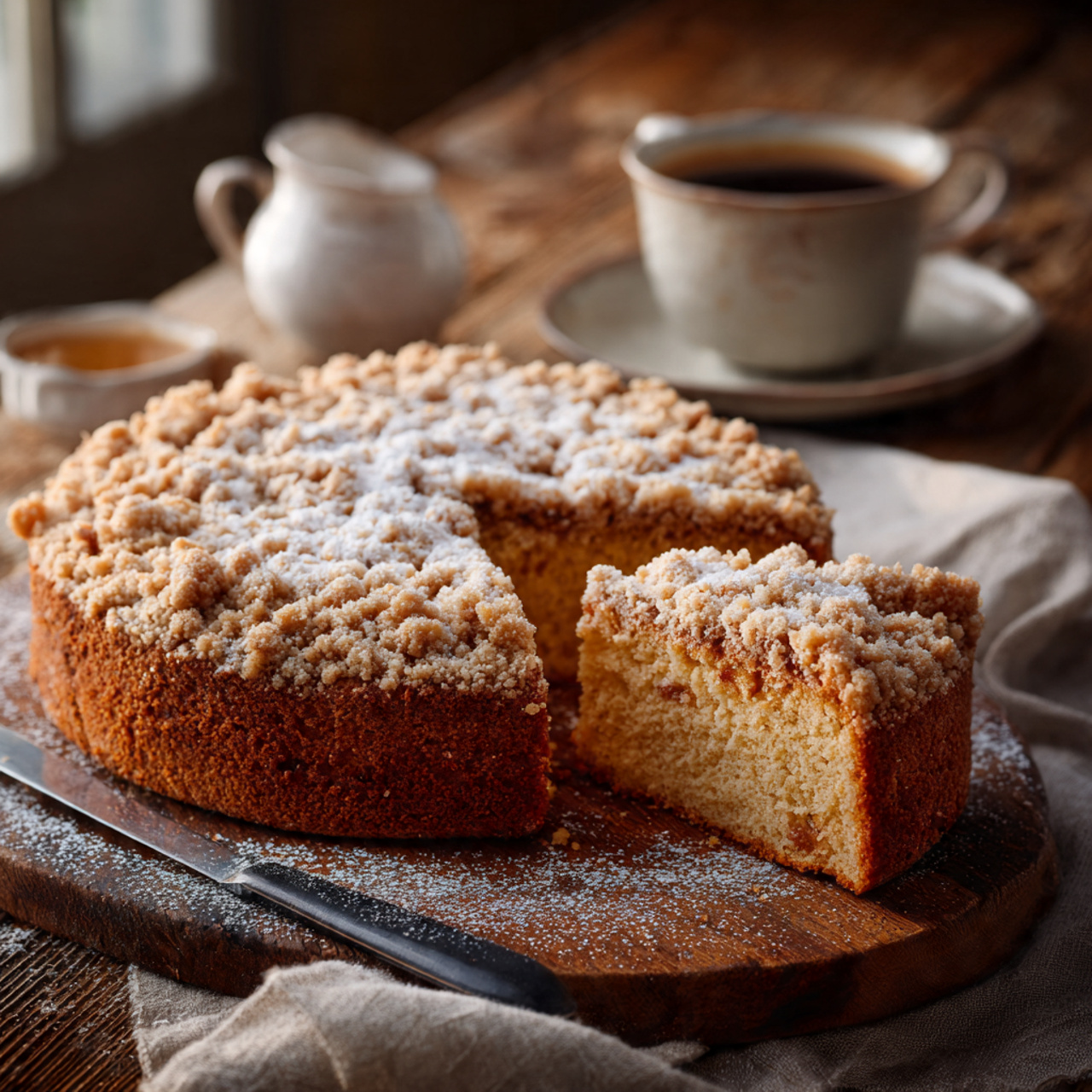
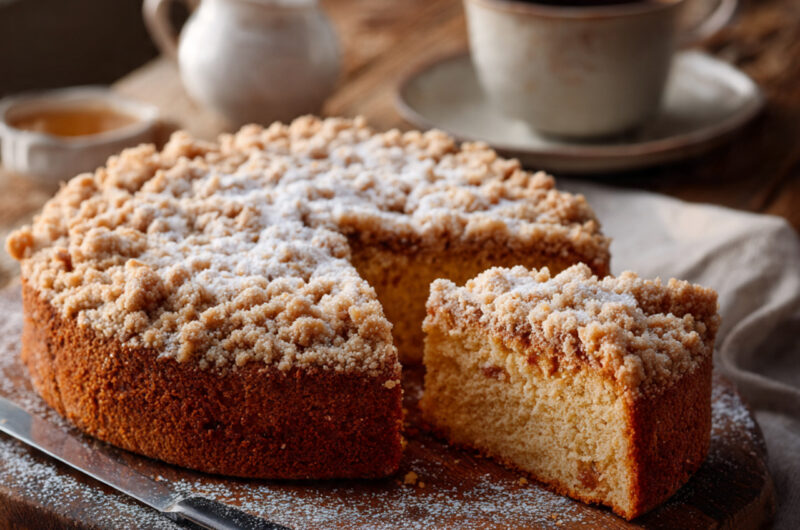
Picture a slice with a tender, pillowy interior that breaks apart gently at the fork — not dense, not gummy, just soft in the way that feels almost effortless. The cinnamon crumb on top is golden and slightly crisp, scattered in uneven clusters that hold their shape but dissolve into warm, buttery sweetness the moment they hit your tongue. The whole kitchen fills with the scent of warm vanilla and cinnamon while it bakes, and that aroma alone is enough to pull everyone in from another room.
This is the kind of cake that belongs at a relaxed weekend brunch just as naturally as it does at a holiday breakfast table or an afternoon tea spread. It’s an easy coffee cake recipe that asks almost nothing from you — pantry staples, no special equipment, and a method that’s genuinely forgiving. Whether you’re baking for a crowd or keeping the whole pan for yourself across the week, this one tends to earn a permanent spot in the rotation.
Why You’ll Love This Recipe
A Texture That Hits Just Right
The interior of this cake stays tender and moist without ever feeling heavy, and the contrast with the crisp cinnamon crumb on top makes every bite feel intentional. That texture comes from a simple mixing technique that keeps things light without any fuss. It’s the kind of result that keeps people reaching for a second slice.
Effortless from Start to Finish
There’s no stand mixer required, no special equipment, and no previous baking experience needed to pull this off. The hands-on prep takes under 15 minutes before the oven takes over completely. Even on a busy morning, this fits without stress or second-guessing.
Made Entirely with Pantry Staples
Every ingredient here is likely already in your kitchen — flour, butter, eggs, sugar, milk, and a pinch of spice. Nothing obscure, nothing expensive, and no last-minute grocery run required. Budget-friendly baking that still manages to feel a little special every time.
A Crowd Favourite Without Exception
This cinnamon crumb cake disappears fast at potlucks, brunch spreads, and family gatherings — its flavor is warm and familiar without being boring, and it travels well without needing refrigeration for a few hours. People always ask for the recipe before the plate is even empty.
A Reliable Base to Make Your Own
The simplicity here is intentional — this recipe is designed to be a starting point as much as it is a finished product. Fold in nuts, layer in fruit, swap the spice, or adjust the topping to your taste. Once you’ve made it once, you’ll find yourself reaching for it as a canvas every time you want to experiment.
Ingredients
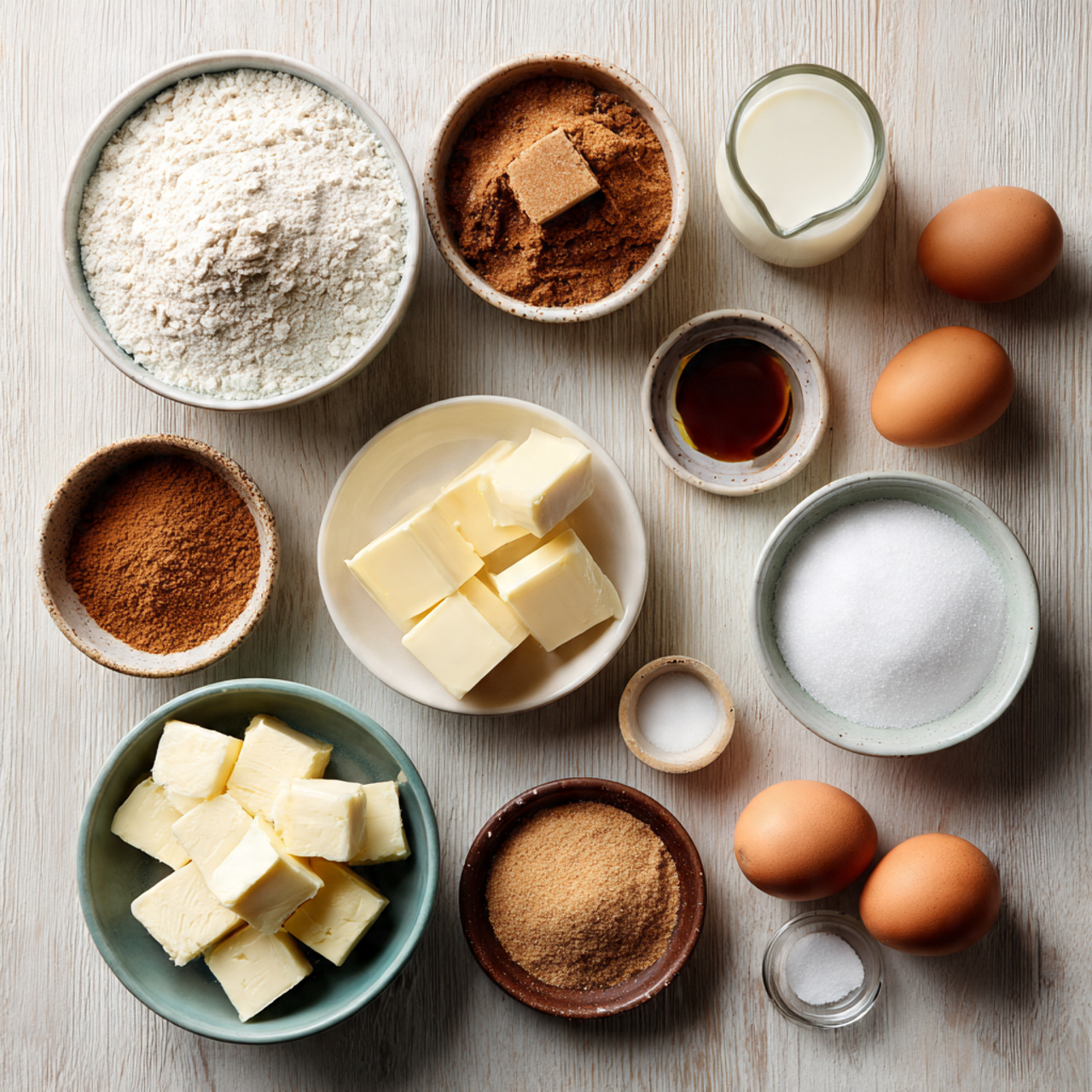
For the Cake Batter
- 2 cups all-purpose flour
- 1 cup granulated sugar
- ½ cup unsalted butter, softened (room temperature for at least 30 minutes before you begin)
- 2 large eggs
- 1 cup whole milk
- 2 teaspoons baking powder
- ½ teaspoon salt
- 1 teaspoon pure vanilla extract (pure, not imitation — the flavor difference shows in every bite)
For the Cinnamon Crumb Topping
- ½ cup brown sugar, packed
- ½ cup all-purpose flour
- ¼ cup unsalted butter, cold and cubed (cold is non-negotiable here — this is what creates true crumble texture)
- 1 teaspoon ground cinnamon
Together, the lightly sweet vanilla cake and the warmly spiced crumb create a pairing that feels completely balanced — rich enough to feel indulgent, but never so heavy that you can’t finish the slice.
How to Make Coffee Cake — Step-by-Step
Step 1: Prepare Your Pan and Oven
Preheat the oven to 180°C (350°F) and grease a 9×9-inch baking dish generously, making sure to reach the corners and sides. In a medium bowl, whisk the flour, baking powder, and salt together until evenly combined. Don’t worry if this step feels too simple — properly mixing your dry ingredients here prevents pockets of baking powder from forming in the finished cake.
Step 2: Cream the Butter and Sugar
In a large bowl, beat the softened butter and granulated sugar together until the mixture looks pale and feels noticeably smoother — about 2 minutes by hand or 1 minute with a hand mixer. You’re looking for a slight color shift from yellow to off-white and a slightly airier consistency. Don’t worry if it doesn’t look perfectly fluffy; as long as the sugar is well incorporated and no longer feels gritty, you’re exactly where you need to be.
Step 3: Add the Eggs and Vanilla
Add the eggs one at a time, stirring each one in fully before adding the next, then pour in the vanilla extract. The batter may look slightly curdled or uneven at this stage — that’s completely normal and nothing to worry about. It comes back together cleanly once the dry ingredients go in.
Step 4: Bring the Batter Together
Add the dry ingredients in two additions, alternating with the milk, and use a spatula to fold everything together gently. Mix only until the batter just comes together and no visible flour streaks remain — a few small lumps are perfectly fine. Overworking the batter after the flour is added is the single most common reason coffee cake turns out dense rather than tender, so stop stirring the moment it looks combined.
Step 5: Top and Bake
Pour the batter into the prepared dish and spread it into an even layer all the way to the edges. In a small bowl, rub the cold butter cubes into the brown sugar, flour, and cinnamon with your fingertips until the mixture forms rough, sandy crumbs — some smaller, some pea-sized. Scatter the topping evenly across the batter. Bake for 30–35 minutes until the top is deep golden and a toothpick inserted into the center comes out clean. The kitchen will smell like warm cinnamon and buttery vanilla — that’s the most reliable sign you’re nearly there.
Perfecting This Recipe
- Bring the batter butter to room temperature before you start — it should leave an indent when pressed but not feel greasy. Cold butter won’t incorporate properly with the sugar and leads to an uneven, lumpy batter.
- The crumb topping butter must stay cold right up until you’re ready to use it. Work quickly with your fingertips, since the heat from your hands is enough to soften it if you take too long.
- Once the flour goes into the batter, switch from a whisk to a spatula. The folding motion is gentler and prevents overdeveloping the gluten, which is what turns a soft cake tough.
- Spread the batter all the way to the corners — thin spots bake faster and can overbake while the center is still catching up.
- Always let the cake rest for at least 10 minutes before slicing. The structure needs time to fully set, and cutting in too early gives a gummy interior that firms up beautifully with just a little patience.
- Start checking for doneness at 28 minutes. A toothpick that comes out with a dry crumb or two — not wet batter — is exactly what you’re looking for.
Common Mistakes to Avoid
- Using butter straight from the fridge — Cold butter doesn’t cream evenly with the sugar, leaving the fat poorly distributed through the batter and producing a denser, patchier texture. Set it out at least 30 minutes before you begin.
- Overmixing after the flour is added — Every extra stir develops more gluten, making the crumb progressively tighter and chewier. Mix only until the batter just comes together, and stop there even if it looks a little lumpy.
- Letting the topping butter get warm — Softened or melted butter blends into the sugar and flour instead of staying in separate pieces, giving you a flat, paste-like layer rather than a proper crumble. Keep it refrigerated right up until you need it.
- Leaving the batter uneven in the pan — A thicker patch in the middle and a thin edge means the cake bakes unevenly, with some parts overdone before others are finished. Spend 30 extra seconds smoothing the surface before adding the topping.
- Slicing while the cake is still hot — A freshly baked cake needs time for its structure to set. Cutting in while it’s still steaming causes the crumb to collapse and the slices to fall apart. Ten minutes of resting is genuinely all it takes.
Add Your Touch
- Fold ½ cup of chopped walnuts or pecans into the batter for extra crunch and a warm, nutty depth that pairs beautifully with the cinnamon topping.
- Create a cinnamon-sugar layer through the middle by spreading half the batter, dusting with 2 tablespoons of sugar mixed with 1 teaspoon of cinnamon, then covering with the remaining batter before adding the crumb.
- Stir ½ cup of fresh blueberries or small diced apple pieces into the batter for a fruity, seasonal variation that works especially well in autumn.
- Replace ¼ cup of the milk with full-fat sour cream or Greek yogurt for a slightly tangier flavor and an even softer, more velvety crumb texture.
- Add a pinch of nutmeg or ground cardamom to the crumb topping for a warmer, more complex spice note that makes the whole cake feel a little more special.
- Scatter a small pinch of flaky sea salt over the crumb topping just before the pan goes into the oven for a sweet-and-salty finish that rounds out the richness beautifully.
Visit Also: Black Forest Cake
What to Serve With This
A freshly brewed cup of coffee or a strong black tea is the natural companion here — the mild sweetness of the cake plays perfectly against a slightly bitter drink. For a brunch table, a bowl of fresh berries or a simple fruit salad alongside adds brightness and color without competing. A small scoop of vanilla ice cream or a drizzle of warm cream transforms a slice into a proper dessert with almost no extra effort. If you’re serving it as part of a fuller morning spread, it sits happily alongside scrambled eggs and fresh juice without overshadowing anything else.
Storing and Serving
Fridge Store leftover coffee cake in an airtight container in the refrigerator for up to 4 days. The crumb topping softens slightly as it sits, but the flavor deepens and the cake often tastes even better by the second day.
Freezer Wrap individual slices tightly in plastic wrap and store in a freezer-safe bag for up to 2 months. Thaw overnight in the refrigerator or at room temperature for about an hour before serving.
Reheating Warm a refrigerated slice in the microwave for 15–20 seconds, checking after the first interval so it doesn’t overheat and lose its soft texture. For a slightly crisper topping, warm it in a 160°C (325°F) oven for about 8 minutes instead.
Make-Ahead Tip Prepare the batter and crumb topping separately the evening before, cover each tightly, and refrigerate overnight. The next morning, assemble and bake — the whole process takes just a few minutes before the oven does the rest.
Servings This recipe yields approximately 9 generous squares or 12 smaller portions, depending on how you slice.
Nutrition (Approximate Per Serving)
- Calories: 310
- Total Fat: 13g
- Saturated Fat: 8g
- Carbohydrates: 44g
- Sugar: 26g
- Protein: 5g
- Sodium: 190mg
Nutritional values are approximate and may vary based on specific ingredients and brands used.
Chef’s Helpful Tips
- Take your eggs out of the fridge at the same time as the butter — cold eggs added to freshly creamed butter can cause the mixture to seize slightly. Room temperature eggs blend in without any issue.
- Trust the toothpick over the timer. Oven temperatures vary by 10–15 degrees from what the dial reads, so start checking at 28 minutes and pull the cake the moment the toothpick comes out clean or with just a dry crumb.
- For the cleanest slices, use a sharp serrated knife. Run it briefly under warm water, wipe it dry, and cut with a gentle sawing motion — this keeps the crumb topping intact rather than dragging it through the layers.
- Use whole milk and full-fat butter throughout. The higher fat content genuinely changes the texture, giving the crumb a richer and more tender result that lower-fat alternatives simply won’t replicate.
- If your cake comes out denser than you’d like, overworking the batter after the flour was added is almost always the culprit. Next time, count your folds — about 10 to 12 gentle strokes with a spatula is all the mixing you need.
Frequently Asked Questions
Q1. Can I make this coffee cake ahead of time? This homemade coffee cake recipe is genuinely one of the best make-ahead options you’ll find — the flavor deepens as it sits and it tastes just as good on day two. Bake it the day before, let it cool completely, and store it covered at room temperature overnight or in the fridge if your kitchen runs warm. A quick 15-second microwave warm-up the next morning and it’s as good as freshly baked.
Q2. What can I use instead of eggs? A flax egg — 1 tablespoon of ground flaxseed stirred into 3 tablespoons of water and rested for 5 minutes — works well here, as does plain yogurt or mashed ripe banana in equal measure. The texture will be slightly softer and a touch denser, but the flavor holds up well either way.
Q3. Is this recipe beginner-friendly? It’s genuinely one of the most forgiving bakes you can make. There’s no special equipment, no technique that requires practice to master, and no ingredients that need precise handling. If you can fold a bowl of batter and set a timer, this recipe is fully within reach.
Q4. Can I bring this to a potluck or gathering? It’s one of the best options for exactly that. It slices cleanly, travels well without refrigeration for a few hours, and has a flavor that lands with almost everyone at the table. Bake it the morning of, cover the pan, and bring it along as-is — it’s that easy.
Q5. Can I freeze individual slices? Individual slices freeze well for up to 2 months when wrapped tightly in plastic wrap and stored in a freezer bag. Thaw overnight in the refrigerator or at room temperature for about an hour. The crumb topping may soften slightly after freezing, but the flavor remains completely intact.
Conclusion
There’s a reason coffee cake keeps showing up on kitchen tables across generations — it fits every occasion and asks almost nothing from the person making it. This homemade coffee cake brings together a short list of simple ingredients, a forgiving method, and a result that consistently impresses, whether it’s sitting out at a Sunday brunch or tucked into someone’s bag on a Tuesday. It’s the kind of recipe you come back to not because you have to, but because it quietly becomes the one everyone around you remembers.
Now it’s your turn to fill your kitchen with warm cinnamon and butter. Bake a batch this weekend, slice it generously, and share it with whoever happens to be nearby. And when they ask for the recipe — because they will — feel free to tell them it was easier than it looks.
Soft Coffee Cake with Cinnamon Crumb Topping
Course: Cake, Trending Cake9 generous squares
servings15
minutes30
minutes310
kcal55
minutesTender, buttery, and crowned with a golden cinnamon crumb that stays perfectly crisp, this easy cake is ideal for weekend brunch, a casual gathering, or any slow morning that deserves something a little special.
Ingredients
For the Cake Batter:
2 cups all-purpose flour
1 cup granulated sugar
½ cup unsalted butter, softened
2 large eggs
1 cup whole milk
2 teaspoons baking powder
½ teaspoon salt
1 teaspoon pure vanilla extract
For the Cinnamon Crumb Topping:
½ cup brown sugar, packed
½ cup all-purpose flour
¼ cup unsalted butter, cold and cubed
1 teaspoon ground cinnamon
Directions
- Preheat oven to 180°C (350°F). Grease a 9×9-inch baking dish.
- Whisk flour, baking powder, and salt together in a medium bowl. Set aside.
- Beat softened butter and granulated sugar until pale and combined.
- Add eggs one at a time, stirring each in fully, then add vanilla.
- Fold in dry ingredients in two additions, alternating with the milk, until just combined.
- Pour batter into prepared dish and spread evenly to the edges.
- Rub cold butter cubes into brown sugar, flour, and cinnamon until crumbly.
- Scatter crumb topping evenly over the batter.
- Bake 30–35 minutes until golden on top and a toothpick comes out clean.
- Rest for at least 10 minutes before slicing.