The Most Buttery, Flaky Croissant Recipe You’ll Ever Pull From Your Own Oven
The first time I made croissants from scratch, it was a rainy Saturday with nowhere to be and a block of European butter sitting on my counter like a dare. I wasn’t sure I could pull it off — all that folding, chilling, waiting — but when that first tray came out of the oven, golden and puffed and crackling at the touch, I understood immediately why bakers obsess over them. The kitchen smelled like a Parisian bakery, and I stood there eating one straight off the pan like it was the most natural thing in the world.
Bite into one and you get it all at once: the shatter of that paper-thin outer layer, the soft, pillowy interior that pulls apart in ribbons, and that deep, nutty, almost caramelized butter flavor that coats your tongue. These aren’t the soft, bready croissants from a plastic bag. These are architectural. Layered. The real thing.
This croissant recipe is a weekend project, yes — but it’s not scary. It fits beautifully into a lazy holiday morning, a special brunch spread, or any occasion where you want to genuinely impress people without saying a word. Once you understand the rhythm of the dough, it becomes something you look forward to. Naturally weave in a little patience, a little cold butter, and a lot of French pastry magic, and you’ll have homemade croissants that belong on any breakfast table.

Why You’ll Love This Recipe
The Flavor Is Deeply, Richly Buttery
There’s a reason French croissants have a cult following — it’s entirely about the butter. Using high-fat European-style butter gives you that deep, complex flavor you can’t fake. Every bite tastes like it has a story.
The Layers Are Genuinely Flaky
The lamination process (folding butter into dough repeatedly) creates dozens of tissue-thin layers that puff apart in the oven. You’ll hear them crackle when you pick one up, and that sound alone is worth the effort.
The Technique Is Learnable
Yes, croissants take time. But the actual hands-on work is surprisingly simple — mostly mixing, rolling, and folding. The fridge does the heavy lifting between steps.
They’re Perfect for Sharing
Whether you’re hosting a weekend brunch, filling a holiday basket, or just leaving a tray on the counter, a batch of buttery pastry like this disappears fast. People remember a homemade flaky pastry.
You Control the Quality
No preservatives, no mystery fats, no compromise. Your croissant recipe, your ingredients — and the result shows it every single time.
Ingredients
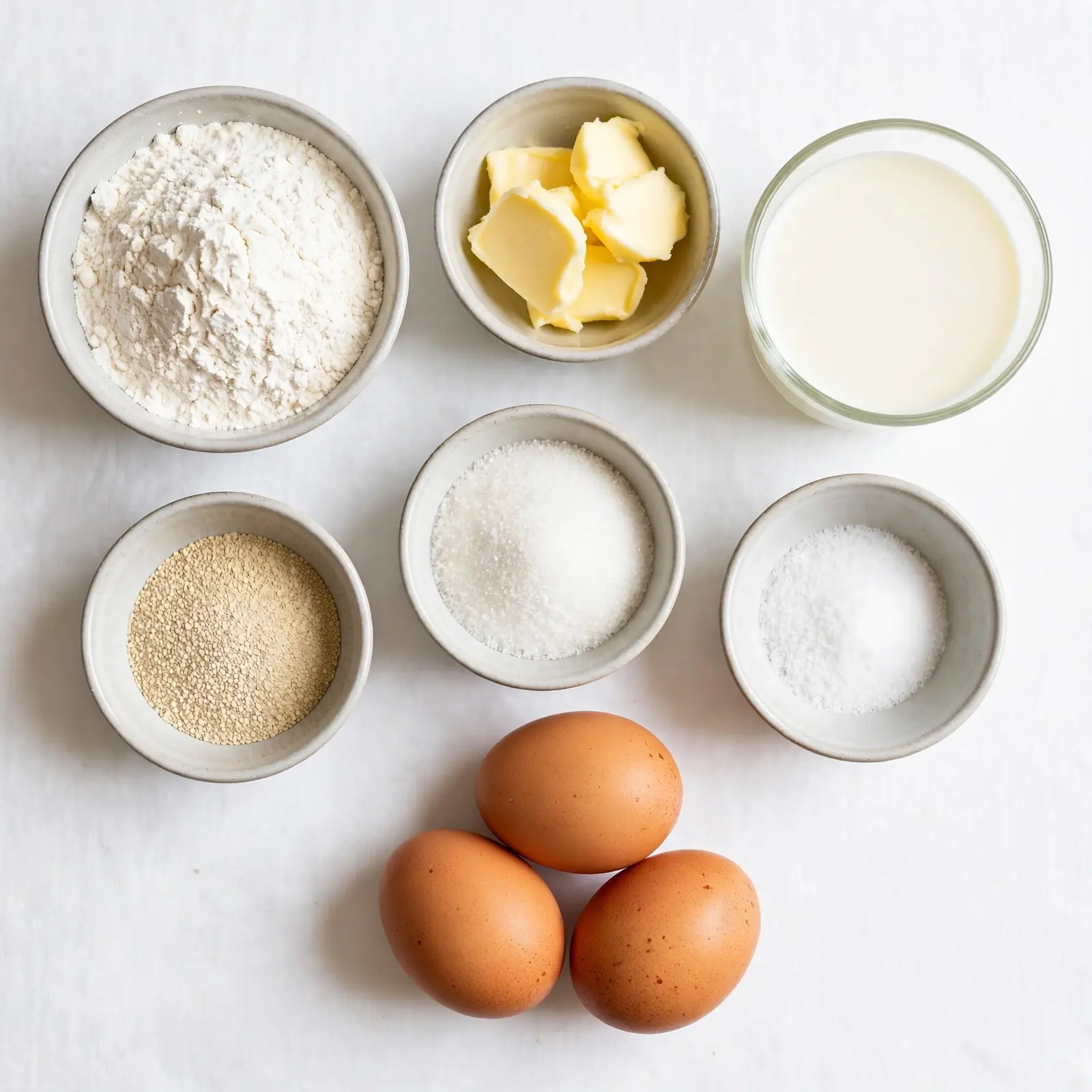
For the Dough
- 4 cups (500g) all-purpose flour, plus extra for dusting
- ¼ cup (50g) granulated sugar
- 2¼ tsp (7g) instant yeast (one standard packet)
- 1½ tsp fine sea salt
- 1 cup (240ml) whole milk, warmed to about 100°F (lukewarm, not hot)
- 2 tbsp (30g) unsalted butter, softened (for the initial dough)
For the Butter Block (Lamination)
- 1 cup + 2 tbsp (250g) cold unsalted European-style butter (83–84% fat content works best)
For the Egg Wash
- 1 large egg
- 2 tbsp whole milk
The magic here is contrast — a soft, slightly sweet dough wrapped around cold, firm butter. As the layers hit the oven’s heat, the butter steams and separates each layer into that unmistakable honeycomb of flaky, golden pastry.
How to Make Croissant Recipe — Step-by-Step
Step 1: Make the Dough
In a large bowl, whisk together the flour, sugar, yeast, and salt. Add the warm milk and softened butter. Mix until a shaggy dough forms, then turn it out onto a clean surface and knead for about 3–4 minutes until smooth — it should feel soft but not sticky. Shape it into a rectangle (roughly 8×5 inches), wrap tightly in plastic wrap, and refrigerate for at least 1 hour or overnight. Don’t worry if the dough feels a little firm when you first pull it out — that’s exactly what you want going into the next step.
Step 2: Prepare the Butter Block
Place your cold butter between two sheets of parchment paper. Using a rolling pin, pound and roll it into a flat 7-inch square. The butter should be pliable but still cold — it should bend slightly without cracking or crumbling. If it snaps, let it sit at room temperature for 5 minutes, then try again. Pop it in the fridge while you roll out your dough.
Step 3: Laminate the Dough (First Set of Folds)
On a lightly floured surface, roll your chilled dough into a rectangle roughly 14×8 inches. Place the butter square in the center, fold the dough over it like an envelope, and pinch the edges to seal the butter inside completely. Now roll the whole package gently into a long rectangle (about 20×8 inches), working from the center outward. Fold the dough into thirds like a letter — this is your first “turn.” Wrap and refrigerate for 30 minutes. Don’t worry if your edges aren’t perfectly straight at this stage — the dough is forgiving.
Step 4: Complete the Remaining Turns
Remove the dough and repeat the rolling and folding process two more times for a total of three turns, chilling for 30 minutes between each one. By the end, you’ll notice the dough feels silkier and you can start to see faint butter layers through it. That’s your cue that everything is going perfectly. After the final turn, wrap the dough and refrigerate for at least 1 hour, or up to overnight.
Step 5: Shape the Croissants
Roll the chilled dough into a large rectangle about ⅛ inch thick (roughly 24×12 inches). Using a sharp knife or pizza wheel, cut long triangles — each with a base of about 4 inches. Starting at the wide base of each triangle, roll toward the tip with gentle, even pressure. Curve the ends slightly inward to form that classic crescent shape. Place them on parchment-lined baking sheets, point-side down.
Step 6: Proof and Bake
Cover the shaped croissants loosely with plastic wrap and let them proof at room temperature for 2–3 hours, until they look noticeably puffed and jiggle slightly when you nudge the tray. Brush each one gently with egg wash (don’t let it drip down the cut sides — it can seal the layers). Bake at 400°F (200°C) for 18–22 minutes, until deep golden brown. You’ll know they’re ready when the tops are a rich amber and the whole kitchen smells irresistibly nutty and buttery.
Perfecting This Recipe
- Keep everything cold. Warm butter melts into the dough instead of staying in layers — if your kitchen is warm, work quickly and chill more often.
- Use a bench scraper to lift and move dough without stretching it out of shape.
- Roll from the center outward, not back and forth, to keep layers even and intact.
- Don’t skip the resting time between turns — it relaxes the gluten and prevents the dough from springing back when you roll it.
- The proof is done when the croissants look puffy and wobble gently when the pan is moved — not when a set amount of time has passed.
- Let them cool on the pan for at least 10 minutes before eating. The interior is still setting as they cool, and cutting too early gives you a gummy crumb.
- Avoid pressing down with the rolling pin — use the weight of the pin and let it do the work gently.
Common Mistakes to Avoid
- Using regular American butter — American butter typically has a lower fat content (80%), which means more water that can make your layers gummy. European-style butter with 83–84% fat gives you crisp, defined layers.
- Letting the butter get too warm — If the butter softens and starts to merge with the dough during lamination, your layers disappear. Work cold and work fast, then chill immediately.
- Skipping the full proof — Under-proofed croissants come out dense and bready with a tight crumb. Give them the full 2–3 hours at room temperature and trust the process.
- Brushing egg wash on the cut layers — If egg wash drips down the sides where you can see the layers, it glues them together in the oven and prevents proper puffing. Apply it only to the top.
- Opening the oven too early — The steam inside the oven is what drives those layers apart. Resist opening the door for the first 15 minutes of baking.
Add Your Touch
- Fill each triangle with a thin strip of dark chocolate before rolling for pain au chocolat.
- Add a thin spread of almond cream (frangipane) to the base of each triangle before rolling for an almond croissant.
- Sprinkle flaky salt on top of the egg wash for a sweet-savory finish that feels very French.
- Add a small cube of brie and a dab of fig jam before rolling for a crowd-pleasing appetizer version.
- Dust finished croissants with powdered sugar and drizzle with simple syrup right out of the oven for a glazed effect.
- In fall, add a thin layer of spiced apple butter to each triangle before shaping.
Visit Also: Mango Smoothie
What to Serve With This
- A strong café au lait or a smooth flat white — classic and absolutely right.
- Fresh orange juice, freshly squeezed if you can manage it.
- A simple fruit salad with berries and a squeeze of lemon to cut through the richness.
- A soft-scrambled egg alongside for a more substantial breakfast.
- Apricot jam and salted butter on the side for the most traditional French breakfast experience.
Storing and Serving
Fridge:
Once fully cooled, store croissants in an airtight container at room temperature for up to 2 days. Refrigerating them is not recommended — the cold air dries them out and makes them tough.
Freezer:
Freeze fully baked, cooled croissants in a zip-top bag for up to 2 months. Freeze shaped, unbaked croissants (before proofing) on a tray, then transfer to a bag once solid — bake from frozen after thawing overnight in the fridge and completing the room-temperature proof.
Reheating:
Warm baked croissants in a 350°F (175°C) oven for 5–7 minutes to refresh the crust. Avoid the microwave — it turns that beautiful crunch into a soft, chewy shell.
Make-Ahead Tip:
The dough can be made through all three lamination turns and refrigerated for up to 24 hours before shaping. Shaped, unbaked croissants can also be refrigerated overnight and proofed the next morning — a great option for fresh-baked croissants without an early alarm.
Servings:
This recipe yields approximately 12 croissants.
Nutrition (Approximate Per Serving)
- Calories: 340
- Total Fat: 20g
- Saturated Fat: 12g
- Carbohydrates: 34g
- Sugar: 5g
- Protein: 6g
- Sodium: 210mg
Nutritional values are approximate and may vary based on specific ingredients and brands used.
Chef’s Helpful Tips
- Use room temperature egg for the egg wash — cold egg doesn’t emulsify as smoothly and can streak the surface.
- If your dough keeps springing back when you roll it, cover it and let it rest for 10 minutes. Fighting the gluten wastes time and energy.
- For clean, sharp triangles, use a very sharp knife or a pizza cutter in a single confident stroke — sawing back and forth compresses the layers on the cut edge.
- Quality butter is genuinely non-negotiable here. Kerrygold, Plugrà, or any European-style varietal makes a visible and tasteable difference.
- If your finished croissants look flat or dense, the most common culprit is under-proofing. Next batch, give them an extra 30–45 minutes at room temperature.
Frequently Asked Questions
Q1. Can I use bread flour instead of all-purpose flour?
You can, but it’s not ideal. Bread flour has higher protein content, which creates more gluten and can make the dough tougher and harder to roll out thin. All-purpose flour gives you that tender, delicate crumb you’re aiming for in a proper French croissant recipe.
Q2. How do homemade croissants compare to bakery ones?
Honestly? When you nail the butter block and the proof, they’re shockingly close. The main difference is practice — professional bakers have muscle memory for the lamination. Your first batch will still taste incredible, and by the third or fourth, you’ll be rolling with real confidence.
Q3. Is this recipe beginner-friendly?
It’s beginner-possible with a little patience. The technique is repetitive rather than complicated — you’re really just rolling, folding, and chilling several times. Read through the full recipe before you start, give yourself a weekend morning, and don’t rush the chilling steps.
Q4. Can I make these ahead for a brunch or party?
Absolutely. Shape them the night before, arrange on your baking sheets, cover loosely, and refrigerate. Pull them out in the morning, let them proof at room temperature for 2–3 hours, then bake. You’ll have fresh, warm croissants ready right when your guests arrive.
Q5. Can I freeze the unbaked croissants?
Yes, and it’s one of the best tricks for this recipe. After shaping, freeze them on a tray until solid, then transfer to a freezer bag. When you’re ready to bake, thaw them in the fridge overnight, let them proof at room temperature for 3–4 hours (slightly longer than fresh), then egg wash and bake as usual.
Conclusion
There’s something genuinely meaningful about making a croissant recipe from scratch — not because it’s difficult, but because it asks you to slow down. To chill the dough, to wait, to trust that all those careful folds are building something worth the time. And when you finally pull that tray from the oven and hear that crunch, you’ll feel it. That’s not just breakfast. That’s craft.
Make these for a slow weekend, for someone you love, for a brunch table you want people to remember. Leave a little room for imperfection — your first batch might not look like a pastry shop window, but they’ll taste like something made with real intention. And that’s always worth more than perfect. Try them, share them, and make them your own.

Buttery Homemade Croissant Recipe
Course: Trending Recipes12 croissants
servings1
hour18
minutes340
kcal180-240
minutes6
hoursThese golden, flaky croissants have a crackling crust, a soft layered interior, and a rich buttery flavor that makes them perfect for weekend brunch, holiday mornings, or any time you want to make something truly special from scratch.
Ingredients
For the Dough:
4 cups (500g) all-purpose flour, plus extra for dusting
¼ cup (50g) granulated sugar
2¼ tsp (7g) instant yeast
1½ tsp fine sea salt
1 cup (240ml) whole milk, warmed to about 100°F
2 tbsp (30g) unsalted butter, softened
For the Butter Block:
1 cup + 2 tbsp (250g) cold unsalted European-style butter
For the Egg Wash:
1 large egg
2 tbsp whole milk
Directions
- Combine flour, sugar, yeast, and salt. Add warm milk and softened butter. Knead 3–4 minutes into a smooth dough. Shape into a rectangle, wrap, and refrigerate at least 1 hour.
- Pound cold butter into a 7-inch square between parchment sheets. Refrigerate until firm but pliable.
- Roll dough to a 14×8-inch rectangle. Encase butter block, seal edges, and roll to 20×8 inches. Fold into thirds. Wrap and refrigerate 30 minutes.
- Repeat rolling and folding two more times, chilling 30 minutes between each turn. Refrigerate at least 1 hour after the final turn.
- Roll dough to ⅛-inch thickness. Cut into triangles with 4-inch bases. Roll each from base to tip. Curve ends into crescents and place point-side down on lined baking sheets.
- Proof uncovered at room temperature 2–3 hours until visibly puffed. Brush tops with egg wash.
- Bake at 400°F (200°C) for 18–22 minutes until deep golden brown. Cool on pan 10 minutes before serving.