The Irresistible Kung Pao Chicken That Beats Your Favorite Takeout
The wok hissed the second the chicken hit the hot oil, and within seconds the kitchen filled with that unmistakable smell of toasted chilies and garlic. I stood there with a spatula in hand, stealing a peanut straight from the bag, already knowing dinner was going to disappear fast.
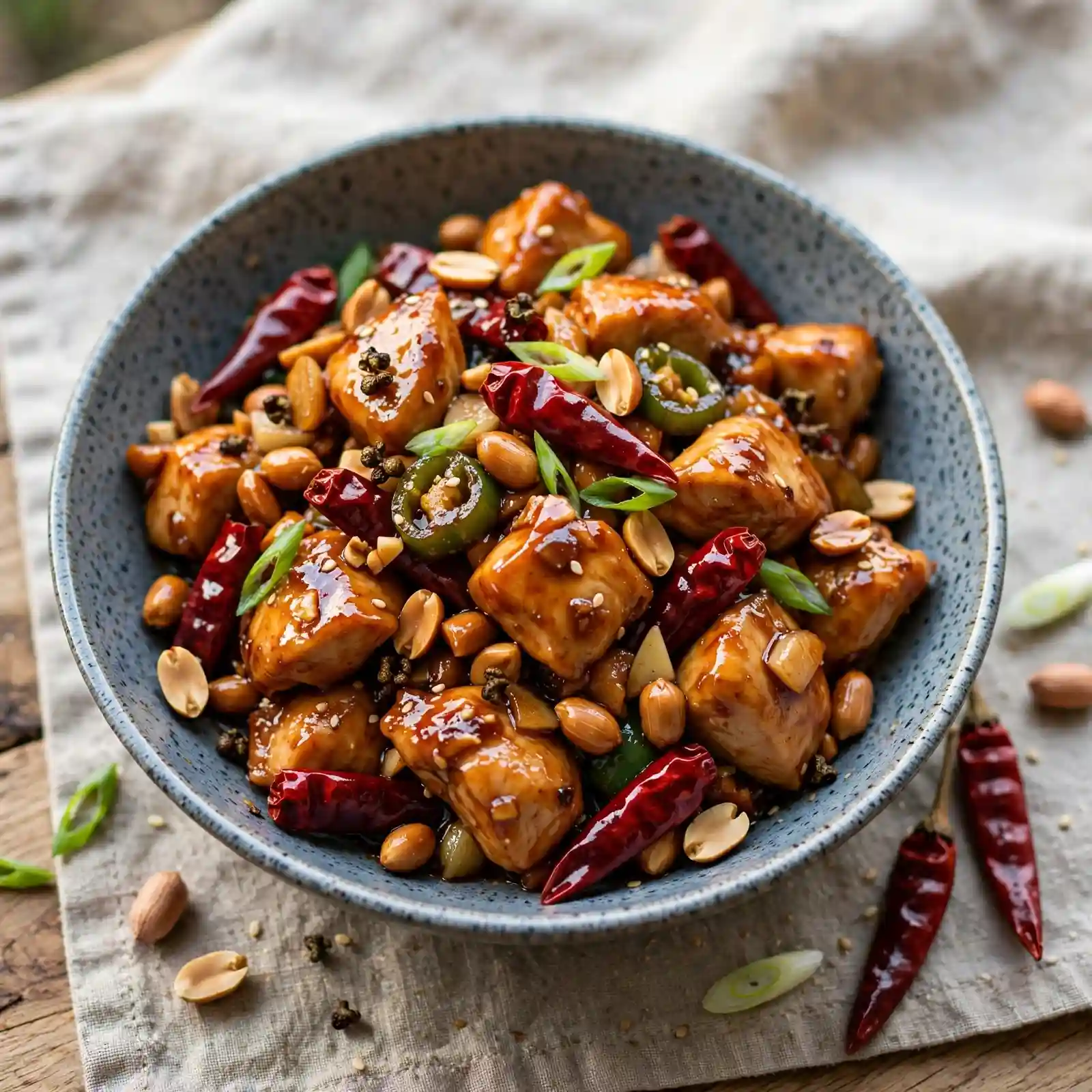
This Kung Pao Chicken is everything you want in a stir-fry: tender bites of chicken coated in a glossy, savory-sweet sauce, punctuated by the sharp bite of dried chilies and the deep crunch of roasted peanuts. Every forkful hits a different note — a little heat, a little tang, a little smoky depth from the charred chilies — and it all comes together in a sauce that clings to every piece instead of pooling at the bottom of the bowl.
It’s the kind of dish that fits anywhere on your calendar. Serve it on a busy weeknight when you need dinner on the table in thirty minutes, or scale it up for a potluck where it’ll disappear before the rice does. This homemade chicken stir fry recipe also happens to be a fantastic way to use up whatever vegetables are hanging around your crisper drawer, so let’s get into how it comes together.
Why You’ll Love This Recipe
Bold, Balanced Flavor
This sauce hits sweet, salty, tangy, and spicy all at once, so no single note overwhelms the dish. It’s the kind of balance that makes you go back for “just one more bite” — three times.
Satisfying Texture Contrast
Crispy-edged chicken, snappy vegetables, and crunchy peanuts all play off each other in every bite. Nothing here is mushy or one-note.
Faster Than Delivery
From prep to plate, this comes together in about 30 minutes — often quicker than waiting on a delivery order. Most of the work is just chopping.
Crowd-Pleasing at Any Table
Whether it’s a family dinner or a potluck spread, this dish gets emptied fast. It reheats well too, so leftovers are never a problem.
Classic Flavor, Approachable Method
It has all the deep, authentic flavor of restaurant-style Kung Pao Chicken, but without any hard-to-find techniques. A home cook with a skillet can absolutely nail this.
Ingredients
For the Chicken and Marinade
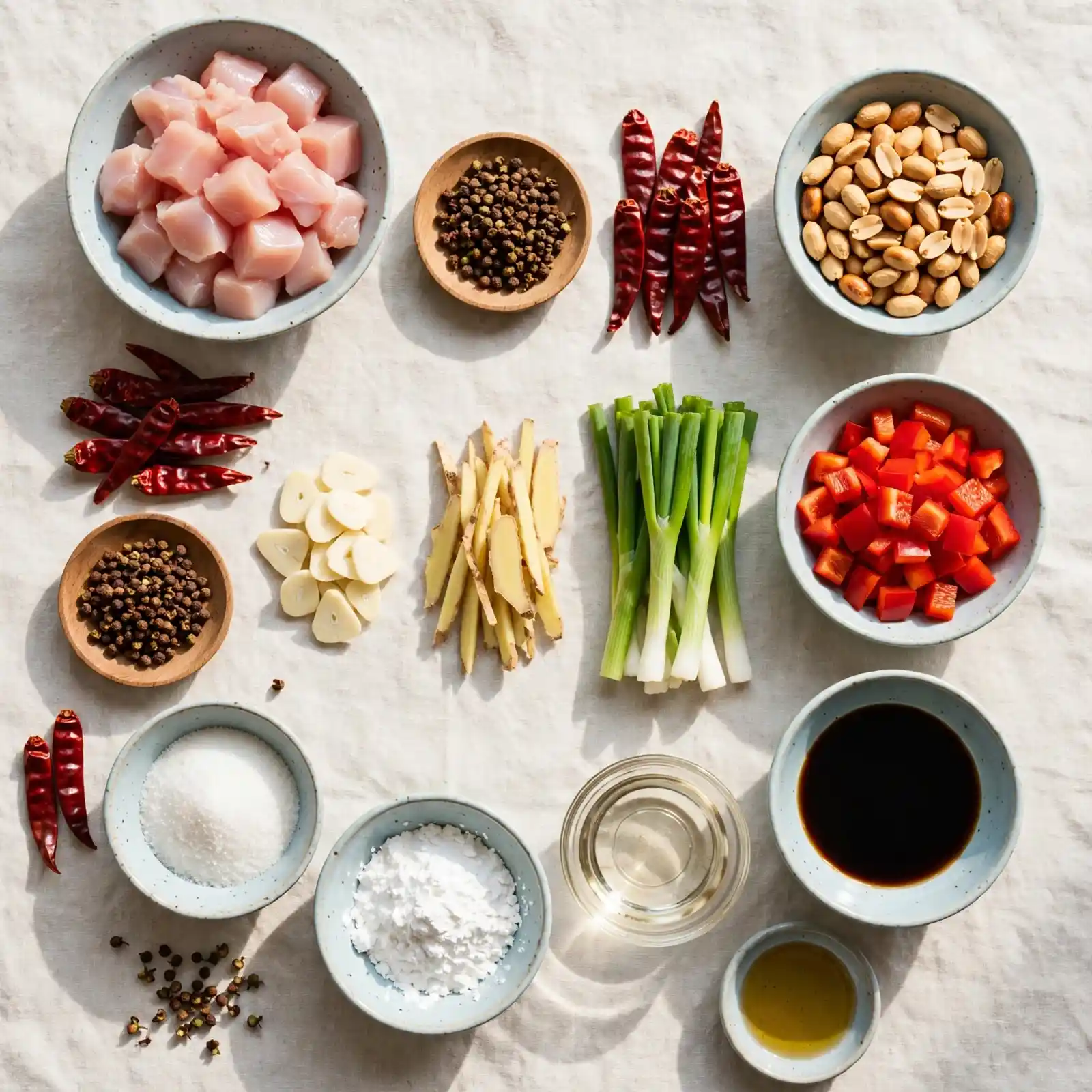
- 1 ½ lbs boneless, skinless chicken thighs, cut into 1-inch cubes (thighs stay juicier than breast, but breast works too)
- 1 tablespoon soy sauce
- 1 tablespoon Shaoxing wine (or dry sherry)
- 1 teaspoon cornstarch
- ½ teaspoon white pepper (black pepper works in a pinch)
For the Stir-Fry
- 3 tablespoons vegetable oil, divided
- 8–10 dried red chilies, stems trimmed (adjust to your heat preference)
- 1 teaspoon Sichuan peppercorns (optional, for authentic numbing heat)
- 3 cloves garlic, minced
- 1 tablespoon fresh ginger, minced
- 3 green onions, whites and greens separated, sliced into 1-inch pieces
- 1 red bell pepper, diced (adds sweetness and color)
- ½ cup roasted, unsalted peanuts (roast your own for extra crunch if you have time)
For the Kung Pao Sauce
- 2 tablespoons soy sauce
- 1 tablespoon dark soy sauce (adds color and deeper flavor; regular soy sauce can substitute)
- 2 tablespoons black vinegar (rice vinegar works as a substitute)
- 1 tablespoon sugar
- 1 tablespoon Shaoxing wine
- 1 tablespoon cornstarch
- 3 tablespoons water
- 1 teaspoon sesame oil, added at the end for aroma
Together, the marinade keeps the chicken tender while it cooks fast over high heat, and the sauce brings that signature sweet-tangy-savory punch that ties every element of the dish together.
How to Make Kung Pao Chicken — Step-by-Step
Step 1: Marinate the Chicken
Toss the cubed chicken with soy sauce, Shaoxing wine, cornstarch, and white pepper. Let it sit for at least 15 minutes while you prep everything else. Don’t worry if it looks a little wet and sticky — that coating is what helps the chicken get a nice glossy sear.
Step 2: Mix the Sauce
Whisk together the soy sauces, black vinegar, sugar, Shaoxing wine, cornstarch, and water in a small bowl until smooth. Set it aside near the stove — once the stir-fry starts, everything moves fast.
Step 3: Sear the Chicken
Heat 2 tablespoons of oil in a wok or large skillet over high heat until it’s shimmering. Add the chicken in a single layer and let it sear undisturbed for about a minute before stirring. You’re looking for golden, slightly crisp edges. Don’t worry if some pieces aren’t fully cooked through yet — they’ll finish later. Remove the chicken and set aside.
Step 4: Toast the Chilies and Aromatics
Add the remaining oil to the same pan. Toss in the dried chilies and Sichuan peppercorns, stirring constantly for about 30 seconds until fragrant and just starting to darken. Watch closely here — they can go from toasty to burnt quickly, and burnt chilies turn bitter.
Step 5: Build the Stir-Fry
Add the garlic, ginger, and the white parts of the green onions, stirring for about 20 seconds until fragrant. Add the bell pepper and cook for a minute until just starting to soften but still crisp.
Step 6: Combine and Glaze
Return the chicken to the pan, then give the sauce a quick re-stir and pour it in. Stir everything together for 1–2 minutes until the sauce thickens and coats every piece in a glossy layer. You’ll know it’s ready when the sauce clings to the spatula instead of running off.
Step 7: Finish and Rest
Stir in the peanuts and green onion tops, then drizzle with sesame oil. Let the dish rest off the heat for a couple of minutes — this allows the sauce to settle and thicken slightly before serving.
Perfecting This Recipe
- Get your pan very hot before adding the chicken; a properly hot wok is what gives you that seared, slightly smoky “wok hei” flavor.
- Don’t overcrowd the pan when searing the chicken — cook in batches if needed, or it’ll steam instead of sear.
- Toast the dried chilies just until fragrant; a few extra seconds can turn them bitter.
- Keep the sauce ingredients pre-mixed and within reach, since the cooking process moves quickly once everything hits the pan.
- Add the peanuts at the very end so they stay crunchy instead of going soft in the sauce.
- Let the dish rest briefly before serving — this helps the sauce cling properly instead of pooling.
Common Mistakes to Avoid
- Skipping the marinade — Even 15 minutes makes a noticeable difference in how tender and flavorful the chicken turns out.
- Burning the dried chilies — Once they turn black, they taste bitter and can ruin the whole dish. Pull them the moment they smell toasty.
- Overcrowding the pan — Too much chicken at once drops the pan’s temperature and leads to steamed, gray chicken instead of a good sear.
- Adding peanuts too early — They lose their crunch if they sit in the hot sauce too long.
- Not having the sauce pre-mixed — This dish moves fast once it starts; scrambling to measure ingredients mid-cook often leads to a burnt pan.
Add Your Touch
- Swap chicken for shrimp or firm tofu for a different protein base.
- Add water chestnuts or diced zucchini for extra crunch and texture.
- Increase or decrease the dried chilies to control the heat level.
- Try cashews instead of peanuts for a slightly sweeter, softer crunch.
- Stir in a splash of chili oil at the end for an extra kick.
Visit Also: Pumpkin Roll Recipe
What to Serve With This
- Steamed jasmine rice is the classic pairing and soaks up the extra sauce beautifully.
- A side of garlic green beans adds a fresh, crisp contrast.
- Egg drop soup makes a light, comforting starter.
- A cold cucumber salad with rice vinegar balances the richness of the stir-fry.
- Iced jasmine tea or a crisp lager both pair nicely with the bold flavors.
Storing and Serving
Fridge: Store in an airtight container for up to 4 days.
Freezer: Freeze in a sealed container for up to 2 months, though the peanuts may soften slightly after thawing.
Reheating: Reheat in a skillet over medium heat for 3–4 minutes, or microwave in 30-second bursts until warmed through.
Make-Ahead Tip: The sauce can be mixed and the chicken marinated up to a day ahead — store separately in the fridge until ready to cook.
Servings: This recipe makes about 4 generous servings.
Nutrition (Approximate Per Serving)
- Calories: 385
- Total Fat: 22g
- Saturated Fat: 4g
- Carbohydrates: 14g
- Sugar: 6g
- Protein: 32g
- Sodium: 890mg
Nutritional values are approximate and may vary based on specific ingredients and brands used.
Chef’s Helpful Tips
- Bring the chicken to room temperature before marinating so it cooks more evenly.
- Keep the heat high and the cooking time short to avoid overcooking the chicken into a tough texture.
- Slice the chicken into uniform cubes so every piece cooks at the same rate.
- Use good-quality soy sauce and black vinegar — they’re the backbone of the sauce, so their flavor really shows.
- If the sauce turns out too thin, let it simmer an extra minute; if it’s too thick, add a splash of water to loosen it.
Frequently Asked Questions
Q1. Can I use chicken breast instead of thighs? Yes, chicken breast works fine — just be careful not to overcook it, since it dries out faster than thighs. Cut it into similar-sized cubes so it cooks evenly.
Q2. Is this the same as what I’d get at a Chinese restaurant? It’s very close to the classic Sichuan-style version, with that same sweet, tangy, and spicy balance you’d expect from takeout. The main difference is you control the heat and quality of ingredients at home.
Q3. Is this recipe good for beginner cooks? Absolutely — the steps are straightforward and forgiving, and having your ingredients prepped ahead of time makes the actual cooking go smoothly. It’s a great recipe for learning basic stir-fry technique.
Q4. Can I make this ahead for a potluck? Yes, though it’s best enjoyed fresh for maximum peanut crunch. If making ahead, keep the peanuts separate and stir them in right before serving.
Q5. Can I freeze Kung Pao Chicken? Yes, it freezes well for up to 2 months in an airtight container. Just know the peanuts will soften a bit after thawing, so adding fresh peanuts when reheating is a nice touch.
Conclusion
There’s a reason Kung Pao Chicken has earned its spot as a takeout menu favorite — that mix of heat, tang, and crunch is hard to resist. Once you make it at home, you’ll notice how much fresher and more vibrant it tastes, with a sauce that’s perfectly balanced to your own preferences.
Give this one a spot in your regular dinner rotation, and don’t be afraid to make it your own with different veggies or a different spice level. However you serve it, I hope it brings the same comfort and satisfaction to your table that it brings to mine.
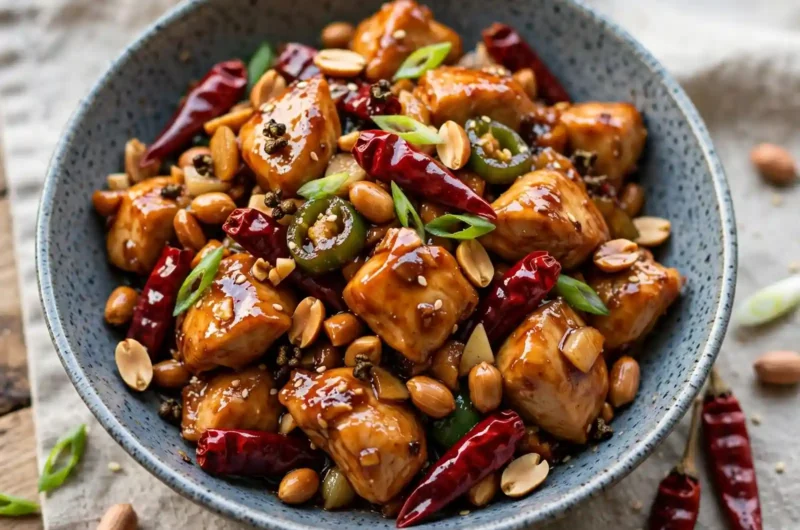
Kung Pao Chicken
Course: Trending Recipes4
servings15
minutes15
minutes385 per serving
kcal30
minutesTender seared chicken tossed in a bold, glossy sweet-spicy sauce with crunchy peanuts and charred chilies — perfect for a fast weeknight dinner or a potluck favorite.
Ingredients
Chicken and Marinade:
1 ½ lbs boneless, skinless chicken thighs, cubed
1 tablespoon soy sauce
1 tablespoon Shaoxing wine
1 teaspoon cornstarch
½ teaspoon white pepper
Stir-Fry:
3 tablespoons vegetable oil, divided
8–10 dried red chilies, trimmed
1 teaspoon Sichuan peppercorns (optional)
3 cloves garlic, minced
1 tablespoon fresh ginger, minced
3 green onions, sliced, whites and greens separated
1 red bell pepper, diced
½ cup roasted, unsalted peanuts
Sauce:
2 tablespoons soy sauce
1 tablespoon dark soy sauce
2 tablespoons black vinegar
1 tablespoon sugar
1 tablespoon Shaoxing wine
1 tablespoon cornstarch
3 tablespoons water
1 teaspoon sesame oil
Directions
- Marinate chicken in soy sauce, wine, cornstarch, and white pepper for 15 minutes.
- Whisk sauce ingredients together in a small bowl.
- Sear chicken in hot oil until golden. Remove and set aside.
- Toast dried chilies and peppercorns for 30 seconds until fragrant.
- Add garlic, ginger, and white green onions; stir 20 seconds.
- Add bell pepper; cook 1 minute.
- Return chicken to pan, pour in sauce, and stir until thickened.
- Stir in peanuts and green onion tops. Drizzle with sesame oil.
- Rest 2 minutes before serving.