
The Easiest Sourdough Starter Recipe for Beginner Bakers Ready to Bake Beautifully
My grandmother kept a jar of sourdough starter in the back corner of her refrigerator for forty years. She called it “the baby.” She fed it every Friday, scooped it into loaves every Saturday, and every Sunday morning the whole house smelled like the best bread you’ve ever eaten. I thought making your own starter was some ancient, mystical art — something only grandmothers and European bakers understood. Then one rainy afternoon I decided to try it myself, and I discovered that flour, water, and a little patience are all you actually need.
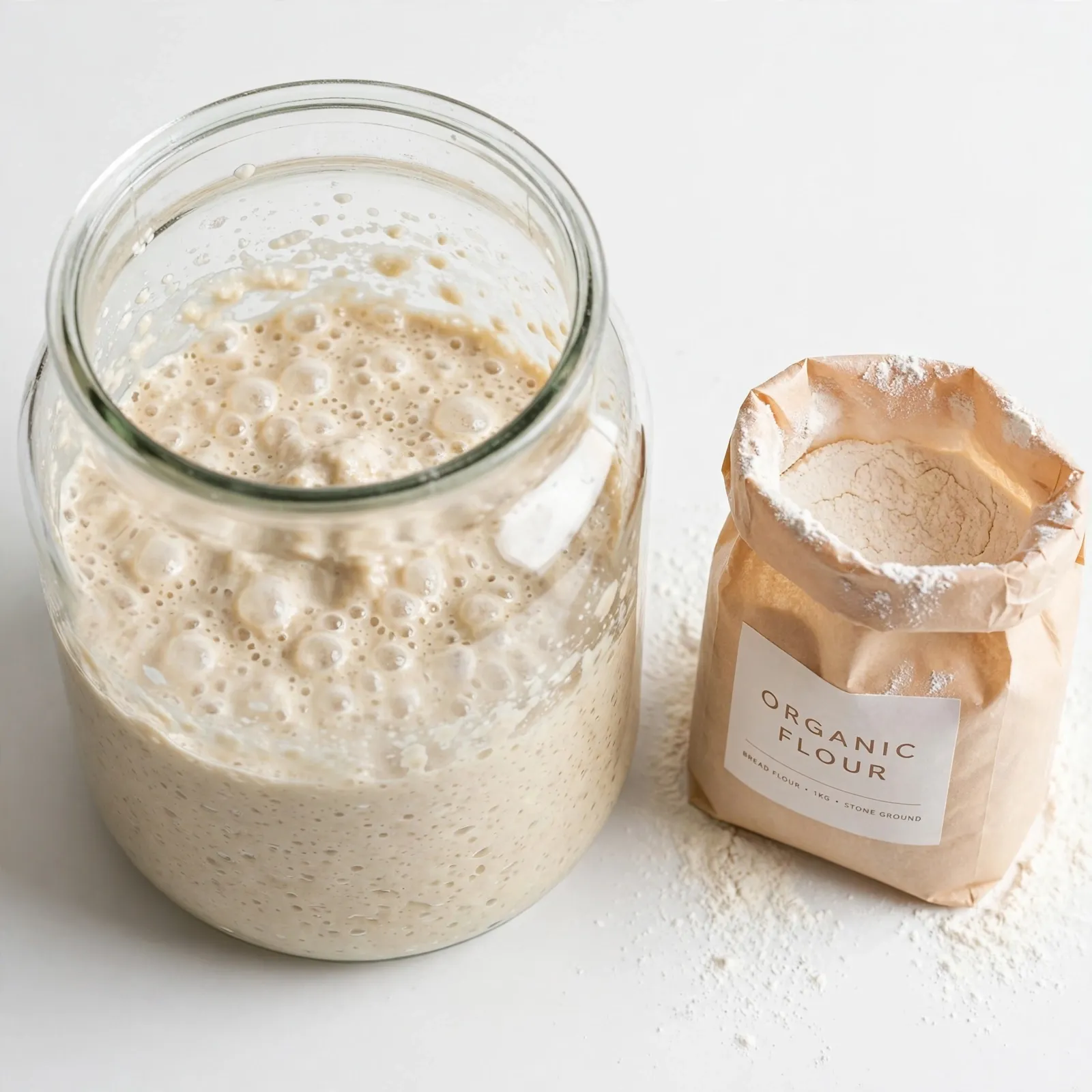
This starter builds slowly over five to seven days, developing a tangy, complex flavor that no commercial yeast can replicate. You’ll notice it start to bubble and rise, smell faintly sour like yogurt or beer, and take on a life of its own. The texture goes from a flat paste on day one to a spongy, webby, living culture that practically begs to be baked with. The aroma alone — mildly funky, pleasantly sour, warm and yeasty — is enough to make you feel like a professional baker before you’ve even turned on the oven.
A sourdough starter recipe is perfect for anyone who loves weekend baking projects, wants to get into homemade sourdough, or is looking for a meaningful slow-food ritual. It fits beautifully into quiet weekend mornings, holiday baking seasons, and long stretches at home when you have time to nurture something. Once you have a thriving wild yeast starter, the doors open wide — to crusty artisan bread loaves, tangy pancakes, crackers, pizza dough, and so much more.
Why You’ll Love This Recipe
It Costs Almost Nothing
All you need is unbleached flour and water. That’s it. This sourdough starter recipe produces a living culture from pantry staples you probably already own, making it one of the most economical baking projects you’ll ever take on.
The Flavor Is Incomparable
Wild fermentation produces lactic and acetic acids that give homemade sourdough its signature tang — a depth and complexity that store-bought yeast simply cannot replicate. Every loaf you bake with this starter will have its own character.
It’s Simpler Than It Looks
The process sounds intimidating, but it really comes down to mixing, waiting, and repeating. There’s no special equipment, no thermometer required, and no experience necessary. If you can stir a bowl, you can make this.
It Lasts Forever with Minimal Effort
Once established, a well-maintained wild yeast starter can live indefinitely in your refrigerator. Feed it once a week and it’ll reward you with fresh fermented dough-ready culture whenever you want to bake.
It Makes You a Better Baker
Understanding how your starter looks, smells, and behaves teaches you instincts that carry over into every baking project. You’ll learn to read dough, understand fermentation timing, and bake with real confidence.
Ingredients
For the Starter Base (Days 1–2)
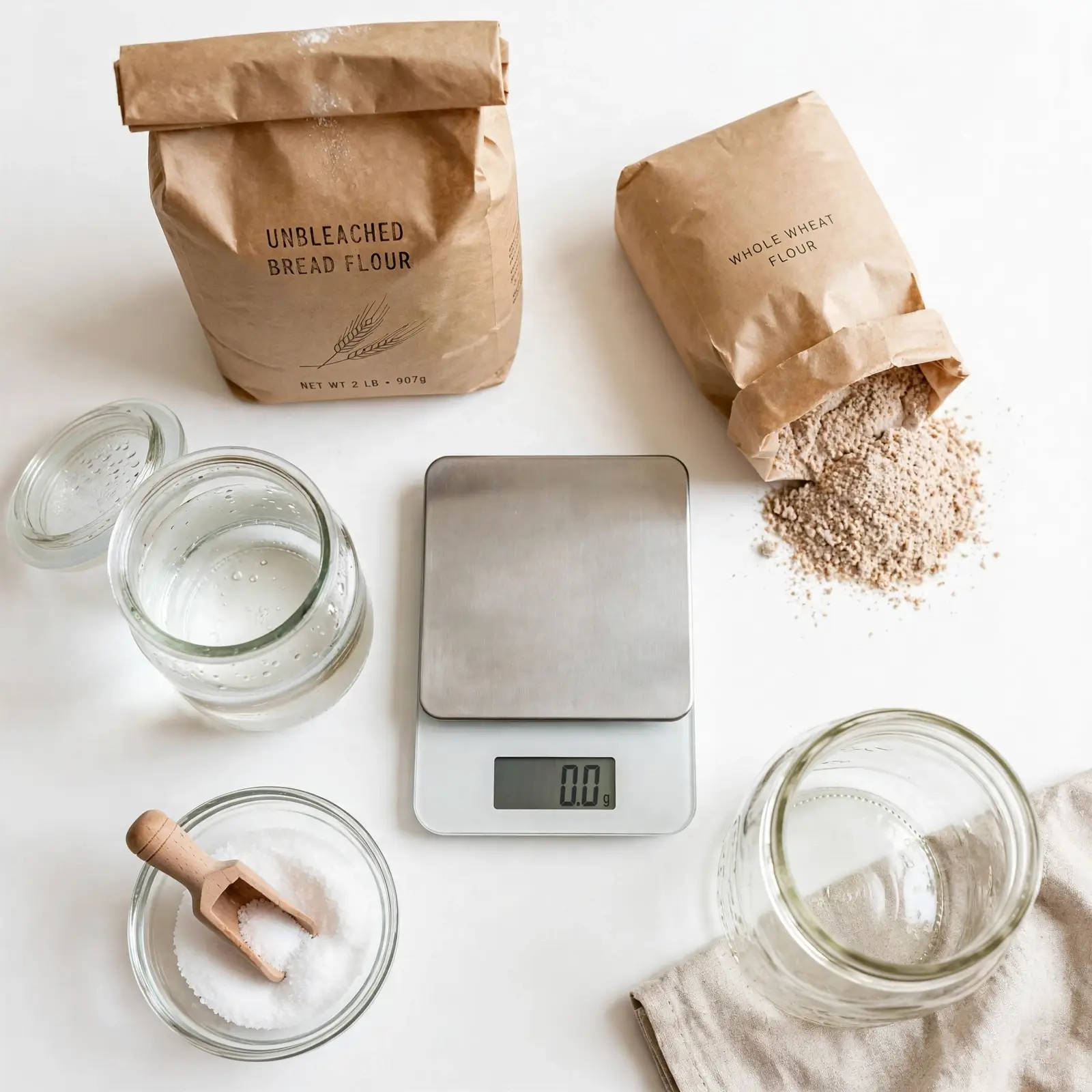
- 50g whole wheat flour (the bran helps attract wild yeast more quickly)
- 50g lukewarm water (around 75–80°F / filtered or left out overnight if chlorinated)
For Daily Feedings (Days 3–7 and Ongoing)
- 50g unbleached all-purpose flour (or bread flour for a stronger starter)
- 50g lukewarm water (same temperature as above)
- 25g active starter from the previous day (discard the rest before each feeding)
Optional Boost (Days 1–2 Only)
- 1 tsp raw honey or a pinch of rye flour (both attract wild yeast and can help kick-start fermentation)
The whole wheat flour on day one gives the starter a head start by introducing more natural wild yeast and bacteria from the grain’s outer bran layer. Once fermentation is underway, switching to all-purpose flour gives the culture a stable, clean base to grow from, resulting in a balanced, reliably sour flavor.
How to Make a Sourdough Starter Recipe — Step-by-Step
Step 1: Mix Your First Batch (Day 1)
In a clean glass jar or tall container, combine 50g whole wheat flour with 50g lukewarm water. Stir vigorously until no dry flour remains and the mixture looks like a thick, smooth paste. Cover loosely with a cloth, plastic wrap with holes, or a jar lid left slightly ajar — you want airflow but no debris falling in. Set it in a warm spot (ideally 70–78°F) and leave it alone for 24 hours. Don’t worry if nothing happens yet — wild yeast takes time to wake up.
Step 2: Check for Life and Feed Again (Day 2)
After 24 hours, peek at your starter. You may see a few small bubbles, or it may look exactly the same — both are completely normal at this stage. Discard all but about 25g of the mixture, then add 50g fresh all-purpose flour and 50g lukewarm water. Stir until smooth, cover loosely, and return to your warm spot. The discard step feels wasteful at first, but it keeps the acid levels balanced and gives the yeast room to thrive.
Step 3: Look for Bubbles and Growth (Days 3–4)
By day three, you should start seeing real activity — bubbles throughout the starter, maybe even some doming at the top and a slightly sour, tangy smell. Repeat the same feeding process: discard down to 25g, add 50g flour and 50g water, stir, cover, rest. Don’t worry if it smells a little funky or like overripe fruit at this point — that’s completely normal and actually a sign your fermentation is working. The smell will mellow and become pleasantly sour as the days go on.
Step 4: Feed Twice Daily as Activity Peaks (Days 5–6)
Once your starter is visibly doubling in size between feedings and smells consistently tangy and yeasty (a bit like yogurt or beer), switch to feeding it twice a day — once in the morning and once in the evening. Maintain the same 25g starter / 50g flour / 50g water ratio each time. You’ll notice the starter rising quickly after feedings, peaking with a domed, bubbly top, then slowly deflating — this peak moment is exactly when it’s most powerful for baking.
Step 5: The Float Test — It’s Ready (Day 7)
Drop a small spoonful of your starter into a glass of water. If it floats, your sourdough starter recipe has produced a fully active, bubbly culture full of trapped gas — it’s ready to bake with. If it sinks, give it one or two more feedings and test again. Your starter should smell pleasantly sour, look webby and aerated when stirred, and double reliably within 4–8 hours of each feeding. Once it passes the float test, it’s yours to bake with, refrigerate, and keep alive for years.
Perfecting This Recipe
- Use a consistent feeding time each day so your starter builds a predictable rhythm. Morning feedings work well because you can watch it rise throughout the day.
- Water temperature matters more than you think. Too cold and fermentation slows to a crawl; too hot (above 90°F) and you risk killing your wild yeast. Lukewarm — the temperature of a comfortable bath — is your sweet spot.
- Weight, not volume. A kitchen scale makes this process far more consistent. Flour measured by cup varies wildly depending on how tightly packed it is.
- The jar you use should be at least three times the size of your starter. It will expand significantly between feedings, and you don’t want it overflowing overnight.
- Mark the jar with a rubber band or piece of tape after each feeding. This lets you track exactly how much it rises and when it peaks.
- Cooler kitchens slow fermentation, warmer ones speed it up. If your kitchen runs cold, try placing the jar near (not on top of) a warm appliance or wrapping it in a towel to hold warmth.
- Don’t skip the discard. It’s tempting to keep everything and just add more flour, but the discard step controls acidity and keeps the yeast healthy. Use the discard in pancakes, waffles, or crackers — nothing goes to waste.
Common Mistakes to Avoid
- Using chlorinated tap water directly — Chlorine can inhibit the wild yeast and slow or stall fermentation. Let tap water sit uncovered for an hour before using, or use filtered water from the start.
- Placing the starter somewhere too warm — A spot that’s too hot (near the back of a running oven, for instance) can make fermentation run out of control and produce an overly acidic, thin starter. Aim for 70–78°F consistently.
- Giving up after day two or three — The first few days can look discouraging. Barely any bubbles, odd smells, and seemingly no action are all normal. Wild yeast development is slow at first and then suddenly rapid. Patience is the most important ingredient.
- Skipping feedings — Consistency is critical during the first week. Missing a feeding throws off the balance between yeast and bacteria and can lead to a weak or overly sour culture that takes extra time to recover.
- Using bleached flour or heavily processed flour — Bleached flour has fewer natural yeasts and nutrients on it. Unbleached all-purpose or bread flour gives your starter more to work with, especially in those early days.
Add Your Touch
- Try a 50/50 blend of whole wheat and all-purpose flour for a nuttier, more complex flavor in your ongoing feedings.
- Add a tablespoon of rye flour every few feedings — rye is packed with wild yeast and gives the starter an extra boost of activity and flavor.
- Keep a stiff starter (60g flour to 40g water) for a milder, less sour bread, or a liquid starter (equal parts by weight) for a tangier result — the hydration level shapes the final flavor.
- Use your sourdough discard daily in waffles, crackers, banana bread, or flatbreads so nothing is ever wasted.
- Name your starter — bakers have been naming their starters for centuries, and it’s a small, delightful way to feel connected to the tradition of fermented dough.
Visit Also: Pecan Pie Bars
What to Serve With This
- Classic sourdough bread loaf — the most natural next step once your starter is mature and reliably active
- Sourdough pancakes or waffles — made with the daily discard, fluffy, tangy, and perfect with maple syrup
- Sourdough pizza dough — long-fermented for a chewy, flavorful crust that changes pizza night forever
- Sourdough focaccia — pillowy, olive-oil-rich, and an excellent beginner’s first full loaf
- Cultured butter or good olive oil — because fresh homemade bread deserves a worthy accompaniment
Storing and Serving
Fridge: Once your starter is fully active, store it in a lidded jar in the refrigerator. It will keep for up to one week between feedings without any attention. When you want to bake, pull it out, feed it once at room temperature, wait for it to peak, then bake.
Freezer: Yes, you can freeze your starter. Spread a thin layer on parchment paper, let it dry completely, break it into flakes, and seal in a zip-lock bag. Frozen starter stays viable for up to 3 months. To revive, dissolve the flakes in water, mix with fresh flour, and resume normal feedings over 3–5 days.
Reheating: Not applicable — starter is a live culture, not a cooked dish. Simply bring it to room temperature and feed it before use if it’s been refrigerated.
Make-Ahead Tip: This recipe is entirely built around a make-ahead timeline. Begin your starter 7–10 days before you want to bake your first loaf. Once established, it can remain dormant in the fridge for up to a week at a time with minimal maintenance.
Servings: One active starter jar yields enough culture to leaven multiple loaves of homemade sourdough bread. Most bread recipes call for 50–100g of active starter per loaf.
Nutrition (Approximate Per 50g Active Starter, Unfed)
- Calories: 95
- Total Fat: 0.3g
- Saturated Fat: 0g
- Carbohydrates: 20g
- Sugar: 0g
- Protein: 2.8g
- Sodium: 1mg
Nutritional values are approximate and may vary based on specific ingredients and brands used.
Chef’s Helpful Tips
- Use unbleached flour from the start. The natural yeasts clinging to unprocessed flour grains are what kickstart fermentation — bleached flour strips a lot of that away.
- Room temperature water is non-negotiable. Straight-from-the-tap cold water shocks the yeast and slows the whole process. A few minutes in a warm bowl fixes this.
- Mark your jar after every feeding. A rubber band or a strip of tape lets you see exactly when the starter peaks — and knowing that window is the key to baking great bread.
- If your starter develops a grey liquid on top, don’t panic. This is called “hooch” — a sign the starter is hungry. Pour it off, feed the starter, and it will bounce back within a day.
- If fermentation seems stuck after day five, try moving the jar somewhere slightly warmer, adding a teaspoon of rye flour at the next feeding, or switching to filtered water if you’ve been using tap.
Frequently Asked Questions
Q1. Can I use all-purpose flour instead of whole wheat on day one? Yes, absolutely — it just may take a day or two longer to see the first signs of activity. Whole wheat flour jump-starts fermentation because of the natural wild yeast living on the bran, but all-purpose flour will absolutely get there. If things seem slow, add a small pinch of rye flour or a drop of raw honey to give it an extra nudge.
Q2. What does a healthy sourdough starter smell like? A mature, active starter smells pleasantly tangy — somewhere between yogurt and beer, with a mild vinegar or yeasty undertone. Early on it may smell a little funky or even like acetone, which is normal and will mellow as fermentation balances out. If it smells truly foul, like rotting food, that’s a sign of contamination and you should start fresh.
Q3. Is this beginner-friendly if I’ve never baked bread before? One hundred percent. This sourdough starter recipe requires no baking at all — just stirring, waiting, and feeding. It’s actually a wonderful entry point into bread baking because it teaches you to understand fermentation before you ever shape a loaf. Most first-time starters succeed beautifully, and the process is very forgiving.
Q4. Can I make the starter ahead of time for holiday baking? Definitely. A fully active starter keeps almost indefinitely in the fridge with weekly feedings. Start it 2–3 weeks before the holidays, establish it thoroughly, then maintain it in the refrigerator until you’re ready to bake. Pull it out the day before, feed it, let it peak, and you’re ready to go.
Q5. Can I freeze my starter if I go on vacation? Yes — freezing is the best long-term storage option. Dry a thin layer on parchment, crumble into flakes, and seal in a freezer bag for up to 3 months. When you return, dissolve the flakes in warm water, mix with fresh flour, and resume daily feedings for about 3–5 days until it’s fully active again. Many bakers keep a backup frozen portion just in case.
Conclusion
There is something deeply satisfying about building something alive from nothing more than flour and water — and then feeding it, watching it grow, and eventually turning it into a loaf of warm, crusty homemade sourdough. This sourdough starter recipe isn’t just a baking project; it’s a ritual that slows you down, connects you to something ancient, and produces genuinely better bread than anything you can buy. Once you have a thriving culture in your refrigerator, you’ll find yourself planning weekends around it, sharing spoonfuls with friends, and wondering how you ever baked without it.
So find a clean jar, pull out your flour and water, and give yourself seven days to discover what bakers have known for thousands of years. This starter will become yours — shaped by your kitchen’s temperature, your local air, your flour, your hands. Try it once and you’ll understand why people pass these cultures down through generations. When you bake your first loaf and the crust crackles under your knife and the whole kitchen fills with that sour, toasty, unmistakable aroma — you’ll be completely, happily hooked. I cannot wait for you to try it.
Sourdough Starter Recipe — From Scratch in 7 Days
Course: Trending Recipes5
minutes168
hours95 per 50g unfed starter
kcal168
hours5
minutesA step-by-step guide to creating a wild yeast starter using only flour and water. The result is a bubbly, tangy, living culture that leavens artisan bread with incredible depth of flavor — perfect for weekend bakers and sourdough enthusiasts of every level.
Ingredients
Starter Base (Days 1–2):
50g whole wheat flour
50g lukewarm water
Daily Feedings (Days 3–7 and Ongoing):
50g unbleached all-purpose flour
50g lukewarm water
25g active starter (discard the rest before feeding)
Optional Boost (Days 1–2):
1 tsp raw honey or a pinch of rye flour
Directions
- Combine 50g whole wheat flour and 50g lukewarm water in a clean glass jar. Stir until smooth. Cover loosely and set in a warm spot (70–78°F) for 24 hours.
- Discard all but 25g of starter. Add 50g all-purpose flour and 50g lukewarm water. Stir, cover, and rest another 24 hours.
- Repeat the same feeding process each day. Watch for bubbles and a tangy aroma — both are signs fermentation is underway.
- By days 5–6, feed twice daily (morning and evening) as activity increases. The starter should begin doubling in size between feedings.
- On day 7, drop a small spoonful into water. If it floats, the starter is ready to bake with.