The Most Luxurious Eggs Benedict Recipe for a Show-Stopping Brunch at Home
The first time I made Eggs Benedict on a slow Sunday morning, my kitchen smelled like a five-star hotel café — buttery, warm, faintly lemony — and I remember standing at the stove in my pajamas thinking, I cannot believe I just made this. That feeling never gets old.
There’s something almost theatrical about this dish. The eggs arrive at the table trembling and glossy, draped in a golden hollandaise that’s rich without being heavy. Each bite gives you that perfect contrast — the slight resistance of the English muffin, the yielding softness of Canadian bacon, the silky yolk that breaks and pools into everything below it like the world’s most satisfying sauce.
This Eggs Benedict Recipe is the brunch dish everyone thinks is complicated but truly isn’t once you understand the rhythm of it. It’s perfect for Mother’s Day, holiday mornings, lazy weekend brunches, or any time you want to make someone feel genuinely special. If you’ve been searching for an easy breakfast idea that looks like it came from a restaurant, you’ve just found it.

Why You’ll Love This Recipe
It Tastes Like a Restaurant Breakfast — Made at Home
Every component is calibrated for balance: the tang of the hollandaise, the salt of the Canadian bacon, the richness of the yolk. You’re not just making breakfast; you’re building layers of flavor that hit every note at once.
The Hollandaise Is Easier Than You Think
No double boiler drama required. This method is approachable and forgiving, and once you’ve done it once, you’ll wonder why it ever intimidated you.
It’s Endlessly Customizable
Canadian bacon is classic, but this base recipe welcomes smoked salmon, sautéed spinach, avocado, or crispy prosciutto without skipping a beat.
Perfect for Feeding a Crowd
With a little prep and organization, you can serve four people beautifully plated plates within minutes of each other. It’s one of those classic brunch dishes that scales with confidence.
It Looks Impossibly Impressive
Few breakfasts photograph better or land with more of a “wow” at the table. It’s the kind of dish that makes a regular Sunday feel like an occasion.
Ingredients
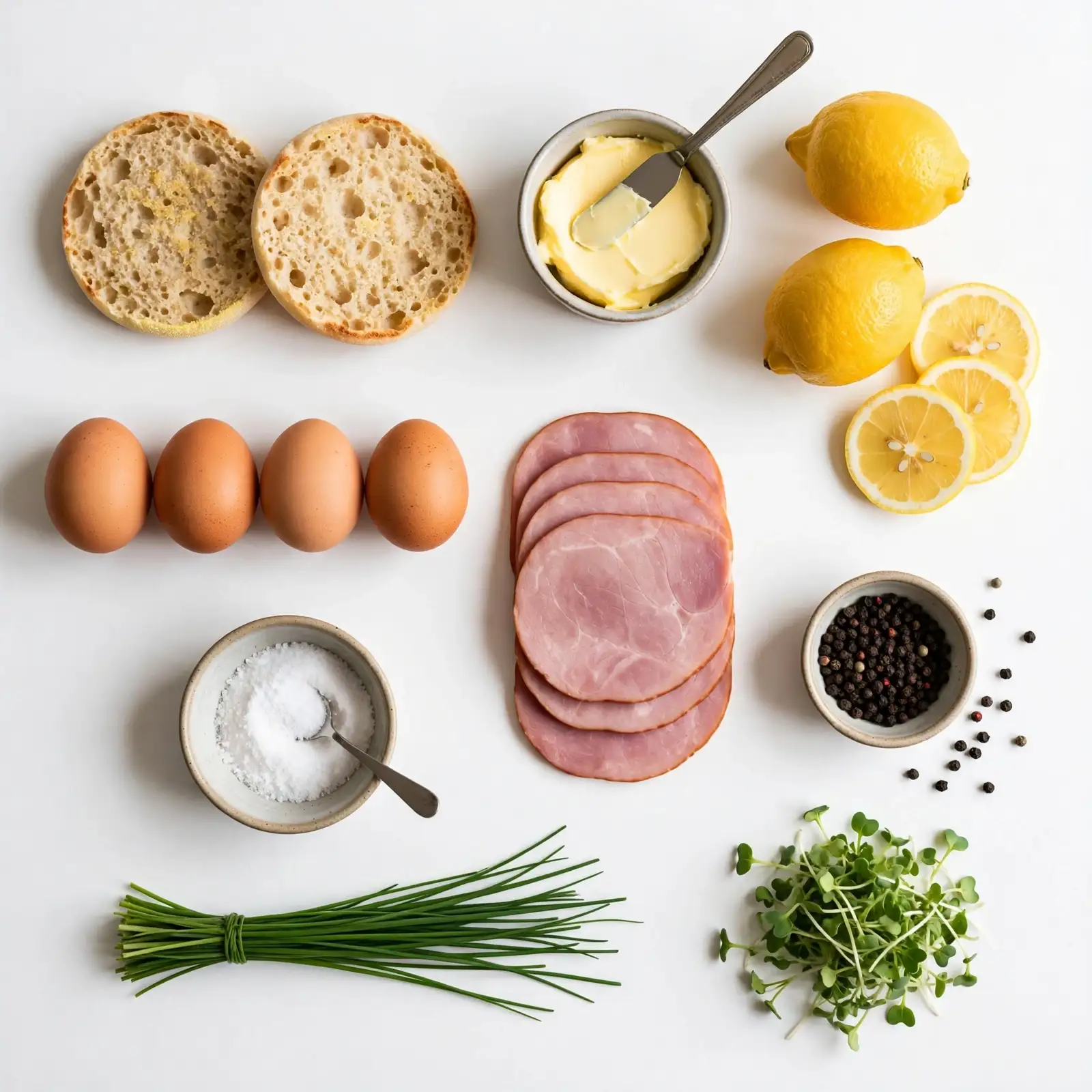
For the Hollandaise Sauce
- 3 large egg yolks
- 1 tbsp cold water
- 1 tbsp fresh lemon juice (about half a lemon — fresh only, not bottled)
- ½ cup unsalted butter, melted and kept warm
- A pinch of cayenne pepper
- Salt and white pepper, to taste
For the Poached Eggs
- 4 large eggs (the freshest you can find — fresher eggs hold their shape best)
- 4 cups water
- 1 tbsp white vinegar (helps the whites hold together cleanly)
- ½ tsp salt
For the Base
- 2 English muffins, split and toasted (nooks and crannies are essential here)
- 4 slices Canadian bacon (or thick-cut ham)
- 1 tbsp butter (for warming the Canadian bacon)
For Garnish
- Fresh chives or flat-leaf parsley, finely chopped
- Smoked paprika or cayenne, for a light dusting
Together, the buttery hollandaise, salty Canadian bacon, and soft poached egg create a layered richness that’s balanced by the slight tang of the toasted English muffin beneath everything — every bite earns its place.
How to Make Eggs Benedict Recipe — Step-by-Step
Step 1: Make the Hollandaise Sauce First
Add the egg yolks, cold water, and lemon juice to a medium heatproof bowl. Whisk them together vigorously until the mixture looks pale and slightly frothy — about 60 seconds. Place the bowl over a saucepan of barely simmering water (the bottom of the bowl should not touch the water) and continue whisking constantly. You’re looking for the mixture to thicken enough that when you lift the whisk, it leaves a ribbon trail across the surface. This takes about 3–4 minutes. Remove from the heat immediately.
Step 2: Finish the Hollandaise with Butter
With the bowl off the heat, start adding the warm melted butter in a very slow, thin stream — almost drop by drop at first — whisking the entire time. As the sauce emulsifies and thickens, you can pour a little faster. Season with cayenne, salt, and white pepper. Don’t worry if it looks slightly thin at first — it will continue to thicken as it cools slightly. Keep it warm by setting the bowl back over the hot (not simmering) water off the heat.
Step 3: Warm the Canadian Bacon
In a skillet over medium heat, melt 1 tablespoon of butter and add the Canadian bacon slices. Warm for about 1–2 minutes per side until they’re heated through and just beginning to turn golden at the edges. Set aside on a plate, loosely covered with foil to keep warm.
Step 4: Poach the Eggs
Bring the water, vinegar, and salt to a gentle simmer in a wide, deep saucepan — you want small bubbles, not a rolling boil. Crack each egg individually into a small ramekin or cup first (this gives you much more control). Create a gentle swirl in the water with a spoon, then slide one egg into the center of the swirl. Cook for exactly 3 minutes for a soft, runny yolk or 3½ minutes for a slightly firmer set. Lift out with a slotted spoon and drain briefly on a folded paper towel. Don’t worry if the whites look slightly wispy around the edges — that’s perfectly normal and won’t affect the taste at all.
Step 5: Assemble and Serve Immediately
Toast your English muffins until they’re golden and sturdy enough to hold everything. Lay one slice of Canadian bacon on each muffin half, place a poached egg gently on top, then spoon a generous amount of hollandaise over the egg — be lavish here, this is not the time to hold back. Dust lightly with smoked paprika, scatter over some fresh chives, and serve right away while the yolks are still warm and liquid inside.
Perfecting This Recipe
- Make the hollandaise first and keep it warm — it’s the most time-sensitive element and benefits from a few minutes of rest before serving
- Use the freshest eggs available; older eggs spread out in the water and lose their neat shape
- White vinegar in the poaching water is not optional — it helps the egg whites set faster and cling together
- Don’t crowd the poaching pan; do two eggs at a time maximum for best results
- If your hollandaise splits (looks greasy and broken), whisk in a teaspoon of cold water off the heat — it often comes back together
- Toast the English muffins right before assembly so they’re warm and slightly crisp when you plate
Common Mistakes to Avoid
- Using boiling water to poach — A full boil tosses the egg around aggressively and breaks up the whites into shreds. Keep it at a gentle, barely-there simmer with small bubbles only.
- Adding butter too fast to the hollandaise — Pour it in a thin, slow stream. Rush this step and the sauce will break into an oily, separated mess instead of a smooth, creamy emulsion.
- Skipping the ramekin crack — Cracking eggs directly into the saucepan gives you zero control. One broken yolk from a direct drop can ruin a beautiful poach.
- Toasting the muffins too early — A cold, soggy muffin at the base ruins the whole texture of the dish. Toast them last, right before you plate.
- Overseasoning the hollandaise before tasting — Canadian bacon and the egg white are already salty. Taste the assembled bite before you decide the sauce needs more salt.
Add Your Touch
- Swap Canadian bacon for smoked salmon and add capers for a classic Eggs Benedict Royale
- Use wilted baby spinach in place of the meat for a vegetarian Florentine version
- Add a thin slice of ripe avocado between the muffin and the bacon for a California-style twist
- Try sourdough or brioche toast rounds instead of English muffins for a richer base
- Stir a teaspoon of Dijon mustard into the hollandaise for a slightly sharper, more complex sauce
- Add a tiny splash of hot sauce to the hollandaise if you want a subtle background heat
Visit Also: Homemade Granola
What to Serve With This
- Fresh fruit salad — Something light and bright cuts through the richness beautifully
- Roasted breakfast potatoes — Crispy on the outside, fluffy inside, with rosemary and garlic
- A simple green salad with lemon vinaigrette — Especially good for a brunch-into-lunch situation
- Freshly squeezed orange juice or a mimosa — The acidity works with the buttery hollandaise in the best way
- A strong, well-made espresso or café au lait — This dish deserves a proper coffee beside it
Storing and Serving
Fridge:
Store any leftover hollandaise in an airtight container for up to 24 hours. Poached eggs can be stored in cold water in the fridge for up to 2 days — reheat briefly in simmering water for 30 seconds before serving.
Freezer:
Hollandaise does not freeze well — the emulsion will break upon thawing. Poached eggs can technically be frozen but lose their texture significantly; fresh is always best.
Reheating:
Reheat the hollandaise very gently in a bowl over warm (not hot) water, whisking constantly. Do not microwave it — the eggs will scramble. Reheat poached eggs by slipping them into barely simmering water for 30–45 seconds.
Make-Ahead Tip:
You can poach the eggs up to two days ahead and store them submerged in cold water in the fridge. The hollandaise can be made up to an hour ahead and kept warm over a pan of hot water off the heat, whisked occasionally.
Servings:
This recipe makes 4 servings (2 halves per person).
Nutrition (Approximate Per Serving)
- Calories: 480
- Total Fat: 36g
- Saturated Fat: 18g
- Carbohydrates: 22g
- Sugar: 2g
- Protein: 20g
- Sodium: 780mg
Nutritional values are approximate and may vary based on specific ingredients and brands used.
Chef’s Helpful Tips
- Use room temperature eggs for the hollandaise — Cold yolks are slower to emulsify and can cook unevenly over the heat
- Warm your plates before plating — Run them under hot water or set them briefly in a low oven; cold plates cool everything down too fast
- For clean poached eggs, trim any stray wispy whites with kitchen scissors after draining — it takes 5 seconds and makes a big visual difference
- Quality matters most in the butter and eggs — This is a simple dish where ingredients carry everything, so use the best you have
- If the hollandaise is too thick, whisk in a teaspoon of warm water at a time until it reaches a pourable, ribbon-like consistency
Frequently Asked Questions
Q1. Can I make the hollandaise sauce without a double boiler?
Absolutely. A heatproof bowl set over a small saucepan of barely simmering water works perfectly — just make sure the bowl doesn’t touch the water. Some people even make a quick blender hollandaise, which is faster and more foolproof, though slightly less silky in texture.
Q2. What can I use instead of Canadian bacon?
Smoked salmon, turkey bacon, prosciutto, or sautéed mushrooms all work wonderfully here. For a vegetarian option, wilted spinach with a little garlic is a classic and delicious swap — that version is traditionally called Eggs Florentine.
Q3. Is this recipe beginner-friendly?
Yes, genuinely — it just requires a bit of patience and multitasking. The trick is making the hollandaise first, then warming the bacon, and poaching the eggs last. Once you’ve done it once, the rhythm clicks and it feels surprisingly easy.
Q4. Can I make this ahead for a big brunch gathering?
You can get most of it ready in advance. Poach the eggs up to two days ahead and store in cold water in the fridge. Make the hollandaise up to an hour before serving and keep it warm over a pot of hot water off the heat. Toast the muffins and warm the bacon right before serving, then reheat the eggs for 30 seconds in hot water before assembling.
Q5. Can I freeze leftover hollandaise sauce?
Unfortunately, hollandaise doesn’t freeze well — the emulsion breaks when thawed and you end up with a greasy, separated sauce. It’s always best made fresh, but it only takes about 10 minutes once you get the hang of it, which makes that trade-off very worthwhile.
Conclusion
Some recipes are just worth learning properly, and this Eggs Benedict Recipe is absolutely one of them. It’s the kind of dish that turns a regular weekend into something that feels genuinely celebratory — the sort of breakfast people remember and talk about afterward. Once you’ve nailed the hollandaise and found your rhythm with the poach, this will become one of those recipes you make with the quiet confidence of someone who’s been doing it for years.
Make it for someone you love, make it for yourself on a slow Saturday when you have nowhere to be, or bring it to a brunch table and watch how people’s faces change when they take the first bite. However you serve it, serve it generously and serve it warm — and don’t forget the extra hollandaise on the side, because someone always wants more.
Dreamy Eggs Benedict with Silky Hollandaise
Course: Trending Recipes4
servings10
minutes15
minutes480
kcal25
minutesA luxurious, restaurant-quality brunch at home — perfectly poached eggs, golden hollandaise, and crispy Canadian bacon stacked on a toasted English muffin. Perfect for weekend mornings, Mother’s Day brunch, or any time you want to really show up for the people at your table.
Ingredients
Hollandaise Sauce:
3 large egg yolks
1 tbsp cold water
1 tbsp fresh lemon juice
½ cup unsalted butter, melted and warm
Pinch of cayenne pepper
Salt and white pepper, to taste
Poached Eggs:
4 large eggs
4 cups water
1 tbsp white vinegar
½ tsp salt
Base:
2 English muffins, split and toasted
4 slices Canadian bacon
1 tbsp butter
Garnish:
Fresh chives, chopped
Smoked paprika
Directions
- Whisk egg yolks, water, and lemon juice in a heatproof bowl over barely simmering water until thick and ribbon-like, about 3–4 minutes.
- Remove from heat. Drizzle in warm melted butter in a slow, thin stream, whisking constantly until smooth and creamy. Season with cayenne, salt, and white pepper. Keep warm.
- Warm Canadian bacon in a buttered skillet over medium heat, 1–2 minutes per side. Set aside.
- Bring water, vinegar, and salt to a gentle simmer. Crack each egg into a ramekin. Swirl the water and slide eggs in one at a time. Poach 3 minutes for soft yolks. Remove with a slotted spoon and drain.
- Toast English muffins. Top each half with Canadian bacon, a poached egg, and a generous spoonful of hollandaise. Garnish with chives and paprika. Serve immediately.