The Coziest Irish Soda Bread You’ll Ever Pull From Your Oven
The kitchen window had fogged up from the oven heat, and I was standing there in wool socks, waiting for that first crack to appear across the top of the loaf. That’s the moment you know it’s working — a deep, hollow-sounding thump when you tap the bottom, and a crust the color of strong tea.
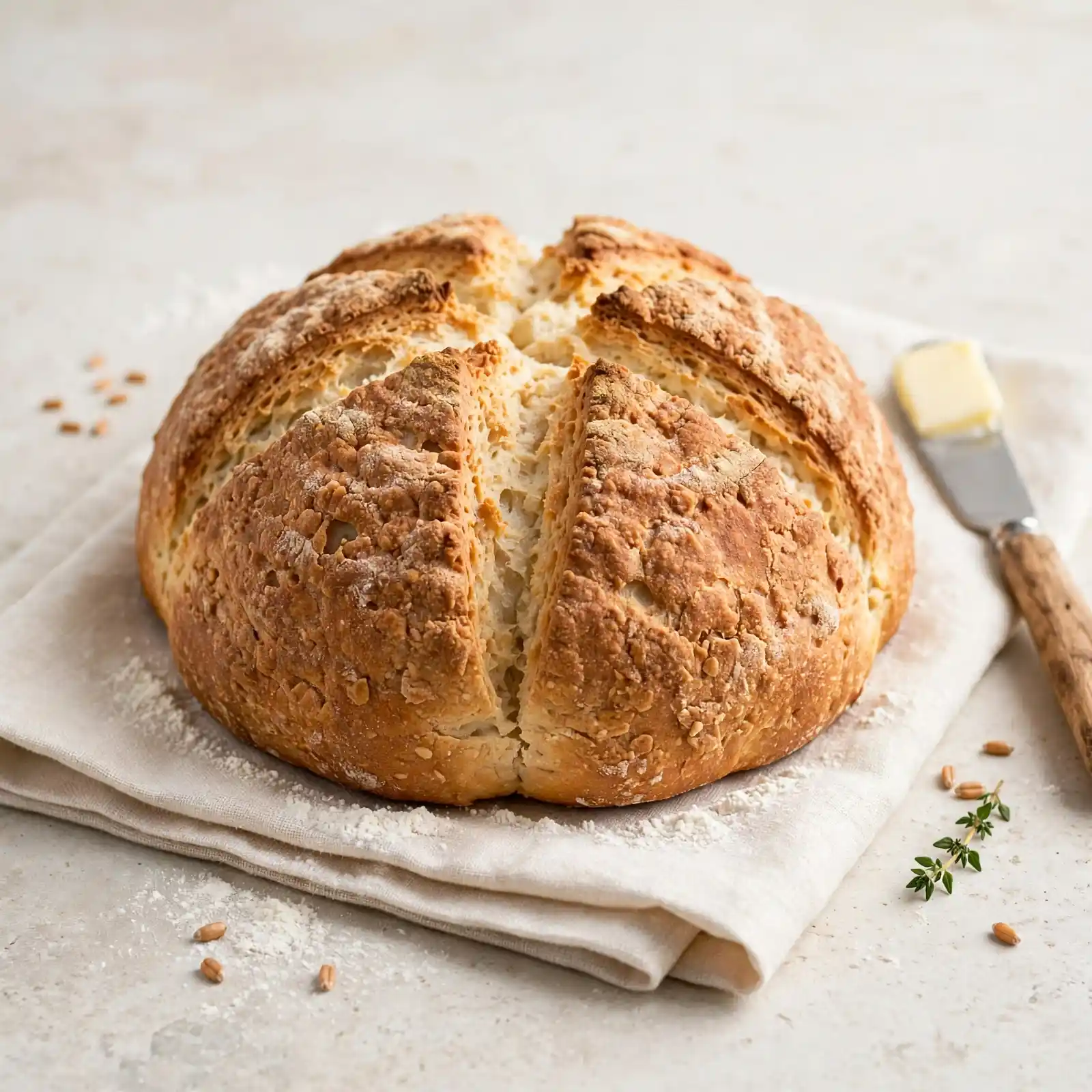
Irish soda bread has a crust that shatters just slightly under your knife, giving way to a crumb that’s dense but not heavy, tender but sturdy enough to hold a thick swipe of butter. It smells faintly of buttermilk and toasted flour, with just enough tang to make you want another slice before the first one’s gone.
It’s the kind of bread that shows up at a St. Patrick’s Day table, but honestly, it earns its place year-round — alongside a pot of soup on a weeknight, next to eggs at brunch, or wrapped in a towel and brought to a friend’s house because you didn’t have time to bake something fancier. This traditional Irish bread recipe is forgiving, quick, and doesn’t ask much of you, which is exactly why it’s stayed in kitchens for generations. Let’s get into how to make it.
Why You’ll Love This Recipe
No Yeast, No Waiting
There’s no proofing, no rising, no watching a bowl for an hour hoping it doubles. You mix, you shape, you bake — this easy soda bread recipe is on your table in under an hour.
That Perfect Crust
The crust bakes up thick, golden-brown, and slightly crackly, while the inside stays soft and moist. It’s the contrast that makes every slice satisfying.
Just a Handful of Ingredients
Flour, buttermilk, baking soda, salt — and maybe a little butter. You likely have everything you need in your kitchen right now.
Beginner-Friendly Baking
There’s no kneading technique to master and no dough to overthink. If you can stir and shape a rough ball, you can make this bread.
A Classic With Room to Play
The base recipe is simple and traditional, but it welcomes little additions — raisins, caraway seeds, a sprinkle of oats — without losing what makes it soda bread in the first place.
Ingredients
For the Dough
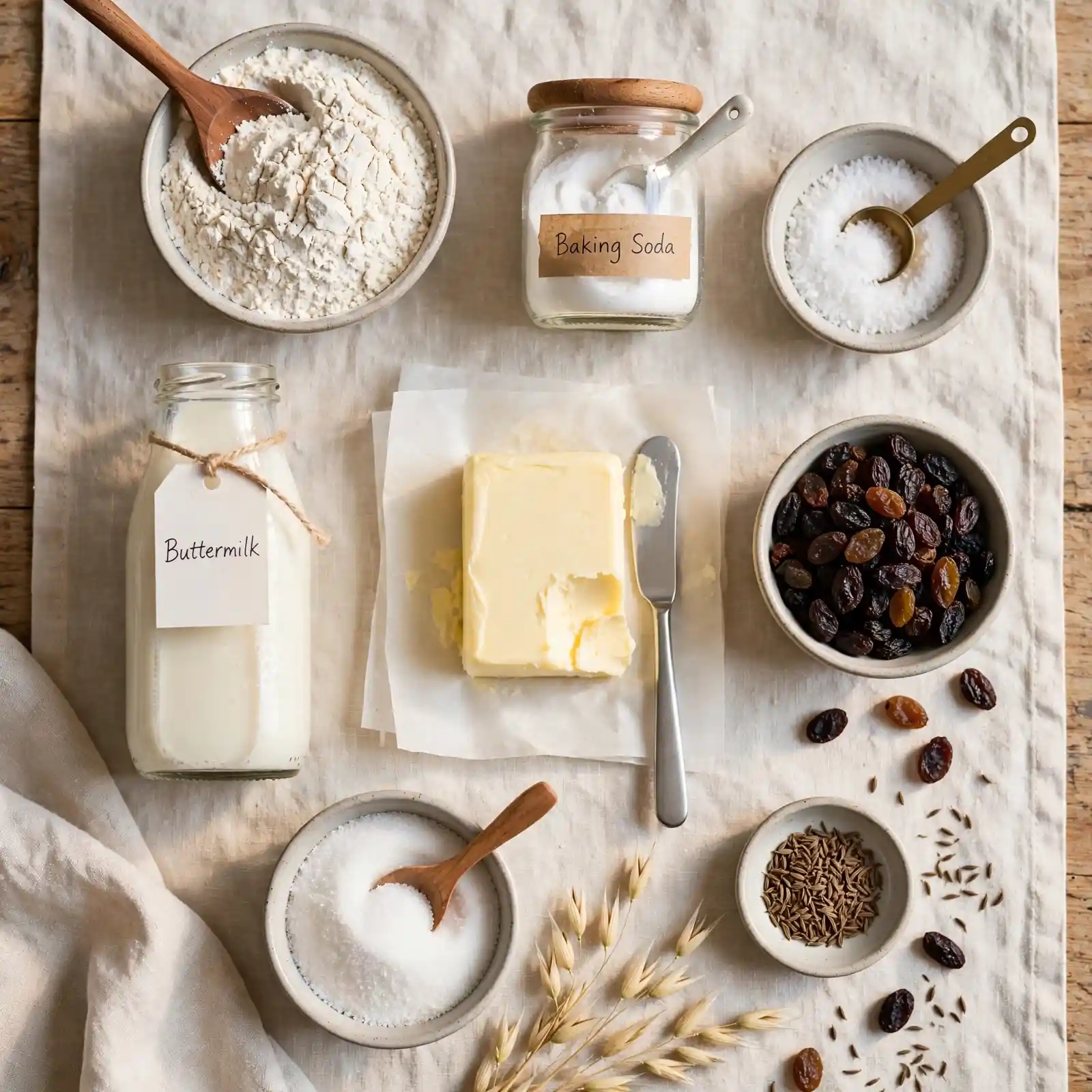
- 4 cups all-purpose flour (spooned and leveled, not scooped)
- 1 tsp baking soda
- 1 ½ tsp salt
- 1 tbsp sugar (optional, for a touch of balance)
- 1 ¾ cups buttermilk, cold (full-fat gives the best tang and texture)
- 3 tbsp unsalted butter, melted and slightly cooled (or substitute with olive oil)
For the Topping
- 1 tbsp all-purpose flour, for dusting the top
- 1 tbsp buttermilk, for brushing (helps deepen the crust color)
The tang of the buttermilk reacts with the baking soda to give this bread its lift, while the melted butter keeps the crumb from drying out — together they’re what make this loaf taste like more than the sum of its parts.
How to Make Irish Soda Bread — Step-by-Step
Step 1: Preheat and Prep Your Pan
Preheat your oven to 425°F and line a baking sheet with parchment paper, or lightly grease a cast iron skillet. Getting your oven fully heated now means your loaf goes in at the right temperature for a good rise.
Step 2: Whisk the Dry Ingredients
In a large bowl, whisk together the flour, baking soda, salt, and sugar if using. Make sure the baking soda is evenly distributed — you don’t want any pockets of it clumped in one spot.
Step 3: Add the Wet Ingredients
Pour in the cold buttermilk and melted butter, then stir with a wooden spoon just until a shaggy dough forms. Don’t worry if it looks messy and uneven at this point — that’s exactly how it should look.
Step 4: Shape the Dough
Turn the dough out onto a floured surface and gently bring it together with your hands, about 30 seconds of light kneading. Shape it into a round loaf roughly 6–7 inches across; don’t worry if it isn’t perfectly smooth, rustic is the goal here.
Step 5: Score and Bake
Place the loaf on your prepared pan, brush the top with buttermilk, and cut a deep X across the top with a sharp knife — this helps the bread bake evenly through the center. Bake for 35–40 minutes, until the crust is deep golden-brown and the loaf sounds hollow when tapped on the bottom.
Step 6: Cool Before Slicing
Transfer the loaf to a wire rack and let it cool for at least 20 minutes before slicing. It’s tempting to cut in right away, but resting lets the crumb finish setting so it doesn’t turn gummy.
Perfecting This Recipe
- Use cold buttermilk straight from the fridge — it reacts better with the baking soda for a good rise.
- Mix just until the dough comes together; overmixing develops gluten and makes the loaf tough instead of tender.
- A deep X cut (about ½ inch) isn’t just decorative — it helps heat reach the center of the dense dough.
- Listen for the hollow thump when tapping the bottom of the loaf; that’s your best doneness cue, more reliable than color alone.
- Let the bread cool fully before storing so trapped steam doesn’t soften the crust.
- If your kitchen is humid, you may need a touch more flour — the dough should be soft but not sticky to the touch.
Common Mistakes to Avoid
- Using warm or old buttermilk — Buttermilk that’s not properly cold or fresh won’t react as vigorously with the baking soda, leading to a flatter, denser loaf.
- Overworking the dough — Kneading like you would a yeast bread develops too much gluten, making the crumb tough instead of tender.
- Skipping the score mark — Without that deep X, the bread can bake unevenly and crack unpredictably as it expands.
- Slicing too soon — Cutting into a hot loaf lets steam escape too fast, leaving the inside gummy instead of set.
- Using too much flour — Packing the measuring cup instead of spooning and leveling adds excess flour, resulting in a dry, crumbly loaf.
Add Your Touch
- Stir in ¾ cup raisins or currants for a slightly sweet, traditional variation.
- Add 1–2 tsp caraway seeds for a more classic, savory Irish flavor.
- Swap in whole wheat flour for up to half the total flour for a heartier, nuttier loaf.
- Fold in shredded sharp cheddar and a pinch of black pepper for a savory twist.
- Sprinkle rolled oats on top before baking for extra texture and a rustic look.
Visit Also: Marinara Sauce
What to Serve With This
- A pat of salted Irish butter melting into a warm slice is really all you need.
- Serve alongside a bowl of hearty beef and Guinness stew for a classic pairing.
- Pair with a soft cheese board and honey for a simple brunch spread.
- A cup of strong Irish breakfast tea makes the perfect companion.
- Try it toasted with smoked salmon and a smear of cream cheese for a weekend treat.
Storing and Serving
Fridge: Store the cooled loaf wrapped in a clean kitchen towel or in a paper bag at room temperature for up to 2 days; refrigeration isn’t necessary and can dry it out faster.
Freezer: Wrap the fully cooled loaf tightly in plastic wrap, then foil, and freeze for up to 3 months. Slice before freezing if you’d like to pull out individual pieces.
Reheating: Warm slices in a 300°F oven for about 8–10 minutes, or toast individual slices directly for a quick refresh.
Make-Ahead Tip: This bread is best the day it’s baked, but you can mix the dry ingredients up to a day ahead and store them covered at room temperature until you’re ready to add the wet ingredients.
Servings: One loaf yields about 8–10 slices.
Nutrition (Approximate Per Serving)
- Calories: 210
- Total Fat: 5g
- Saturated Fat: 3g
- Carbohydrates: 36g
- Sugar: 2g
- Protein: 6g
- Sodium: 370mg
Nutritional values are approximate and may vary based on specific ingredients and brands used.
Chef’s Helpful Tips
- Bring your buttermilk out only right before using it — it works best cold, straight from the fridge.
- Watch the loaf in the last 5 minutes of baking; ovens vary, and a too-dark crust can mean it’s drying out inside.
- Use a serrated bread knife for the cleanest slices without compressing the crumb.
- Good quality flour makes a real difference here since there are so few ingredients to hide behind.
- If your loaf turns out dense, it’s usually a sign the dough was overworked or the baking soda wasn’t fresh — check the expiration date next time.
Frequently Asked Questions
Q1. Can I make this without buttermilk? Yes — if you don’t have buttermilk on hand, stir 1 tbsp of white vinegar or lemon juice into 1 ¾ cups of regular milk and let it sit for 5 minutes before using. It won’t be identical, but it gets you very close.
Q2. What does Irish soda bread taste like compared to regular bread? It’s less airy than yeast bread, with a denser, more rustic crumb and a subtle tang from the buttermilk. Think somewhere between a biscuit and a hearty white bread.
Q3. Is this recipe good for beginner bakers? Absolutely — there’s no yeast to manage and no complicated technique, just mixing, shaping, and baking. It’s one of the most forgiving bread recipes out there.
Q4. Can I make this ahead of time for a potluck? Yes, though it’s best enjoyed within a day of baking. You can bake it the morning of and it’ll still be fresh and delicious by evening.
Q5. Can I freeze Irish soda bread? Definitely — wrap the cooled loaf tightly and freeze for up to 3 months. Thaw at room temperature and warm it in the oven to bring back that fresh-baked texture.
Conclusion
There’s a reason Irish soda bread has stuck around for so long — it doesn’t ask for much, and it gives back so much more than you’d expect from four humble ingredients. Whether you’re baking it for a holiday table or just because you’re craving something warm and homemade on a Tuesday, this loaf comes together with almost no fuss and fills the kitchen with a smell that feels like something worth slowing down for.
Give it a try this week, and don’t be afraid to make it your own with a handful of raisins or a pinch of caraway. However you slice it, I think it’s going to earn a permanent spot in your baking rotation — and if you make it, I’d love to hear how it turned out.
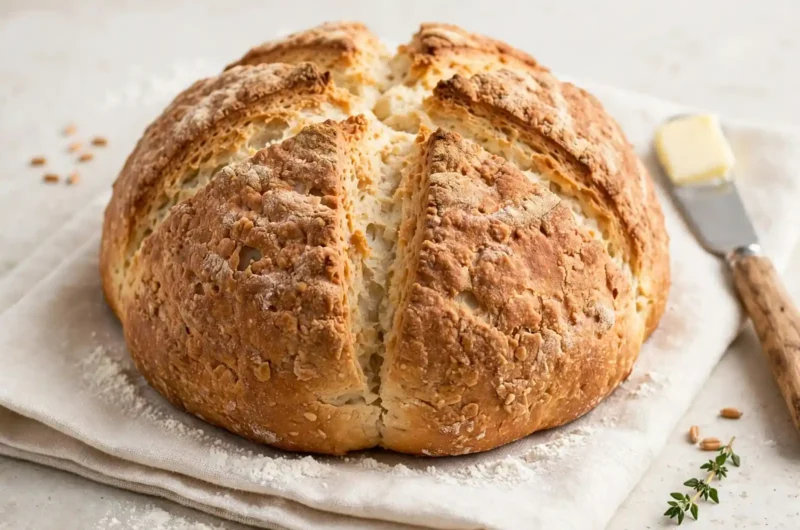
The Coziest Irish Soda Bread
Course: Trending Recipes8–10 slices
servings10
minutes40
minutes210 per serving
kcal50
minutesA crusty, golden loaf with a tender, tangy crumb — perfect alongside soup, spread with butter, or served at any holiday table.
Ingredients
For the Dough:
4 cups all-purpose flour
1 tsp baking soda
1 ½ tsp salt
1 tbsp sugar (optional)
1 ¾ cups buttermilk, cold
3 tbsp unsalted butter, melted and cooled
For the Topping:
1 tbsp all-purpose flour, for dusting
1 tbsp buttermilk, for brushing
Directions
- Preheat oven to 425°F and prep a baking sheet or cast iron skillet.
- Whisk flour, baking soda, salt, and sugar together.
- Stir in buttermilk and melted butter until a shaggy dough forms.
- Turn out and gently knead into a round loaf.
- Brush with buttermilk and cut a deep X across the top.
- Bake 35–40 minutes until deep golden and hollow-sounding.
- Cool on a wire rack 20 minutes before slicing.