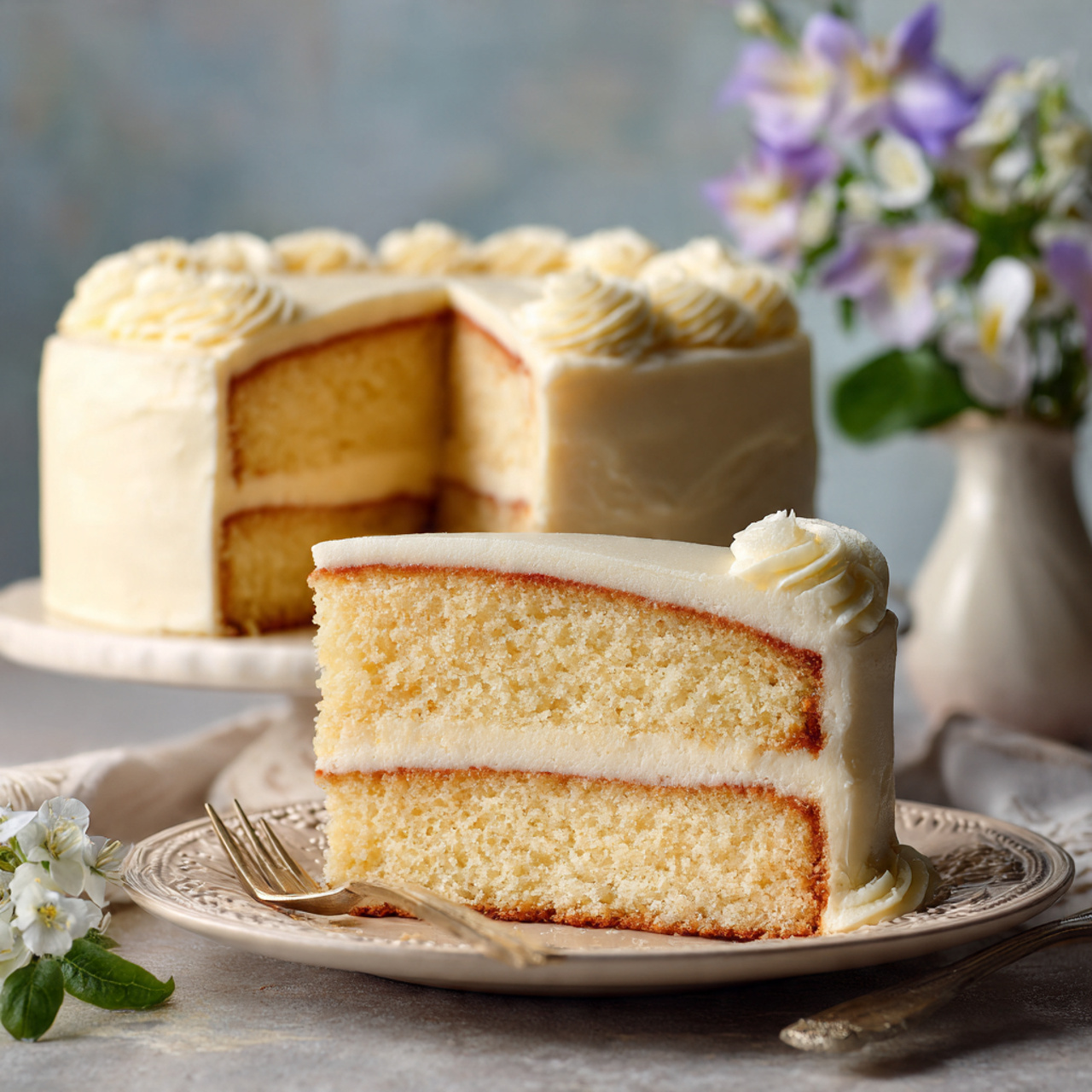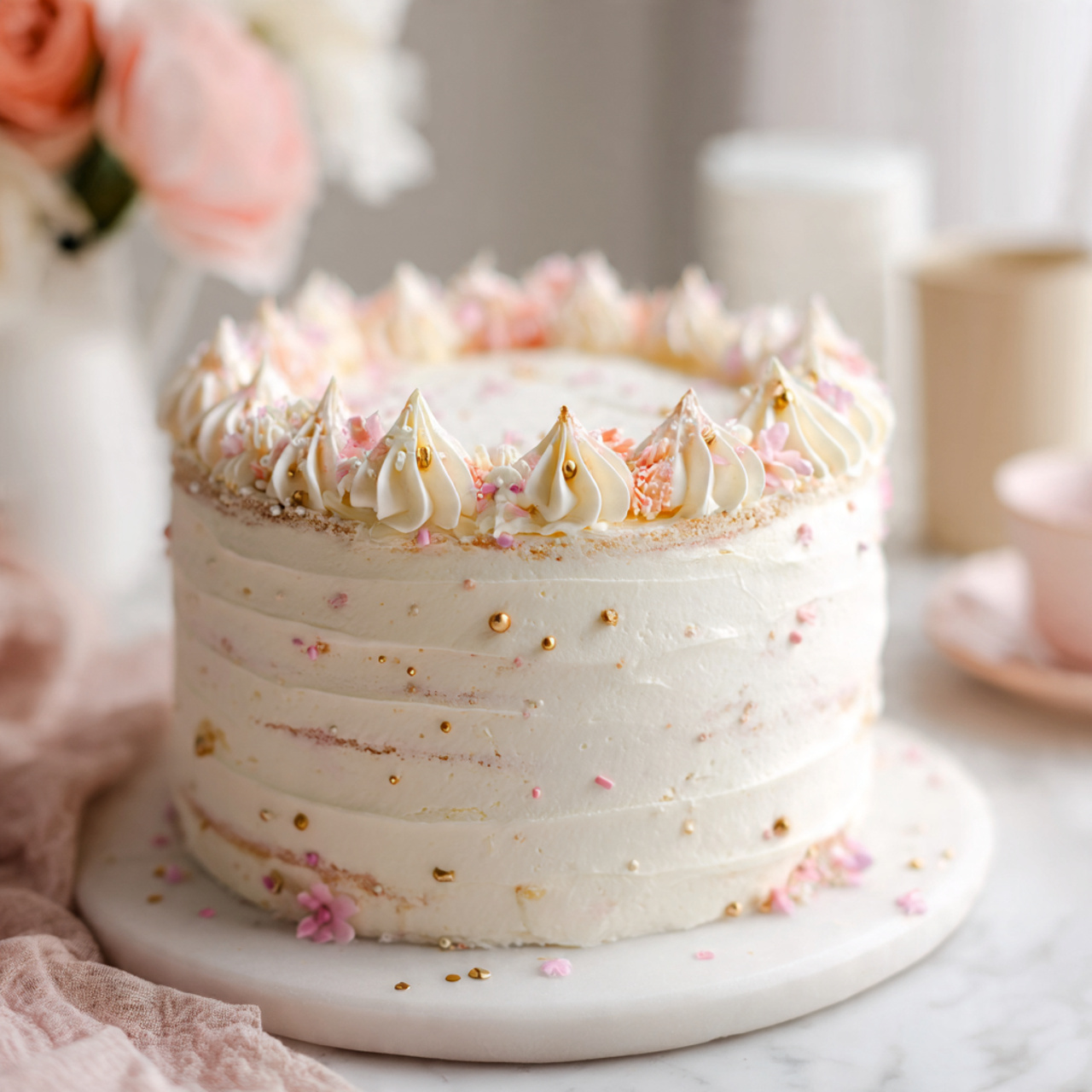
Irresistible Jelly Cake with Creamy Layers — Easy, Colorful, and Perfect for Any Occasion
Jelly cake sounds simple — and it should be — but nine times out of ten, people end up with a soggy sponge bottom and jelly that slides right off instead of setting into those gorgeous, glassy layers. The culprit is almost always one thing: rushing the pour. This recipe fixes that with one easy step that changes everything, and once you know it, you’ll never go back.
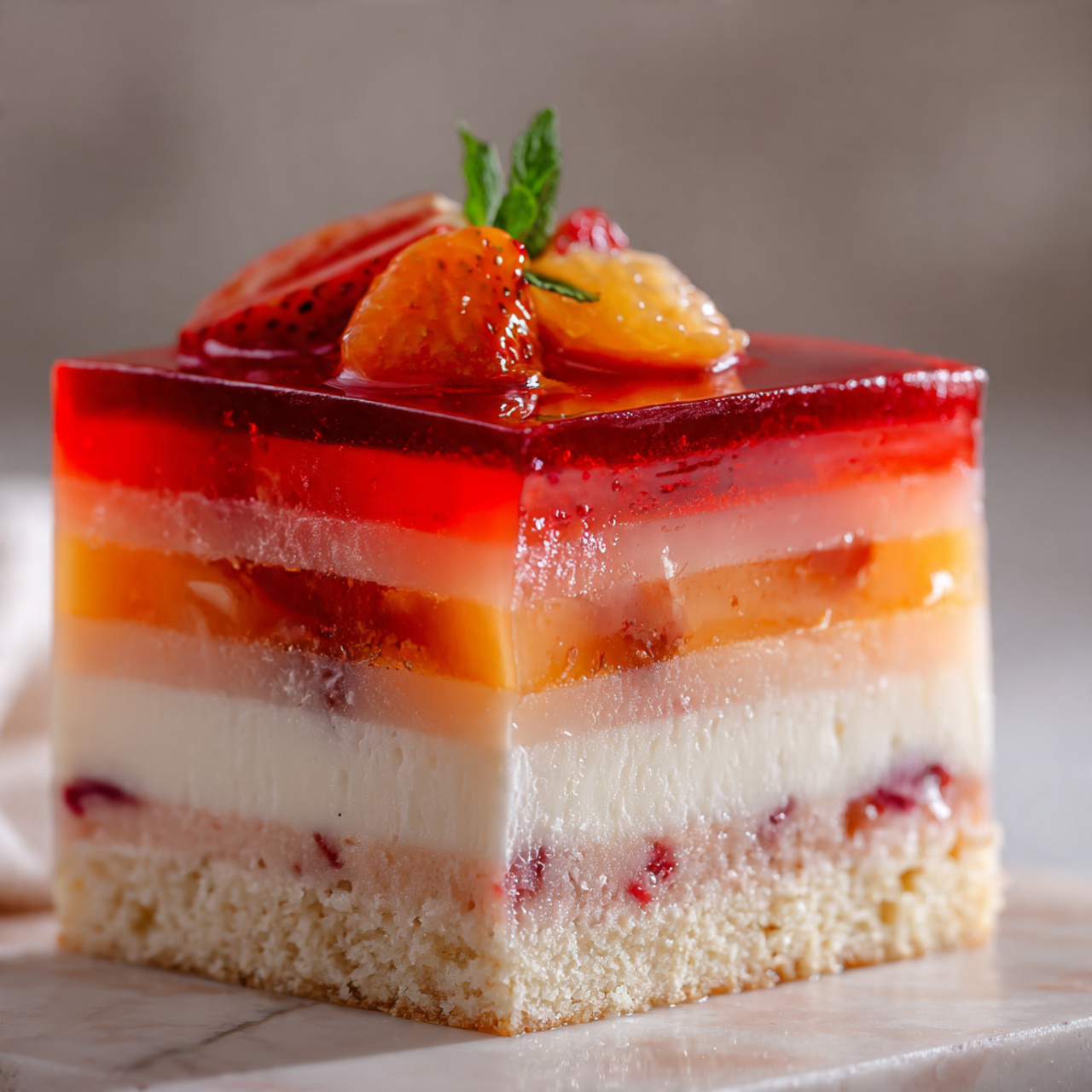
When it works — and with this recipe, it always does — the top layer is jewel-bright and barely wobbly, catching the light like stained glass. Beneath it, a ribbon of cool, lightly sweetened cream holds everything together before giving way to a pillowy soft sponge that soaks in just enough fruity flavor without losing its structure. The whole thing is refreshingly cold, gently sweet, and every gorgeous layer holds its shape right up until the moment you cut into it.
This jelly cake is the kind of easy family dessert that works just as well on a random Tuesday as it does at a birthday table or summer potluck. It’s a fantastic make-ahead chilled dessert — set it the night before and pull it out when you’re ready — and it can be dressed up with fresh fruit or kept beautifully simple. Whether you’re making it for a quiet evening at home or a table full of guests, one thing is certain: you’ll be asked for the recipe before dessert is even finished.
Why You’ll Love This Recipe
Each Layer Has Its Own Personality
This isn’t just a one-note dessert. The firm, fruity jelly, the cloud-soft whipped cream, and the tender sponge base each bring a different texture to every bite, and together they create something that feels far more special than the ingredient list would suggest. It’s layered simplicity at its most satisfying.
Light, Refreshing Flavor That Never Feels Heavy
Unlike rich cakes or dense puddings, jelly cake finishes clean. The fruity brightness of the jelly keeps everything tasting fresh, and the cream layer adds just enough richness without tipping the scales. It’s the kind of dessert you can enjoy after a big dinner without feeling like you overdid it.
No Oven, No Stress — Just Chilling
Most of the time this recipe takes is completely hands-off. Once you’ve assembled the layers, the fridge does all the work. That makes it one of the most genuinely easy no-bake desserts you’ll ever put together, and it frees you up to focus on the rest of your meal or evening.
Simple Ingredients, Stunning Result
Everything you need is probably already in your kitchen or a quick trip to the store: a packet of jelly, a plain sponge cake, and a bit of cream. The ingredients are budget-friendly and widely available, yet the finished dessert looks layered, polished, and impressive enough to serve to guests.
Endlessly Flexible and Crowd-Pleasing
Change the jelly flavor, add fresh fruit between the layers, swap in yogurt for the cream — the base formula stays the same while the result shifts with your mood or the season. Kids love the bouncy jelly top, adults appreciate how light it is, and everyone at the table tends to reach for seconds.
Ingredients
For the Jelly Layer
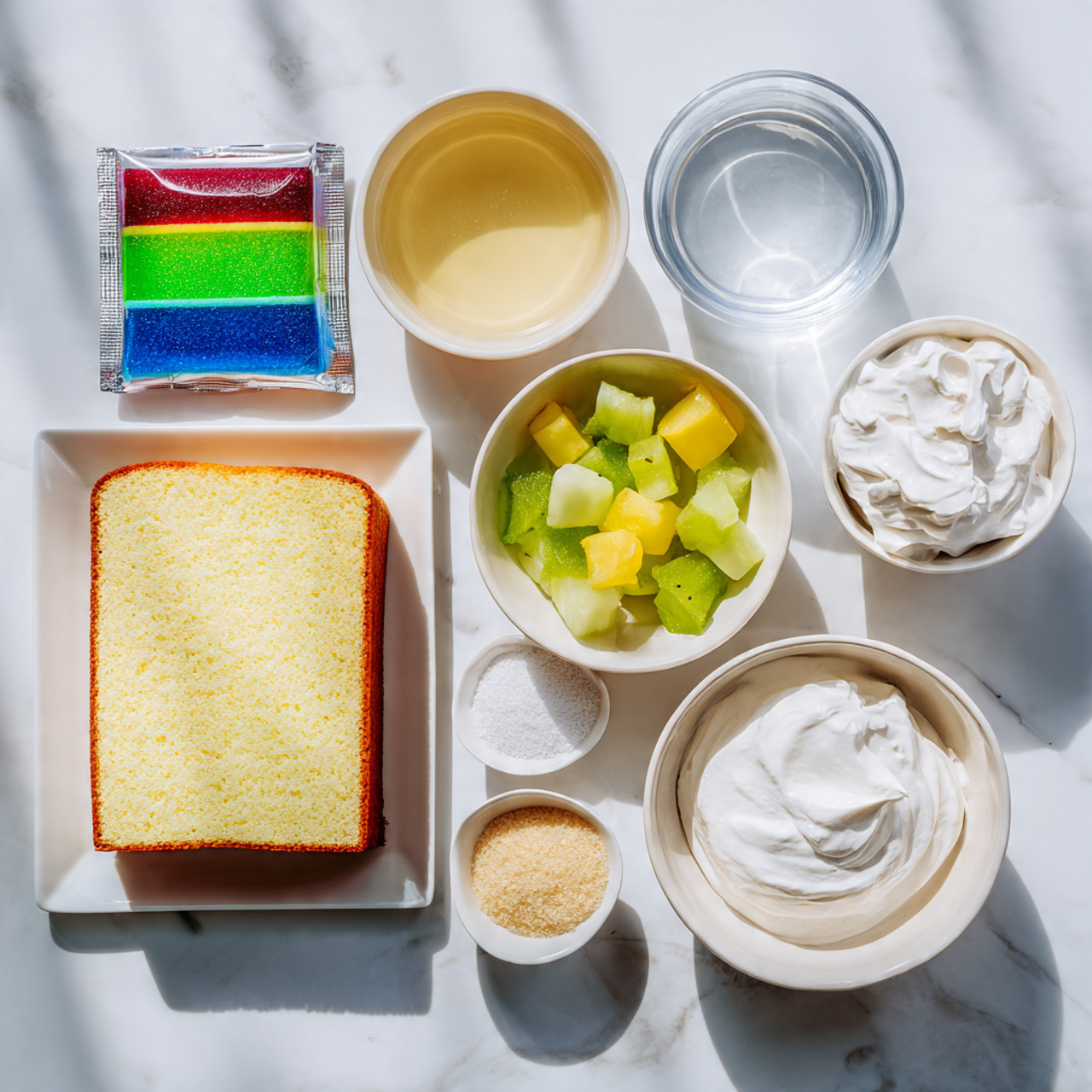
- 1 packet flavored jelly — strawberry or orange recommended (approximately 85g / 3 oz)
- 1 cup hot water (to fully dissolve the jelly crystals)
- 1 cup cold water (to bring the temperature down and start the set)
For the Sponge Base
- 1 plain sponge cake, 8-inch (store-bought is perfectly fine; any soft, unflavored sponge cake works well here)
For the Cream Layer
- 1 cup whipped cream (start with chilled heavy cream, whipped to soft peaks)
- 2 tbsp sugar, optional (add while whipping if you’d like a lightly sweetened layer)
- ½ cup chopped fruits, optional (mango, strawberries, and banana all pair beautifully with the jelly)
The combination of silky cream and vibrant fruity jelly creates a balance that’s refreshing without being cloyingly sweet, and the soft sponge base anchors everything with just enough substance to make each slice feel complete.
How to Make Jelly Cake — Step-by-Step
Step 1: Dissolve and Cool the Jelly
Pour the jelly crystals into a heatproof bowl and add the hot water. Stir until every crystal is completely dissolved — the liquid should look glossy, clear, and entirely smooth with no grainy residue. Add the cold water, stir again, and set the bowl aside to cool to room temperature. This usually takes 20–30 minutes, and it’s worth every second. Don’t worry if it feels like a long wait; this step is exactly what separates a beautifully layered jelly cake from a waterlogged disappointment.
Step 2: Prepare Your Dish and Sponge Base
Choose a baking dish or deep tray that fits your sponge cake snugly. If the top is slightly domed or uneven, trim it gently with a serrated knife so it sits completely flat. Place the sponge in the dish and press the edges lightly to close any gaps around the sides where jelly could seep underneath unevenly. This small step takes two minutes and makes slicing the finished dessert so much cleaner and easier.
Step 3: Pour the First Thin Jelly Layer
Here’s the step that makes all the difference: pour only a thin layer of cooled jelly over the sponge — about one-quarter of the total amount — then slide the dish into the fridge for 15–20 minutes. You’re looking for that jelly to reach a “barely set” stage, where it holds a faint impression when gently pressed but isn’t fully firm. This thin layer acts as a seal over the sponge, controlling how much liquid soaks in below. Don’t worry if the surface looks slightly uneven at this point — once the cream and remaining jelly go on top, everything levels out into those gorgeous, defined layers.
Step 4: Add the Cream Layer
Once that first jelly layer feels set to the touch, spoon the whipped cream over it in an even, generous layer. Use a spatula or the back of a spoon to smooth it gently from the center outward — light, careful strokes are what you want here so you don’t disturb the jelly beneath. If you’re adding chopped fruit, scatter it over the cream now while it’s still soft and easy to settle in. The cream should be cold and firm enough to hold the next pour of jelly without the two layers bleeding into each other.
Step 5: Pour the Remaining Jelly and Chill
Ladle or slowly pour the remaining cooled jelly over the cream layer. Go from a low angle and take your time — this is not the moment to rush. A slow, gentle pour keeps the cream surface intact and produces that clean, defined line between layers that makes a jelly dessert look so impressive. Once everything is in, transfer the dish carefully to the fridge and leave it completely undisturbed for a minimum of 2–3 hours. The top will set glossy and firm, and when you’re ready to serve, slice with a cold, damp knife for the cleanest, most satisfying portions.
Perfecting This Recipe
- Cool the jelly completely before each pour. Even slightly warm jelly will melt the cream layer and blur the separation between everything you worked to keep distinct. If you’re short on time, set the bowl in a larger bowl of ice water to speed up the process.
- Layer and rest, then layer and rest again. Setting each stage before adding the next is the single most important technique here. It takes patience, but it’s what produces those defined, jewel-toned layers that make the dessert look as good as it tastes.
- Don’t overwhip the cream. Soft peaks hold beautifully in a layered dessert; stiff peaks can become slightly grainy when they meet the cold jelly, which affects both the texture and the look of the finished slice.
- Use a deep dish rather than a wide, shallow one. Deeper dishes give you thicker, more distinct layers that hold their shape when sliced. A very shallow tray produces layers so thin they’re difficult to cut cleanly.
- When in doubt, chill longer. Two hours is the absolute minimum; three to four hours — or an overnight chill — produces a firmer, cleaner result with no wobbling in the wrong places.
- Rest briefly before serving. If the jelly feels very firm straight from the fridge, five minutes at room temperature softens it to that perfect, gently bouncy texture.
Common Mistakes to Avoid
- Pouring all the jelly in one go — This is the most common reason a jelly cake turns out with a waterlogged sponge. The cake absorbs liquid faster than the jelly can set around it, so dumping everything in at once means the base turns soft and heavy before the top has a chance to firm up. Always pour in stages.
- Adding cream before the first jelly layer has set — If that initial layer is still liquid and moves freely when you tilt the dish, it’s not ready. Adding cream too early means it sinks straight through and you lose the layered effect entirely.
- Using warm or hot jelly — Warm jelly melts the whipped cream on contact and over-softens the sponge. Always cool the jelly to room temperature — or slightly below — before it touches anything else in the dish.
- Using fresh pineapple or kiwi directly in the jelly layer — Both fruits contain natural enzymes that break down gelatin and prevent a proper set. Use canned versions of these fruits in the jelly layer, or keep fresh pieces reserved for the cream layer only.
- Cutting it too soon — A jelly cake that hasn’t had enough chilling time will collapse at the first cut, and those beautiful layers will blur together into one messy slice. Give it the full time, and if you’re serving it for a gathering, making it the night before removes all that pressure entirely.
Add Your Touch
- Try a different jelly flavor — Raspberry gives a sharper, more tart result; mango or peach goes tropical and summery; lime jelly adds a zingy freshness that wakes up the whole dessert.
- Make it vanilla — Stir ½ teaspoon of pure vanilla extract into the cream before whipping for a warm, fragrant undertone that pairs beautifully with berry or citrus jelly flavors.
- Layer in fresh fruit — Thin slices of strawberry, mango, or banana between the cream and the final jelly pour create a fruit-forward version that’s bursting with color when cut.
- Swap the cream for Greek yogurt — Full-fat Greek yogurt with a little honey in place of whipped cream gives a lightly tangy layer that keeps the whole dessert feeling even more refreshing and slightly lighter.
- Go two-tone with the jelly — Use two different but complementary jelly flavors — strawberry and orange work perfectly together — in separate pours for a striking double-layer top.
- Dress it up for a celebration — Right before serving, scatter fresh berries on top, add a light dusting of powdered sugar, or tuck in a few small mint leaves for a little extra color and flair.
Visit Also: Upside Down Pineapple Cake
What to Serve With This
- A cup of hot tea or coffee — The warmth contrasts beautifully with the cold, wobbly jelly and makes each bite feel cozier, especially on a cooler evening.
- A small handful of fresh berries — Blueberries, raspberries, or sliced strawberries alongside each serving add tartness and color that play off the sweetness of the jelly.
- A scoop of vanilla ice cream — For a more indulgent occasion, plain vanilla ice cream next to a cold slice of jelly cake is an unexpectedly lovely combination of temperatures and textures.
- Sparkling lemonade or fruit punch — The fizzy freshness of a cold drink pairs naturally with fruity jelly flavors and makes the whole thing feel like a proper celebration dessert.
- Shortbread cookies — Light, buttery shortbread on the side adds a gentle crunch without competing with the soft, layered textures of the cake.
Storing and Serving
Fridge Cover the dish tightly with plastic wrap or transfer slices to an airtight container. Jelly cake keeps well in the fridge for up to 2 days. After that, the sponge begins absorbing too much moisture and the texture softens considerably.
Freezer Freezing is not recommended. Jelly loses its firm, bouncy set after thawing and becomes watery and loose. If you have leftovers, refrigerate them and enjoy within two days rather than attempting to freeze.
Reheating This dessert is not meant to be reheated — serve it cold, straight from the fridge. If it feels too firm fresh out of a very cold fridge, let it rest at room temperature for five minutes before slicing.
Make-Ahead Tip This is one of the most make-ahead-friendly chilled desserts around. Assemble the whole thing the night before, cover tightly, and it will be perfectly set and ready to slice whenever you need it. Add any fresh fruit garnishes right before serving to keep them looking bright and fresh.
Servings This recipe makes approximately 6–8 generous slices from a standard 8-inch dish.
Nutrition (Approximate Per Serving)
- Calories: 225
- Total Fat: 9g
- Saturated Fat: 5.5g
- Carbohydrates: 35g
- Sugar: 24g
- Protein: 3g
- Sodium: 95mg
Nutritional values are approximate and may vary based on specific ingredients and brands used.
Chef’s Helpful Tips
- Chill your bowl and beaters before whipping the cream. Cold equipment helps the cream whip up faster and stay more stable, which means a firmer, more beautifully textured layer in the finished dessert.
- Choose a good-quality jelly packet. The flavor of this dessert lives or dies by the jelly you choose. A well-regarded brand with a vibrant, clear flavor will set firmer and taste more genuinely fruity than a budget alternative.
- Dip your knife in cold water before each cut. This prevents the jelly from sticking to the blade and tearing the layers. Wipe the knife clean between cuts for the neatest portions.
- Use a glass or ceramic dish when possible. These materials stay cold longer and help the jelly maintain its set during serving, especially on a warm afternoon.
- If the jelly starts thickening before you’ve finished the final pour, set the bowl briefly in a larger bowl of warm — not hot — water and stir gently until it loosens back to a smooth, pourable consistency. Don’t microwave it or the temperature jump could affect how cleanly the final layer sets.
Frequently Asked Questions
Q1. Can I make this jelly cake the day before? Absolutely — and it’s honestly the best approach. An overnight chill gives every layer time to fully firm up and the flavors time to settle into each other beautifully. Cover the dish tightly, refrigerate until ready to serve, and add any fresh garnishes at the very last minute.
Q2. What can I use instead of whipped cream? Full-fat Greek yogurt is a brilliant swap that keeps things light and adds a pleasant tang. Softened cream cheese thinned with a small splash of milk also works well and produces a slightly richer, denser layer. Both hold up beautifully between the jelly layers without weeping or losing their shape.
Q3. Is this a beginner-friendly jelly dessert? It really is. If you can dissolve a jelly packet and spread cream with a spatula, you’re more than capable of making this. The only skill involved is patience — waiting for each layer to set before adding the next. Respect that one step and the rest practically takes care of itself.
Q4. Can I bring this to a potluck or party? It’s genuinely one of the best desserts to bring to a crowd. Make it the night before in the serving dish, cover it tightly, and transport it cold. It holds its shape when sliced, looks stunning on a table, and requires zero last-minute prep. Just bring a sharp knife and a server.
Q5. Why won’t my jelly set properly? The two most likely culprits are too much water relative to the jelly packet, or not enough time in the fridge. Always follow the water ratio on the packet exactly, and give the dessert a full 2–3 hours to chill before checking. If you’re using fresh pineapple or kiwi, those fruits contain enzymes that break down gelatin — use canned versions of either if you’d like them in the jelly layer.
Conclusion
There’s a reason jelly cake has such a devoted following. It doesn’t try to be anything more than what it is — a light, colorful, and genuinely satisfying dessert that brings a little sparkle to the table without demanding much from the kitchen. It scales up or down without fuss, welcomes whatever fruit you have on hand, and keeps happily in the fridge for a couple of days, which makes it one of the most practical sweets in any home cook’s rotation.
However you make it — with strawberry jelly and fresh mango, with orange jelly and a vanilla cream layer, or kept perfectly simple with nothing but the basics — this is a recipe worth coming back to. Make it once and you’ll understand why it has that effortless way of making an ordinary evening feel just a little more like a celebration. It’s ready when you are.
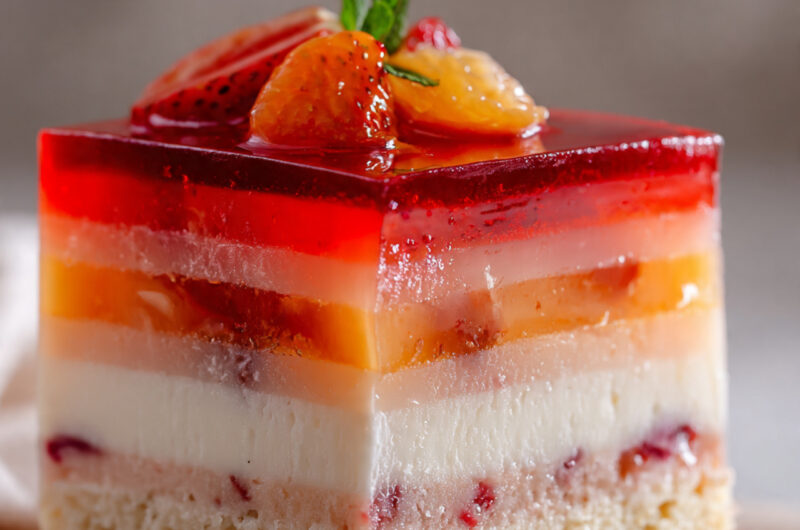
Easy Jelly Cake with Creamy Layers
Course: Trending Cake4
servings15
minutes5
minutes225
kcal3
hoursA refreshing, no-bake layered dessert made with a soft sponge base, lightly sweetened whipped cream, and vibrant set jelly on top. Light, beautiful, and perfect for any occasion from a casual weeknight to a summer gathering.
Ingredients
Jelly Layer:
1 packet flavored jelly, strawberry or orange (approx. 85g / 3 oz)
1 cup hot water
1 cup cold water
Sponge Base:
1 plain sponge cake, 8-inch
Cream Layer:
1 cup whipped cream
2 tbsp sugar (optional)
½ cup chopped fruits (optional)
Directions
- Dissolve jelly crystals in 1 cup hot water. Add 1 cup cold water, stir, and cool to room temperature.
- Place sponge cake flat in a deep 8-inch dish.
- Pour a thin layer of cooled jelly (about ¼ of total) over the sponge. Refrigerate 15–20 minutes until just set.
- Spread whipped cream evenly over the set jelly layer. Add fruit if using.
- Slowly pour remaining jelly over the cream layer.
- Refrigerate for a minimum of 2–3 hours, or overnight for the best results.
- Slice with a cold, damp knife and serve chilled.