The Most Irresistible Lego Cake That Kids Will Beg You to Make Again
Decorated kids’ cakes have a reputation for looking stunning on screen and falling apart the moment you try to cut them — crumbly blocks, frosting that slides, colors bleeding into each other after all that effort. This Lego Cake is built differently. A sturdy vanilla sponge holds clean edges under the knife, gel-colored buttercream grips each block without budging, and a straightforward cutting method gives you neat, toy-like bricks every single time.
Picture soft, pillowy squares of golden vanilla cake with a fine, even crumb that presses cleanly under a knife. Each block is blanketed in smooth, vivid frosting — cherry red, sky blue, sunshine yellow, grassy green — cool and sweet, with that satisfying resistance on the first bite before giving way to the warm, buttery cake underneath. There’s a subtle vanilla fragrance that fills the kitchen while it bakes, and when those little colored bricks come together on a serving board, the effect is pure, cheerful magic.
This birthday cake was made for celebrations, but it doesn’t have to wait for one — it works just as beautifully for a rainy weekend baking project with the kids, a classroom treat, or a last-minute family gathering. It comes together with pantry staples and is one of the most satisfying easy cake recipes you’ll reach for again and again. Whether you’re a first-time baker or you’ve made a hundred cakes, this one delivers every single time.
Why You’ll Love This Recipe
It Looks Impressive but Comes Together Simply
No special equipment, no complicated techniques, no stress. The blocks are cut from a single square bake and decorated piece by piece, which makes the process far more manageable than assembling a traditional layered cake. You don’t need a piping bag or a turntable — just a knife, a spatula, and a little patience.
The Texture Is Soft, Moist, and Sturdy Enough to Hold Its Shape
This vanilla sponge strikes the perfect balance between tender and firm — fluffy enough to eat happily on its own, but structured enough that the blocks hold clean edges and stack without crumbling. Every bite is light, buttery, and satisfying without feeling dense or dry.
The Colors Are Bold, Bright, and Completely Customizable
With a handful of gel food colors, you can recreate a full Lego palette or match any birthday theme you have in mind. Swap colors freely, mix in your own combinations, and let the kids choose their favorites — there’s genuinely no wrong answer here.
It’s Built for Real Life — Bake Ahead, Adjust the Batch
The sponge bakes beautifully a day in advance and the frosting stores overnight in the fridge, making party-morning prep completely stress-free. Whether you’re feeding four or fourteen, the recipe scales up smoothly without complication.
Even the Pickiest Eaters Come Around
The classic vanilla flavor keeps everyone happy, including kids who usually claim they don’t like cake. The colorful presentation tends to win over the skeptics before they even take a bite, and the familiar buttery sweetness seals the deal.
Ingredients
For the Vanilla Sponge
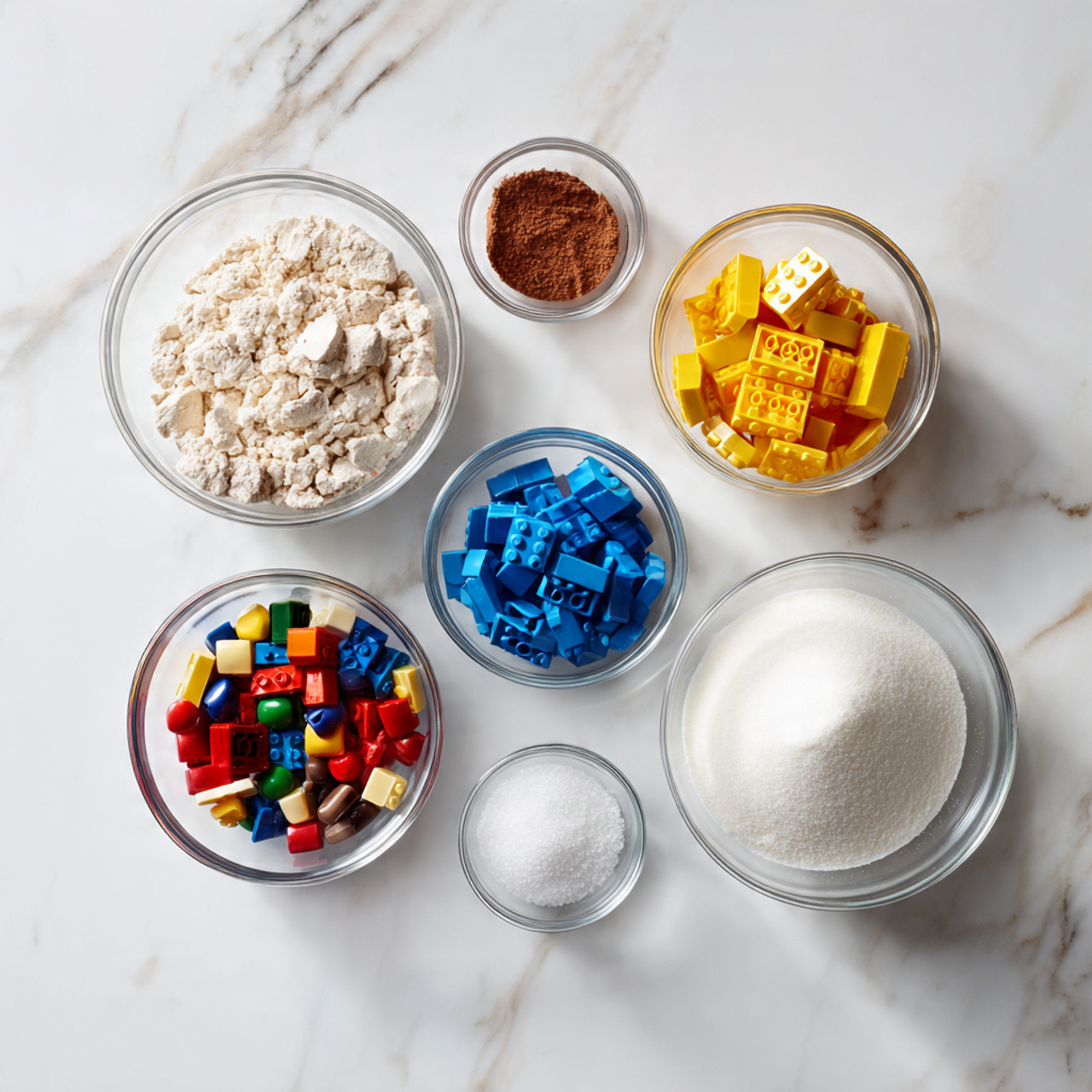
- 2 cups all-purpose flour
- 1 cup sugar
- 1 cup milk
- ½ cup butter, softened (unsalted gives better flavor control)
- 3 eggs (room temperature for a smoother, more even batter)
- 1 tbsp baking powder
- 1 tsp vanilla extract (pure, not imitation)
- Pinch of salt
For the Frosting and Decoration
- 2 cups buttercream frosting (buttercream holds shape and color far better than whipped cream when stacking blocks)
- Gel food coloring in red, blue, yellow, and green (gel gives deep, saturated shades — liquid coloring tends to dull and waterlog the frosting)
The butter and eggs in the sponge create a fine, even crumb that cuts cleanly into blocks, while the buttercream provides just enough structure to coat each piece without sliding. Together they deliver that satisfying bite — sweet, soft, and colorful right through.
How to Make Lego Cake — Step-by-Step
Step 1: Prepare Your Pan and Preheat
Preheat your oven to 180°C (350°F) and grease a square baking pan generously with butter, then dust lightly with flour. This ensures your cake releases in one clean piece — the foundation of getting neat, even blocks later. Don’t worry if you only have a rectangular pan; it works perfectly well, and you can trim the edges after baking.
Step 2: Mix the Batter
Whisk the flour, baking powder, and salt together in one bowl. In a larger bowl, beat the softened butter and sugar until the mixture turns pale and fluffy — about 2–3 minutes by hand or 1 minute with a mixer. Add the eggs one at a time, mixing well after each, then stir in the vanilla. Fold in the dry ingredients, alternating with the milk, until you have a smooth, ribbon-thick batter. Don’t worry if it looks slightly lumpy at first — it comes together beautifully with a few more gentle folds.
Step 3: Bake Until Just Set
Pour the batter into your prepared pan and smooth the top with a spatula so it reaches evenly into the corners. Bake for 28–32 minutes, until the top is lightly golden and a toothpick inserted into the center comes out clean. The edges will smell nutty and start to pull gently away from the pan — that’s exactly the cue you’re looking for. Let the cake cool in the pan for 10 minutes before turning it out onto a wire rack.
Step 4: Cut Into Lego Blocks
Once the cake is completely cool — and this step is non-negotiable, since a warm cake tears rather than slices — use a sharp knife to cut it into even rectangular blocks roughly twice as long as they are wide, mimicking a classic Lego brick. Wipe the knife clean between each cut for the neatest edges. A standard square pan gives you 12–16 blocks depending on your sizing. Don’t worry if a few edges look rough — the frosting covers everything beautifully.
Step 5: Color, Frost, and Assemble
Divide the buttercream into four bowls and add gel food coloring to each — red, blue, yellow, and green. Mix until the color is vivid and even with no streaks. Use a small palette knife or butter knife to coat each cake block on all sides with its color. Roll small pinches of matching frosting into balls and press two or four onto the top of each block to create the signature Lego dot studs. Arrange the finished blocks on a serving board, stack a few for height and drama, and chill for 15 minutes so everything firms up before serving.
Perfecting This Recipe
- Start with room temperature butter and eggs. Cold butter won’t cream properly, and cold eggs can cause the batter to split. Take both out 30–45 minutes before you begin.
- Once the flour goes in, stop mixing as soon as the batter comes together. Overmixing develops gluten and turns a light sponge rubbery.
- Use a spatula to spread the batter level in the pan before baking — uneven batter bakes into uneven blocks that are harder to stack.
- Give the cake a full 45 minutes to cool at room temperature before cutting. If you’re short on time, 20 minutes in the refrigerator speeds things up without affecting texture.
- Apply frosting in two stages: a thin crumb coat first to seal in any loose crumbs, then a second smooth layer for the clean, bright color finish.
- Gel food coloring is worth the upgrade here. Liquid drops dilute the frosting and produce dull, streaky shades — gel gives you the bold, saturated colors that make this cake look so striking.
Common Mistakes to Avoid
- Opening the oven before 25 minutes — The sponge needs time to fully set its structure. Opening early causes the center to sink into a dense, underbaked layer that crumbles when cut.
- Frosting a warm cake — Warm cake is the single biggest reason frosting slides off or looks greasy and uneven. Always cool completely before touching the frosting.
- Using liquid food coloring — Liquid drops waterlog the buttercream and wash out the colors. Gel coloring is a small upgrade with a big visual payoff.
- Cutting blocks without wiping the knife — Frosting and crumbs build up on the blade with every cut, dragging color and making edges ragged. A quick wipe between each slice keeps everything clean.
- Skipping the post-decoration chill — Even 15 minutes in the refrigerator after frosting helps the buttercream firm up so the blocks hold their shape when arranged and handled.
Add Your Touch
- Mix a tablespoon of cocoa powder into half the batter before baking for a marble effect inside each block — vanilla and chocolate in every bite.
- Add the zest of one lemon or a half teaspoon of almond extract to the batter for a subtle twist that makes the vanilla taste brighter and more interesting.
- Pipe a thin outline around the edge of each frosted block in a contrasting color for a more polished, graphic look.
- Match the palette to the occasion — orange and purple for Halloween, red and green for Christmas, or a child’s two favorite colors for a birthday they’ll never forget.
- Fold a tablespoon of rainbow sprinkles into the batter for a funfetti surprise hiding inside every colorful block.
- Swap the buttercream for cream cheese frosting if you prefer a slightly tangy, less-sweet finish that still takes gel color beautifully.
Visit Also: Winnie The Pooh Cake
What to Serve With This
A tall glass of cold milk is the classic companion — it’s hard to beat the combination with a sweet, buttery vanilla cake. For a party table, small cups of fruit punch or homemade lemonade add a colorful, kid-friendly spread that matches the cake’s energy. A scoop of vanilla ice cream on the side turns each block into a proper dessert plate. For a crowd that includes adults, a light Earl Grey or chamomile tea cuts through the sweetness in the best way. Round out the table with simple savory finger foods — mini sandwiches, fruit skewers, or veggie sticks — to balance the richness.
Storing and Serving
Fridge Store frosted cake blocks in a single layer in an airtight container for up to 3 days. If you need to stack them, lay a sheet of parchment between layers to prevent the frosting from sticking.
Freezer Unfrosted cake pieces freeze well for up to one month. Wrap each block tightly in plastic wrap, place in a zip-lock bag, and thaw overnight in the refrigerator before frosting.
Reheating This cake is best served at room temperature rather than reheated. Remove it from the fridge at least 20 minutes before serving so the frosting softens back to its best texture. Avoid microwaving frosted pieces — the buttercream melts quickly and the cake can go rubbery.
Make-Ahead Tip Bake the sponge up to one day ahead and store it unfrosted, wrapped tightly in plastic wrap at room temperature. Mix and color the frosting the night before and refrigerate it in covered bowls. Decorate the morning of your event for the freshest, most vibrant result with almost no day-of effort.
Servings This recipe makes approximately 12–16 Lego blocks depending on how you cut them, serving 6–8 people comfortably.
Nutrition (Approximate Per Serving)
- Calories: ~290
- Total Fat: 12g
- Saturated Fat: 7g
- Carbohydrates: 42g
- Sugar: 26g
- Protein: 4g
- Sodium: 180mg
Nutritional values are approximate and may vary based on specific ingredients and brands used.
Chef’s Helpful Tips
- Use softened butter, not melted. Softened butter traps air when beaten with sugar, giving you that light, pillowy crumb. Melted butter skips that aeration step and produces a noticeably denser cake.
- Start checking for doneness at 28 minutes with a toothpick rather than relying on the timer alone — every oven runs a little differently, and pulling the cake at the right moment makes a real difference in texture.
- A sharp chef’s knife wiped with a damp cloth between slices gives the cleanest cuts. A slightly warm (not hot) blade also glides through more smoothly than a cold one.
- If your buttercream is too stiff to spread, beat in a teaspoon of milk at a time until it loosens. If it’s too soft, add powdered sugar a tablespoon at a time until it firms up.
- Pure vanilla extract makes a noticeable difference in a simple sponge. The flavor is cleaner, warmer, and more rounded — worth keeping a good bottle on hand.
Frequently Asked Questions
Q1. Can I make this Lego Cake ahead of time? Absolutely. Bake the sponge up to a day in advance, wrap it well, and store it at room temperature. Mix and refrigerate your colored frosting overnight, then decorate on the morning of your party. The cake tastes just as fresh and the colors stay vivid.
Q2. Can I replace the eggs if I need an egg-free version? Yes — substitute each egg with 3 tablespoons of plain yogurt, or use a mix of 1 tablespoon white vinegar and 1 tablespoon milk per egg. The sponge will be slightly denser but still soft, moist, and easy to cut into clean blocks.
Q3. Is this recipe suitable for beginner bakers? It genuinely is one of the most beginner-friendly colorful cake recipes you’ll find. The batter comes together with basic mixing technique, and the decorating is forgiving — rough edges disappear under frosting, no piping bag is required, and there’s very little that can go wrong once the cake is properly cooled.
Q4. Can I make this for a potluck or large party? It’s one of the best options for exactly that. Double the recipe, bake in two pans, and you’ll have enough blocks for a crowd. The frosted pieces can be refrigerated up to 3 days in advance, which means almost zero day-of stress. Bring them to room temperature before serving for the best frosting texture.
Q5. Can I freeze the finished cake? For the best result, freeze the blocks before frosting rather than after. Unfrosted pieces wrapped tightly in plastic keep well for up to a month. If you need to freeze frosted blocks, wrap them carefully and thaw slowly in the refrigerator overnight, then allow them to come fully to room temperature before serving.
Conclusion
There’s something quietly joyful about a cake that makes a room full of kids stop mid-conversation and point. This Lego Cake does that every single time — not because it’s technically demanding or requires hours in the kitchen, but because it’s colorful, playful, and made with genuine care. It captures the spirit of celebration in the most straightforward way: a good vanilla sponge, bold buttercream, and a little creative cutting. Whether you’re centering it on a birthday table or making it on a slow Sunday afternoon with the kids helping, it gives back far more than the effort it asks for.
Make it once and it earns a permanent place in your rotation. Change the colors for the season, experiment with flavors, hand the decorating over to the kids — this is the kind of recipe that grows with your family and never gets old. Try it this weekend, bring it to your next gathering, and make it completely your own.
Lego Cake
Course: Cake4
servings20
minutes30
minutes290
kcal1
hour10
minutesSoft vanilla sponge cut into colorful frosted blocks — this is the birthday cake kids never forget. Easy to make ahead, fun to decorate, and endlessly customizable for any celebration or occasion.
Ingredients
For the Vanilla Sponge:
2 cups all-purpose flour
1 cup sugar
1 cup milk
½ cup butter, softened
3 eggs
1 tbsp baking powder
1 tsp vanilla extract
Pinch of salt
For the Frosting and Decoration:
2 cups buttercream frosting
Gel food coloring in red, blue, yellow, and green
Directions
- Preheat oven to 180°C (350°F). Grease and flour a square baking pan.
- Whisk flour, baking powder, and salt in a bowl. Set aside.
- Beat softened butter and sugar until pale and fluffy. Add eggs one at a time, then mix in vanilla.
- Fold dry ingredients into the butter mixture, alternating with milk, until a smooth batter forms.
- Pour into prepared pan, smooth the top, and bake 28–32 minutes until golden and a toothpick comes out clean.
- Cool in pan for 10 minutes, then transfer to a wire rack to cool completely.
- Cut cooled cake into even rectangular blocks. Wipe knife between each cut.
- Divide buttercream into four bowls and mix in gel food coloring — one color per bowl.
- Frost each block on all sides. Roll small frosting balls and press 2–4 onto each block top to form the Lego studs.
- Arrange on a serving board and refrigerate 15 minutes before serving.