Silky Lemon Posset — The Effortlessly Elegant Dessert You’ll Make Again and Again
The first time I served lemon posset at a dinner party, I almost didn’t admit how easy it was. Three ingredients, one saucepan, and fifteen minutes of actual work — yet every guest leaned in after the first spoonful and asked for the recipe as if I’d spent hours in the kitchen. That quiet little moment of magic is exactly why this dessert has a permanent place in my repertoire.
The texture is what gets people. It’s not quite a pudding, not quite a mousse — it’s somewhere in between, impossibly smooth and rich, with a brightness that cuts right through the cream. The lemon doesn’t just flavour it; it sets it, working like alchemy to firm up the cream into something that trembles on the spoon before melting clean on your tongue.
This is the kind of creamy lemon dessert you reach for when you want to impress without the stress. It belongs at summer garden parties and cosy winter dinner tables equally. It’s make-ahead pudding at its finest — actually better after a full night in the fridge — and it fits right alongside other British dessert classics that prove simplicity is its own kind of sophistication. If you’ve been looking for an easy no-bake dessert that genuinely delivers, you’ve found it.

Why You’ll Love This Recipe
It Tastes Like Sunshine in a Glass
The balance of sharp citrus and heavy cream is genuinely remarkable. The lemon cuts through the richness so cleanly that the posset never feels heavy — every bite is bright, smooth, and refreshing in a way that heavier desserts simply can’t match.
The Texture Is Unlike Anything Else
This isn’t a mousse that collapses, and it’s not a panna cotta that bounces. Lemon posset sets with a delicate, almost quivery firmness — silky from edge to edge, with zero gelatine required. The citric acid in the lemon juice does all the work naturally.
Three Ingredients, Zero Fuss
You need double cream, sugar, and lemons. That’s it. No water baths, no gelatine sheets, no stand mixers, and no special equipment beyond a saucepan and a fine sieve. Even complete beginners pull this off on the first try.
Perfect for Entertaining and Make-Ahead Meals
Set your possets the night before, cover them, and they’ll be waiting for you — perfectly chilled and ready to serve — when your guests arrive. No last-minute plating stress, no melting desserts, no worrying about timing.
A Classic with Real Elegance
There’s something about the simplicity of lemon posset that feels quietly luxurious. Served in pretty glasses or ramekins with a curl of lemon zest, it looks like it came from a restaurant kitchen. Nobody needs to know it took you fifteen minutes.
Ingredients
For the Posset Base
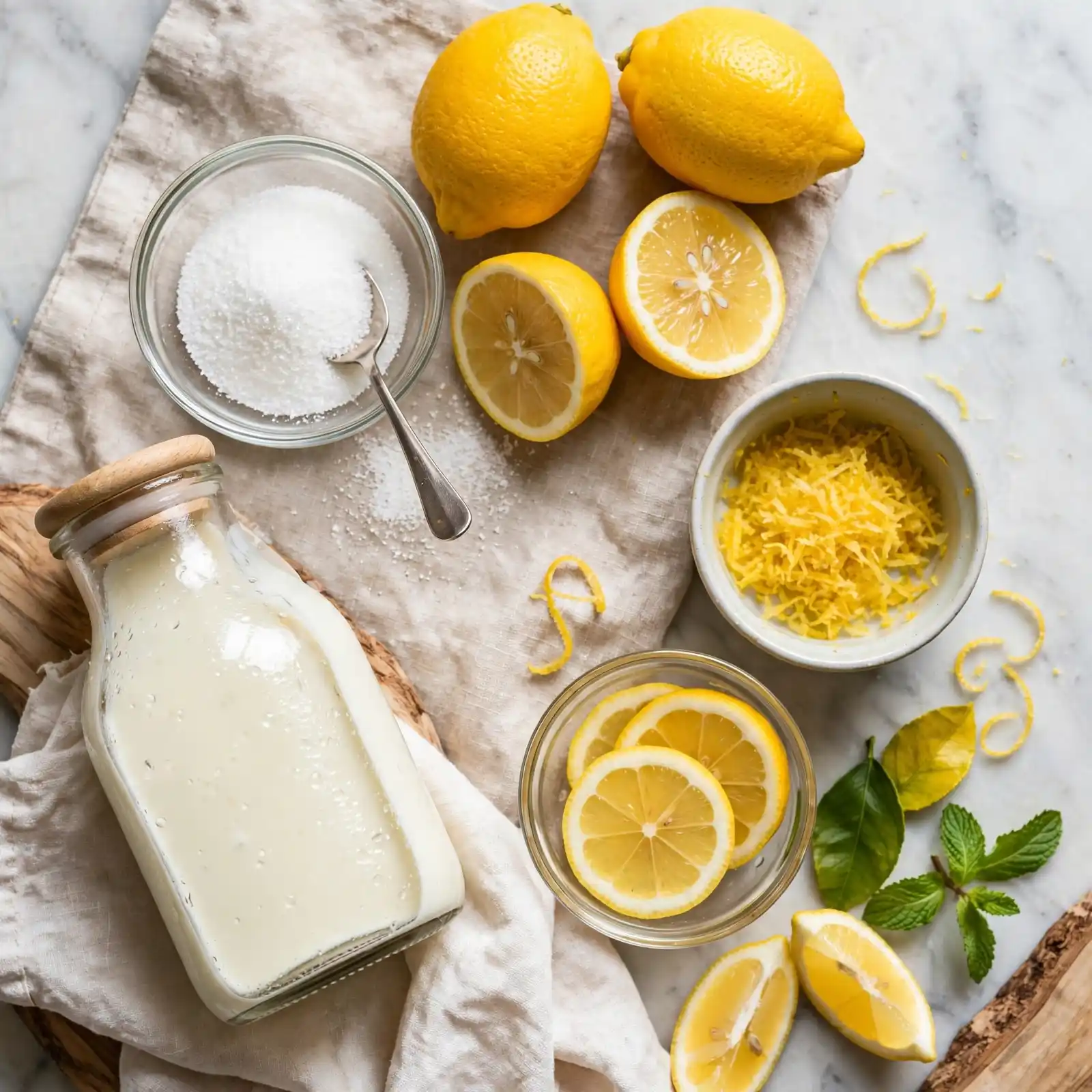
- 600ml double cream (full-fat only — single cream won’t set)
- 150g caster sugar
- 3 large lemons, zest and juice (you need approximately 90ml / 6 tbsp fresh juice — do not use bottled)
For Serving / Topping (optional but recommended)
- Extra lemon zest, finely grated, for garnish
- Fresh raspberries or blueberries (the tartness pairs beautifully)
- Shortbread biscuits or thin butter cookies, for crunch alongside each serving
The cream and sugar create a rich, sweet base, while the lemon juice reacts with the fat in the cream to firm the posset naturally — no setting agents needed. The result is a dessert that’s indulgent yet light-tasting, every single time.
How to Make Lemon Posset — Step-by-Step
Step 1: Zest and Juice Your Lemons
Before anything else, zest all three lemons and set the zest aside. Then juice them until you have at least 90ml — give them a firm roll on the countertop first to get the most juice out. Freshly squeezed is non-negotiable here; bottled juice doesn’t have the right acidity to set the cream properly.
Step 2: Heat the Cream and Sugar
Pour the double cream and caster sugar into a medium, heavy-bottomed saucepan. Set it over medium heat and stir gently as it warms. Bring it to a full rolling boil — you’ll see it rise and bubble actively across the surface. Once it reaches that point, reduce the heat slightly and let it boil steadily for exactly 3 minutes, stirring occasionally. Don’t worry if it looks like it’s bubbling up too enthusiastically; just keep the heat steady and stay close.
Step 3: Add the Lemon
Remove the pan from the heat and immediately pour in the lemon juice and zest. Stir well to combine — you’ll notice the mixture shift slightly in texture within seconds. That’s the magic happening: the citric acid is beginning to react with the cream. The smell at this point is absolutely glorious — sharp citrus cutting through warm cream.
Step 4: Strain and Pour
Set a fine-mesh sieve over a large jug with a good pouring spout. Pour the cream mixture through the sieve to catch any zest. Skim off any foam from the surface if you’d like a perfectly smooth top. Now pour the mixture carefully and evenly into your serving glasses, ramekins, or small bowls. Don’t worry if a few tiny bubbles appear on the surface — they’ll settle as the posset cools.
Step 5: Chill Until Set
Allow the possets to cool at room temperature for about 20 minutes, then cover each one loosely with cling film and transfer to the fridge. They need a minimum of 4 hours to set fully, but overnight is genuinely better — the flavour deepens and the texture becomes even silkier. You’ll know they’re ready when the surface is just firm to a light touch and the posset holds its shape when the glass is tilted gently.
Perfecting This Recipe
- Use the heaviest double cream you can find — fat content is what makes lemon posset set without gelatine. Anything below 35% fat is risky.
- Roll your lemons firmly on the counter before cutting — this breaks down the cells and yields significantly more juice.
- The full 3-minute boil matters. Undercooking the cream and sugar mixture can result in possets that don’t set firmly enough.
- Don’t skip the fine sieve — straining removes the zest and gives you that impossibly smooth finish that makes lemon posset so stunning.
- Let it cool slightly before pouring so you don’t crack delicate glasses, and always chill uncovered for the first 15 minutes to avoid condensation droplets on the surface.
- Overnight chilling produces noticeably better results than a rushed 4-hour set — plan ahead when you can.
- Avoid stirring once poured; any disturbance before setting can affect the final texture.
Common Mistakes to Avoid
- Using single cream or half-and-half — The posset relies entirely on the high fat content of double cream to set. Lower-fat creams simply won’t firm up, no matter how long you chill them.
- Not boiling long enough — A brief simmer isn’t the same as a rolling boil maintained for 3 full minutes. Under-boiling means the setting process won’t complete properly.
- Using bottled lemon juice — Bottled juice is often pasteurised and pH-adjusted, which affects its ability to set the cream. Fresh lemons only, every time.
- Skipping the strain — Leaving the zest in the mixture doesn’t just affect texture; it can also make the posset slightly bitter over a long chill. Always strain it out.
- Rushing the chill time — Pulling possets out of the fridge after two hours when they’re still liquid in the centre is a common shortcut that ends in disappointment. Be patient — 4 hours minimum, overnight is best.
Add Your Touch
- Stir in a teaspoon of finely grated lime zest alongside the lemon for a citrus-forward twist.
- Swap half the lemon juice for fresh pink grapefruit juice for a more complex, slightly bitter edge.
- Add a teaspoon of culinary lavender to the cream as it heats, then strain out with the zest for a floral, Provençal version.
- Layer the bottom of each glass with a spoonful of lemon curd before pouring in the posset for double lemon intensity.
- Top with a simple raspberry coulis for colour contrast and a fruity counterpoint to the richness.
- Press a crushed digestive biscuit base into the bottom of each glass before pouring for a cheesecake-style effect.
- Fold in a half teaspoon of vanilla bean paste at the lemon stage for a softer, more dessert-like flavour profile.
Visit Also: Crab Cakes Recipe
What to Serve With This
Shortbread fingers — the buttery crunch is a natural counterpoint to the silky cream.
Fresh raspberries or strawberries — their tartness lifts the whole dessert and adds beautiful colour.
Elderflower cordial with sparkling water — light, floral, and perfect for a summer table.
Prosecco or a dry sparkling wine — the bubbles and acidity mirror the citrus beautifully.
Almond tuile biscuits — elegant, delicate, and they shatter satisfyingly against the smooth posset.
Storing and Serving
Fridge:
Cover each glass with cling film or a small plate and refrigerate for up to 3 days. The texture actually improves overnight, making this a genuinely better dessert the longer it chills.
Freezer:
Lemon posset doesn’t freeze well — the cream separates on thawing and the smooth set texture is lost entirely. This one is best kept in the fridge only.
Reheating:
Not applicable — lemon posset is served cold, straight from the fridge. Remove it 5 minutes before serving in very cold weather to take the deep chill off.
Make-Ahead Tip:
This is one of the best make-ahead desserts you can keep in your repertoire. Make it the night before, cover, and refrigerate. You can prep up to 48 hours in advance with no loss of quality — the flavour only gets better.
Servings:
This recipe makes 6 generous servings in standard dessert glasses or ramekins.
Nutrition (Approximate Per Serving)
- Calories: 420 kcal
- Total Fat: 36g
- Saturated Fat: 23g
- Carbohydrates: 22g
- Sugar: 21g
- Protein: 2g
- Sodium: 30mg
Nutritional values are approximate and may vary based on specific ingredients and brands used.
Chef’s Helpful Tips
- Always use room temperature lemons — cold lemons straight from the fridge yield significantly less juice and are harder to zest cleanly.
- Watch the boiling cream closely and don’t step away from the stove during those 3 minutes — cream boils over fast and without much warning.
- For perfectly clean, streak-free glasses, wipe the rim and inside edge of each glass with a clean damp cloth before the posset sets.
- A microplane zester gives you fine, feathery zest that infuses the cream beautifully and strains out easily — worth using if you have one.
- If your possets seem too soft after 4 hours, give them another 2–3 hours. Room temperature in your kitchen, the age of your lemons, and even humidity can all slightly affect setting speed.
Frequently Asked Questions
Q1. Can I use single cream instead of double cream?
Unfortunately, no — single cream doesn’t have the fat content needed to set the posset through the citric acid reaction. You really do need double cream (at least 35% fat) for this to work. It’s what gives lemon posset its signature silky, firm texture.
Q2. What does lemon posset taste like compared to lemon curd?
It’s smoother, creamier, and less intensely tart than lemon curd. Think of it as somewhere between a rich panna cotta and a very light, fresh cheesecake — the lemon flavour is bright but wrapped in cream, so it’s never sharp or mouth-puckering.
Q3. Is this recipe suitable for beginners?
Genuinely one of the most beginner-friendly desserts you can make. As long as you use the right cream, boil for the correct time, and use fresh lemon juice, it sets reliably every single time. There’s very little that can go wrong.
Q4. Can I make this for a dinner party ahead of time?
Absolutely — in fact, it’s ideal for it. Make the possets the evening before, cover them, and refrigerate overnight. They’ll be perfectly set, deeply flavoured, and completely stress-free when guests arrive. Just add garnish right before serving.
Q5. Can I freeze lemon posset?
Freezing isn’t recommended — the texture separates when thawed and you lose that beautiful smooth set entirely. Keep it in the fridge for up to 3 days and it will be perfect. Honestly, it won’t last that long anyway.
Conclusion
There’s a reason lemon posset has been made in British kitchens for centuries — it’s one of those rare desserts where less truly is more. Three ingredients, a single saucepan, and a few hours of patience produce something that feels genuinely special. Whether you’re serving it at a formal dinner or a lazy Sunday lunch, it always lands with the same quiet, delighted reaction.
Make it once, and you’ll understand why it earns a permanent spot in the rotation. Dress it up with fresh berries and shortbread, or let it speak for itself in a plain glass — either way, it’s yours to make your own. I hope it brings a little elegance and a lot of joy to your table.

Silky Lemon Posset
Course: Trending Recipes6
servings10
minutes8
minutes420 per serving
kcal240
minutes4
hours18
minutesA three-ingredient, no-bake dessert with a delicate, creamy set and a bright citrus flavour. Elegant enough for dinner parties, easy enough for a Tuesday night. Make it the day before and it takes care of itself.
Ingredients
Posset Base:
600ml double cream
150g caster sugar
3 large lemons (approx. 90ml juice + zest)
To Serve (optional):
Extra lemon zest
Fresh raspberries or blueberries
Shortbread biscuits
Directions
- Zest all 3 lemons, then juice them to get at least 90ml juice. Set both aside.
- Combine double cream and caster sugar in a medium saucepan over medium heat. Stir to dissolve.
- Bring to a full rolling boil. Boil steadily for exactly 3 minutes, stirring occasionally.
- Remove from heat. Stir in lemon juice and zest immediately.
- Strain through a fine sieve into a large jug. Skim any surface foam.
- Pour evenly into 6 glasses or ramekins.
- Cool at room temperature for 20 minutes, then cover and refrigerate for at least 4 hours or overnight.
- Garnish with lemon zest and berries before serving.