The Softest Victoria Sponge Cake for Cozy Afternoon Tea
Most homemade Victoria sponge comes out dense, dry, or stubbornly flat — and it almost always traces back to butter that wasn’t soft enough or a batter that got overworked. This recipe sidesteps both of those traps, so you end up with a tender, cloud-light crumb every single time.
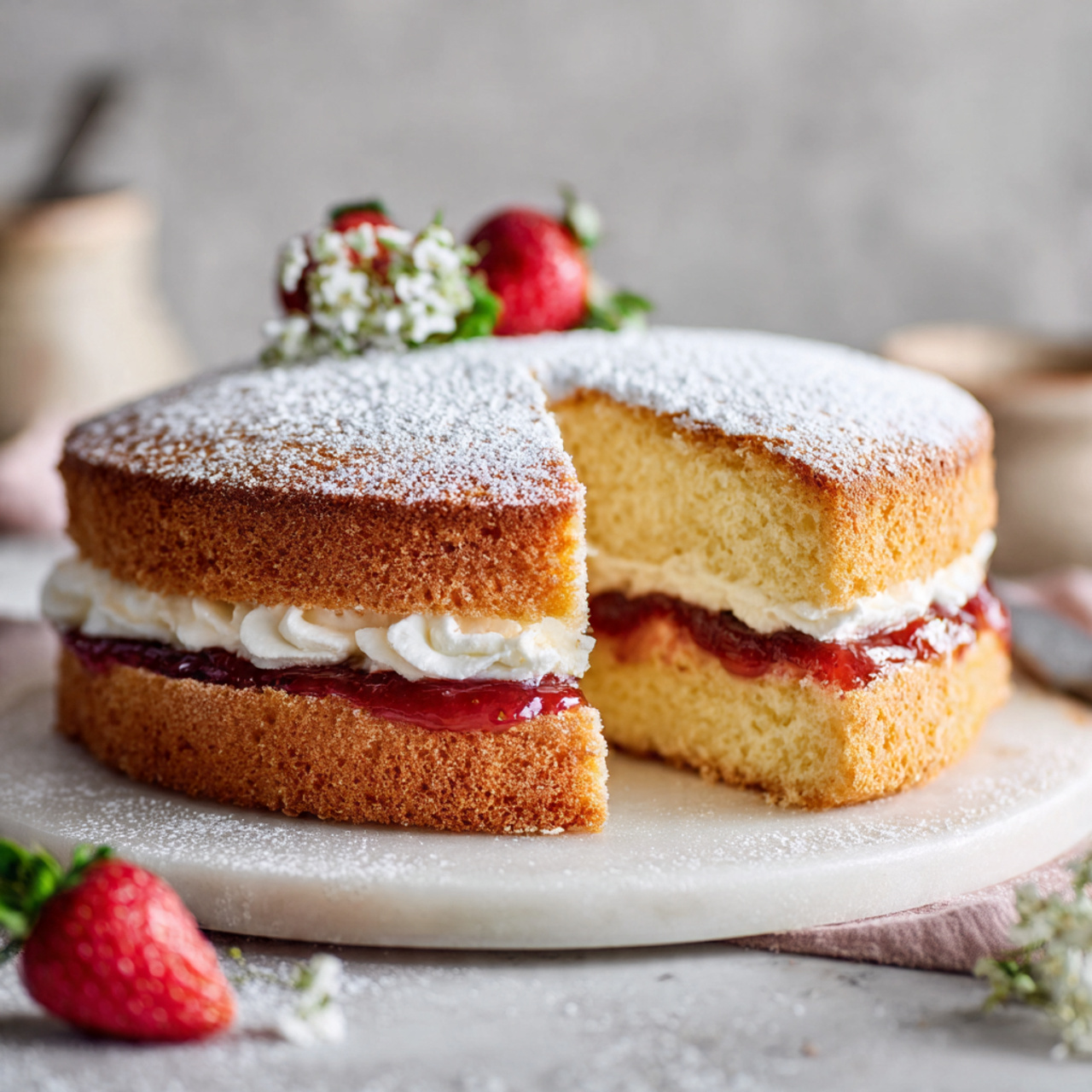
Picture two golden sponge layers so soft they feel almost weightless on the fork, with a delicate buttery crumb that melts the moment it touches your tongue. A ribbon of bright strawberry jam runs sweet and gently tart through the middle, softened by a pillow of barely sweetened whipped cream. A whisper of powdered sugar settles on top, and the whole thing smells faintly of warm vanilla the second you cut into it.
It’s the kind of classic British bake that suits almost any moment — a relaxed afternoon tea, a weekend family gathering, or a quiet evening when you simply want something sweet and homemade. As a fuss-free tea-time dessert, it leans on pantry staples and rewards even first-time bakers. Whether it’s your first sponge or your fiftieth, this one earns a permanent spot in your rotation.
Why You’ll Love This Recipe
Gently Sweet, Perfectly Balanced
The sweetness here is soft and rounded, never cloying. The tart edge of the strawberry jam plays against the mild buttery sponge and the lightly sweetened cream, so every slice tastes balanced rather than sugary.
A Cloud-Soft, Tender Crumb
This is the texture people chase and rarely hit at home. Properly creamed butter and a gentle folding hand give you a springy, melt-in-the-mouth sponge that stays soft for a day or two.
Beginner-Friendly and Quick
There are no fancy tools, tricky techniques, or hard-to-find ingredients. If you can cream butter and fold in flour, you can make this easy homemade cake with confidence on your very first try.
Made for Sharing
A jam and cream sponge is the ultimate crowd-pleaser. It slices neatly, travels well to potlucks and family dinners, and looks lovely on a cake stand without any decorating skill.
A Timeless Classic You Can Make Your Own
The base is wonderfully simple, which means it’s endlessly adaptable. Keep it traditional, or add lemon zest, swap the jam, or layer in a little custard — it welcomes a personal touch.
Ingredients
For the Sponge
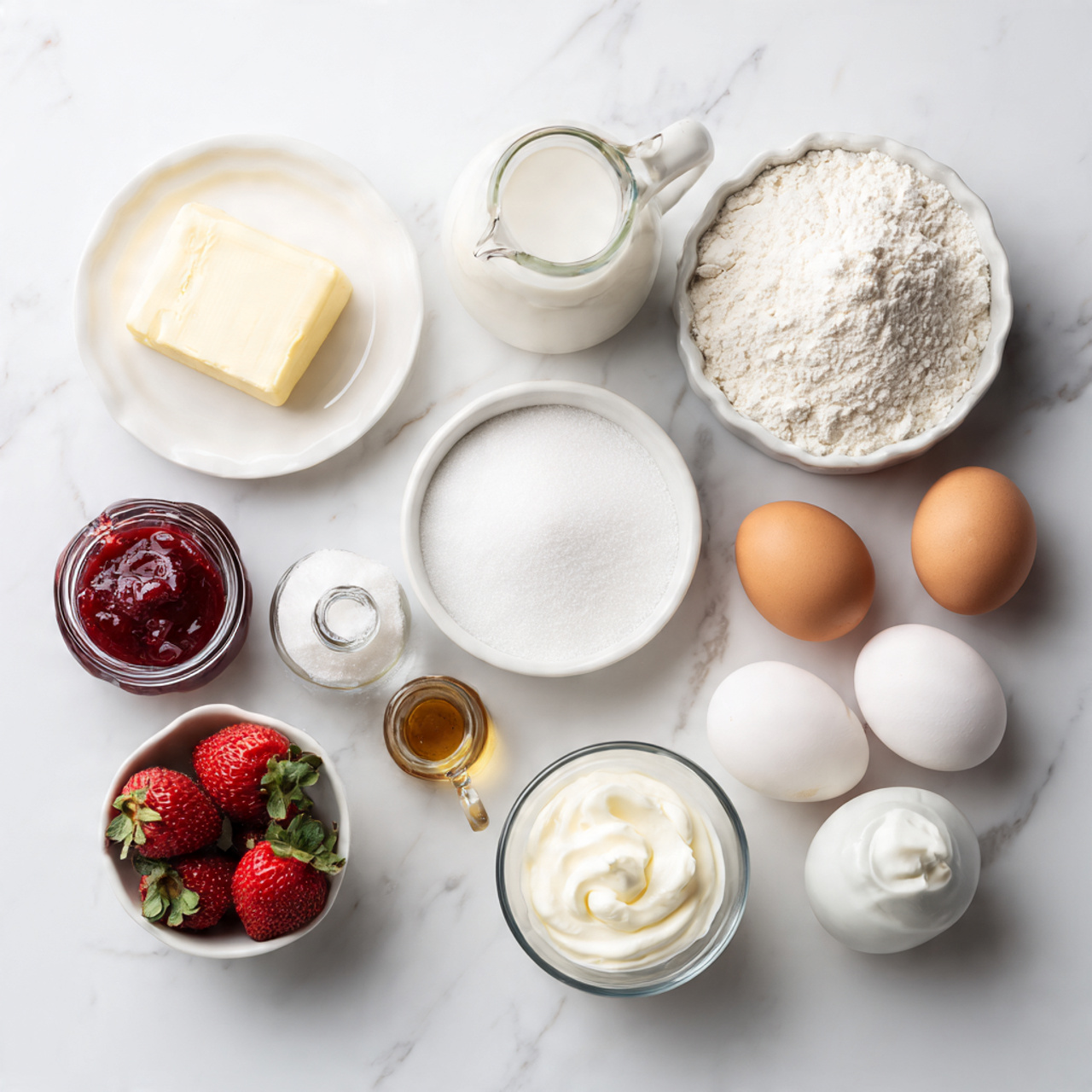
- 200g unsalted butter (softened — leave it out for about an hour so it creams easily)
- 200g sugar (fine or caster sugar blends most smoothly)
- 4 eggs (large, at room temperature)
- 200g all-purpose flour
- 2 teaspoons baking powder
- 1 teaspoon vanilla extract (pure, not imitation, for the best flavor)
- 3–4 tablespoons milk (whole milk works best)
For the Filling
- 4 tablespoons strawberry jam (a good-quality jam with real fruit makes a difference)
- 100ml fresh cream (whipped to soft peaks)
For Finishing
- A little powdered sugar (for dusting)
The soft, buttery sponge gives you a neutral, tender base, while the bright jam adds fruit and a touch of tartness and the whipped cream keeps everything light and creamy. Together they hit that classic sweet-soft-fresh balance that makes this cake feel both simple and special.
How to Make Victoria Sponge Cake — Step-by-Step
Step 1: Prepare Your Pans and Oven
Preheat your oven to 180°C and lightly grease two round cake pans. Line the bases with baking paper so the sponges lift out cleanly — press it down flat so it sits snugly. If you’re baking for two, use smaller pans and shave a few minutes off the bake time.
Step 2: Cream the Butter and Sugar
Beat the softened butter and sugar together until the mixture turns pale and fluffy and lightens to an almost ivory color. Don’t worry if this takes a few minutes — this is the step that traps air and gives the sponge its lift, so it’s worth the patience.
Step 3: Add the Eggs and Vanilla
Add the eggs one at a time, beating well after each so they fully blend in, then stir in the vanilla until the batter smells warm and fragrant. Don’t worry if the mixture looks slightly curdled after the eggs go in — a spoonful of the flour brings it right back together.
Step 4: Fold in the Dry Ingredients
In a separate bowl, mix the flour and baking powder, then gently fold them into the batter just until no dry streaks remain. Add the milk a tablespoon at a time until the batter is soft and drops easily off the spoon but isn’t runny. Stop as soon as it’s smooth — overmixing is what turns a sponge dense.
Step 5: Bake the Sponges
Divide the batter evenly between the two pans and smooth the tops. Bake for about 20 minutes, until the sponges are golden, springy to a light touch, and a toothpick inserted in the center comes out clean. Resist opening the oven early so the rise doesn’t drop.
Step 6: Cool, Fill, and Finish
Let the cakes cool completely in the pans for a few minutes, then turn them out onto a rack to cool fully before filling. Spread the jam over one layer, top with the whipped cream, set the second sponge on top, and finish with a dusting of powdered sugar. Don’t worry if your layers aren’t perfectly level — a little dusting hides almost everything.
Perfecting This Recipe
- Start with truly soft butter. If it gives easily when pressed but isn’t melting, it’s ready to cream into a light, airy base.
- Cream the butter and sugar longer than you think — a pale, fluffy mixture is the single biggest factor in a tall, tender sponge.
- Fold the flour in gently with a spatula rather than beating it. Overworking the batter develops gluten and gives you a tight, heavy crumb.
- Weigh the batter into the two pans for even layers that stack neatly and bake at the same rate.
- Cooling matters: warm sponge tears under jam and melts the cream, so let the layers reach room temperature before filling.
Common Mistakes to Avoid
- Using cold butter — Cold butter won’t cream properly, which means less trapped air and a dense, uneven sponge. Always soften it first.
- Overmixing the batter — Beating hard once the flour goes in develops gluten and toughens the crumb. Fold gently and stop as soon as it’s combined.
- Opening the oven too early — A sudden drop in temperature can make the sponge sink in the middle. Wait until at least the 18-minute mark before checking.
- Overbaking — A few minutes too long dries the sponge out fast. Pull it when it’s golden and springy, not deeply browned.
- Filling a warm cake — Spreading cream on a hot sponge melts it into a soggy mess. Let the layers cool fully first.
Add Your Touch
- Add a thin layer of soft custard alongside the cream for a richer, more indulgent filling.
- Swap in raspberry or apricot jam for a slightly tangier, brighter flavor.
- Stir a little lemon zest into the batter for a fresh, citrusy lift that pairs beautifully with the sweetness.
- For a dairy-free version, replace the fresh cream with whipped coconut cream, keeping the texture light.
Visit Also: Cake Simple
What to Serve With This
- A pot of freshly brewed black tea — the classic pairing for a reason.
- Fresh strawberries or mixed berries on the side for color and a bright contrast.
- A small scoop of vanilla ice cream to turn a slice into a fuller dessert.
- A glass of cold milk for an easy, family-friendly treat.
Storing and Serving
Fridge Store the assembled cake in an airtight container in the fridge for up to 2 days. Cover any cut sides well so the sponge doesn’t dry out.
Freezer Freeze the plain sponge layers (without cream or jam) for up to a month, wrapped tightly. Separate the layers before freezing so they don’t stick, and thaw at room temperature before filling.
Reheating There’s no need to reheat this cake. Just let cold slices sit at room temperature for 15–20 minutes before serving so the sponge softens and the cream loosens. Skip the microwave, which dries the crumb.
Make-Ahead Tip Bake the sponge layers a day in advance and store them covered at room temperature. Add the jam and cream just before serving for the freshest texture.
Servings This recipe makes one two-layer cake that serves about 8 slices.
Nutrition (Approximate Per Serving)
- Calories: 250–320
- Total Fat: 16g
- Saturated Fat: 10g
- Carbohydrates: 30g
- Sugar: 19g
- Protein: 4–6g
- Sodium: 120mg
Nutritional values are approximate and may vary based on specific ingredients and brands used.
Chef’s Helpful Tips
- Bring your butter and eggs to room temperature first — they blend more smoothly and trap more air for a lighter rise.
- Set a timer and start checking at 18 minutes to avoid overbaking; sponges go from perfect to dry quickly.
- For clean slices, use a sharp knife and wipe it between cuts so the jam and cream don’t smear.
- Use good-quality butter and real vanilla — in a recipe this simple, the flavor of every ingredient shows.
- If your sponge turns out a little dense, cream the butter and sugar longer next time and fold the flour in more gently.
Frequently Asked Questions
Q1. Can I use a different jam instead of strawberry? Absolutely. Raspberry and apricot both work beautifully and add a slightly tangier note. Just use the same 4 tablespoons and spread it evenly so the flavor doesn’t overpower the sponge.
Q2. What does this cake actually taste like? Think of it as a softer, lighter cousin of a buttery pound cake, but far more delicate. The vanilla sponge is mild and tender, and the jam-and-cream layer gives it that fresh, fruity lift you’d expect from a bakery slice.
Q3. Is this recipe okay for beginner bakers? Yes, it’s one of the friendliest cakes to start with. There are no tricky techniques — if you can cream butter, add eggs, and fold in flour, you’ll do great on your first attempt.
Q4. Can I make it ahead for a gathering? Definitely. Bake the sponge layers a day early and keep them covered at room temperature, then add the jam and cream just before serving so everything stays fresh and the sponge doesn’t go soggy.
Q5. Can I freeze it? You can freeze the plain sponge layers for up to a month — wrap them tightly and separate the layers first. Thaw at room temperature, then fill with fresh jam and cream when you’re ready to serve.
Conclusion
There’s a reason this cake never goes out of style. Victoria Sponge Cake is soft, gently sweet, and endlessly comforting, and it’s forgiving enough to make on a calm afternoon or a busy one. You can keep it perfectly classic with strawberry jam and cream, or nudge it in your own direction with a little lemon zest or a different fruit — either way, it always feels homemade and warm.
So grab your two cake pans and give it a try. Once you see how easily it comes together and how happily it disappears at the table, it’ll quickly become the bake you reach for whenever you want something simple yet special. Make it, share it, and don’t be surprised when someone asks you for the recipe.els comforting and familiar. Once you try it, you’ll see how easy it is to make and how nicely it fits into everyday baking.
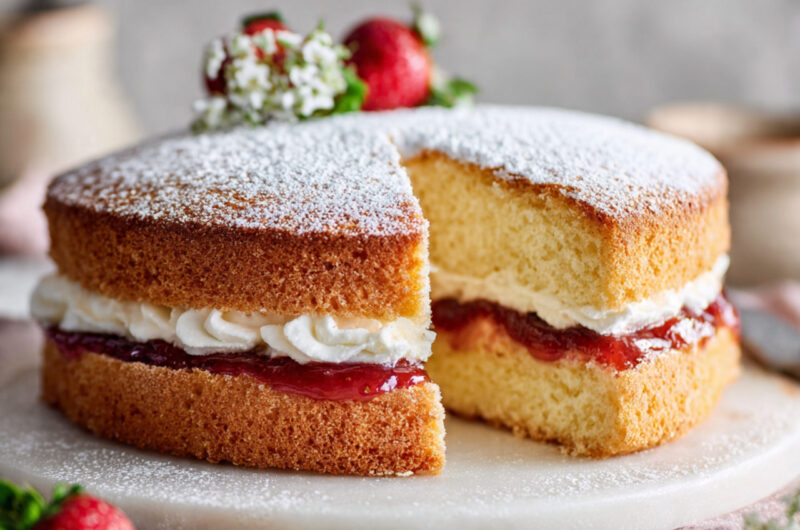
Soft and Fluffy Victoria Sponge Cake
Course: Trending Cake4
servings15
minutes20
minutes250–320
kcal55
minutesLight, buttery sponge layered with bright strawberry jam and softly whipped cream, finished with a dusting of powdered sugar. Gently sweet and tender, it’s perfect for afternoon tea, family gatherings, or any cozy day at home.
Ingredients
For the Sponge:
200g unsalted butter (softened)
200g sugar
4 eggs
200g all-purpose flour
2 teaspoons baking powder
1 teaspoon vanilla extract
3–4 tablespoons milk
For the Filling:
4 tablespoons strawberry jam
100ml fresh cream (whipped)
For Finishing:
A little powdered sugar (for dusting)
Directions
- Preheat oven to 180°C. Grease two round pans and line the bases with baking paper.
- Cream butter and sugar until pale and fluffy.
- Beat in eggs one at a time, then stir in vanilla.
- Mix flour and baking powder, then gently fold into the batter.
- Add milk a tablespoon at a time until the batter is soft but not runny.
- Divide evenly between pans and bake about 20 minutes, until golden and springy.
- Cool layers completely. Spread jam on one layer, top with whipped cream, and add the second sponge.
- Dust with powdered sugar and serve.