The Softest, Most Buttery Yellow Cake Recipe for Any Celebration
Most homemade yellow cake comes out dry and tight-crumbed — the kind of slice that needs a glass of milk just to get it down — and the culprit is almost always a batter that’s been overmixed and a pan left in the oven a few minutes too long. This recipe sidesteps both problems with a gentle mixing method and a watchful eye on the timer, so what you pull out is tender, soft, and buttery from the center all the way to the edges.
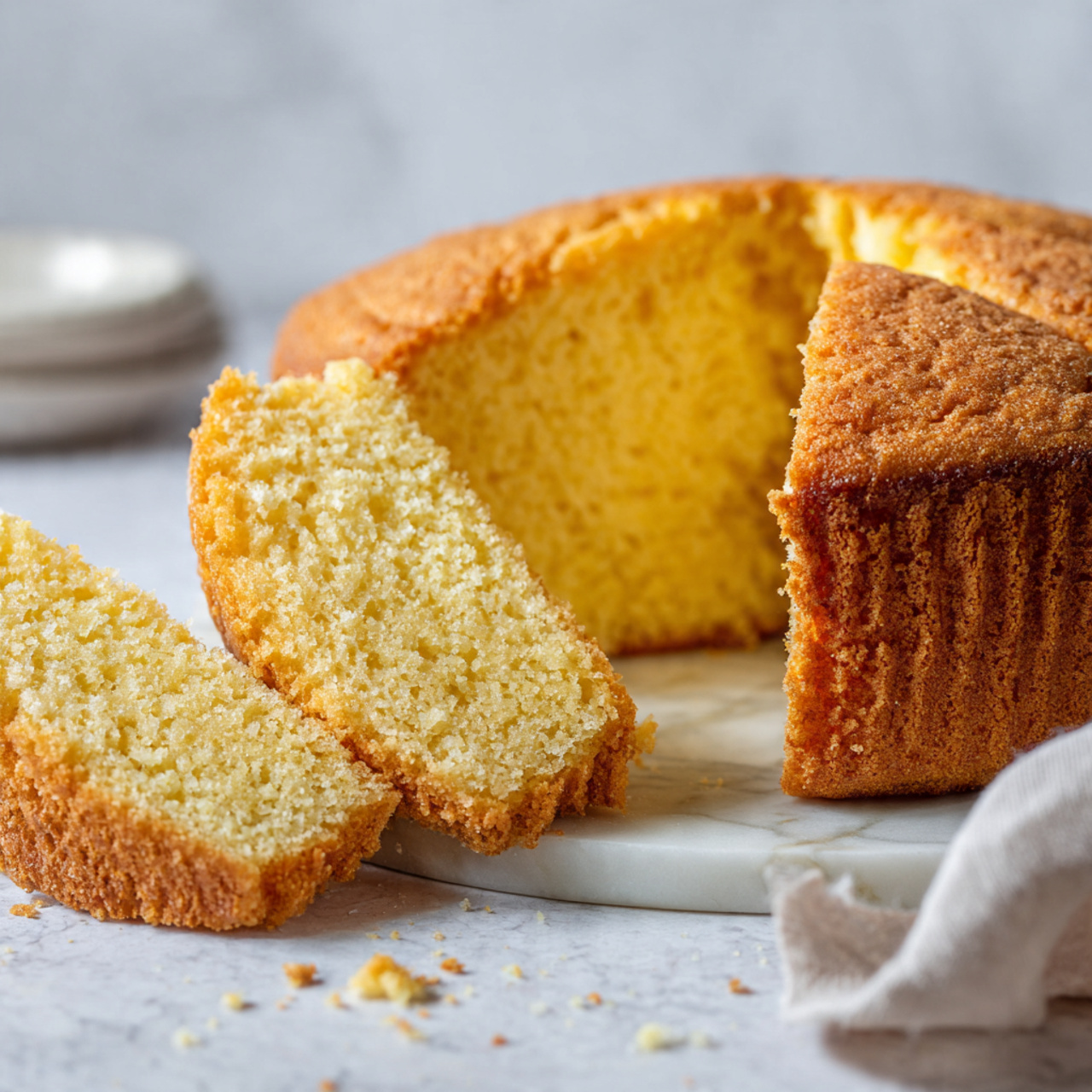
Picture a slice with a crumb so fine and moist it nearly melts, carrying that deep, golden butter-and-vanilla flavor boxed mixes only pretend to have. The top bakes to a soft gold, the edges stay barely chewy, and the whole thing smells like warm vanilla the second it leaves the oven. Each bite is light but rich, sweet without being cloying — the sort of cake you find yourself going back to for a second sliver before the first plate is even cleared.
It’s the cake I reach for when I want something comforting without a lot of fuss, and it slides effortlessly into almost any moment: a birthday table, a lazy Sunday with tea, or a weeknight that needs a sweet ending. Frost it, fruit it, or leave it bare — this moist yellow cake plays every role well. Here’s exactly how it comes together, start to finish.
Why You’ll Love This Recipe
Buttery Flavor With Real Depth
Real butter, fresh eggs, and pure vanilla give this buttery yellow cake a warm, rounded flavor no shortcut mix can match. It’s sweet and rich, but balanced — the kind of taste that feels nostalgic and homemade in the very best way.
A Crumb That Stays Soft and Moist
Thanks to a gentle folding step and just the right amount of milk, the texture lands somewhere between cloud-soft and tender-rich. It holds together beautifully when sliced, yet practically dissolves the moment it hits your tongue.
Genuinely Easy, Even for First-Timers
There’s no fussy technique here — just a bowl, a mixer or whisk, and pantry staples you probably already have. If you can stir and watch a timer, this Yellow Cake Recipe is well within reach.
Made for Sharing
It’s budget-friendly, family-approved, and travels well, which makes it a quiet hero at potlucks and birthday tables alike. Leftovers keep their softness for days, so it’s just as good on day three as it is fresh out of the oven.
A Classic With Room to Play
On its own it’s a timeless classic yellow cake, but it’s also a blank canvas — frost it, layer it, turn it into cupcakes, or fold in a little citrus. You get dependable comfort first, with all the freedom to make it your own.
Ingredients
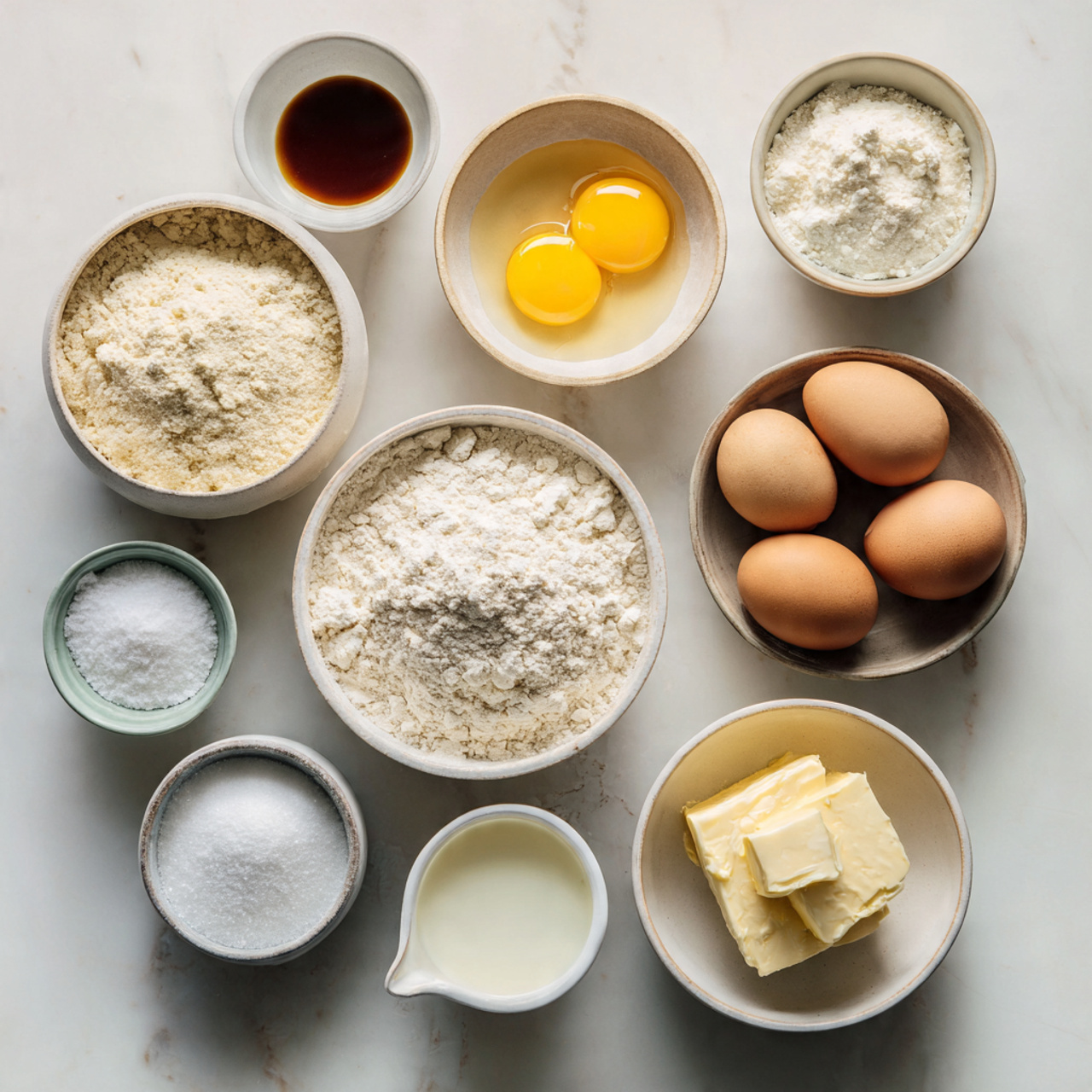
Good ingredients do most of the work in a cake this simple, so reach for fresh eggs and a quality butter if you can.
For the Dry Ingredients
- 1 ½ cups all-purpose flour (spooned and leveled, not packed)
- 1 ½ teaspoons baking powder (fresh, for the best rise)
- ¼ teaspoon salt (balances the sweetness)
For the Wet Ingredients
- 1 cup sugar
- ½ cup unsalted butter, softened (room temperature is key)
- 2 large eggs (room temperature)
- ½ cup milk (whole milk gives the richest crumb)
- 1 teaspoon vanilla extract (pure, not imitation)
The butter and sugar create lift and that signature richness, the eggs bind and tenderize, the milk keeps everything moist, and the vanilla ties the whole buttery profile together. Balanced just so, these everyday staples turn into something that tastes far more special than the short list suggests.
How to Make Yellow Cake — Step-by-Step
Step 1: Prep Your Oven and Pan
Preheat the oven to 180°C (350°F) and lightly grease your baking pan so the cake releases cleanly later. Gather and measure everything before you start mixing — it keeps the rest smooth and stress-free. Baking with a smaller pan gives you a thicker, softer slice.
Step 2: Cream the Butter and Sugar
Beat the softened butter and sugar together until the mixture turns pale and fluffy, about two to three minutes. You’re looking for it to lighten in both color and texture — that’s the air that helps the cake rise. Don’t worry if it looks a little grainy at first; it smooths out as you keep going.
Step 3: Add the Eggs, Milk, and Vanilla
Add the eggs one at a time, mixing well after each, then stir in the milk and vanilla until the batter looks smooth and creamy. Don’t worry if it looks slightly curdled when the milk goes in — it pulls right back together once the flour joins in.
Step 4: Fold in the Dry Ingredients
Sift the flour, baking powder, and salt together, then fold them into the wet batter gently, just until no dry streaks remain. Stop the moment it’s combined, since overmixing is the fastest route to a dense cake. The batter should look thick, soft, and satiny.
Step 5: Bake and Cool
Pour the batter into your prepared pan and bake for 25 to 30 minutes, until the top is golden and a toothpick slid into the center comes out clean. Your kitchen will smell like warm vanilla right about then. Let the cake rest and cool in the pan before slicing, so the crumb has time to set and stays tender.
Perfecting This Recipe
- Start with room-temperature butter, eggs, and milk so everything blends into a smooth, even batter with no lumps.
- Cream the butter and sugar longer than feels necessary; that pale, fluffy stage is where your cake’s lift comes from.
- Fold the flour in by hand at the end rather than beating it — gentle wins here, and it keeps the crumb airy.
- Check for doneness a few minutes early, since every oven runs differently and yellow cake dries out quickly once it’s past its peak.
- Let it cool fully before frosting; a warm cake melts buttercream and tears as you slice.
Common Mistakes to Avoid
- Using cold butter — Cold butter won’t trap air when creamed, leaving you with a dense, heavy crumb instead of a light one. Set it out ahead of time.
- Overmixing the batter — Once the flour is in, every extra stir builds gluten and toughens the cake. Mix only until the streaks disappear.
- Opening the oven too early — Peeking before the center has set lets out heat and can sink the middle. Wait until the last few minutes.
- Overbaking — Just a few extra minutes can dry out a yellow cake. Pull it the moment a toothpick comes out clean.
- Slicing while warm — Cutting too soon gives you a gummy, crumbly slice. A little patience lets the crumb firm up.
Add Your Touch
- Brighten the batter with a teaspoon of lemon or orange zest for a fresh, citrusy lift.
- Stir in a pinch of cinnamon or a splash of almond extract for cozy depth.
- Fold in a handful of chocolate chips or sprinkles for a festive twist.
- Swap the milk for buttermilk to add a subtle tang and an even more tender crumb.
- Turn the batter into cupcakes and shave the bake time down to 16–18 minutes.
Visit Also: Peach Dump Cake
What to Serve With This
- A scoop of vanilla ice cream while the slice is still just barely warm.
- Fresh strawberries, raspberries, or sliced bananas for a lighter plate.
- A hot cup of tea or coffee for an unhurried afternoon treat.
- A drizzle of warm caramel or a dusting of powdered sugar when you want something quick.
Storing and Serving
Fridge Once fully cooled, store the cake in an airtight container in the fridge for up to 4 days. Wrapping individual slices keeps them from drying out and makes grab-and-go easy.
Freezer Wrap slices tightly in plastic and then foil, and freeze for up to 2 months. Freezing in single portions means you can thaw exactly what you need with no waste; let them come to room temperature before serving.
Reheating A cold slice perks right back up with 10 to 15 seconds in the microwave. Smaller pieces warm faster, so start low and add time as needed to avoid drying them out.
Make-Ahead Tip Bake the cake a day ahead and keep it covered at room temperature, then frost just before serving for the freshest texture. For a crowd, bake multiple batches in advance and assemble the day of.
Servings This recipe makes about 8 soft slices — easily halved for two, or doubled in a larger pan for a bigger gathering.
Nutrition (Approximate Per Serving)
- Calories: 250
- Total Fat: 12g
- Saturated Fat: 7g
- Carbohydrates: 33g
- Sugar: 19g
- Protein: 4g
- Sodium: 130mg
Nutritional values are approximate and may vary based on specific ingredients and brands used.
Chef’s Helpful Tips
- Bring your butter, eggs, and milk to room temperature first — it’s the single biggest factor in a smooth batter and even crumb.
- Spoon and level your flour instead of scooping; packed flour is a common cause of dry, dense cake.
- For clean slices, use a sharp knife wiped between cuts, and let the cake cool completely first.
- Quality matters in a recipe this simple — real butter and pure vanilla genuinely taste better than substitutes here.
- If your cake turns out a touch dense, suspect overmixing next time; if it’s dry, shave a couple of minutes off the bake.
Frequently Asked Questions
Q1. Can I replace the butter with oil? You can — swap in an equal amount of a neutral oil like canola or vegetable. The cake will stay lovely and moist, though you’ll lose a little of that signature buttery flavor, so it’s a trade-off worth weighing against your priorities.
Q2. How is this different from a boxed yellow cake? This tastes like the warm, real-butter version a boxed mix is trying to imitate — richer, more vanilla-forward, and without that faintly artificial aftertaste. The texture is more tender too, since you control the freshness of every ingredient.
Q3. Is this recipe okay for beginners? Absolutely — it’s one of the most forgiving cakes you can make. As long as you don’t overmix and you pull it on time, it’s genuinely hard to get wrong, which makes it a great confidence-builder.
Q4. Can I make it ahead for a party or potluck? Yes, and it travels really well. Bake it a day early, keep it covered, and frost the morning of — it holds its softness beautifully and is a reliable crowd-pleaser on a buffet table.
Q5. Can I freeze the cake? Definitely. Wrap slices tightly and freeze for up to 2 months, then thaw at room temperature whenever a craving hits. Freezing in single portions is the easiest way to keep a sweet treat on standby.
Conclusion
There’s a reason a good Yellow Cake Recipe earns a permanent spot in the rotation — it’s endlessly comforting, quietly impressive, and flexible enough to fit a quiet Tuesday or a candle-topped celebration. Soft, buttery, and dependably moist, it asks very little of you and gives back a whole lot, whether you serve it bare with tea or dressed up in frosting for a crowd.
So preheat the oven, soften that butter, and give it a go — once you taste how tender and golden it bakes up, you’ll understand why it never goes out of style. Make it exactly as written the first time, then start playing: a little citrus here, a swirl of frosting there, until it’s unmistakably yours.
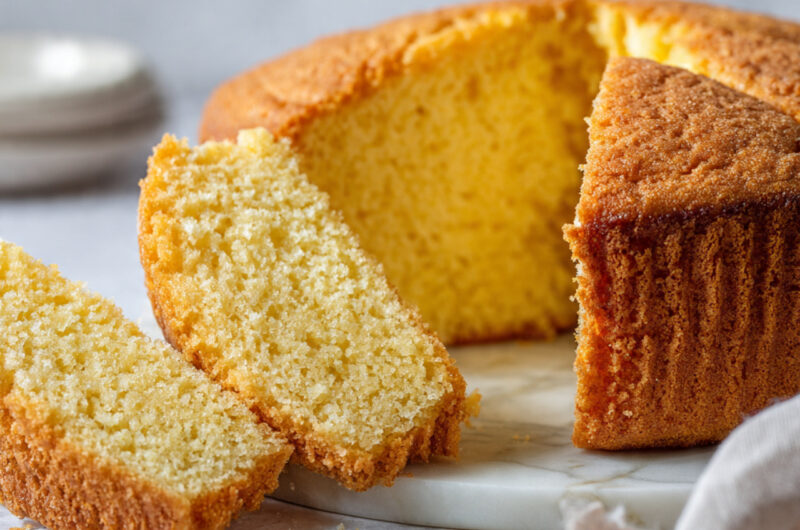
Soft & Buttery Yellow Cake
Course: Cake4
servings10
minutes30
minutes250
kcal50
minutesA tender, fine-crumbed yellow cake with rich butter-and-vanilla flavor and a soft golden top. Endlessly comforting and easy to dress up — perfect for birthdays, tea time, or an everyday treat.
Ingredients
For the Dry Ingredients:
1 ½ cups all-purpose flour
1 ½ teaspoons baking powder
¼ teaspoon salt
For the Wet Ingredients:
1 cup sugar
½ cup unsalted butter, softened
2 large eggs
½ cup milk
1 teaspoon vanilla extract
Directions
- Preheat oven to 180°C (350°F) and grease a baking pan.
- Cream softened butter and sugar until pale and fluffy.
- Beat in eggs one at a time, then stir in milk and vanilla until smooth.
- Sift together flour, baking powder, and salt; fold into the batter just until combined.
- Pour into the pan and bake 25–30 minutes, until golden and a toothpick comes out clean.
- Cool completely before slicing or frosting.