The Coziest Beef Stew Recipe That Tastes Like It Simmered All Day
The smell hit me before I even opened the front door — that deep, savory cloud of browned meat and herbs that somehow managed to wrap around the whole house like a blanket. My grandmother had a pot going every Sunday from October through March, and without fail, the whole family would find themselves drifting toward the kitchen before dinner was even close to ready. That’s the kind of recipe this is.
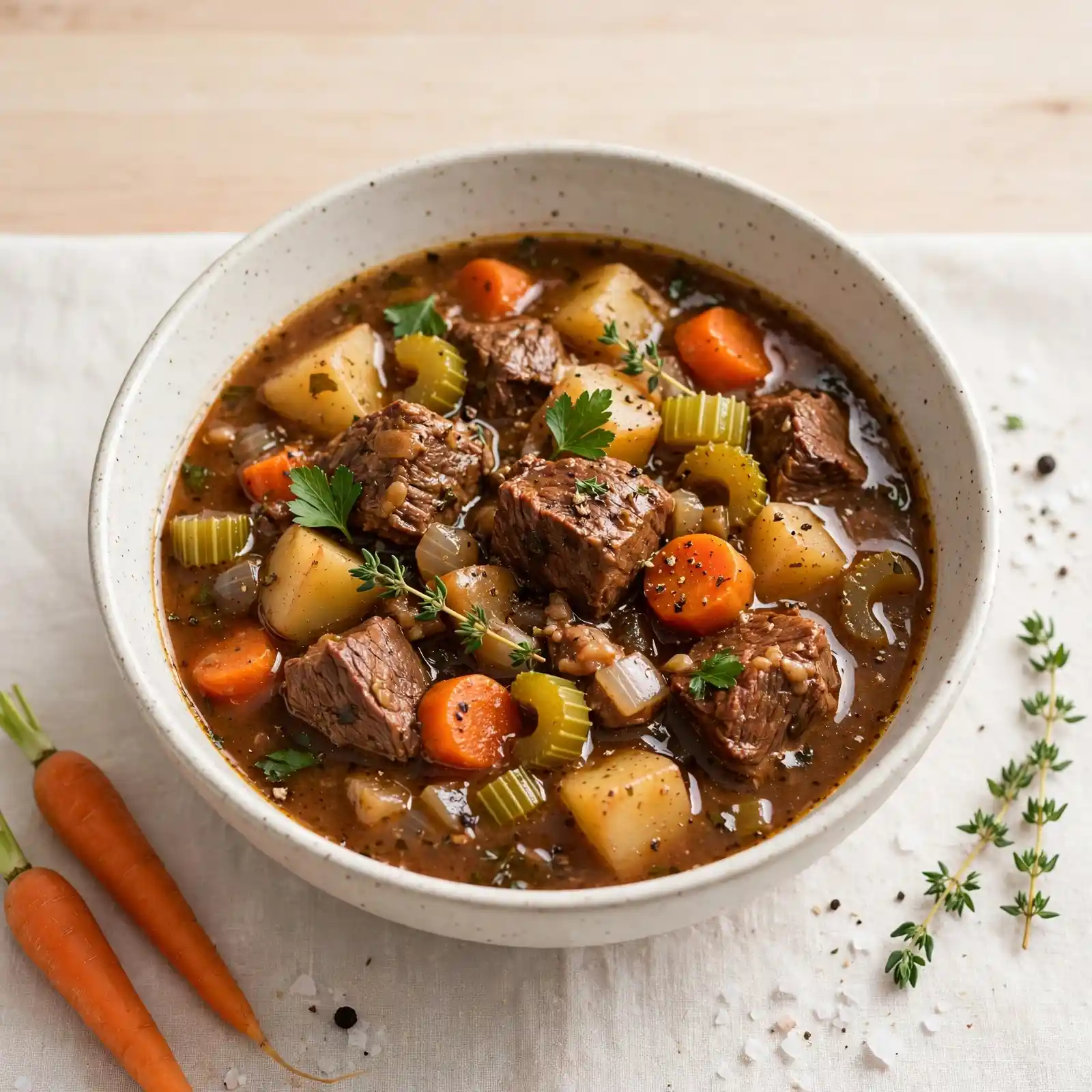
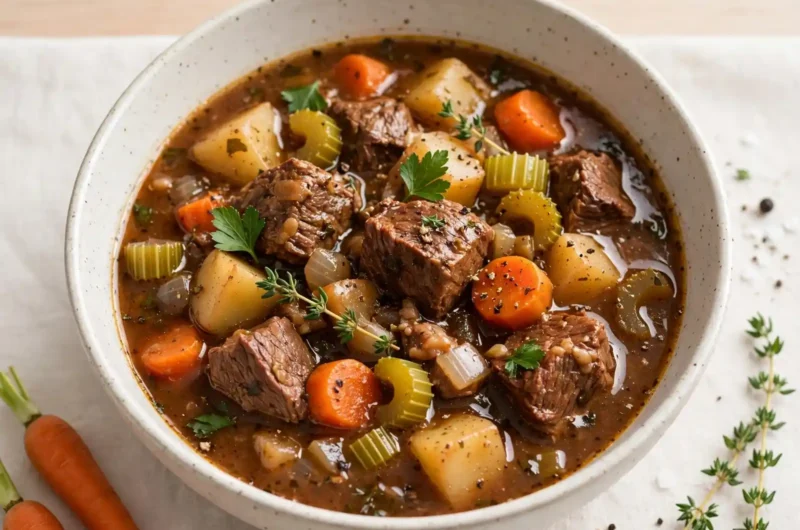
Every spoonful of this beef stew is rich and satisfying — chunks of beef so tender they fall apart with the gentlest nudge, carrots and potatoes that have soaked up every bit of that dark, herby broth, and a sauce so silky it coats the back of a spoon. The flavor is deep and layered: savory, slightly sweet from the vegetables, with a hint of tomato and thyme running through every bite.
Whether you’re making it for a quiet weeknight dinner, bringing it to a neighborhood potluck, or setting it out for a holiday gathering, this easy beef stew is the kind of dish that earns you compliments you didn’t even ask for. It pairs beautifully with crusty bread, works as a meal-prep hero, and gets even better the next day. If you’ve been searching for a homemade beef stew that actually tastes like something your grandmother would make — this is the one.
Why You’ll Love This Recipe
It Builds Incredible Depth of Flavor
Browning the beef before it simmers isn’t just a step — it’s the whole reason this stew tastes so good. That golden crust creates a layer of flavor that dissolves into the broth and makes every bite richer than the last.
The Beef Gets Perfectly Tender
Low and slow is the secret here. Given enough time, even a tough cut like chuck roast turns buttery soft, and the collagen in the meat thickens the broth naturally — no cornstarch shortcuts needed.
It’s Surprisingly Simple to Make
Despite tasting like it required hours of skill, this recipe comes together with basic pantry ingredients and mostly hands-off cooking time. You brown the meat, build the base, and let the stove do the rest.
It Feeds a Crowd Without the Stress
This hearty beef stew scales up easily, holds well on the stovetop, and actually improves as it sits — which makes it a dream for family dinners, potlucks, or meal prepping for the week.
Classic Comfort With a Restaurant-Worthy Finish
A splash of Worcestershire sauce and a touch of tomato paste give this stew a depth that sets it apart from the basic version. It tastes nostalgic and elevated at the same time.
Ingredients
For the Beef and Browning
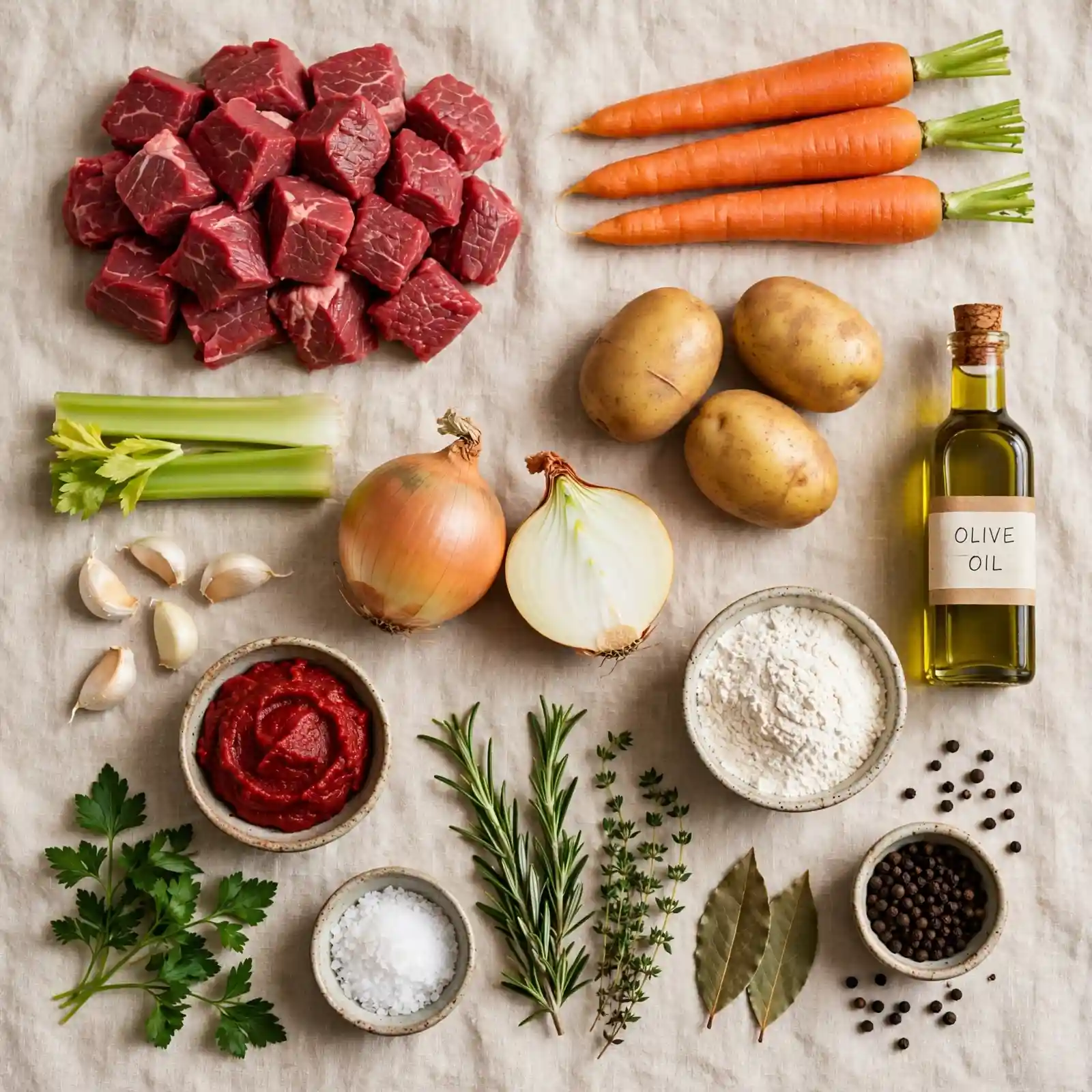
- 2.5 lbs beef chuck roast, cut into 1.5-inch cubes
- 1.5 tsp kosher salt
- 1 tsp black pepper
- 3 tbsp all-purpose flour (for dredging — helps thicken the stew naturally)
- 2 tbsp olive oil (or vegetable oil)
For the Stew Base
- 1 large yellow onion, diced
- 4 garlic cloves, minced
- 2 tbsp tomato paste (the secret to a richer, deeper broth)
- 1 tbsp Worcestershire sauce
- 1 cup dry red wine (Cabernet or Merlot — or substitute with extra beef broth)
- 3 cups beef broth (low-sodium preferred so you can control salt)
- 1 cup water
- 2 bay leaves
- 1 tsp dried thyme
- 1 tsp dried rosemary
For the Vegetables
- 3 medium Yukon Gold potatoes, cut into 1-inch chunks (waxy potatoes hold their shape best)
- 3 large carrots, peeled and sliced into thick rounds
- 2 celery stalks, chopped
- 1 cup frozen peas (added at the end — they stay bright and fresh)
The beef, broth, and root vegetables form a perfectly balanced trio here — the meat provides richness, the broth carries all the aromatics, and the vegetables soak everything up while adding natural sweetness and body.
How to Make Beef Stew Recipe — Step-by-Step
Step 1: Season and Dredge the Beef
Pat the beef cubes completely dry with paper towels — this is non-negotiable for a good sear. Toss them with salt, pepper, and flour until each piece is lightly coated. Don’t worry if the flour looks uneven; it will dissolve into the broth and thicken everything beautifully as it cooks.
Step 2: Brown the Beef in Batches
Heat olive oil in a large Dutch oven or heavy-bottomed pot over medium-high heat. Add the beef in a single layer — do not crowd the pan — and let it sear undisturbed for 3–4 minutes per side until deeply golden brown. Work in two or three batches, removing the browned pieces to a plate as you go. You’ll know it’s ready to flip when the meat releases easily from the pot.
Step 3: Build the Flavor Base
In the same pot (don’t wipe it out — those browned bits are gold), reduce the heat to medium and add the onion. Cook for 3–4 minutes until softened and starting to turn golden. Add the garlic and tomato paste and stir for about 1 minute until the paste darkens slightly and smells deeply savory. Pour in the red wine and scrape up every bit from the bottom of the pot — that fond dissolving into the liquid is where all the flavor lives.
Step 4: Simmer Low and Slow
Return the beef to the pot along with the beef broth, water, Worcestershire sauce, bay leaves, thyme, and rosemary. Bring everything to a gentle boil, then reduce the heat to low, cover, and let it simmer for 1 hour and 15 minutes. Don’t worry if the broth looks thin at this point — it will thicken and deepen as it cooks. The kitchen is going to smell unbelievable.
Step 5: Add the Vegetables and Finish
Add the potatoes, carrots, and celery to the pot. Stir gently, cover, and continue simmering for another 30–35 minutes until the vegetables are fork-tender and the beef practically melts when you press it. Stir in the frozen peas during the last 5 minutes — just long enough to heat through. Remove the bay leaves, taste and adjust salt, and let the stew rest for 10 minutes before serving.
Perfecting This Recipe
- Always dry your beef before searing. Moisture is the enemy of a good crust. Even 30 seconds with paper towels makes a significant difference.
- Don’t skip the browning step. It’s tempting, but the Maillard reaction — that golden crust — is responsible for nearly half the flavor in the finished stew.
- Use chuck roast, not stew meat. Pre-packaged “stew meat” often includes multiple cuts that cook at different rates. Chuck roast breaks down evenly and gives you that fork-tender result.
- Keep the heat low and steady. A rolling boil will toughen the meat. You want a gentle simmer — just a few lazy bubbles breaking the surface.
- Cut vegetables on the larger side. Small pieces will dissolve and turn mushy. Bigger chunks hold their texture and give the finished dish more presence.
- Let it rest before serving. Even 10 minutes off the heat allows the broth to settle and the flavors to round out — it’s noticeably better for it.
Common Mistakes to Avoid
- Skipping the sear — Going straight to simmering means missing out on the deep, roasted flavor that only comes from browning. It takes an extra 10 minutes but changes the entire character of the dish.
- Adding vegetables too early — Potatoes and carrots added at the start of cooking will be waterlogged and falling apart before the beef is even tender. Add them in the last 30–35 minutes.
- Using the wrong cut of beef — Lean cuts like sirloin don’t have enough fat and collagen to get tender through braising. Stick with chuck roast or a similarly marbled, well-worked cut.
- Boiling instead of simmering — High heat makes beef tough, not tender. If you see a vigorous boil, turn it down immediately. Low and slow is the only way.
- Not tasting and adjusting before serving — The broth concentrates as it cooks, which can shift the saltiness. Always taste at the end and adjust with salt, pepper, or a splash of Worcestershire if needed.
Add Your Touch
- Swap the red wine for a dark beer like Guinness for a maltier, earthier profile.
- Add mushrooms — stir in sliced cremini mushrooms when you add the vegetables for an extra layer of umami.
- Make it spicy with a pinch of red pepper flakes or a small dried chili nestled into the broth.
- Use parsnips or turnips instead of (or alongside) potatoes for a more rustic, old-fashioned flavor.
- Stir in a handful of fresh baby spinach at the very end for color and a subtle earthiness.
- Finish with fresh herbs — a small handful of chopped flat-leaf parsley stirred in just before serving brightens the whole bowl.
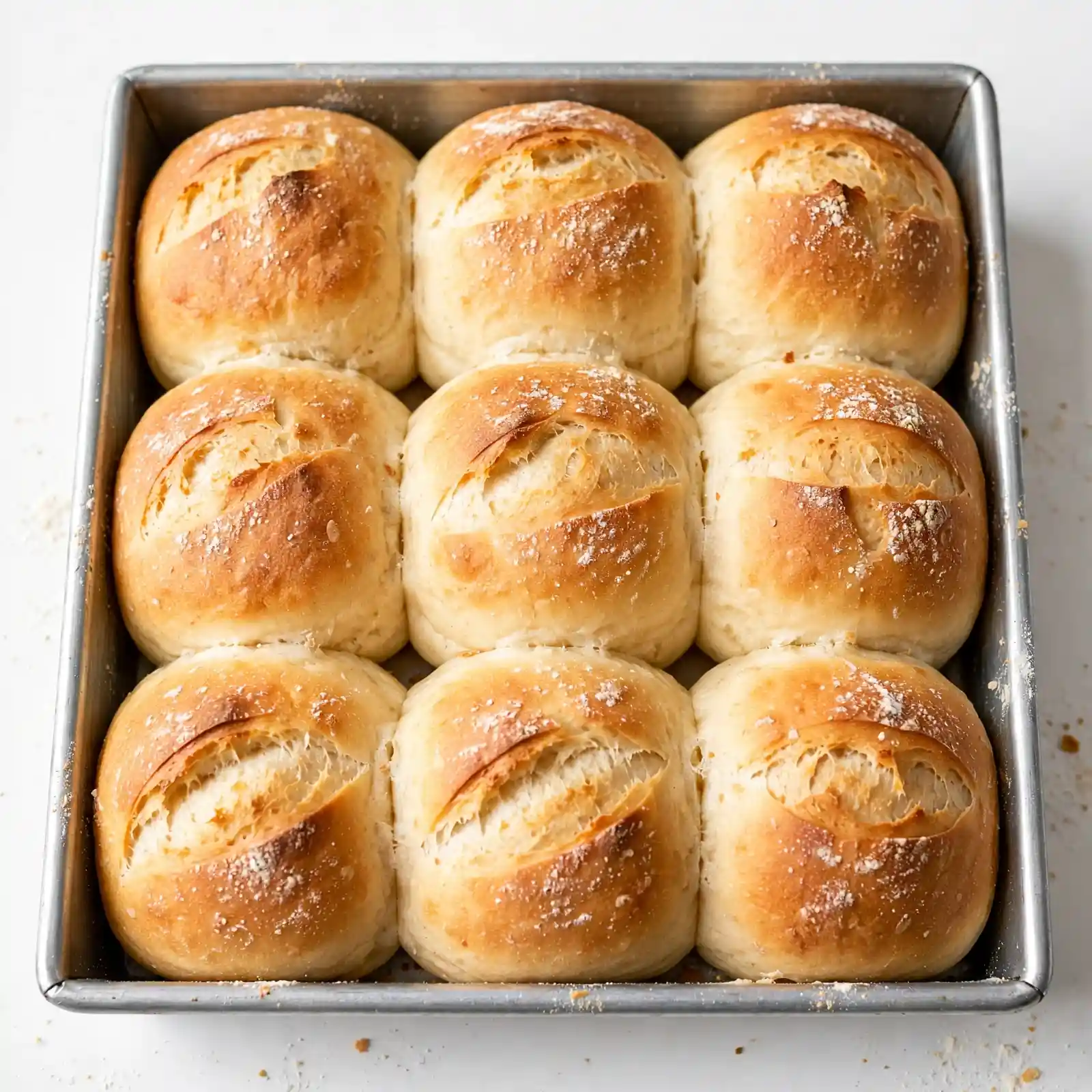
Visit Also: Sourdough Bread Recipe
What to Serve With This
- Crusty sourdough or a French baguette — essential for soaking up every last drop of that broth.
- Creamy mashed potatoes — serve the stew spooned right over the top for a seriously hearty meal.
- A simple green salad with lemon vinaigrette to cut through the richness.
- Buttered egg noodles — a classic pairing that makes the whole dish feel even more comforting.
- A glass of the red wine you used in cooking — it pairs back to the dish naturally.
Storing and Serving
Fridge:
Let the stew cool completely before transferring it to an airtight container. It keeps well in the refrigerator for up to 4 days, and the flavor genuinely improves overnight as everything continues to meld.
Freezer:
This stew freezes beautifully. Store in freezer-safe containers or zip-top bags (with as much air removed as possible) for up to 3 months. Note that potatoes can become slightly grainy after freezing — if you plan to freeze the batch, consider leaving them out and adding fresh ones when reheating.
Reheating:
Reheat gently on the stovetop over medium-low heat, stirring occasionally, until warmed through — about 10–15 minutes. Add a splash of broth or water if the stew has thickened too much in storage. Microwave reheating works in a pinch; cover loosely and heat in 90-second intervals, stirring between each.
Make-Ahead Tip:
This stew can be made up to 2 days in advance and stored covered in the refrigerator. Reheat gently and it will taste just as good — possibly better — than the day it was made.
Servings:
This recipe yields approximately 6 generous servings.
Nutrition (Approximate Per Serving)
- Calories: 420
- Total Fat: 16g
- Saturated Fat: 5g
- Carbohydrates: 30g
- Sugar: 6g
- Protein: 38g
- Sodium: 620mg
Nutritional values are approximate and may vary based on specific ingredients and brands used.
Chef’s Helpful Tips
- Room temperature beef browns better. Pull the chuck roast from the fridge 20–30 minutes before cooking so it sears evenly rather than steaming in the pan.
- Your pot matters. A Dutch oven or heavy-bottomed pot retains heat evenly and prevents hot spots that can scorch the bottom of your stew.
- Taste as you go, especially at the end. The broth reduces and concentrates during cooking, so what tasted well-seasoned at the start may need a small adjustment before serving.
- Skim any fat from the surface if needed. After the stew finishes cooking, a quick skim with a wide spoon removes excess fat without sacrificing any flavor.
- If the broth is too thin, mix 1 tablespoon of cornstarch with 2 tablespoons of cold water and stir it into the simmering stew. Give it 5 minutes to thicken before adding more.
Frequently Asked Questions
Q1. Can I make this in a slow cooker?
Absolutely — this translates well to a slow cooker beef stew. Brown the beef and build the base in a skillet first (don’t skip this), then transfer everything to the slow cooker and cook on low for 8–9 hours or high for 4–5 hours. Add the vegetables halfway through the cooking time so they don’t turn to mush.
Q2. What’s the best cut of beef for stew?
Chuck roast is the gold standard — it has the right balance of fat and connective tissue to become fall-apart tender through slow braising. Brisket and short ribs also work beautifully. Avoid lean cuts like round steak or sirloin, which tend to stay tough and dry.
Q3. Is this recipe beginner-friendly?
Yes, completely. The steps are straightforward, and most of the cooking is hands-off simmering time. The only part that requires attention is the initial searing, and even that is forgiving — just make sure the pan is hot before the meat goes in.
Q4. Can I make this ahead for a dinner party or potluck?
This is actually one of the best make-ahead dishes you can serve. Make it up to two days in advance, store it in the fridge, and reheat gently on the stovetop before serving. The flavors deepen overnight, so your guests will never know it wasn’t made fresh.
Q5. Can I freeze beef stew with potatoes in it?
You can, though potatoes sometimes turn slightly grainy after thawing due to their water content. If you know you’re making a batch to freeze, leave the potatoes out entirely and stir in freshly cooked chunks when you reheat. Everything else — the beef, broth, and carrots — freezes and thaws without any issue.
Conclusion
There’s a reason this beef stew recipe has stayed on kitchen tables for generations — it’s the kind of food that does something nothing else quite can. It feeds people. It warms them up. It turns an ordinary Tuesday evening into something that feels intentional and cared-for. The ingredients are humble, the technique is approachable, and yet the result is something that genuinely makes people stop mid-bite to say something.
Make it your own — add the mushrooms, use the dark beer, toss in whatever vegetables need using up. However you make it, I hope it finds its way to your table on a cold night and earns a spot in your regular rotation. If it does, I’d love to hear about it. Share a photo, leave a comment, or just make it again next week. That’s the highest compliment a recipe can get.
Rich & Hearty Beef Stew
Course: Trending Recipes6
servings20
minutes1
hour50
minutes420
kcal2
hours10
minutesA deeply flavorful, fork-tender beef stew with fall-apart meat, thick savory broth, and perfectly cooked vegetables — the ultimate cold-weather comfort food that’s just as good the next day.
Ingredients
Beef and Browning:
2.5 lbs beef chuck roast, cut into 1.5-inch cubes
1.5 tsp kosher salt
1 tsp black pepper
3 tbsp all-purpose flour
2 tbsp olive oil
Stew Base:
1 large yellow onion, diced
4 garlic cloves, minced
2 tbsp tomato paste
1 tbsp Worcestershire sauce
1 cup dry red wine
3 cups beef broth (low-sodium)
1 cup water
2 bay leaves
1 tsp dried thyme
1 tsp dried rosemary
Vegetables:
3 medium Yukon Gold potatoes, cut into 1-inch chunks
3 large carrots, peeled and sliced thick
2 celery stalks, chopped
1 cup frozen peas
Directions
- Pat beef dry, toss with salt, pepper, and flour until evenly coated.
- Heat oil in a Dutch oven over medium-high. Sear beef in batches, 3–4 minutes per side, until deeply browned. Remove and set aside.
- In the same pot, cook onion over medium heat for 3–4 minutes. Add garlic and tomato paste; stir 1 minute.
- Pour in red wine and scrape up all browned bits. Add broth, water, Worcestershire, bay leaves, thyme, and rosemary.
- Return beef to pot. Bring to a boil, reduce heat to low, cover, and simmer 1 hour 15 minutes.
- Add potatoes, carrots, and celery. Cover and simmer 30–35 more minutes until vegetables are fork-tender.
- Stir in frozen peas for the last 5 minutes. Remove bay leaves, taste and adjust seasoning. Rest 10 minutes before serving.