14 Stunning Cake Designs Ideas That Will Make Everyone Think You Hired a Professional
You spent an hour scrolling Pinterest, saved forty-seven pins, and somehow still don’t know what your cake is going to look like — and the party is in three days. That paralysis is real, and it happens to everyone from first-time bakers to people who’ve been decorating for years. These 14 cake design ideas cut through the overwhelm completely. Every single one here has been tried, tested, and thought through from start to finish — so you can stop browsing and actually start baking.
What makes this list different from every other decorating roundup you’ve stumbled across is the range it covers. There are designs here that a complete beginner can nail on a first attempt — no special equipment, no panic. And there are also showstopper centerpieces that will genuinely stop a room. Whether you need simple cake designs for a low-key weeknight celebration or jaw-dropping elegant cake designs for a wedding or milestone birthday, this list has you covered. Every flavor profile, every skill level, every occasion gets its moment here.
The ideas below move from the most approachable to the most ambitious, so you can find your entry point and work your way up — or simply jump straight to the one that matches the occasion. Bookmark this page. You’ll come back to it more than once.
14 Cake Design Ideas You’ll Want to Make on Repeat
1. Classic Buttercream Rosette Cake
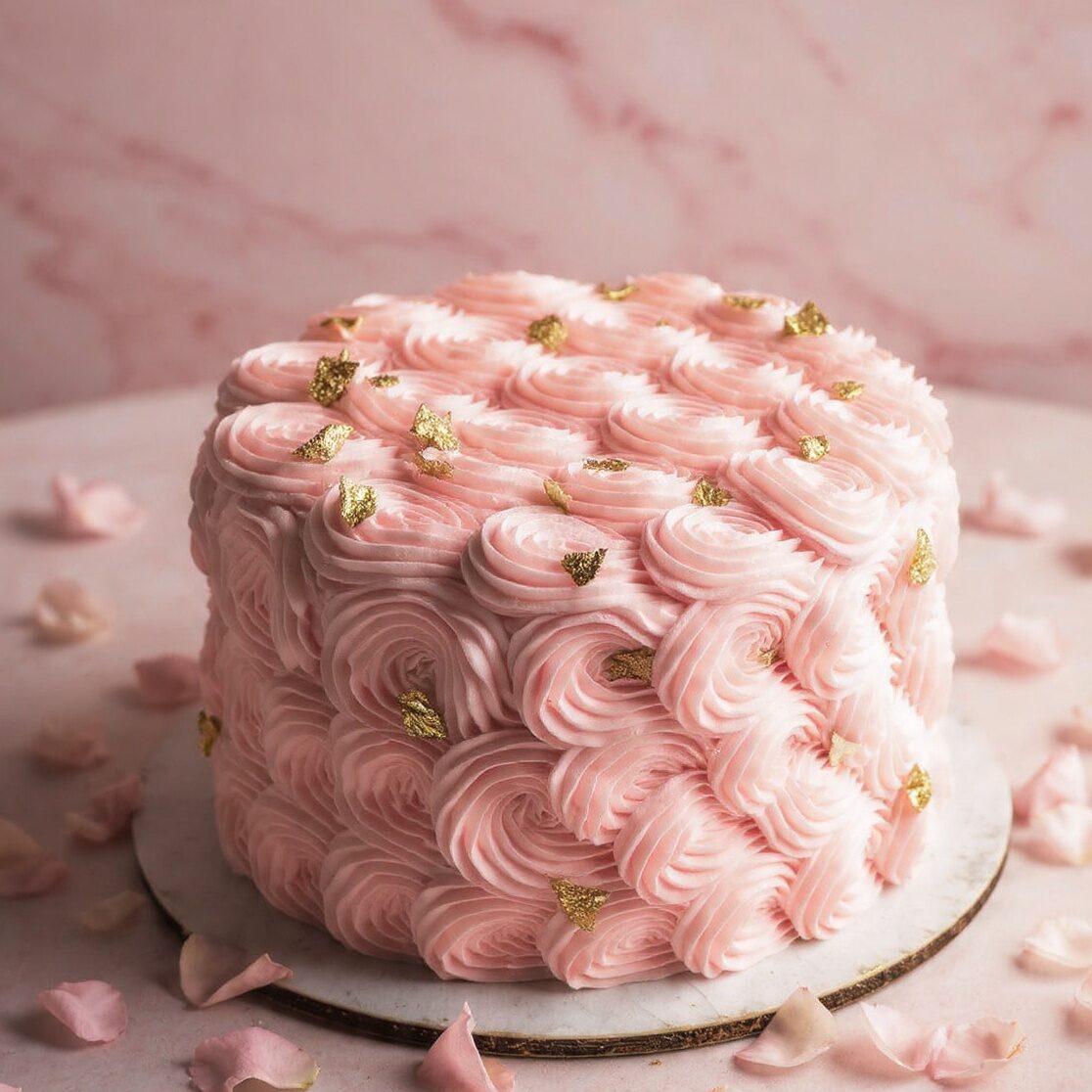
There are some designs that never go out of style, and the buttercream rosette cake is at the top of that list. This one is all texture — swirling 1M-tipped rosettes piped in tight rows that together create a dense, romantic finish that looks far harder to execute than it actually is. It’s the perfect entry point for anyone who wants a cake that looks genuinely impressive without requiring fondant skills or a decorating class.
This design is ideal for birthdays, baby showers, and Mother’s Day — any occasion where you want elegance without fuss. Pick a single color for a classic look, or go two-tone and let the contrast do the talking.
The key trick here is chilling the cake between the crumb coat and the final piping. Cold buttercream holds its shape when it hits the surface, meaning your rosettes come out defined and clean rather than melting into each other.
Ingredients:
- 3 cups (340g) all-purpose flour
- 2 tsp baking powder
- ½ tsp salt
- 1 cup (225g) unsalted butter, softened
- 2 cups (400g) granulated sugar
- 4 large eggs, room temperature
- 1 cup (240ml) whole milk
- 2 tsp vanilla extract
- For Frosting: 3 cups (340g) unsalted butter, softened
- 6 cups (720g) powdered sugar, sifted
- 3–4 tbsp heavy cream
- Gel food coloring of choice (optional)
Nutrition (Approximate Per Serving — based on 12 slices):
- Calories: 480
- Total Fat: 26g
- Carbohydrates: 58g
- Protein: 5g
- Sodium: 210mg
Values are approximate and vary based on ingredients and portion size.
2. Naked Layer Cake with Fresh Berries
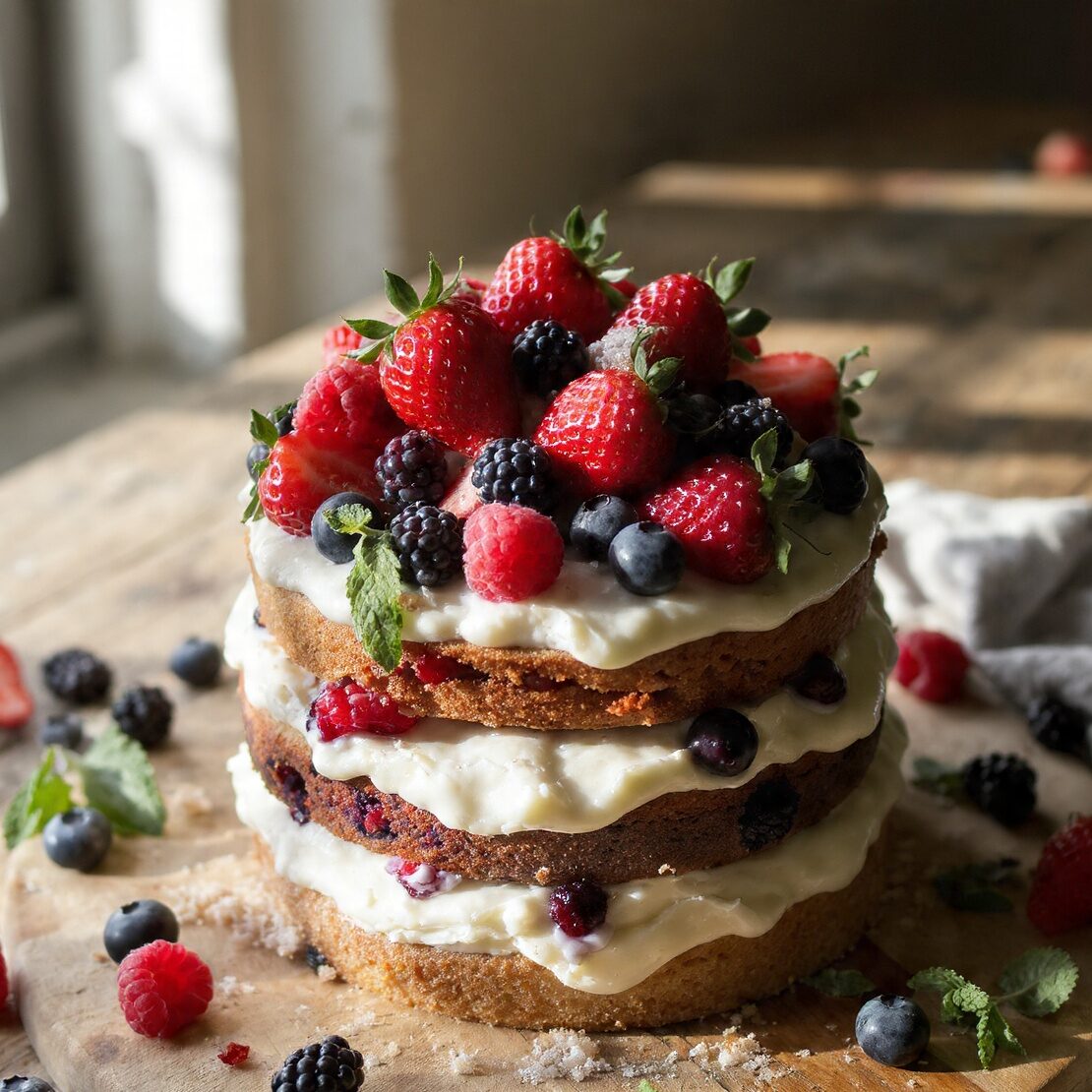
The naked cake is proof that imperfection can be the most beautiful choice in the room. Instead of covering the exterior with frosting, the sides of the cake are left intentionally bare — showing off the layers, the filling, and every gorgeous stain of jam or curd beneath. A crown of fresh berries on top does the rest of the decorating for you.
This design works beautifully for garden parties, brunches, bridal showers, and wedding dessert tables. It has an earthy, editorial quality that feels both effortless and intentional — exactly the aesthetic that’s impossible to fake with fondant.
The secret to a great naked cake is using a slightly thicker filling between each layer — lemon curd, whipped cream cheese, or fresh berry compote — so the interior is as generous as the exterior is minimal.
Ingredients:
- 3 cups (340g) all-purpose flour
- 2½ tsp baking powder
- ½ tsp salt
- 1 cup (225g) unsalted butter, softened
- 2 cups (400g) granulated sugar
- 4 eggs, room temperature
- 1 cup (240ml) buttermilk
- 2 tsp vanilla extract
- For Filling: 1½ cups (360ml) whipped cream or cream cheese frosting
- ½ cup (120g) fresh strawberry or raspberry jam
- For Topping: 2 cups mixed fresh berries (strawberries, blueberries, raspberries)
- Fresh mint leaves for garnish
Nutrition (Approximate Per Serving — based on 12 slices):
- Calories: 360
- Total Fat: 16g
- Carbohydrates: 52g
- Protein: 5g
- Sodium: 190mg
Values are approximate and vary based on ingredients and portion size.
3. Chocolate Ganache Drip Cake
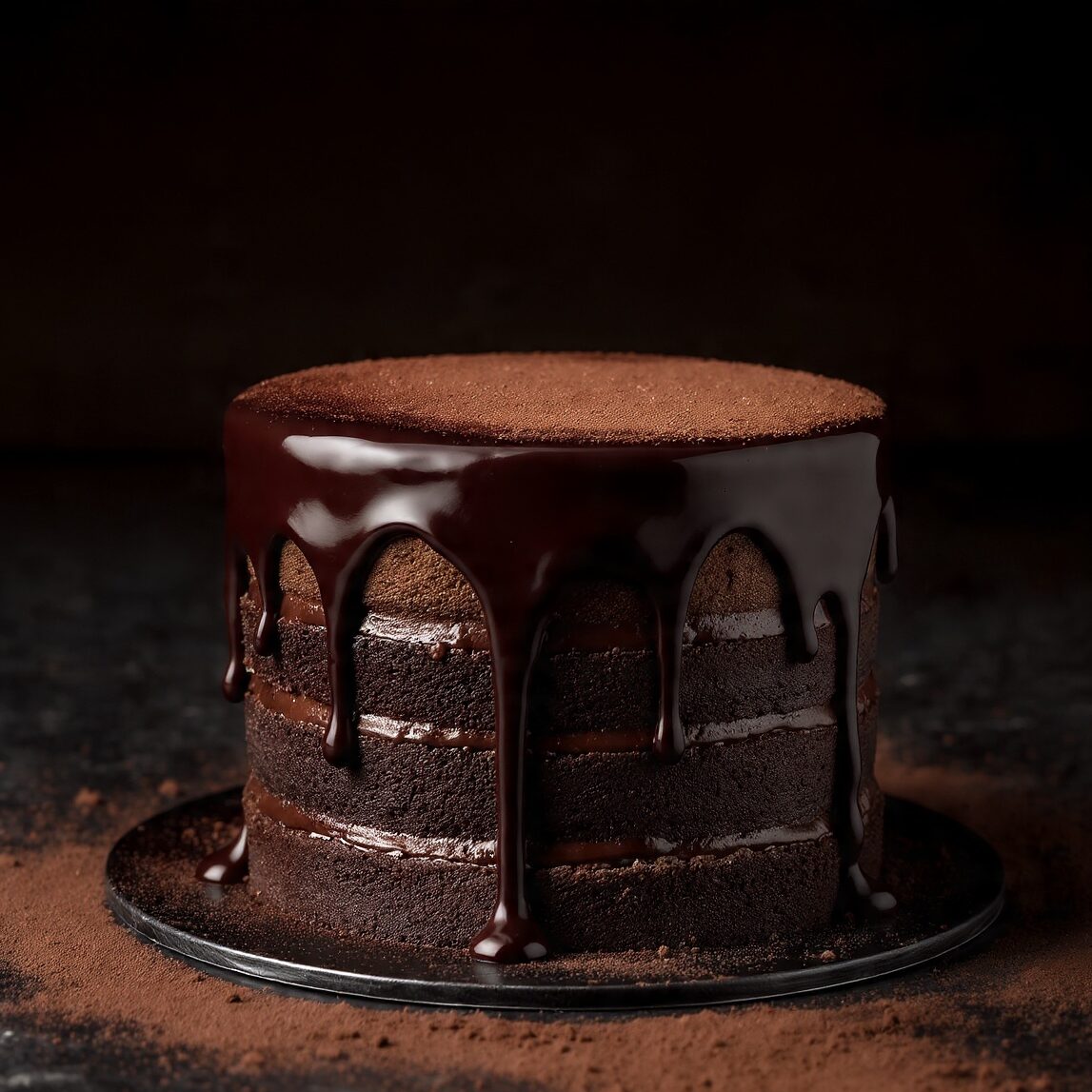
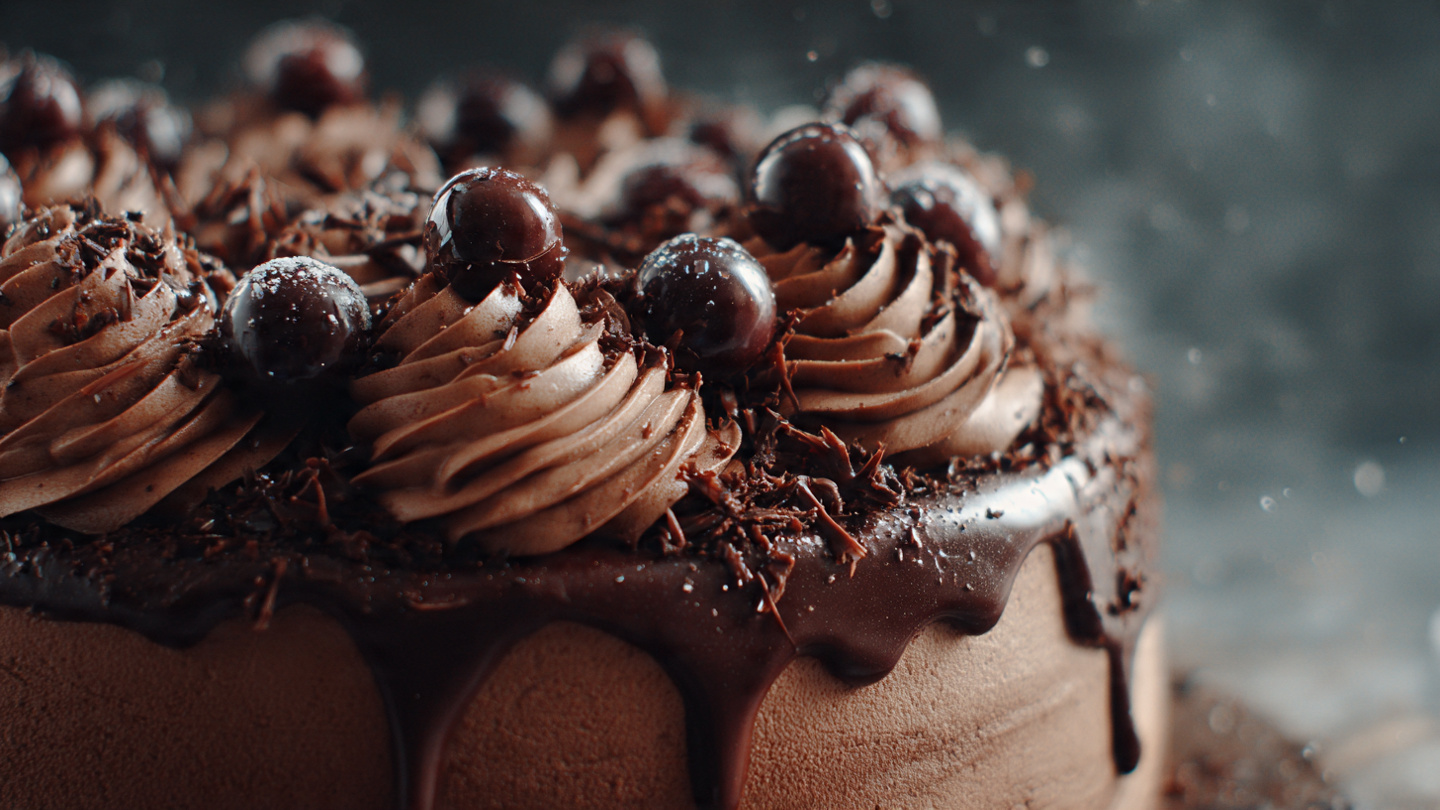
Bold, dramatic, and endlessly customizable — the drip cake has earned its place as one of the most crowd-pleasing birthday cake designs of the last decade, and it has zero intention of going anywhere. The signature is a dark or colored ganache drip that cascades down a smooth buttercream exterior in controlled, varying-length ribbons, topped with a mountain of decorations that can be anything from macarons to donuts to fresh flowers.
This is the go-to design for a teenager’s birthday, a gender reveal, or any celebration that calls for maximum visual impact. The exterior can be white, hot pink, deep navy — whatever matches the party’s color palette.
The professional trick is temperature control: your ganache should be poured at exactly 90–95°F (32–35°C). Too warm and the drips race to the plate; too cool and they stop halfway down. A kitchen thermometer is not optional here — it’s what separates a polished drip from a disaster.
Ingredients:
- 3 cups (340g) all-purpose flour
- 1 cup (100g) Dutch-process cocoa powder
- 2 tsp baking soda
- 1 tsp baking powder
- ½ tsp salt
- 2 cups (400g) granulated sugar
- 1 cup (240ml) buttermilk
- 1 cup (240ml) hot coffee (enhances chocolate depth)
- ½ cup (120ml) vegetable oil
- 3 eggs
- For Drip: 200g dark or semi-sweet chocolate, finely chopped
- ½ cup (120ml) heavy cream
- For Frosting: 3 cups classic vanilla or chocolate buttercream
- Toppings of choice: macarons, sprinkles, fresh berries, candy bars
Nutrition (Approximate Per Serving — based on 12 slices):
- Calories: 510
- Total Fat: 28g
- Carbohydrates: 64g
- Protein: 6g
- Sodium: 280mg
Values are approximate and vary based on ingredients and portion size.
4. Watercolor Buttercream Cake
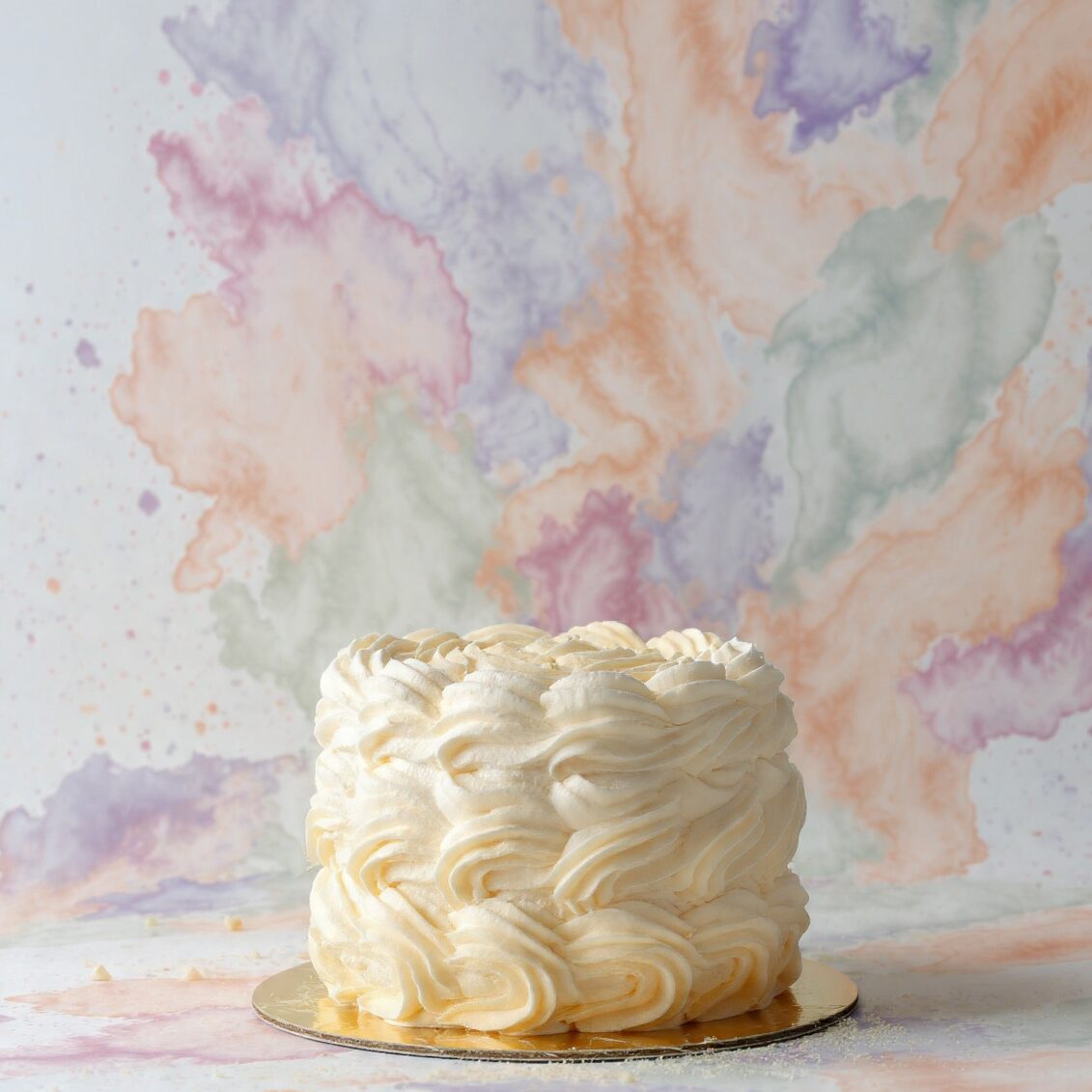
If you’ve ever wanted to paint a cake like a canvas, this is the design for you. The watercolor technique uses diluted gel food coloring brushed directly onto white buttercream in soft, translucent washes — building up layers of blush, sage, peach, or any palette you choose until the cake looks like a studio art piece that wandered into your kitchen.
It suits milestone birthdays, spring celebrations, and bridal showers particularly well — anywhere that calls for a soft, editorial aesthetic that photographs beautifully. No fondant, no piping skill required.
The one thing that separates a watercolor cake that looks artful from one that looks streaky is starting with a perfectly smooth, chilled buttercream base. Let the crumb coat firm up completely in the fridge before picking up a brush — a soft surface will drag and tear rather than absorb color.
Ingredients:
- 3 cups (340g) all-purpose flour
- 2 tsp baking powder
- ½ tsp salt
- 1 cup (225g) unsalted butter, softened
- 1¾ cups (350g) granulated sugar
- 4 eggs, room temperature
- 1 cup (240ml) whole milk
- 1 tbsp vanilla extract
- For Frosting: 4 cups vanilla Swiss meringue or American buttercream
- Gel food coloring in 3–4 shades of your chosen palette
- ½ tsp clear extract per color (for diluting to watercolor consistency)
- Soft pastry brush or food-safe watercolor brushes
Nutrition (Approximate Per Serving — based on 12 slices):
- Calories: 445
- Total Fat: 23g
- Carbohydrates: 57g
- Protein: 5g
- Sodium: 200mg
Values are approximate and vary based on ingredients and portion size.
5. Geode Crystal Cake
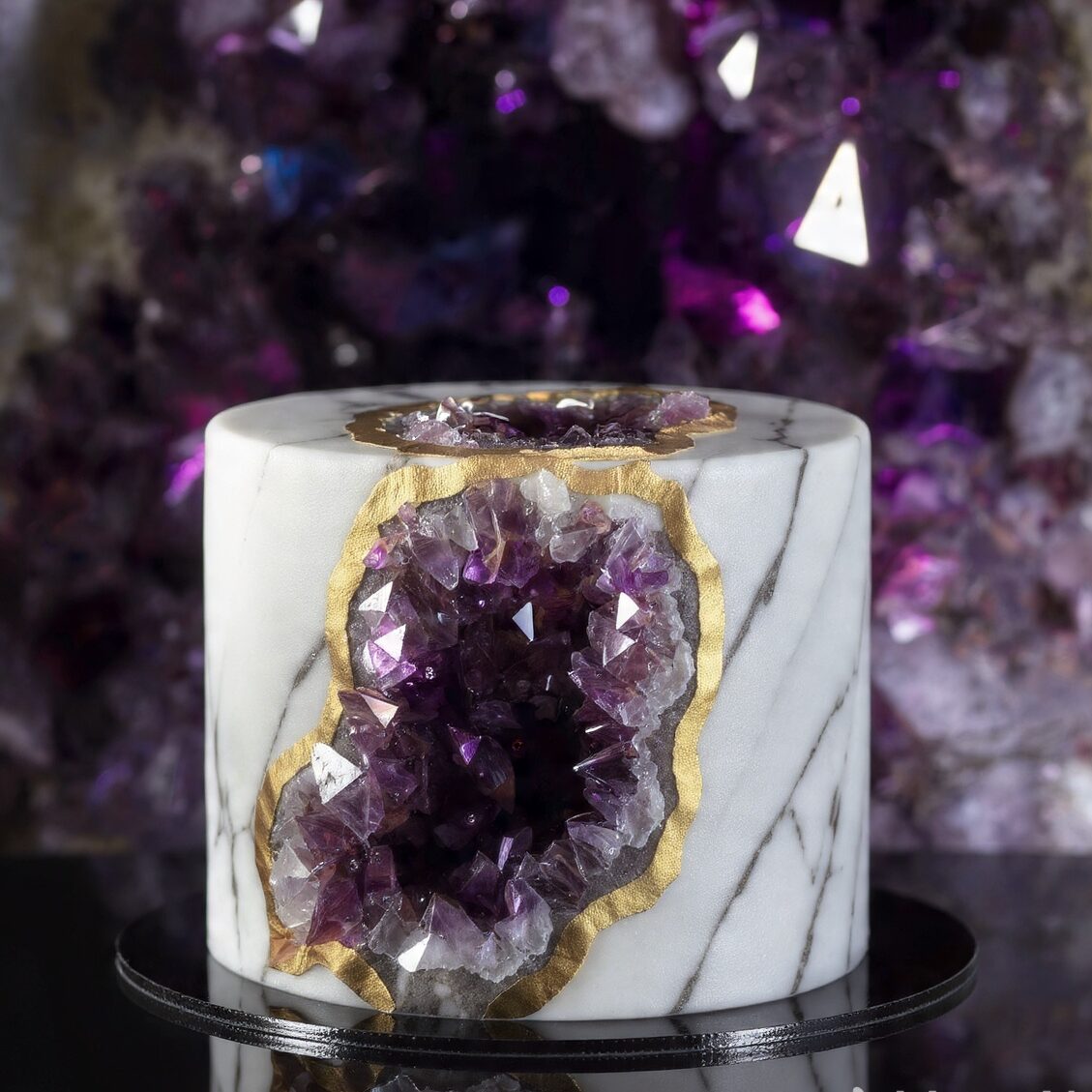
There is no cake on this list that gets a bigger reaction in a room than the geode. Inspired by natural mineral formations, this design features a carved cavity on one side of the cake that’s filled with rock candy crystals, edible glitter, and gold luster dust — mimicking the look of amethyst, rose quartz, or raw opal. It is, without any exaggeration, one of the most stunning things you can put on a table.
This is the statement piece for engagement parties, milestone anniversaries, and luxury celebrations where you need the cake to hold its own against a full floral display. It also photographs like something from a magazine editorial.
The structural key is to carve the cavity after the cake is fully assembled and frosted — not before. Use a melon baller or small serrated knife to scoop a natural-looking geode opening, then build your crystals inward from largest to smallest, using melted isomalt as an adhesive between layers.
Ingredients:
- 3 cups (340g) all-purpose flour
- 2 tsp baking powder
- 1 tsp salt
- 1 cup (225g) unsalted butter, softened
- 2 cups (400g) sugar
- 4 eggs
- 1 cup (240ml) sour cream
- 2 tsp almond extract
- For Covering: 1kg white rolled fondant
- For Geode: 2 cups rock candy crystals (purple, white, or your chosen color)
- 200g isomalt nibs, melted (adhesive and glossy crystal effect)
- Gold luster dust + 1 tsp vodka or clear alcohol (for painting)
- Purple, blue, or rose gel food coloring (for coloring the cavity interior)
Nutrition (Approximate Per Serving — based on 12 slices):
- Calories: 540
- Total Fat: 22g
- Carbohydrates: 82g
- Protein: 5g
- Sodium: 230mg
Values are approximate and vary based on ingredients and portion size.
6. Floral Wreath Cake
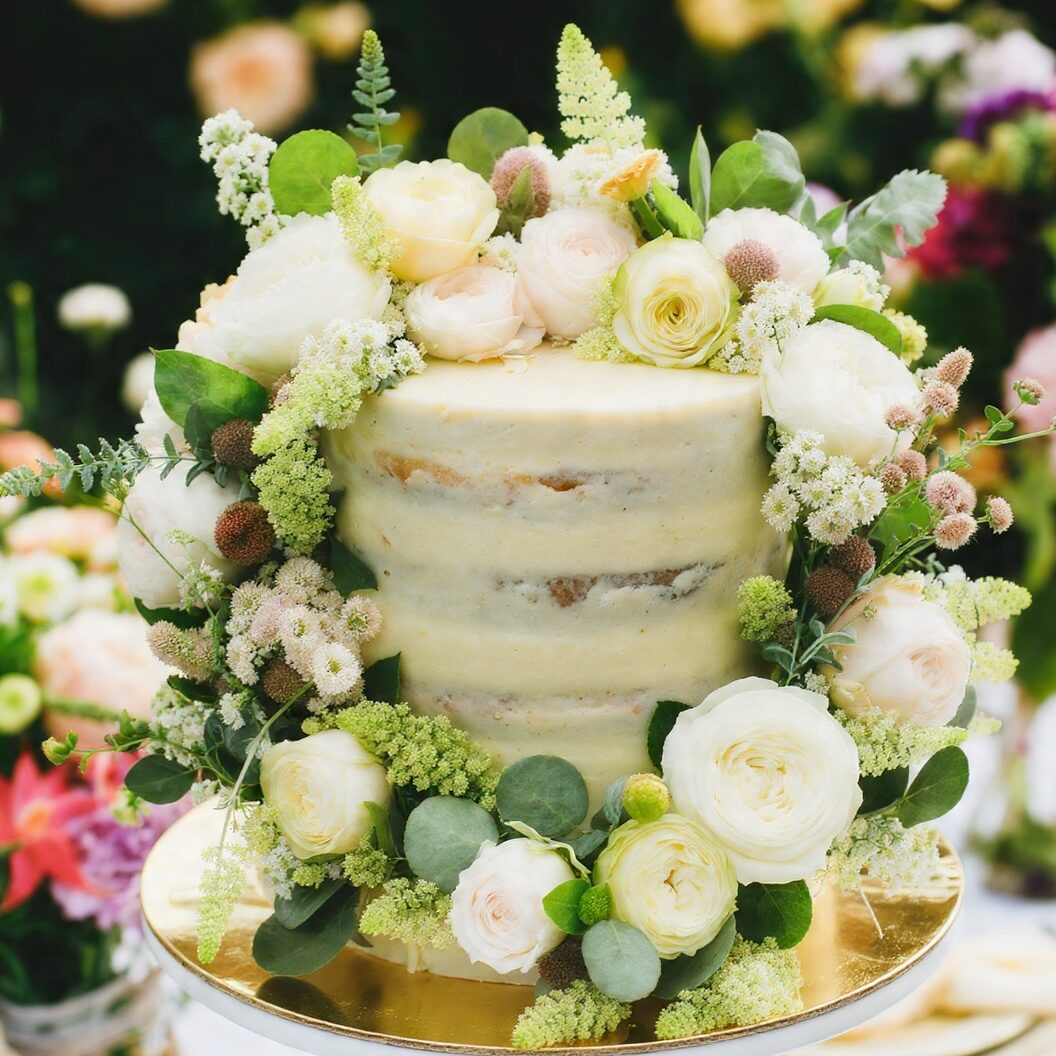
Simple, seasonal, and quietly breathtaking — the floral wreath cake places a lush ring of blooms around the top of a semi-naked or smooth-frosted cake, and somehow manages to feel both effortless and considered at the same time. This design works with fresh flowers, dried botanicals, or hand-modeled sugar flowers, depending on your skill level and the formality of the event.
It’s the design that wedding cake planners reach for again and again for good reason: it suits every season, every venue, and every color scheme you hand it. It’s equally at home at a garden bridal shower as it is at a formal banquet.
Use a floral ring as an armature — the kind used for table centerpieces — pressed gently into the top of the cake before arranging your stems. This keeps the arrangement stable during transport and prevents individual flowers from shifting as the buttercream softens at room temperature.
Ingredients:
- 3 cups (340g) all-purpose flour
- 2 tsp baking powder
- ½ tsp salt
- 1 cup (225g) unsalted butter, softened
- 1¾ cups (350g) granulated sugar
- 4 large eggs
- 1 cup (240ml) whole milk
- 2 tsp vanilla extract
- For Frosting: 4 cups vanilla buttercream (tinted ivory or left white)
- For Wreath: Fresh food-safe flowers (garden roses, ranunculus, eucalyptus, lavender) OR 20–25 sugar paste flowers
- Floral wire and small floral water tubes (if using fresh flowers)
- Fresh herb sprigs (rosemary, thyme, or sage) for greenery fill
Nutrition (Approximate Per Serving — based on 12 slices):
- Calories: 430
- Total Fat: 22g
- Carbohydrates: 56g
- Protein: 5g
- Sodium: 205mg
Values are approximate and vary based on ingredients and portion size.
Visit Also: Wedding Cake
7. Ombre Gradient Buttercream Cake
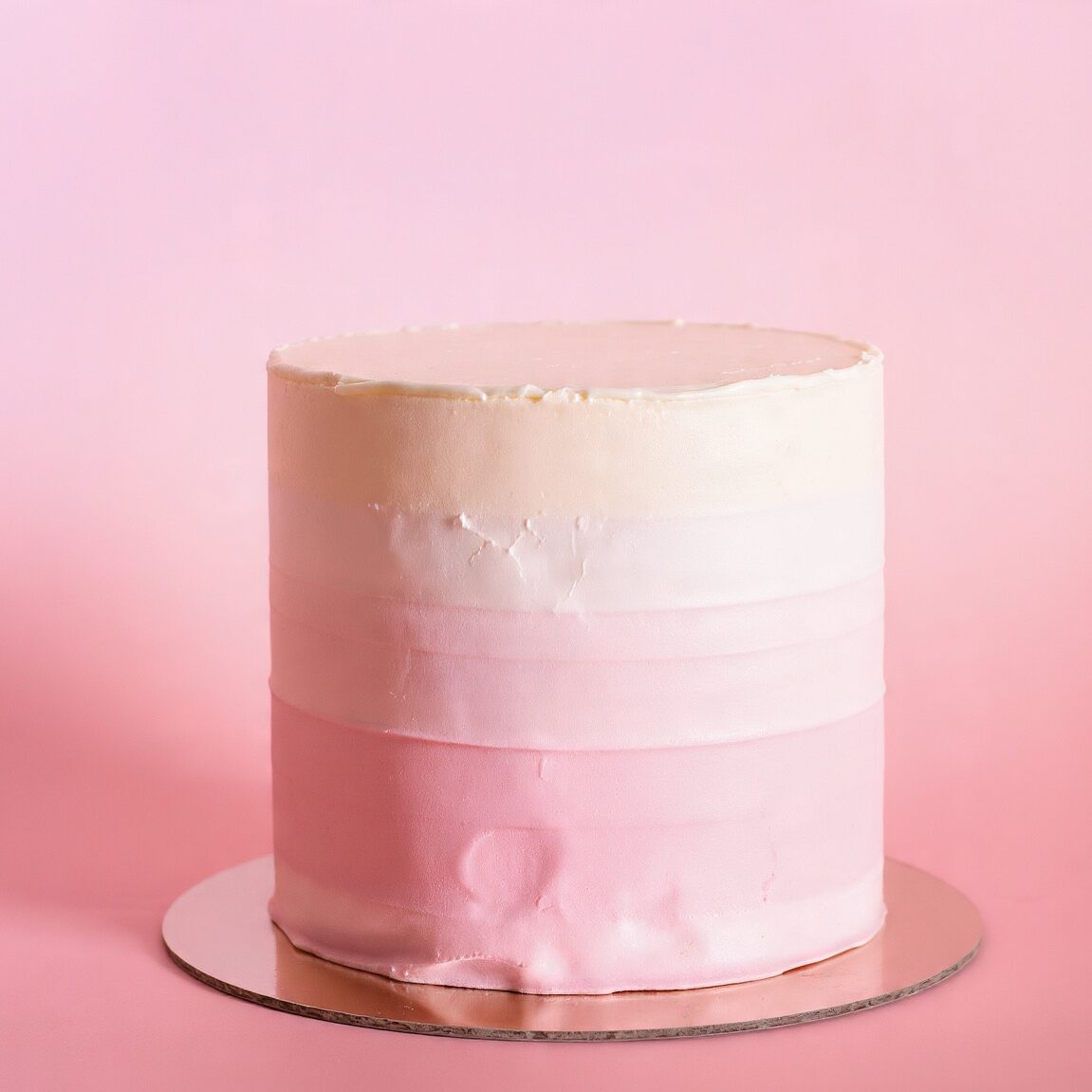
Color that transitions smoothly from deep to pale — or from one hue to another — across the exterior of a cake sounds technically demanding, but it’s actually one of the more forgiving decorating techniques once you understand the basic blend. The ombre effect is achieved by loading different shades of the same color onto a bench scraper and smoothing it around the frosted cake in a single, continuous pass.
This design is a favourite for birthday cake designs when you want something modern and graphic without committing to a theme. Go blush-to-white for a bridal feel, or deep teal-to-mint for a more editorial birthday look.
The trick most tutorials skip: apply the darkest shade at the bottom first and work upward. Gravity pulls frosting down as you work, so starting at the base ensures the color stays where you intended it rather than migrating.
Ingredients:
- 3 cups (340g) all-purpose flour
- 2 tsp baking powder
- ½ tsp salt
- 1 cup (225g) unsalted butter, room temperature
- 2 cups (400g) granulated sugar
- 4 eggs, room temperature
- 1 cup (240ml) buttermilk
- 2 tsp vanilla extract
- For Frosting: 5 cups vanilla buttercream, divided into 3 portions
- Gel food coloring in your chosen shade (deep, medium, and pale concentrations)
- Bench scraper and offset spatula
Nutrition (Approximate Per Serving — based on 12 slices):
- Calories: 465
- Total Fat: 24g
- Carbohydrates: 59g
- Protein: 5g
- Sodium: 215mg
Values are approximate and vary based on ingredients and portion size.
8. Mirror Glaze Cake
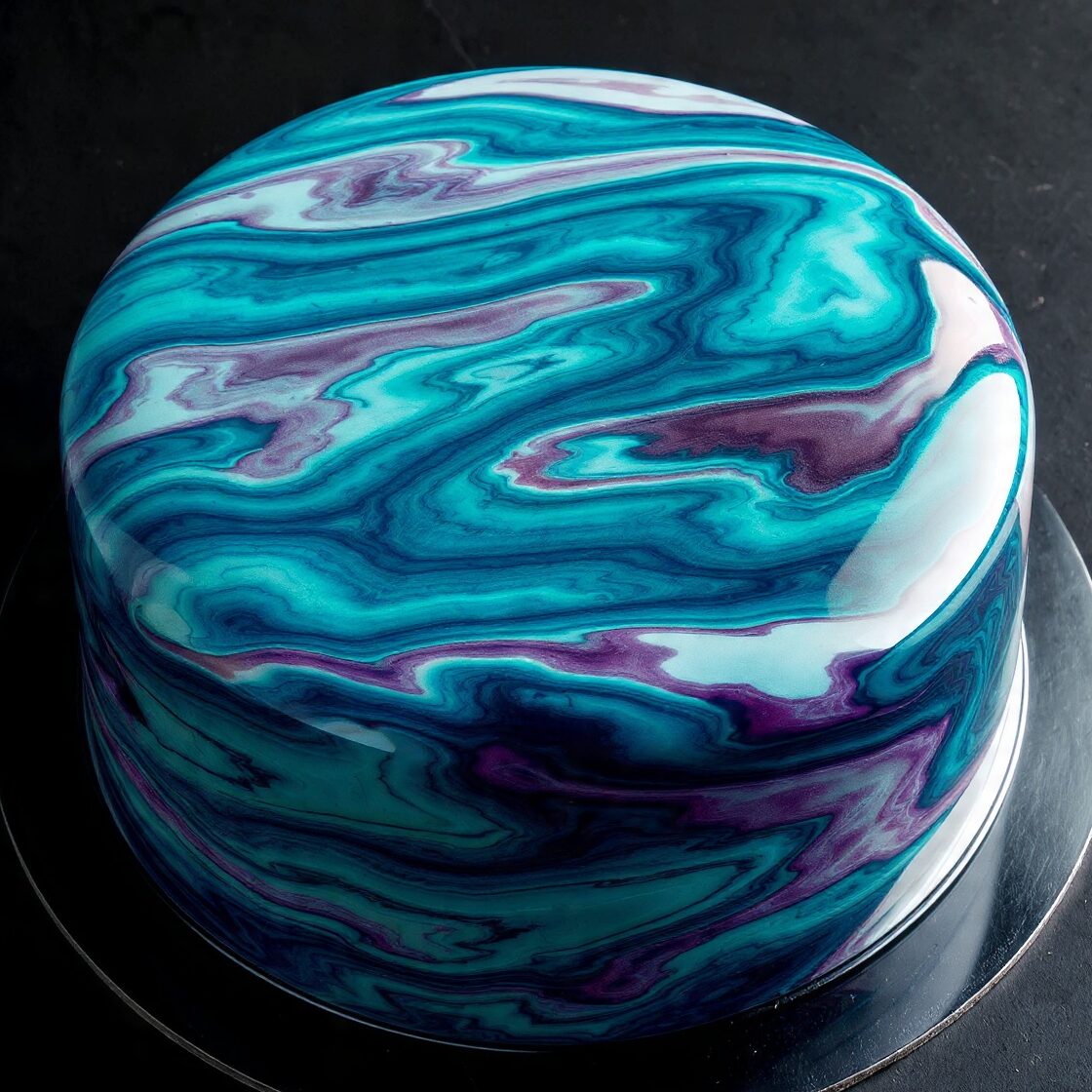
If you want to watch someone’s jaw literally drop when they see your cake, the mirror glaze is your design. It produces a high-gloss, reflective surface — the kind where guests can genuinely see themselves in the cake — in a galaxy of swirling colors. Poured over a mousse-based cake that’s frozen solid, the glaze sets in seconds and leaves behind something that looks more like sculpture than dessert.
This is the centerpiece for a dinner party where you want your hosting to be remembered. It’s also the most technical design on this list — mousse, gelatin, and precise glaze temperature are all in play. But the reward is proportional to the effort.
The single most important step is temperature: your glaze should be poured between 90–95°F (32–35°C). Any warmer and it runs off entirely; any cooler and it sets in an uneven, lumpy skin before it covers the cake. Use a digital thermometer. Swirl colors into the glaze while it’s still in the pouring jug — not on the cake.
Ingredients:
- For Mousse Cake Base: 200g dark chocolate, melted
- 3 egg yolks + 60g sugar
- 300ml heavy cream, whipped to soft peaks
- 5g gelatin sheets, bloomed
- For Mirror Glaze: 150g white chocolate, finely chopped
- ½ cup (120ml) sweetened condensed milk
- 150ml heavy cream
- 150g sugar
- 10g powdered gelatin dissolved in 75ml water
- Gel food coloring in 2–3 colors (neon or jewel tones work best)
Nutrition (Approximate Per Serving — based on 10 slices):
- Calories: 490
- Total Fat: 31g
- Carbohydrates: 48g
- Protein: 7g
- Sodium: 140mg
Values are approximate and vary based on ingredients and portion size.
9. Fault Line Cake
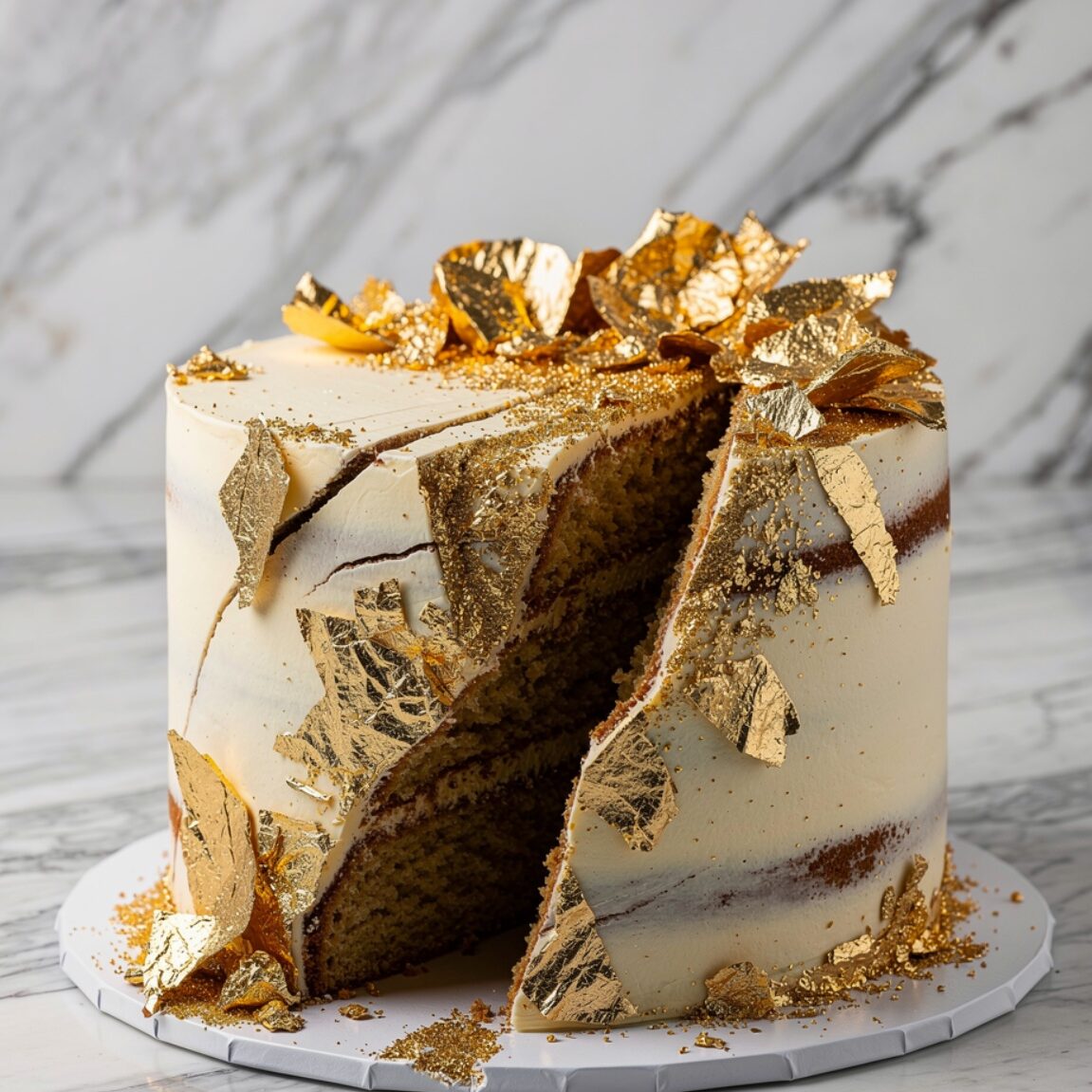
The fault line cake looks as though the cake has cracked open to reveal something beautiful hidden inside — a band of sprinkles, fresh florals, crushed meringue, or candy running around the mid-section of the cake like a geological strata. It’s a structural optical illusion achieved entirely with frosting and patience, and it is genuinely one of the most eye-catching things you can produce without fondant.
Perfect for milestone birthdays and any celebration where you want a conversation-starting centerpiece that doesn’t feel like a traditional tiered cake. The “filling” of the fault line is fully customizable — seasonal flowers in spring, crushed candy canes in winter, or gold leaf for black-tie events.
The structural technique is a two-stage frost: apply and smooth the lower and upper sections of the cake, leave the fault line band completely uncovered, pack in your decorative elements, then pipe and smooth buttercream frames above and below the band to create that crisp, geological edge.
Ingredients:
- 3 cups (340g) all-purpose flour
- 2 tsp baking powder
- ½ tsp salt
- 1 cup (225g) unsalted butter, softened
- 2 cups (400g) granulated sugar
- 4 large eggs
- 1 cup (240ml) whole milk
- 2 tsp vanilla or almond extract
- For Exterior: 5 cups tinted buttercream in your chosen palette
- For Fault Line Band: ½ cup mixed sprinkles, dried edible flowers, crushed meringue, or gold leaf
- Offset spatula and bench scraper for clean edges
Nutrition (Approximate Per Serving — based on 12 slices):
- Calories: 470
- Total Fat: 25g
- Carbohydrates: 60g
- Protein: 5g
- Sodium: 220mg
Values are approximate and vary based on ingredients and portion size.
10. Number Cream Tart
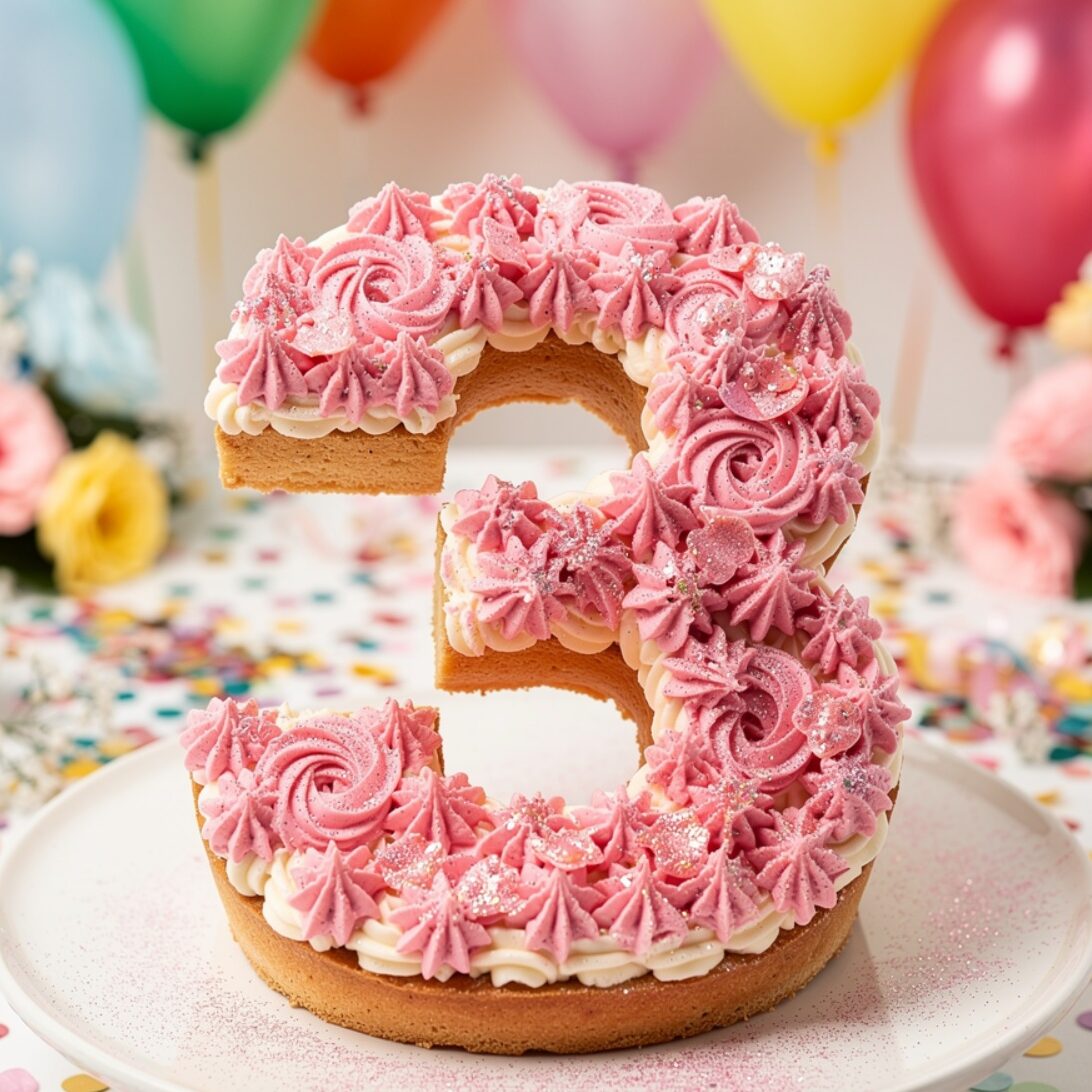
The number cake — sometimes called a cream tart — replaced the traditional layer cake as the dominant birthday table centerpiece for good reason. It’s personal, completely customizable, and visually it has no equal. Two pastry cut-outs in the shape of a number (or letter) are sandwiched with generous rosettes of cream and decorated with a curated selection of fresh fruit, edible flowers, macarons, and chocolate bonbons on top.
This is the design for significant birthdays — thirties, forties, sixties — or for a monogram dessert at a bridal event. It’s also a great choice when you want something elegant but gluten-adaptable, since the pastry base swaps easily to almond flour.
Use a printed number template on parchment as your cutting guide for the pastry. Stack both layers before decorating — the full height is what gives the cream tart its signature lushness. Decorate from the back of the number forward so the freshest elements end up at the front where they photograph best.
Ingredients:
- For Pastry: 3 cups (360g) all-purpose flour
- 200g unsalted butter, cold and cubed
- ½ cup (60g) powdered sugar
- 2 egg yolks
- 2–3 tbsp ice water
- For Cream Filling: 2 cups (480ml) heavy whipping cream
- 4 tbsp powdered sugar
- 1 tsp vanilla extract
- For Decoration: 1 cup mixed fresh berries
- 12–15 edible flowers
- 4–6 macarons (store-bought is perfectly fine)
- Gold sprinkles or luster dust
Nutrition (Approximate Per Serving — based on 10 servings):
- Calories: 420
- Total Fat: 27g
- Carbohydrates: 40g
- Protein: 5g
- Sodium: 130mg
Values are approximate and vary based on ingredients and portion size.
11. Checkerboard Layer Cake
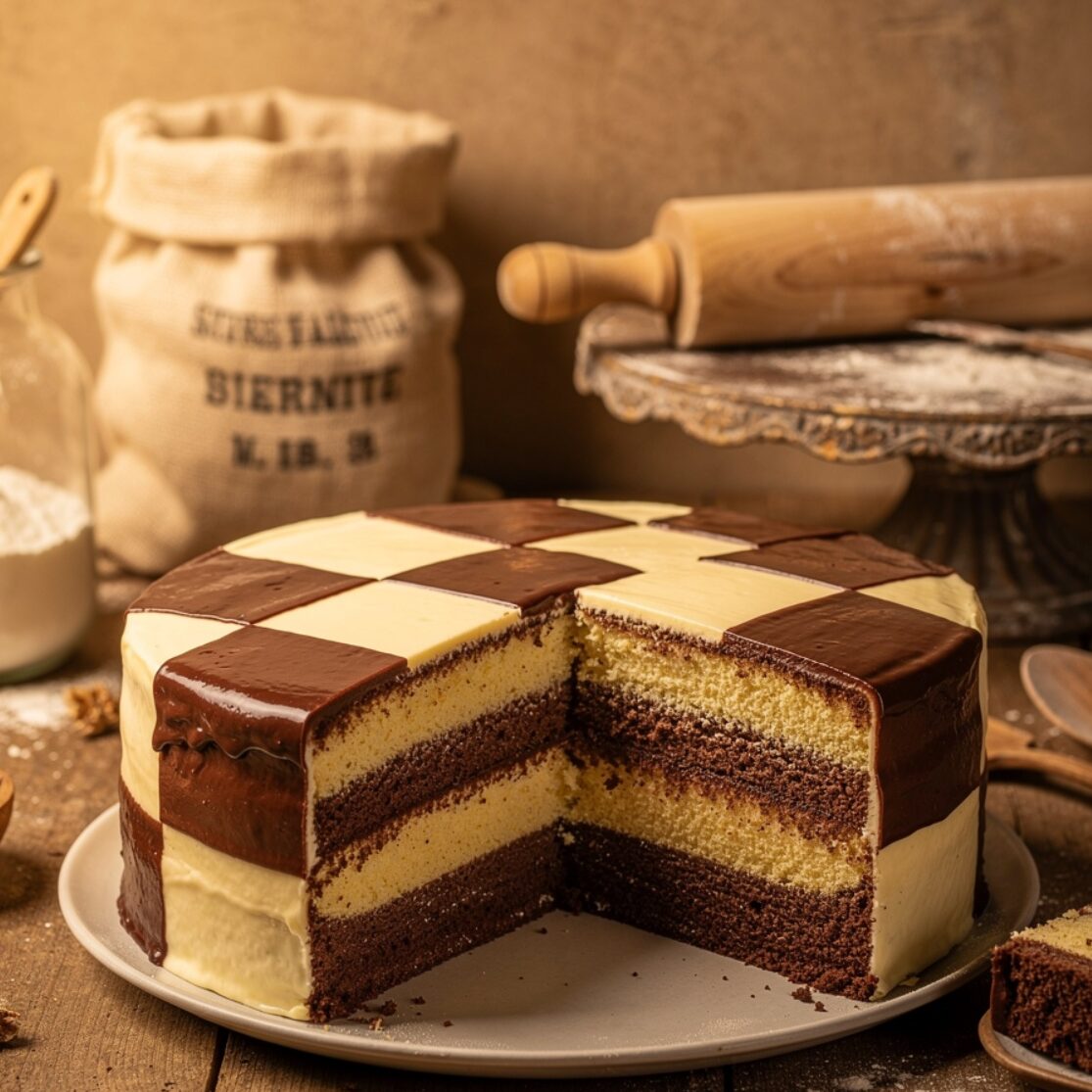
From the outside, this cake looks perfectly ordinary. Slice into it, and the interior reveals a geometric checkerboard of alternating chocolate and vanilla cake arranged in perfect concentric squares. The reaction in the room is instant — which is exactly why this design has never lost its appeal at children’s parties, birthday celebrations, or any event where you want to deliver a genuine surprise.
It’s genuinely one of the most impressive-looking interiors you can create with nothing more than two batters, a checkerboard cake pan set, and a little patience. The exterior can be as simple or as decorated as the occasion calls for.
The structural secret is using the same density batter for both flavors. If your vanilla batter is fluffier than your chocolate batter, the layers compress unevenly during baking and the checkerboard loses its clean lines in the slice. Weigh your batter portions — don’t eyeball them.
Ingredients:
- Vanilla Batter: 1½ cups (170g) all-purpose flour, 1 tsp baking powder, ½ cup (115g) butter, 1 cup (200g) sugar, 2 eggs, ½ cup (120ml) milk, 1 tsp vanilla
- Chocolate Batter: 1¼ cups (140g) all-purpose flour, ¼ cup (25g) cocoa powder, 1 tsp baking powder, ½ cup (115g) butter, 1 cup (200g) sugar, 2 eggs, ½ cup (120ml) milk, 1 tsp vanilla
- Checkerboard cake pan set (3-ring divider kit)
- For Frosting: 4 cups classic vanilla buttercream
- Chocolate sprinkles or ganache drip for exterior (optional)
Nutrition (Approximate Per Serving — based on 12 slices):
- Calories: 455
- Total Fat: 24g
- Carbohydrates: 57g
- Protein: 6g
- Sodium: 240mg
Values are approximate and vary based on ingredients and portion size.
12. Palette Knife Textured Cake
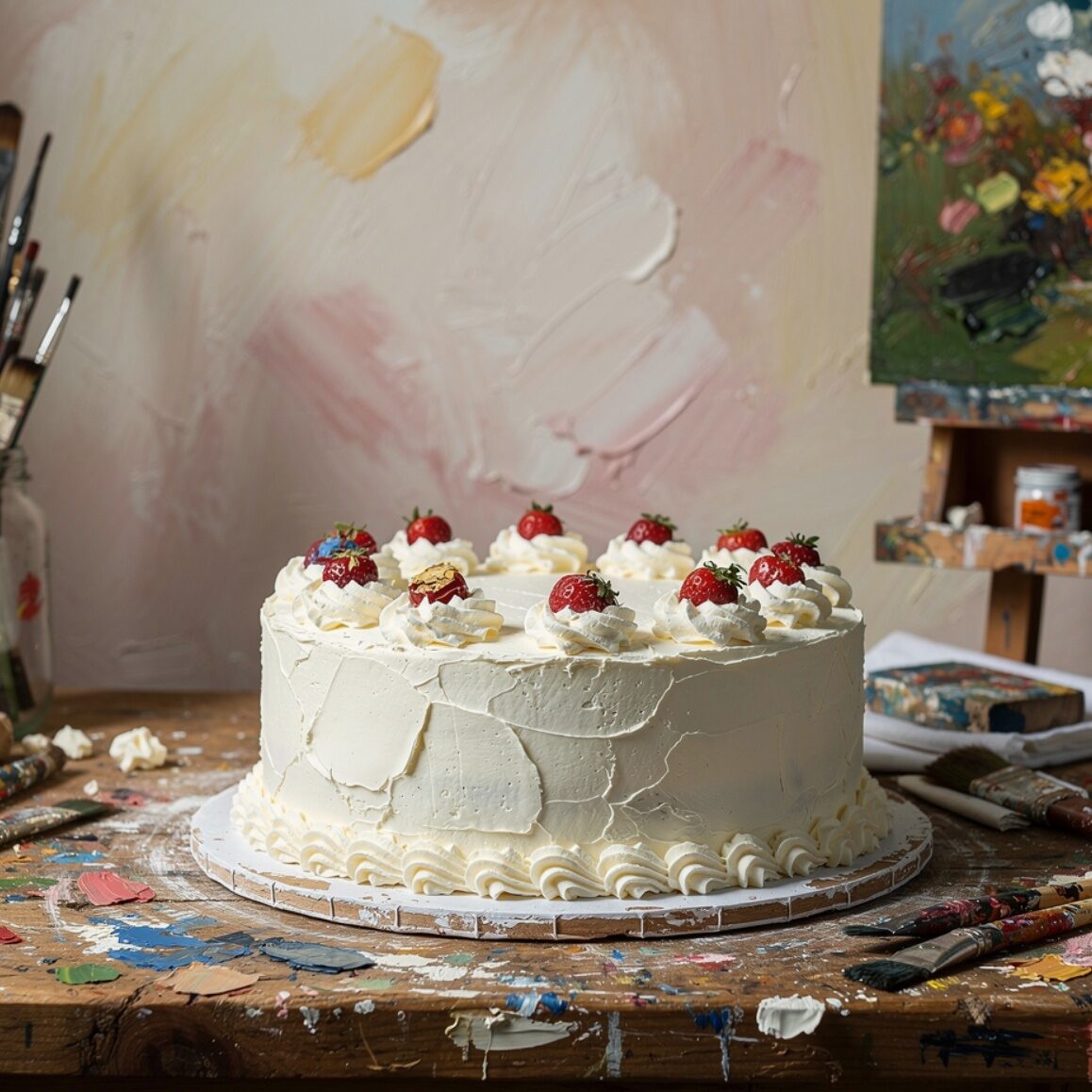
Abstract, sculptural, and genuinely fun to make — the palette knife cake uses a small offset or palette knife to apply dabs, strokes, and sweeps of tinted buttercream directly onto the cake exterior in an impressionistic, painterly style. No two palette knife cakes ever look the same, which is part of what makes this design so liberating.
This design suits anyone who finds piping stressful but still wants a finished cake that looks intentional and artful. It also happens to be one of the best options for elegant cake designs on a time budget — what looks like hours of work often takes under thirty minutes once the crumb coat is set.
The technique that lifts this from smeared to stunning is using cold buttercream applied in small amounts at a time. Warm buttercream drags and blends into mud. Cold buttercream sits on the surface with clean edges, maintaining the contrast between colors and the illusion of brushstrokes.
Ingredients:
- 3 cups (340g) all-purpose flour
- 2 tsp baking powder
- ½ tsp salt
- 1 cup (225g) unsalted butter, softened
- 1¾ cups (350g) granulated sugar
- 4 eggs, room temperature
- 1 cup (240ml) whole milk
- 2 tsp vanilla extract
- For Texture: 5 cups vanilla buttercream, divided into 4 small portions
- Gel food coloring in 3–4 colors (keep one portion white)
- Small offset spatula and palette knife
Nutrition (Approximate Per Serving — based on 12 slices):
- Calories: 450
- Total Fat: 23g
- Carbohydrates: 58g
- Protein: 5g
- Sodium: 210mg
Values are approximate and vary based on ingredients and portion size.
13. Hand-Painted Fondant Cake
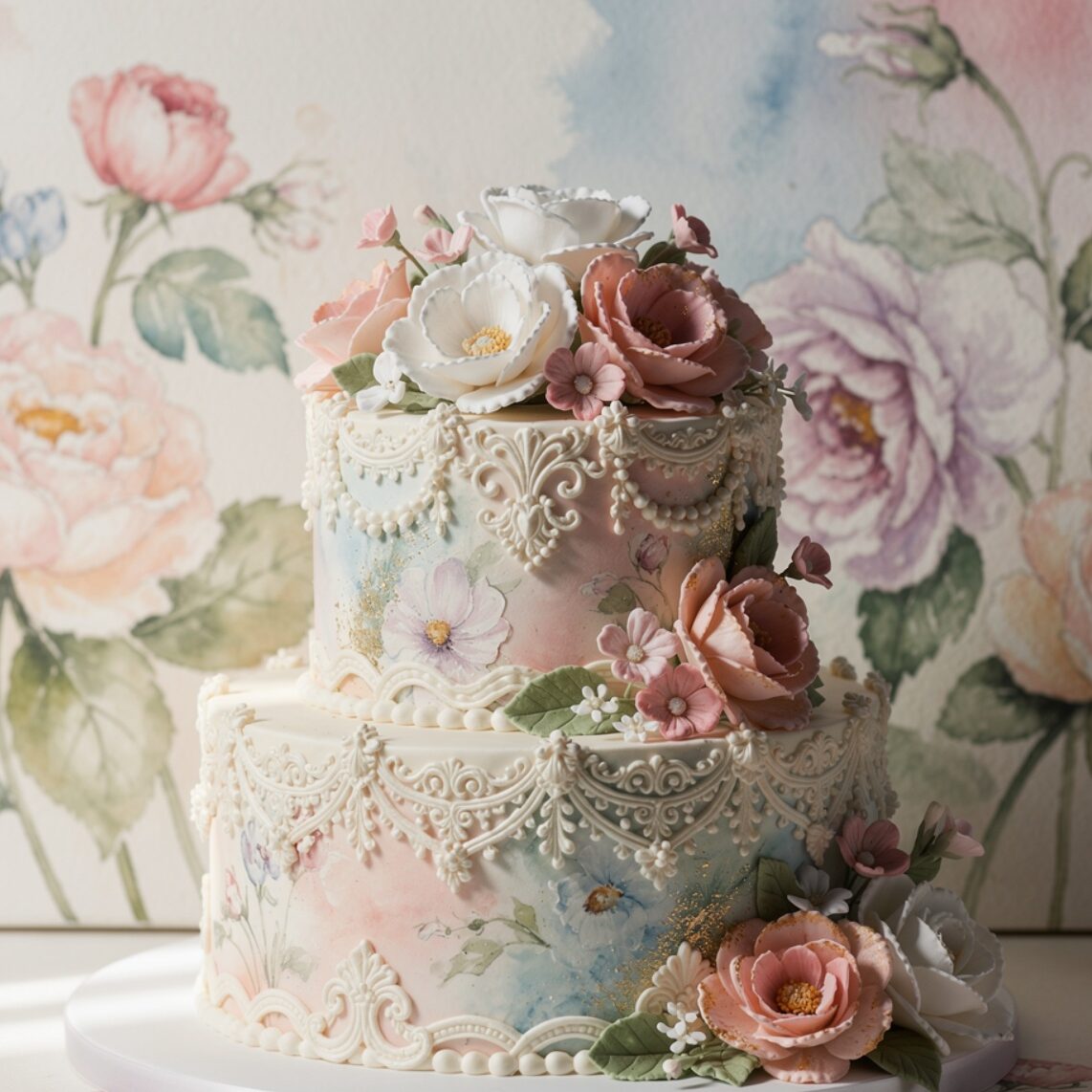
This is where cake decorating becomes fine art. A hand-painted fondant cake starts with a perfectly smooth, matte fondant exterior and then uses food-safe brushes and diluted gel or petal dust colors to paint florals, landscapes, botanical prints, or abstract designs directly onto the surface. The result looks more like a decorative porcelain piece than a dessert.
It’s the prestige choice for weddings, anniversaries, and formal celebrations — the kind of cake that gets framed in a photo and kept on someone’s wall for decades. It’s also surprisingly achievable for anyone with patience and a steady hand, since small, imprecise brushstrokes read as part of the intentional design.
Paint onto dry, room-temperature fondant — never fresh. Fresh fondant is slightly tacky and the colors bleed and blotch. If possible, roll and apply your fondant the day before, let it dry overnight at room temperature, and paint on a cool, dry day. Humidity is the enemy of a hand-painted finish.
Ingredients:
- 3 cups (340g) all-purpose flour
- 2 tsp baking powder
- 1 tsp salt
- 1 cup (225g) unsalted butter, softened
- 2 cups (400g) granulated sugar
- 4 large eggs
- 1 cup (240ml) sour cream
- 2 tsp vanilla or rose extract
- For Covering: 1kg rolled white fondant
- 2 cups vanilla buttercream (crumb coat layer, under fondant)
- For Painting: Gel food coloring or petal dust in 4–6 shades
- Clear alcohol (vodka or Everclear) for diluting color to paint consistency
- Food-safe brushes in fine, medium, and fan tip sizes
- Gold luster dust (for accents)
Nutrition (Approximate Per Serving — based on 12 slices):
- Calories: 530
- Total Fat: 22g
- Carbohydrates: 78g
- Protein: 5g
- Sodium: 225mg
Values are approximate and vary based on ingredients and portion size.
14. Semi-Naked Tiered Wedding Cake
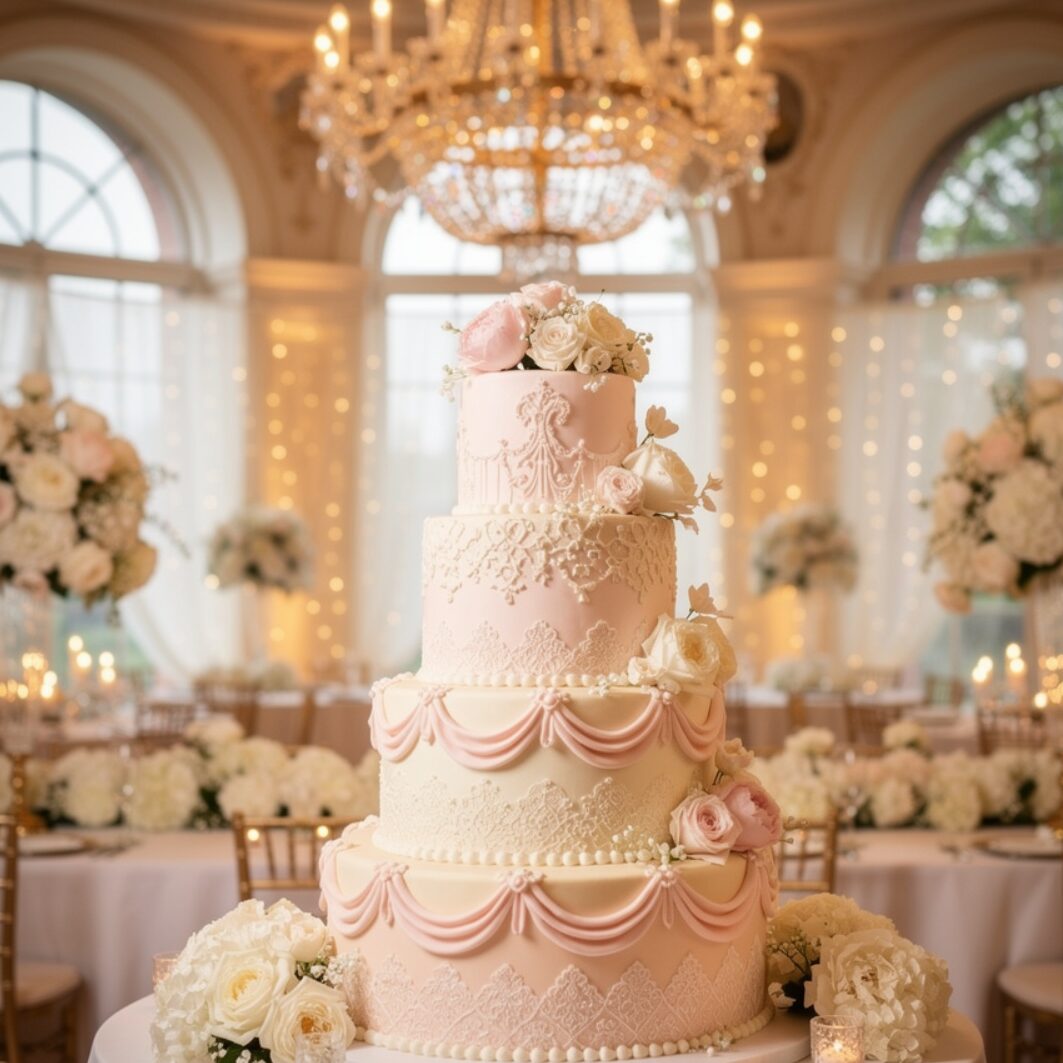
Three tiers. Lightly draped buttercream that intentionally shows the layers beneath. Fresh flowers or greenery tucked between tiers. This is the design that has defined modern wedding cake aesthetic for the better part of a decade, and it still looks genuinely elegant rather than tired — because it’s built on classical proportion and real restraint.
This design is the ultimate goal project in this list — achievable at home with the right planning, the right dowels, and a weekend of calm preparation. It also scales beautifully: a two-tier version works perfectly for intimate weddings or anniversary dinners, while three or four tiers anchor a larger celebration.
The interior support structure is non-negotiable on a tiered cake: use bubble tea straws or wooden dowels between every tier, cut flush with the top of the frosted cake, and place a thin cardboard cake board under each tier before stacking. Without this, the tiers compress and the whole structure shifts during transport. Assemble the tiers at the venue — never fully stacked in the car.
Ingredients:
- Per Tier (scale proportionally):
- All-purpose flour (4 cups / 6 cups / 8 cups for 6″ / 8″ / 10″ tiers)
- Unsalted butter, sugar, eggs, buttermilk, vanilla in matching proportions
- For Frosting (all tiers): 8–10 cups vanilla or champagne buttercream
- For Structure: Bubble tea straws or wooden dowels (8–10 per tier)
- Thin cardboard cake boards for each tier
- Non-slip cake mat for transport
- For Decoration: Fresh food-safe flowers and greenery (spray roses, eucalyptus, baby’s breath)
- Gold leaf sheets (optional)
- Ribbon for base of each tier (optional)
Nutrition (Approximate Per Serving — based on 40 wedding servings, 10″ base tier only):
- Calories: 390
- Total Fat: 20g
- Carbohydrates: 50g
- Protein: 5g
- Sodium: 195mg
Values are approximate and vary based on ingredients and portion size.
Common Mistakes to Avoid
Skipping the crumb coat — The crumb coat is a thin first layer of frosting that traps loose crumbs before the final coat goes on. Skipping it results in a finished exterior full of brown crumb streaks, especially on darker cakes. Give it twenty minutes in the fridge before your final frost, and the surface you’re working on will be smooth and completely clean.
Working with warm buttercream — Buttercream at room temperature spreads easily but holds almost no shape — rosettes collapse, drips race, textures bleed. Most decorating techniques require a chilled, firm frosted cake as the canvas. When in doubt, put the cake back in the fridge for ten minutes and start again cold.
Rushing the layer assembly — Stacking a warm or undercooked cake is the fastest way to a leaning, sliding, structurally compromised design. Let your layers cool completely — not just “not hot” but fully room temperature — before leveling, filling, and stacking. For multi-tiered cakes, this means baking a day ahead.
Ignoring humidity when working with fondant or mirror glaze — Both are deeply sensitive to moisture in the air. A humid kitchen causes fondant to sweat and tear and prevents mirror glaze from setting with a clean finish. Work on these designs in a cool, dry environment — air conditioning on, kettle off, windows closed.
Overworking the buttercream color — When tinting buttercream, gel food coloring develops and deepens over time. What looks pale pink right after mixing will be hot pink two hours later. Mix your color the night before you decorate and refrigerate overnight. The color you see in the morning is the color you’re working with.
Storage Guide
Fridge Most of the cakes in this list — buttercream-frosted, naked, ombre, drip, fault line, and tiered — can be stored in the refrigerator for up to 4–5 days. Store in a cake box or loosely covered cake dome rather than plastic wrap pressed directly against the frosting. The number cream tart and any cake with fresh whipped cream as the filling should be eaten within 2 days and never left at room temperature for more than 2 hours. Cakes decorated with fresh flowers should have the floral arrangement removed before refrigerating.
Freezer Buttercream-frosted cakes freeze exceptionally well. Freeze the fully frosted and decorated cake uncovered for 1–2 hours until the exterior is firm, then wrap in two layers of plastic wrap and one layer of foil. Label with the date and freeze for up to 3 months. The mirror glaze cake, geode cake, and hand-painted fondant cake do not freeze well — the glaze fractures, rock candy crystals weep, and painted fondant weeps on thawing. The number cream tart does not freeze due to the whipped cream filling.
Reheating These are served at room temperature, not reheated. Remove refrigerated cakes from the fridge 1–2 hours before serving to let the buttercream soften back to its full flavor and texture. Buttercream served straight from the fridge is dense and dull — room temperature buttercream is the entire point. For fondant-covered cakes, allow 3 hours to come fully to room temperature before cutting.
Make-Ahead Tip The best candidates for make-ahead preparation are the classic buttercream rosette cake, the ombre gradient cake, and the semi-naked tiered cake. All three can be fully assembled, frosted, and refrigerated up to 2 days before the event. The floral wreath cake and number cream tart should be decorated on the day of serving — the fresh florals and cream need to be added as close to serving time as possible. For geode and hand-painted fondant cakes, the base cake can be baked and frozen up to 2 weeks ahead; thaw in the fridge overnight before decorating.
Frequently Asked Questions
Q1. How do I decide which cake design to make first? Start with the design that matches your current skill level, not the one you’re most excited by aesthetically. If you’ve never decorated before, the buttercream rosette (Idea #1) or palette knife cake (Idea #12) will build your confidence fast and both look genuinely impressive. If you’ve done a few buttercream cakes before, the drip cake or ombre gradient are your natural next step. Save the mirror glaze and hand-painted fondant for when you’ve developed a feel for temperature and surface preparation.
Q2. Can any of these designs be made gluten-free or dairy-free? Yes — most of the cake bases in this list adapt well to a 1:1 gluten-free flour blend, though the texture of the crumb will differ slightly. For dairy-free versions, substitute butter with a high-quality vegan butter (Miyoko’s and Violife are both reliable for baking and frosting), replace whole milk with full-fat oat milk or coconut milk, and use coconut cream in place of heavy cream in ganache and glaze recipes. The flavors shift a little, but the designs themselves are completely achievable.
Q3. Which ideas in this list are best for beginners? Ideas 1 (buttercream rosette), 2 (naked cake), 7 (ombre gradient), and 12 (palette knife texture) are all genuinely beginner-friendly. None of them require specialty equipment beyond a bench scraper, offset spatula, and a 1M piping tip. They’re also the most forgiving — small imperfections in these designs read as character rather than mistakes, which matters enormously when you’re still learning.
Q4. Which of these designs are best for feeding a large crowd or meal prep for an event? The semi-naked tiered wedding cake (Idea #14) is purpose-built for large gatherings — a three-tier version comfortably serves 60–80 guests. The checkerboard cake and drip cake also portion well and can be made in sheet cake form (scaled up) for very large crowds. For events where you want to prep well ahead, the buttercream rosette, ombre gradient, and fault line cake are all excellent — they hold beautifully in the fridge for up to two days fully assembled.
Q5. Can the mirror glaze or geode cake be made ahead and frozen? The mirror glaze cake can be partially made ahead — the mousse-based interior actually benefits from being frozen solid before the glaze is poured, so the base is best made and frozen 1–2 days ahead. However, once the mirror glaze is applied, do not refreeze. The geode cake base can be baked and frozen up to 2 weeks ahead, but the crystal installation and gold leaf work should be done fresh on the day of the event. Isomalt crystals absorb moisture from the fridge and lose their sparkle quickly.
Conclusion
Every one of these 14 cake design ideas exists to solve the exact problem this list started with — that feeling of wanting to make something beautiful and having no idea where to begin. From the gentlest buttercream rosette that any first-time decorator can land, to the mirror glaze that demands technical precision but delivers something that genuinely looks impossible, there’s a starting point here for every skill level, every occasion, and every creative vision. The right cake design for you is the one you’re ready to try today.
Pick one this week — just one — and try it. Not when you’ve watched more tutorials, not when you’ve bought more equipment, but this week, with what you already have. Share this list with the person in your life who always says they could never decorate a cake. They’re almost always wrong, and one of these ideas will prove it to them. Happy baking.