The Prettiest Flower Birthday Cake With Dreamy Buttercream Blooms
The hardest part of making a decorated birthday cake at home isn’t the baking — it’s the moment you pick up a piping bag and realize the frosting isn’t cooperating. Flowers droop, petals smear, and what was supposed to look like a spring garden ends up looking like a melted mess. This Flower Birthday Cake solves that exact problem with a frosting consistency and a decorating approach that’s genuinely forgiving, even on your very first attempt.
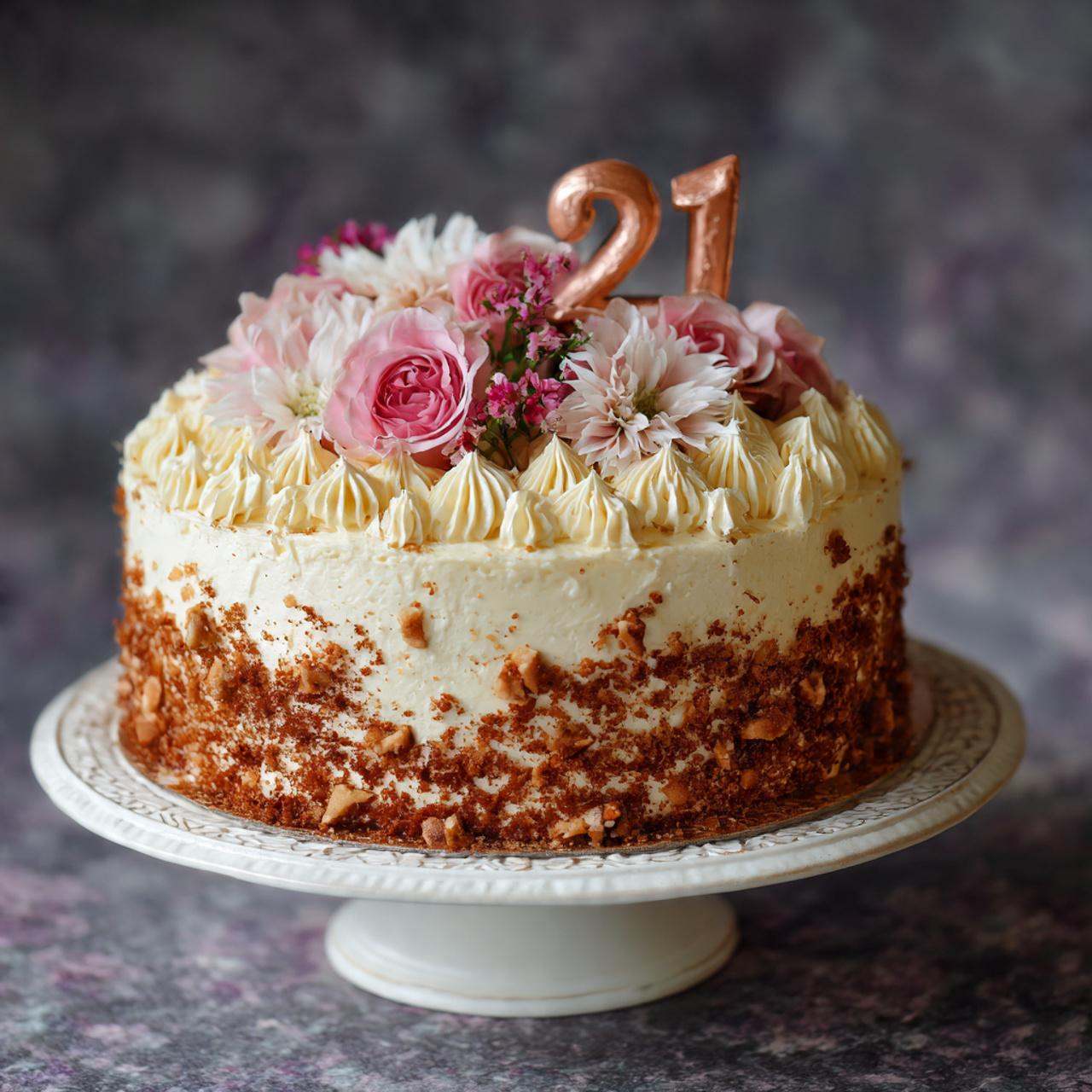
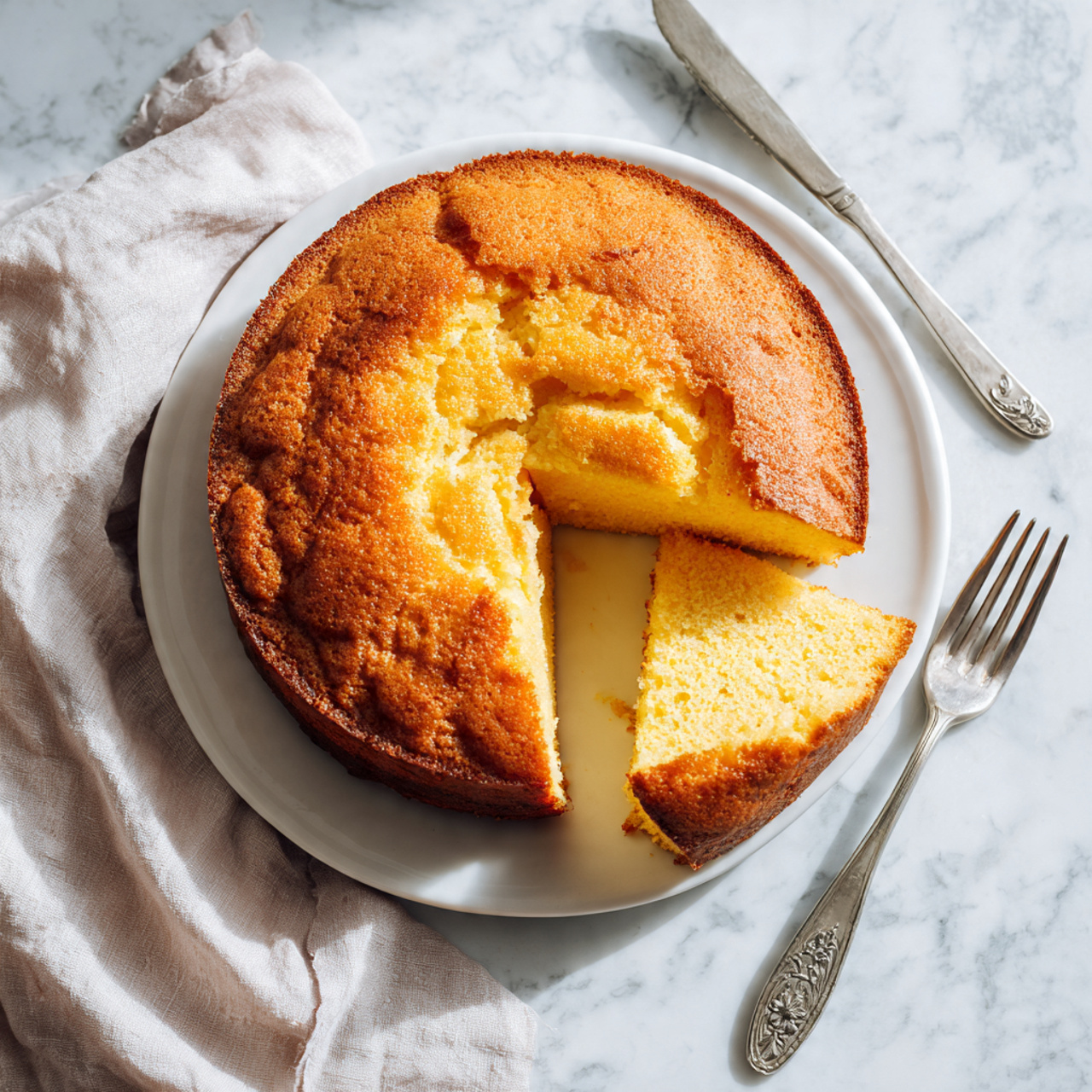
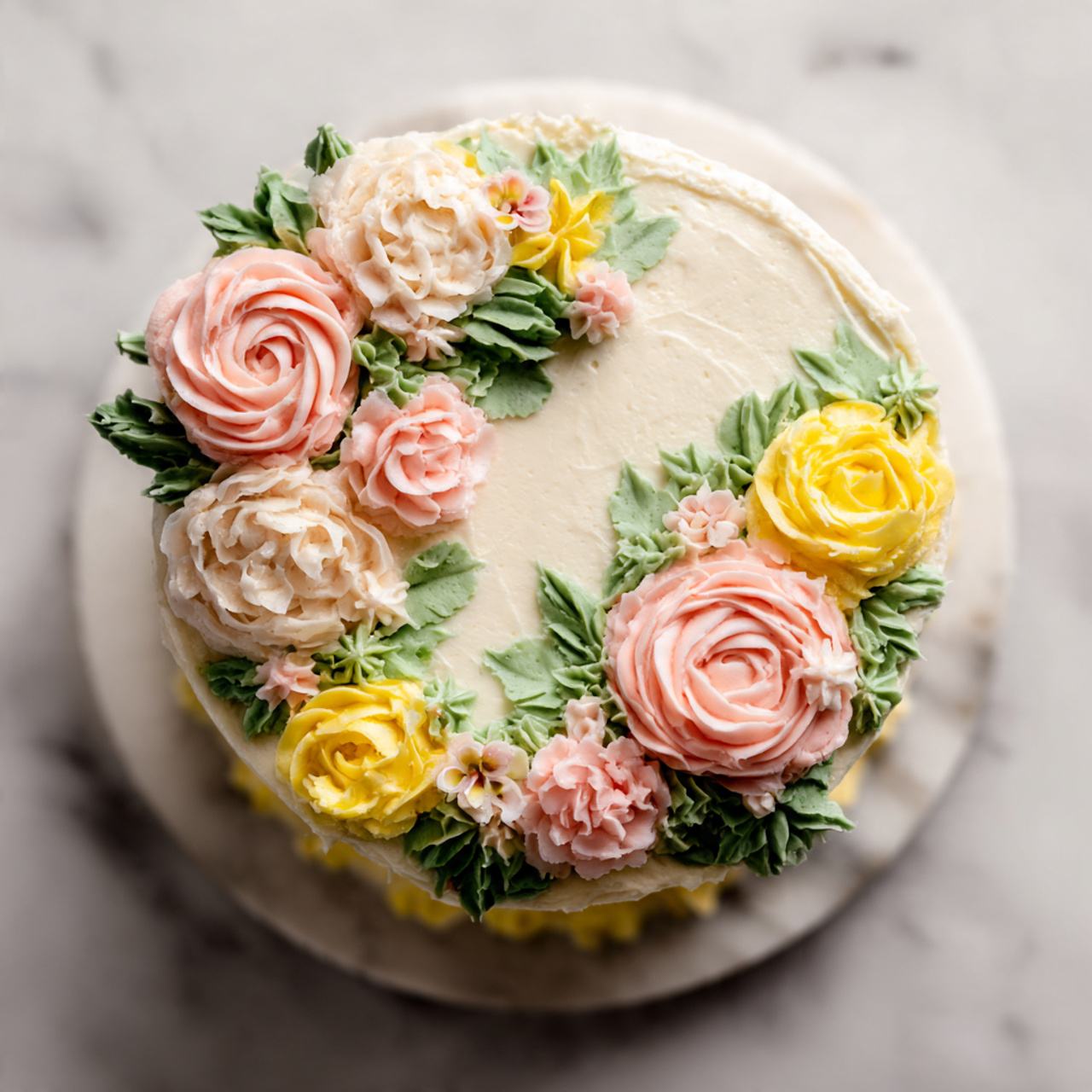
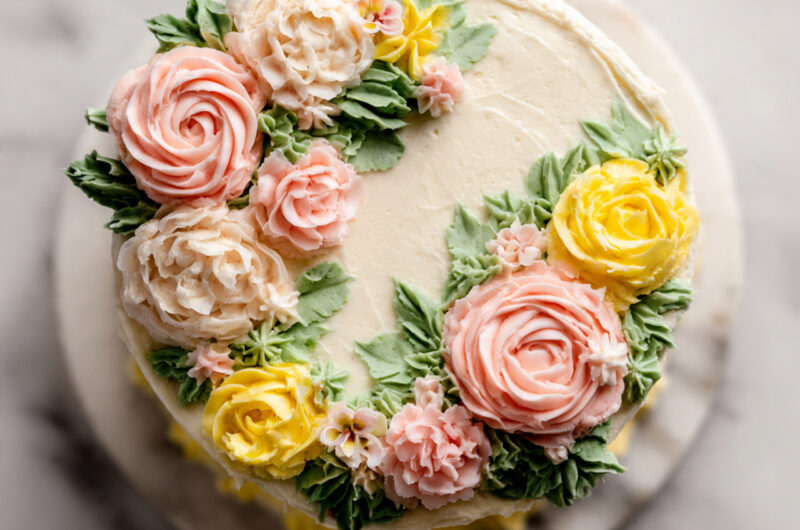
The cake itself has the kind of crumb you want to close your eyes over — soft, fine, and just sturdy enough to hold a generous layer of frosting without crumbling under it. The vanilla flavor comes through in every bite: warm, lightly sweet, and clean in a way that lets the frosting shine rather than compete with it. Those buttercream flowers — soft pinks, sunny yellows, a few gentle green leaves — sit on top like they belong there, each petal carrying a whisper of sweetness that feels like a celebration rather than a sugar overload.
This is the kind of easy birthday cake recipe that earns its permanent place in your rotation — beautiful enough for birthdays and bridal showers, relaxed enough for a Sunday bake when you simply want something pretty on the table. It’s the recipe you make when you want someone to feel genuinely cared for, and you want the baking to feel just as good as the giving. Let’s make it together.
Why You’ll Love This Recipe
A Vanilla Flavor That’s Warm and Perfectly Balanced
There’s no fighting sweetness here — this cake is gently vanilla all the way through, which means it pairs well with everything from fruity frostings to the classic buttercream it’s designed for. The sugar level is measured just right so every bite tastes homemade without being overwhelming. It’s the kind of flavor everyone in the room will agree on, from the pickiest five-year-old to the most discerning adult.
The Most Tender, Pillowy Crumb
The method behind this cake produces a crumb that stays soft even after a day in the fridge. It’s light without being airy, with just enough structure to hold clean slices without collapsing. That texture is exactly what makes people reach for a second piece before they’ve even finished their first.
Beginner-Friendly Decorating That Looks Genuinely Stunning
You don’t need a set of professional piping tips or years of cake decorating experience to pull this off. A simple piping bag — or a zip-lock bag with a small corner snipped off — is all you need to create those flowers. The forgiving nature of buttercream means you can always smooth over a mistake and start fresh, which takes an enormous amount of pressure off the whole experience.
Ideal for Every Kind of Celebration
This is your go-to homemade birthday cake for parties large and small, but it holds its own just as well at weekend brunches, teacher appreciation tables, and impromptu celebrations where you want to bring something that feels genuinely thoughtful. It slices beautifully and photographs even better — it’s the cake you bring when you want people to feel cared for.
A Classic Vanilla Base With a Floral Twist That Feels Special
There’s something about adding a garden of hand-piped buttercream flowers to an otherwise familiar vanilla base that makes the whole thing feel elevated and intentional. The traditional flavor everyone loves becomes something memorable — not because anything complicated happened, but because the decoration added a personal touch that a bakery box simply cannot replicate.
Ingredients
For the Cake
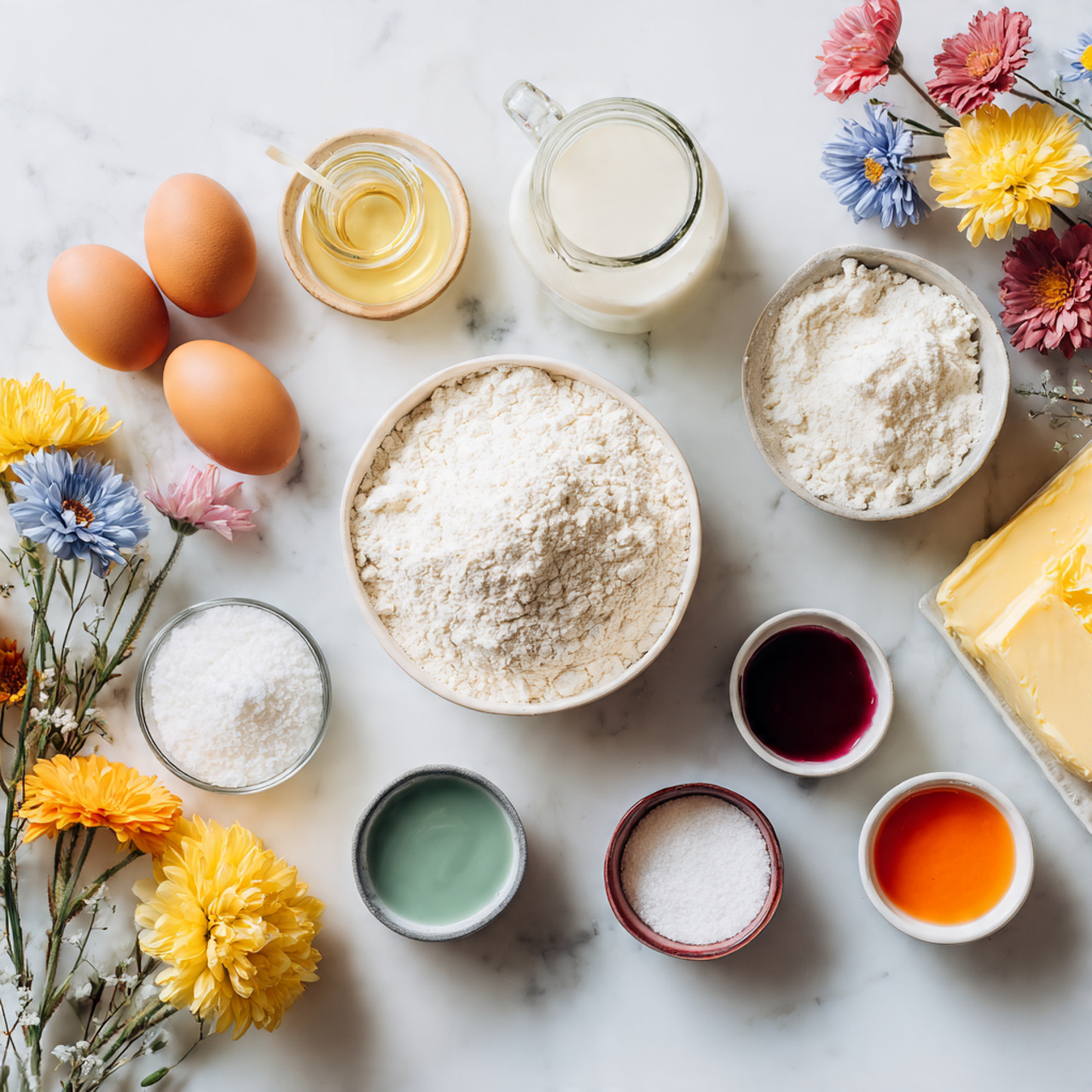
- 2 cups all-purpose flour
- 1 cup sugar
- ½ cup unsalted butter, softened (room temperature gives the smoothest, most even batter)
- 2 eggs
- 1 cup milk
- 1 tbsp baking powder
- 1 tsp vanilla extract (pure vanilla extract, not imitation, for the cleanest flavor)
- ¼ tsp salt
For the Buttercream Frosting
- 1 cup unsalted butter, softened
- 2½ cups powdered sugar (sifted for a silky, lump-free consistency)
- 1 tsp vanilla extract
- 2–3 tbsp milk (added one tablespoon at a time until the frosting ribbons smoothly off a spatula)
- Food coloring in pink, yellow, and green (gel food coloring gives more vibrant results than liquid without thinning the frosting)
Together, the clean vanilla cake and the silky, lightly sweet buttercream create a balance that feels genuinely celebratory — pretty to look at, and satisfying in every single bite.
How to Make Flower Birthday Cake — Step-by-Step
Step 1: Prep Your Pan and Preheat the Oven
Preheat your oven to 180°C (350°F) and grease a round 9-inch cake pan well, making sure to get the sides. In a medium bowl, whisk together the flour, baking powder, and salt until evenly combined. Don’t worry if the dry mix looks like more than you expected — it comes together beautifully once the wet ingredients join the party.
Step 2: Cream the Butter and Sugar
Beat the softened butter and sugar together in a large bowl until the mixture is pale, noticeably fluffy, and smells faintly sweet and buttery — this usually takes about 2 to 3 minutes with a hand mixer on medium speed. This step is the foundation of the tender crumb, so don’t rush it. You’re looking for a mixture that holds its shape and looks almost white rather than yellow.
Step 3: Build the Batter
Add the eggs one at a time, beating briefly after each, then mix in the vanilla extract. With the mixer on low, pour in the milk in a slow, steady stream. Now fold in the dry ingredients gently with a spatula, mixing until just combined. Don’t worry if the batter looks slightly lumpy at this stage — a few small streaks of flour will disappear with the last few folds, and those folds are all you need.
Step 4: Bake Until Golden and Set
Pour the batter into your prepared pan and smooth the top with the back of a spoon. Bake for 25 to 30 minutes, until the top is golden and a toothpick inserted into the center comes out completely clean. The edges will look set and just beginning to pull away from the sides of the pan — that’s your cue it’s ready. Let it cool in the pan for 10 minutes, then transfer to a wire rack and let it cool completely before moving on to frosting.
Step 5: Make the Buttercream and Decorate
Beat the butter until pale and creamy, then add the sifted powdered sugar in two additions, followed by the vanilla and milk one tablespoon at a time until the frosting is smooth, spreadable, and holds its shape. Divide it into bowls and tint each portion with your food coloring. Spread the white base frosting over the cooled cake in an even layer, then load a piping bag and create flowers across the top — start with a small dot in the center, then pipe short petals around it with gentle, even pressure. Don’t worry if your first flower looks a little rough; by the third one you’ll find your rhythm, and the finished top will look effortlessly beautiful.
Perfecting This Recipe
- Make sure your butter is genuinely at room temperature before you begin — it should give easily when pressed but feel neither greasy nor cold. Butter that’s too cold won’t cream into the sugar properly, and butter that’s melted will collapse the structure of both the cake and the frosting.
- Measure flour by spooning it into the measuring cup and leveling off with a straight edge. Scooping directly from the bag compacts the flour and can make the cake noticeably denser.
- When folding in the dry ingredients, switch to a spatula and use a gentle figure-eight motion. Stop the moment no dry streaks remain — one or two extra folds can be the difference between tender and tough.
- Let the cake cool completely before frosting, no shortcuts. Even a slightly warm cake will melt the buttercream and cause it to slide, turning your flowers into puddles.
- For the cleanest flower shapes, apply a thin crumb coat of frosting first, chill the cake for 15 minutes, then add your final layer and piped decorations. Firmer frosting holds petal edges beautifully.
- Sift your powdered sugar before making the frosting — it’s a small step that makes a significant difference in the final smoothness and spreadability. This is especially important for a buttercream flower cake, where clean petal definition depends on a consistently lump-free frosting.
Common Mistakes to Avoid
Overbaking the cake — The biggest threat to a moist crumb is leaving the cake in a few minutes too long. Start checking at the 25-minute mark and pull it out as soon as the toothpick comes out clean. The residual heat from the pan continues to cook it slightly as it cools.
Using cold butter in the batter or frosting — Cold butter doesn’t cream into the sugar properly, leaving you with a dense batter and a gritty, lumpy frosting that resists piping. Set your butter out at least 30 to 45 minutes before you plan to start.
Frosting a warm cake — It’s tempting to move quickly, but frosting applied to a warm cake will melt and slide regardless of how stiff it started. Patience here pays off in cleaner layers and flowers that actually hold their shape through serving.
Adding too much milk to the frosting at once — Milk adjusts consistency, not volume. Add it one teaspoon at a time and stop when the frosting ribbons smoothly off your spatula. Overly loose frosting makes it nearly impossible to pipe flowers with defined petals.
Overmixing after adding the flour — Once the dry ingredients go in, the goal is simply to incorporate them. Overmixing develops gluten, which turns your soft, tender cake into something closer to bread. When the batter looks uniform, stop.
Add Your Touch
- Stir a teaspoon of lemon zest into the batter for a bright, citrusy lift that pairs beautifully with the floral decoration.
- Add a few drops of rose water to the frosting for a fragrant, garden-party twist that feels intentional and elegant without overpowering the vanilla.
- Use freeze-dried strawberry powder in your pink frosting for a naturally blush-tinted, fruit-flavored buttercream that tastes as good as it looks.
- Slice the cooled cake horizontally and add a thin layer of strawberry jam between the layers before frosting — a hidden filling that surprises people with the first slice.
- Swap the standard color palette for lavender, peach, or dusty rose for a more muted, grown-up look.
- Tuck edible gold sprinkles or small fondant leaves between the buttercream flowers for extra sparkle on a special birthday.
Visit Also: Jelly Cake
What to Serve With This
A pot of Earl Grey or chamomile tea turns a slice of this cake into a proper afternoon treat, with the floral notes in the tea echoing the decoration in a way that feels almost intentional. Fresh strawberries or raspberries on the side add a natural tartness that balances the sweetness of the buttercream beautifully. For a birthday table, a scoop of vanilla or strawberry ice cream alongside each slice goes over extremely well with guests of all ages. Sparkling lemonade is a lovely outdoor option for warmer months. And for a cozy, everyday moment, a simple mug of good coffee is all this cake really needs.
Storing and Serving
Fridge Store the frosted cake covered in the fridge for up to 3 days. Press plastic wrap gently against any cut surfaces to prevent them from drying out. Individual slices can be wrapped separately for easier access.
Freezer Unfrosted cake layers can be wrapped tightly in plastic wrap and frozen for up to one month. Thaw overnight in the fridge before frosting and decorating. Frosted slices can also be frozen individually, though the buttercream texture may shift slightly after thawing.
Reheating This cake is best served at room temperature. Pull refrigerated slices out about 20 minutes before serving — the frosting softens back to its ideal creamy texture, and the crumb becomes pillowy again. Avoid microwaving frosted slices, as the buttercream will melt unevenly.
Make-Ahead Tip The cake layers can be baked up to one day ahead and stored at room temperature, covered with a clean tea towel. Make the frosting fresh on the day you plan to decorate — this gives you the most stable buttercream and the crispest flower edges for serving.
Servings This recipe yields approximately 8 to 10 slices from a single 9-inch round cake.
Nutrition (Approximate Per Serving)
- Calories: 310
- Total Fat: 16g
- Saturated Fat: 10g
- Carbohydrates: 40g
- Sugar: 28g
- Protein: 4g
- Sodium: 180mg
Nutritional values are approximate and may vary based on specific ingredients and brands used.
Chef’s Helpful Tips
- Room temperature eggs and milk matter just as much as room temperature butter. Cold dairy poured into creamed butter can make the batter look curdled, which tempts you to overmix — and overmixing is where tender crumb goes to die.
- To avoid a domed top that makes decorating awkward, tap the filled pan gently on the counter two or three times before putting it in the oven to release any trapped air bubbles.
- For the cleanest, most professional-looking slices, run a sharp knife under warm water, wipe it dry, and cut. A warm blade glides through buttercream without dragging or tearing.
- If your piped flowers don’t look quite right, smooth them with the back of a small spoon and try again. Buttercream is remarkably forgiving — you can rework the same section multiple times without any visible trace.
- To scale this recipe for two people, halve all the ingredients and reduce baking time by 5 minutes, checking early. For a larger group of eight or more, double the quantities and bake in two pans rather than one deeper pan, which ensures even cooking throughout.
Frequently Asked Questions
Q1. Can I make this Flower Birthday Cake a day ahead? Absolutely — this is actually a great recipe for baking in advance. Make the layers the day before, let them cool completely, then wrap and store at room temperature. Frost and decorate the morning of the celebration for the freshest, most beautiful result, with flowers that hold their shape right through serving.
Q2. What can I use instead of eggs in this recipe? Plain yogurt or mashed banana both work well here — use about 3 tablespoons per egg. Yogurt keeps the flavor neutral and the texture very close to the original, while banana adds a subtle natural sweetness. Either version bakes up soft and holds together nicely for slicing.
Q3. Is this recipe truly beginner-friendly, even the decorating part? Yes, genuinely. The flower design looks impressive but the technique is actually one of the easiest things to pipe — small swirls and gentle petal motions with a round tip. If you don’t have a piping bag, a zip-lock bag with a tiny corner snipped off works perfectly. Your first flower will be a little rough, but they improve quickly and even the imperfect ones look charming.
Q4. How does this compare to a store-bought cake? The texture is noticeably softer and more tender than most store-bought vanilla birthday cakes, which tend to be denser due to commercial stabilizers. The flavor is cleaner too — you can actually taste the vanilla without the slightly artificial undertone that often comes with packaged versions. And there’s something about a cake made by someone who loves you that a bakery box simply cannot match.
Q5. Can I freeze the finished cake after it’s been frosted and decorated? You can, though the buttercream flowers may look slightly different after thawing due to surface condensation. For the best results, freeze unfrosted cake layers and decorate fresh. If you do freeze the finished cake, set it uncovered in the freezer for an hour first to firm up the frosting before wrapping — this protects the flowers from being crushed and keeps them recognizable after thawing.
Conclusion
There’s something genuinely lovely about a cake decorated with your own hands — soft petals piped one by one, each one a little more confident than the last. This Flower Birthday Cake is the kind of recipe that grows with you: you’ll make it a little differently each time, with new colors, a hidden jam filling, or a story that belongs only to that particular birthday. It’s simple enough to fit into a busy week and beautiful enough to become a real tradition, one that people will start to expect and look forward to.
Whether you’re baking for a five-year-old who asked for pink flowers or a grown-up who deserves something made with love, this recipe is ready for all of it. Share it at the table, photograph it in the afternoon light, or keep the last slice entirely to yourself — it’s going to taste just as good either way. Now go make something beautiful.
Flower Birthday Cake
Course: Trending Cake4
servings20
minutes30
minutes310
kcal1
hour20
minutesA soft, pillowy vanilla cake topped with silky buttercream and hand-piped floral decorations — easy enough for beginners, beautiful enough for any birthday table.
Ingredients
For the Cake:
2 cups all-purpose flour
1 cup sugar
½ cup unsalted butter, softened
2 eggs
1 cup milk
1 tbsp baking powder
1 tsp vanilla extract
¼ tsp salt
For the Buttercream Frosting:
1 cup unsalted butter, softened
2½ cups powdered sugar
1 tsp vanilla extract
2–3 tbsp milk
Food coloring in pink, yellow, and green
Directions
- Preheat oven to 180°C (350°F). Grease a 9-inch round cake pan. Whisk flour, baking powder, and salt together in a bowl.
- Beat butter and sugar until pale and fluffy, about 2–3 minutes.
- Add eggs one at a time, beating after each. Mix in vanilla extract.
- Pour in milk gradually on low speed. Fold in dry ingredients until just combined — do not overmix.
- Pour batter into pan and smooth the top. Bake 25–30 minutes until golden and a toothpick comes out clean.
- Cool in pan 10 minutes, then transfer to a wire rack. Cool completely before frosting.
- Beat butter until pale and creamy. Add sifted powdered sugar in two additions. Mix in vanilla and milk one tablespoon at a time until smooth and spreadable.
- Divide frosting and tint with food coloring. Spread white base frosting over cooled cake. Pipe flowers across the top using a piping bag with a round tip.