The Easiest Upside Down Pineapple Cake That Always Steals the Show
The flip is where most upside-down cakes go wrong, and it almost always comes down to the same mistake: inverting the pan too early. The caramel hasn’t had time to set, the fruit tears away from the cake, and instead of a showstopping golden top you get a sticky mess stuck to the inside of the pan. This recipe gives you the exact timing and technique to make the flip clean and confident — every single time.
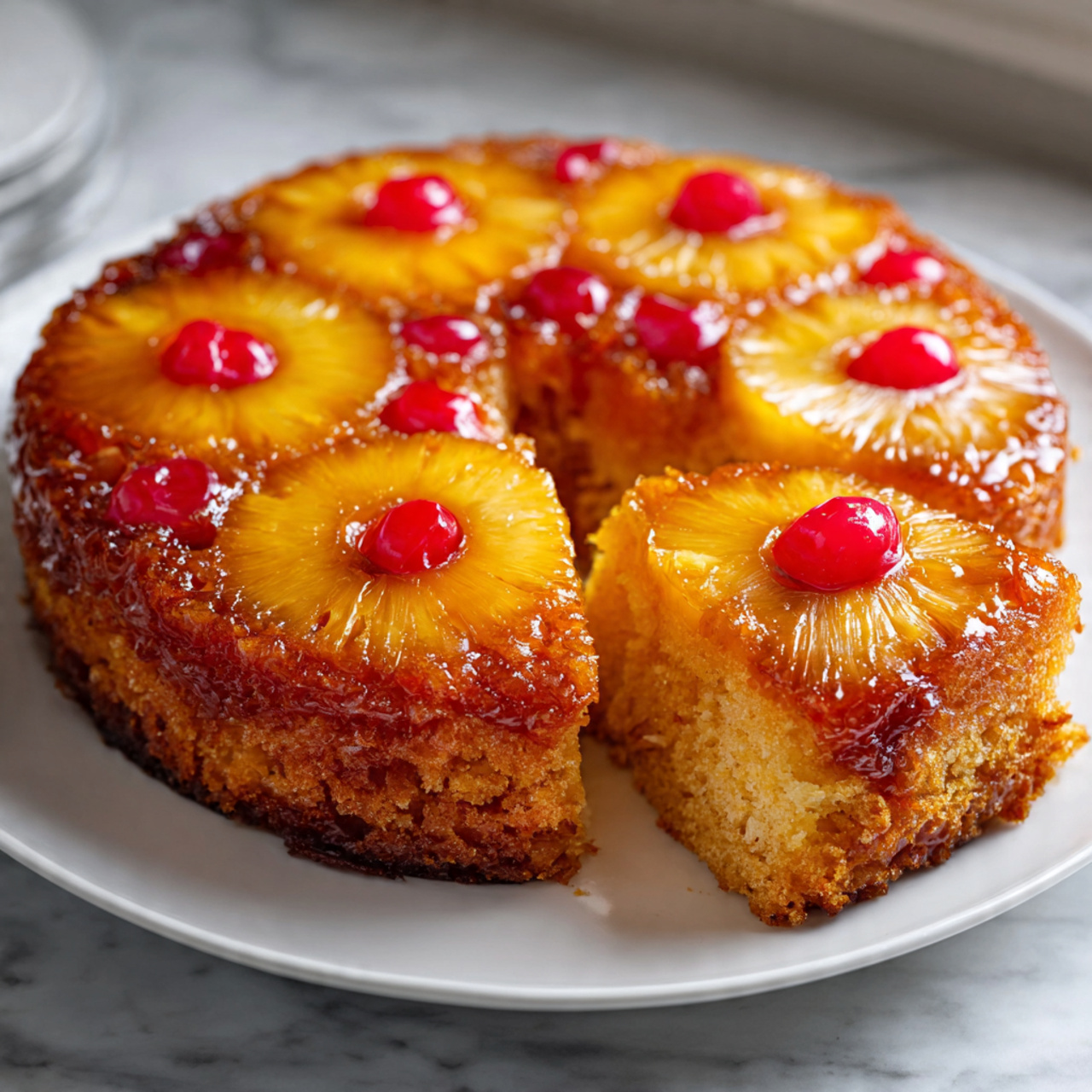
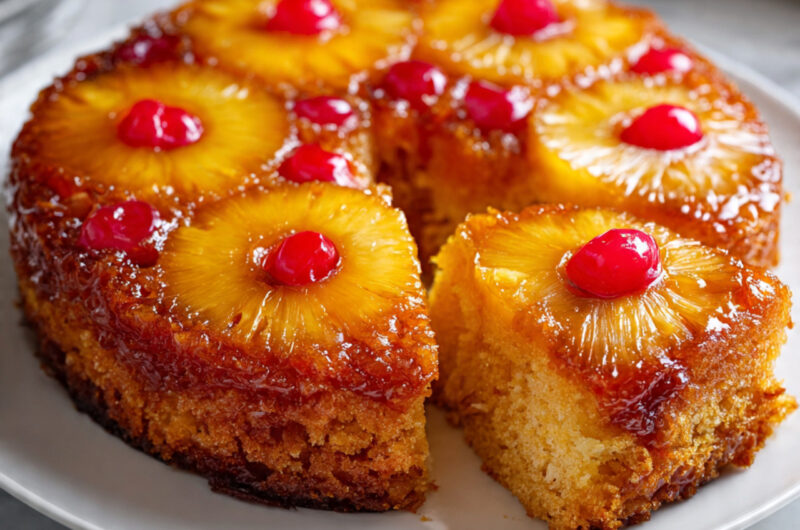
Once those ten minutes are up and you invert the pan, you’ll lift it away to reveal rings of pineapple caramelized to a deep amber, each one glossed with warm buttery sugar and nestled around a bright maraschino cherry — like something from a vintage postcard. The cake underneath is soft and vanilla-scented, with a light, open crumb that soaks up all that warm fruit juice as it bakes. The edges go just slightly golden and firm while the center stays pillowy and tender. And the smell while it’s in the oven — warm brown sugar, melting butter, fruit slowly caramelizing — will bring everyone into the kitchen before the timer even goes off.
Whether it’s a casual weeknight when you want something a little special, a potluck where you want to arrive with something memorable, or a holiday table that needs one more dessert, this easy pineapple cake delivers every time. Pair it warm with a scoop of ice cream or simply with a cup of tea, and it fits every occasion without asking much from you. Let’s walk through it together, start to finish.
Why You’ll Love This Recipe
The Flavor Balance Is Just Right
The sweetness of the brown sugar caramel is lifted by the natural tang of pineapple, which keeps the whole cake from feeling one-dimensional or too sugary. A lightly vanilla-scented crumb underneath ties everything together without competing with the fruit up top.
A Texture That’s Genuinely Hard to Put Down
The cake bakes up with a soft, even crumb that stays moist well past the first day. The caramel layer gives the top a slightly chewy, sticky quality that plays beautifully against the tender interior — the kind of contrast that makes a dessert hard to stop eating after the first bite.
One Bowl and About an Hour
The batter comes together in a single bowl with no special equipment, using ingredients most people already keep on hand. Prep takes fifteen minutes, the oven does the rest, and you’re done in an hour including the resting time before the flip.
A Crowd-Pleaser That Travels Well
This cake slices cleanly, holds its shape on a platter, and is just as impressive served cold the next day as it is warm from the oven. It’s the kind of dessert that consistently gets requests for the recipe, whether it’s served at a small family dinner or brought somewhere to share.
That Old-School Charm with a Fresh Feel
This classic pineapple dessert has a warmth and familiarity that goes back generations — this pineapple upside down cake recipe is the kind of thing people associate with home cooking at its most comforting. But this version keeps the process completely unfussy, with no shortening or outdated technique, just simple ingredients done well.
Ingredients
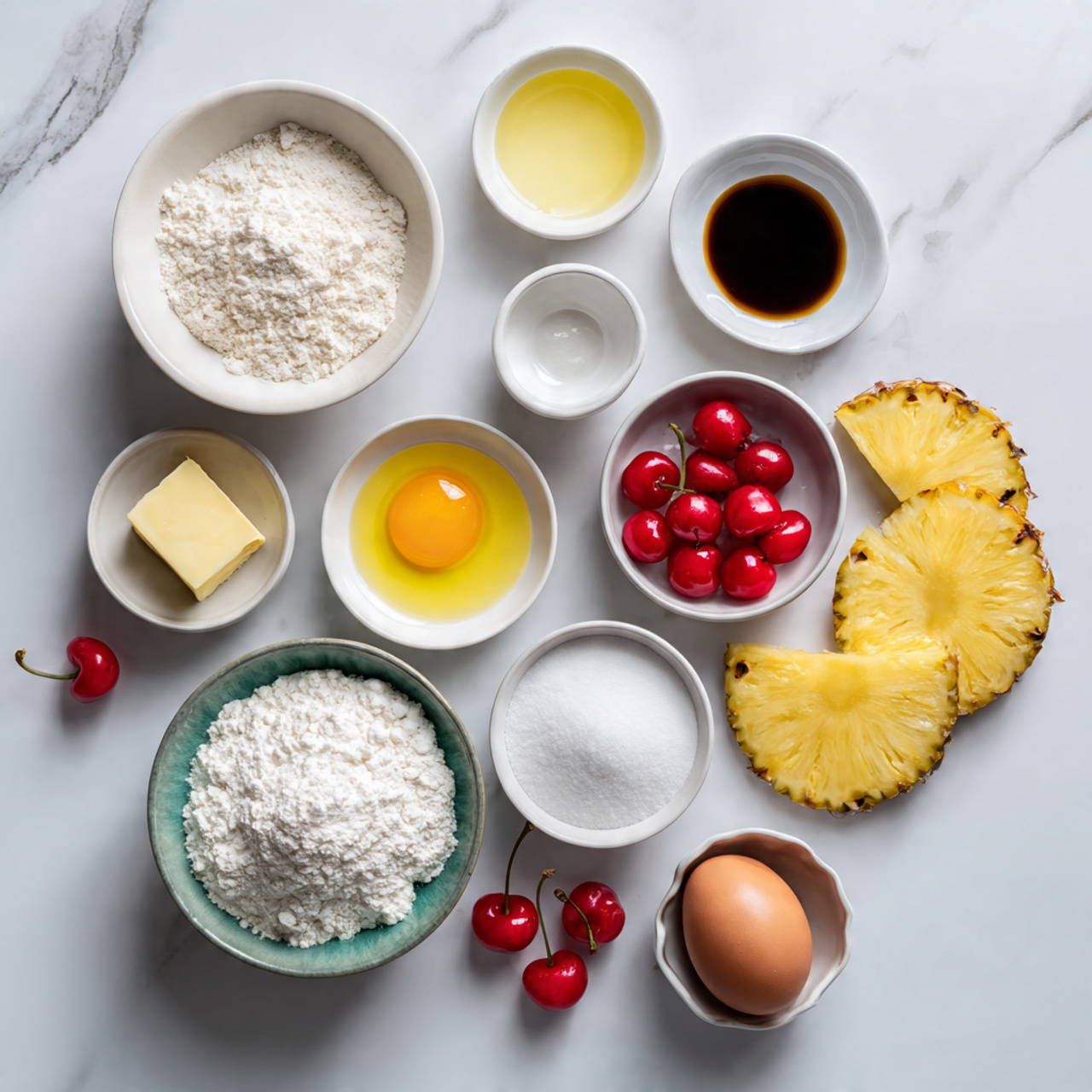
For the Caramel Topping
- 1/4 cup (60g) butter
- 1/2 cup (100g) brown sugar (packed firmly for a thicker, glossier caramel layer)
- 6 pineapple rings (fresh or canned, drained and patted dry)
- 6–8 maraschino cherries
For the Cake Batter
- 1 cup (125g) all-purpose flour
- 1 tsp baking powder
- 1/4 tsp salt
- 1/2 cup (100g) granulated sugar
- 1/2 cup (120ml) milk (whole milk gives a slightly richer crumb)
- 1/4 cup (60ml) vegetable oil
- 1 large egg (room temperature blends in more evenly)
- 1 tsp vanilla extract (pure, not imitation, for the best flavor)
The caramel topping does double duty here — it flavors and glazes the fruit as it bakes, then becomes the crown of the finished cake once you flip. The batter is intentionally light and neutral so it doesn’t compete with the fruit; it’s there to provide the soft, buttery base that makes every bite feel complete.
How to Make Upside Down Pineapple Cake — Step by Step
Step 1: Preheat the Oven and Prep Your Pan
Preheat your oven to 180°C (350°F) and lightly grease a 9-inch round cake pan, making sure to coat the sides as well as the bottom. Melt the butter and pour it directly into the prepared pan, tilting gently to coat the base evenly. Sprinkle the brown sugar over the butter in a single even layer. Don’t worry if it looks a little uneven or grainy right now — it will melt and smooth out beautifully in the oven.
Step 2: Build the Caramel-Pineapple Base
Arrange the drained and thoroughly dried pineapple rings over the brown sugar layer, fitting them flat and snug. Place one maraschino cherry in the center of each ring, then tuck any remaining cherries into the gaps between the fruit. Press everything down gently so it all sits in a flat, even layer. At this stage the pan should look almost like a jewel-toned mosaic — that’s exactly what you’ll see on top of the cake once it’s flipped.
Step 3: Combine the Dry Ingredients
In a medium bowl, whisk the flour, baking powder, and salt together until evenly combined — about thirty seconds is all it needs. This step distributes the leavening throughout the flour so the cake rises evenly without dense pockets. Don’t worry if the dry mixture looks like a very small amount; it’s precisely right for the light crumb this batter is meant to produce.
Step 4: Mix the Cake Batter
In a separate bowl, whisk the sugar, milk, vegetable oil, egg, and vanilla extract together until smooth and slightly pale, about one minute by hand. Add the dry ingredients to the wet and stir gently until just combined and no streaks of flour remain. The moment the batter looks smooth and uniform, stop stirring — working it further at this stage is exactly what makes cakes turn out dense and heavy instead of light and tender.
Step 5: Bake, Rest, and Flip
Pour the batter carefully over the pineapple layer and spread it gently and evenly to the edges. Slide the pan onto the middle rack and bake for 33–35 minutes. The top should be deep golden brown, the edges will be pulling slightly away from the sides, and a toothpick inserted in the center should come out clean. Remove from the oven and let the cake rest in the pan for exactly 10 minutes — this is the step that makes the flip work, and it’s not one to rush. After 10 minutes, run a thin knife around the edge, place your serving plate firmly over the top of the pan, and invert in one confident motion. Lift the pan slowly and let the cake release on its own. Don’t worry if it takes a second or two — gravity will do the job.
Perfecting This Recipe
Getting this recipe right consistently comes down to a few small habits that make a real difference in the final result.
- Pat pineapple rings thoroughly dry before placing them in the pan. Excess moisture from canned fruit dilutes the caramel and causes the topping to slide rather than set into that glossy layer.
- Pack the brown sugar firmly when measuring. Loosely measured brown sugar produces a thinner caramel with less depth of flavor.
- Use a pan with straight sides for the cleanest caramel distribution and the sharpest, most defined top once flipped.
- Stop mixing the batter earlier than feels comfortable — as soon as the last streak of flour disappears, you’re done.
- The 10-minute rest before flipping is not negotiable. Too early and the caramel is still liquid; too late and the sugar begins to stick. Ten minutes is the window.
- If your oven tends to run warm, check the cake around the 30-minute mark. The top should be evenly golden, not darkening at the edges.
Common Mistakes to Avoid
Skipping the pineapple-drying step — Moisture from undrained or wet fruit creates steam in the oven and dilutes the caramel, leaving you with a pale, watery topping instead of a deep amber glaze. A quick press with a paper towel takes five seconds and makes a visible difference.
Flipping the cake too soon — This is the single most common reason upside-down cakes stick. The caramel needs the full 10-minute rest to settle and begin cooling before it will release cleanly from the pan.
Overmixing the batter — The gluten in flour tightens when it’s worked too much, which transforms a light, pillowy crumb into a dense, gummy one. Once the batter looks smooth and lump-free, put down the spoon.
Using cold eggs straight from the fridge — A cold egg doesn’t emulsify as evenly into the batter, which can affect both the mixing and the rise. If you forget to take it out early, set it in a bowl of warm (not hot) water for five minutes before using it.
Leaving the sides of the pan ungreased — The butter and sugar handle the bottom, but the cake still needs to release cleanly from the sides. A light coat of cooking spray on the sides before you add anything else is easy insurance.
Add Your Touch
This cake is genuinely forgiving about variations, and a few small adjustments can make it feel like an entirely different dessert.
- Swap maraschino cherries for dried cranberries, halved fresh tart cherries, or small pieces of crystallized ginger for a more sophisticated look and a flavor that’s less candy-sweet.
- Add 1/2 teaspoon of ground cinnamon or a pinch of cardamom to the batter for a warmer, spicier version that’s especially good made in autumn and winter.
- Try sliced fresh mango, peaches, or thinly cut pears in place of pineapple for a seasonal take on this caramelized pineapple cake idea — the technique stays exactly the same, just swap the fruit.
- Stir a tablespoon of unsweetened shredded coconut into the batter for a tropical depth that pairs naturally with the pineapple topping.
- Replace vegetable oil with melted coconut oil for a subtle coconut undertone that deepens the tropical character of the whole cake without adding sweetness.
Visit Also: Healthy Cake
What to Serve With This
A scoop of good vanilla ice cream alongside a warm slice is the classic pairing for a reason — the cold cream melting slowly into the caramel is hard to beat. Lightly sweetened whipped cream is a lighter option that still feels indulgent. A strong cup of black coffee or plain tea is the ideal counterpoint to the sweetness if you’re serving this as an afternoon treat. For a more laid-back dessert spread, it works naturally next to a bowl of fresh fruit or a simple fruit salad. And if it’s the final course of a full dinner, this pairs well after roasted chicken, pasta, or any savory main that isn’t too rich or heavy.
Storing and Serving
Fridge Cover the cake with plastic wrap or store slices in an airtight container in the refrigerator for up to 3 days. The flavor actually deepens slightly overnight as the caramel settles further into the crumb, so day-two slices are genuinely excellent.
Freezer Wrap individual slices tightly in plastic wrap, then foil, or layer them in a freezer-safe container with parchment paper between slices. The cake freezes well for up to 1 month. The topping softens slightly after thawing but the flavor holds beautifully.
Reheating Warm a single slice in the microwave for 15–20 seconds to bring back that fresh-baked softness. For multiple slices, a low oven at 160°C for 8–10 minutes gives a more even result without drying out the crumb.
Make-Ahead Tip This cake bakes perfectly a full day in advance. Store it covered at room temperature for up to 12 hours, or refrigerate it overnight and allow it to come to room temperature for about 30 minutes before serving.
Servings This recipe makes approximately 8 slices from a standard 9-inch round cake pan.
Nutrition (Approximate Per Serving)
- Calories: ~280
- Total Fat: 11g
- Saturated Fat: 4g
- Carbohydrates: 43g
- Sugar: 27g
- Protein: 3g
- Sodium: 145mg
Nutritional values are approximate and may vary based on specific ingredients and brands used.
Chef’s Helpful Tips
- If you want extra insurance against sticking, cut a circle of parchment paper to fit the bottom of the pan and lay it in before adding the butter and sugar. It adds one small step and guarantees a clean release.
- Save the juice from canned pineapple and lightly brush it over the rings before placing them in the pan — it intensifies the pineapple flavor and helps the caramel layer build more evenly.
- Use the middle rack and resist opening the oven door in the first 25 minutes. A draft from opening too early can cause the center to sink before it has set.
- For the cleanest slices, let the cake cool for at least 20 minutes after flipping before cutting. A slightly cooled cake holds its shape under the knife; a hot one compresses.
- If the cake comes out denser than you hoped next time, shorten your mixing by a few strokes. That single change is almost always the entire fix.
Frequently Asked Questions
Q1. Can I use fresh pineapple instead of canned? Fresh pineapple works really well and gives a slightly brighter, less sweet flavor. Slice it into rings about half an inch thick, remove the core, and pat the rings completely dry before placing them in the pan. Fresh fruit holds significantly more moisture than canned, so the drying step matters even more here.
Q2. Is this recipe suitable for a beginner baker? Very much so — this is one of the most beginner-friendly cakes you can make. There’s no creaming butter, no folding technique, and no mixer needed. As long as you don’t overmix the batter and you give the cake its full 10-minute rest before flipping, there’s very little that can go wrong.
Q3. Can I make this ahead for a potluck or gathering? This is honestly one of the best cakes to prepare in advance. Bake it the day before, cover it tightly, and refrigerate overnight. Let it come to room temperature before serving and it will taste just as good — possibly even better than it did fresh from the oven.
Q4. Can this cake be frozen? Yes, it freezes well. Wrap slices individually and freeze for up to one month. Thaw overnight in the fridge and warm gently before serving. The topping texture softens slightly but the flavor stays fully intact.
Q5. Can I reduce the sugar if I prefer things less sweet? You can reduce the granulated sugar in the batter by about 2 tablespoons without noticeably affecting the texture or rise. Be more cautious about cutting the brown sugar in the topping — that sugar is responsible for the caramel itself, and reducing it too much affects both the flavor and your ability to flip cleanly.
Conclusion
There’s a reason Upside Down Pineapple Cake has held its place on home kitchen tables for so long — it’s one of those rare recipes that manages to look genuinely impressive and taste deeply satisfying while asking very little of the person making it. The caramel top does all the visual work for you, the batter is forgiving and comes together quickly, and the result is the kind of cake that feels like real, warm hospitality regardless of the occasion.
Now it’s your turn. Make it as written the first time, then start experimenting — a pinch of cinnamon, fresh seasonal fruit, coconut oil instead of vegetable oil. Once you’ve made it once, you’ll know exactly how it behaves and what it can handle. And when someone inevitably asks you for the recipe, share it without hesitation. The best cakes are the ones that keep traveling.
Easiest Upside Down Pineapple Cake
Course: Cake4
servings15
minutes35
minutes280
kcal1
hourGolden caramelized pineapple rings baked into a soft, buttery vanilla crumb — an impressive-looking dessert that’s secretly one of the simplest things you can make. Ready in about an hour, perfect for gatherings, and genuinely delicious the next day.
Ingredients
For the Caramel Topping:
1/4 cup (60g) butter
1/2 cup (100g) brown sugar
6 pineapple rings (fresh or canned, drained and patted dry)
6–8 maraschino cherries
For the Cake Batter:
1 cup (125g) all-purpose flour
1 tsp baking powder
1/4 tsp salt
1/2 cup (100g) granulated sugar
1/2 cup (120ml) milk
1/4 cup (60ml) vegetable oil
1 large egg
1 tsp vanilla extract
Directions
- Preheat oven to 180°C (350°F). Grease a 9-inch round cake pan including the sides.
- Pour melted butter into the base of the pan. Sprinkle brown sugar evenly over top.
- Arrange pineapple rings over the sugar layer. Place cherries in the center of each ring and in the gaps between.
- Whisk flour, baking powder, and salt together in a bowl.
- In a second bowl, whisk sugar, milk, oil, egg, and vanilla until smooth.
- Fold dry ingredients into wet until just combined. Stop the moment the batter looks streak-free.
- Pour batter over the pineapple layer and spread gently to the edges.
- Bake on the middle rack for 33–35 minutes until golden and a toothpick comes out clean.
- Rest in the pan for exactly 10 minutes. Run a knife around the edge, place a plate over the top, and flip in one confident motion. Lift the pan slowly.