Vibrant, Herb-Packed Chimichurri Sauce Recipe That Transforms Every Meal
The first time I tasted chimichurri, it was spooned straight from a jar at a tiny Buenos Aires-style grill tucked into a strip mall — nothing fancy, just a paper plate, a charred skirt steak, and a sauce so aggressively fresh it made my eyes go wide. I scraped every last drop off the plate with a piece of bread and immediately asked the cook what was in it. He laughed and said, “Parsley, garlic, vinegar. Nothing secret.” But somehow it tasted like everything.
That bright, herby punch — the way the fresh parsley mingles with sharp garlic, red pepper flakes, and just enough red wine vinegar to cut through the richness of grilled meat — is something no bottled sauce ever captures. The texture is loose but not watery, oily but not heavy, and the color is so deeply, unapologetically green it practically glows.
Whether you’re hosting a backyard cookout, pulling together a quick weeknight dinner, or building a Mediterranean-inspired mezze spread, this easy homemade sauce earns a permanent spot at your table. It pairs beautifully with grilled vegetables, roasted potatoes, and crusty bread just as well as it does with a ribeye. Once you keep a jar in your fridge, you’ll find yourself reaching for it daily. Let’s make it.
Why You’ll Love This Recipe
It’s Explosively Flavorful
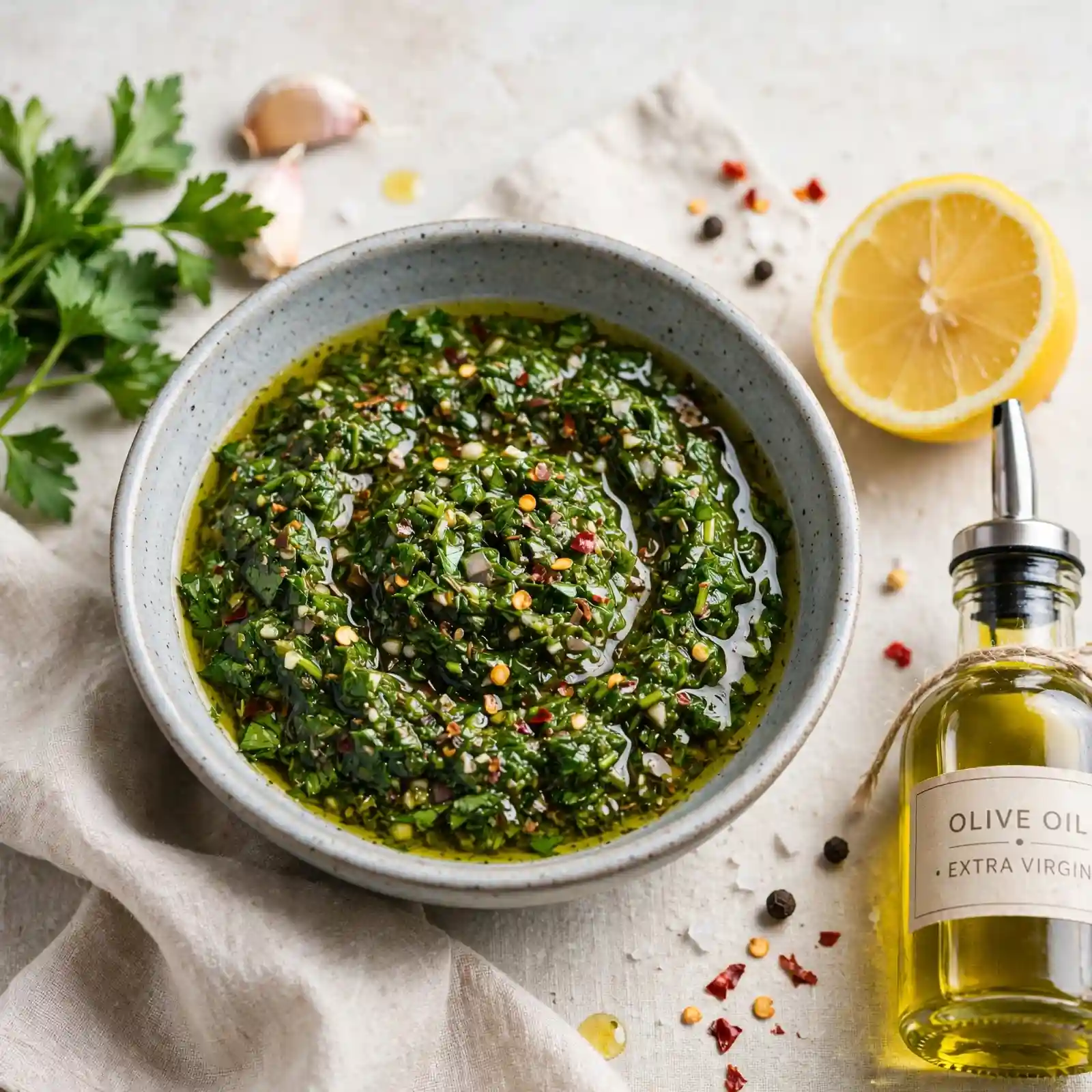
This Argentine green sauce delivers layers of flavor in every spoonful — bright herbs, mellow olive oil, sharp garlic, and a vinegar tang that wakes everything up. It’s bold without being aggressive, and balanced in a way that makes even simple food taste special.
The Texture Is Just Right
Chimichurri isn’t a smooth purée — it’s rustic and chunky in the best possible way. The hand-chopped herbs give it a satisfying body that clings to whatever you pour it over, soaking in rather than sliding off.
It Comes Together in 10 Minutes
No cooking, no special equipment, no culinary degree required. This is a mix-and-rest situation — you chop, stir, and walk away. The sauce does all the flavor-building while you’re doing something else.
It’s Perfect for Sharing
This recipe makes a generous batch, making it ideal for potlucks, summer cookouts, or family dinners where everyone wants a little extra on their plate. Double the batch and you’ll be glad you did.
Classic Flavor With Real Depth
Traditional chimichurri is simple by design, but this version layers in smoked paprika and a touch of dried oregano that adds an earthy, slightly smoky undertone. It’s recognizable and authentic, with just enough nuance to feel truly homemade.
Ingredients
For the Herb Base
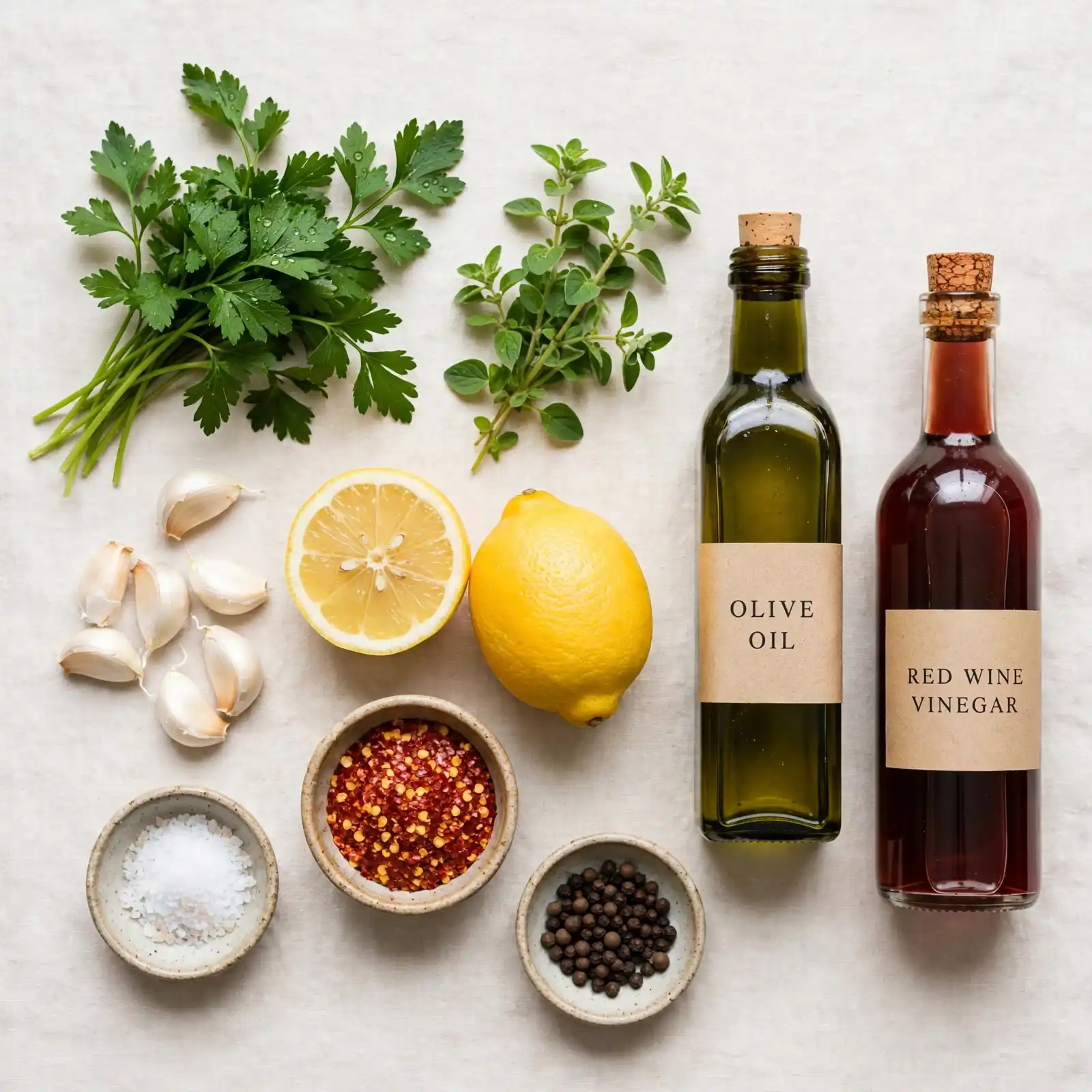
- 1 cup fresh flat-leaf parsley, packed (stems removed)
- ¼ cup fresh cilantro, loosely packed (optional but highly recommended)
- 4 cloves garlic, minced (or more if you love it punchy)
- 1 small shallot, finely diced
For the Sauce
- ½ cup extra-virgin olive oil (use the good stuff — it really matters here)
- 3 tablespoons red wine vinegar (not white or balsamic)
- 1 tablespoon fresh lemon juice
- 1 teaspoon dried oregano
- ½ teaspoon smoked paprika
- ½ teaspoon red pepper flakes (adjust to your heat preference)
- ¾ teaspoon fine sea salt
- ¼ teaspoon freshly cracked black pepper
The olive oil carries all those bright herb flavors through the sauce, the vinegar adds sharpness, and the red pepper flakes provide a slow, gentle warmth that builds at the end of each bite — it’s a sauce that keeps giving.
How to Make Chimichurri Sauce Recipe — Step-by-Step
Step 1: Prep and Chop the Herbs
Wash your parsley and cilantro and shake off excess water thoroughly — wet herbs will dilute your sauce. Strip the leaves from the stems and chop them by hand until fine but not a paste. The parsley should smell fresh and grassy from the moment your knife hits it. Don’t worry if your chop is a little uneven — rustic is exactly the texture you’re going for.
Step 2: Mince the Garlic and Shallot
Mince the garlic as finely as possible and do the same with the shallot. The finer you go, the more evenly they distribute through the sauce without any harsh raw bites. Don’t worry if a few larger pieces slip through — they mellow out beautifully during the resting time.
Step 3: Combine Everything in a Bowl
Add the chopped herbs, garlic, and shallot to a medium bowl. Pour in the olive oil, red wine vinegar, and lemon juice. Add the oregano, smoked paprika, red pepper flakes, salt, and pepper. Stir everything together until well combined — you’ll notice the oil turning a soft, gorgeous green almost immediately.
Step 4: Taste and Adjust
This is the most important step: taste it. Dip a piece of bread or a spoon in and evaluate. Too sharp? Add a splash more olive oil. Not punchy enough? Add another pinch of salt or a few more drops of vinegar. The sauce should feel lively and balanced — bright, garlicky, slightly tangy.
Step 5: Rest the Sauce Before Serving
Cover the bowl and let it sit at room temperature for at least 20–30 minutes before serving. This resting period is non-negotiable — it’s when the garlic mellows, the herbs soften slightly, and all the flavors merge into something far greater than the sum of their parts. Don’t worry if the oil separates a little; just stir before serving.
Perfecting This Recipe
- Always use flat-leaf (Italian) parsley, not curly — flat-leaf has a stronger, more vegetal flavor that anchors the sauce properly.
- Chop by hand rather than using a food processor. A processor turns the herbs into a paste and releases bitter compounds from over-processing.
- Red wine vinegar is essential — it has the right sharpness and fruit without overwhelming the herbs the way white or balsamic vinegar would.
- Let the sauce rest at room temperature before refrigerating. Chilling too quickly locks the garlic flavor in a harsher state.
- If you’re making this for grilling sauce purposes, make it the night before — the flavor deepens considerably after 12–24 hours in the fridge.
- Use a sharp knife. Bruised herbs from a dull blade will turn faster and taste slightly bitter.
Common Mistakes to Avoid
- Using dried parsley — Dried herbs have none of the bright, grassy punch that makes chimichurri what it is. There’s no substitution for fresh here.
- Over-processing in a blender — This turns your sauce into a smooth green liquid that oxidizes quickly and loses the textural character that defines authentic chimichurri.
- Skipping the rest time — A freshly mixed chimichurri tastes sharp and disconnected. Twenty minutes of resting at room temperature changes everything.
- Using the wrong vinegar — Balsamic is too sweet, white wine vinegar too neutral. Red wine vinegar has the exact acidity and complexity this sauce needs.
- Under-salting — Herbs need salt to express their full flavor. If your chimichurri tastes flat, salt is almost always the answer before you add more of anything else.
Add Your Touch
- Swap cilantro for fresh mint to give the sauce a cooler, Mediterranean character.
- Add ½ teaspoon of cumin for a warmer, earthier profile that pairs beautifully with roasted root vegetables.
- Use half olive oil and half avocado oil if you prefer a more neutral background.
- Stir in a teaspoon of honey for a very subtle sweetness that balances the vinegar on nights when the sauce feels too sharp.
- Add finely diced roasted red peppers for a smoky, sweet variation perfect as a sandwich spread.
- For a creamier version, stir in one tablespoon of Greek yogurt and use it as a dip or dressing.
Visit Also: Chicken And Dumpling Soup
What to Serve With This
- Grilled steak or flank steak — the classic pairing, and for excellent reason.
- Roasted potatoes or sweet potatoes — chimichurri over crispy potatoes is an underrated weeknight dinner move.
- Grilled shrimp skewers — the sauce cuts the richness perfectly.
- Crusty bread or flatbread — for scooping and spreading without apology.
- Grain bowls with farro or quinoa — drizzle generously over the top as a punchy dressing.
Storing and Serving
Fridge:
Store in an airtight jar or sealed container for up to 1 week. The olive oil will solidify when cold — let it sit at room temperature for 10 minutes and stir before using.
Freezer:
Spoon into an ice cube tray, freeze solid, then transfer to a zip-lock bag. Frozen chimichurri keeps for up to 3 months. Thaw individual cubes as needed — color may darken slightly but flavor holds well.
Reheating:
No reheating needed — this is a cold sauce. Simply allow refrigerated chimichurri to come back to room temperature before serving.
Make-Ahead Tip:
This sauce is best made 12–24 hours before serving. The flavor improves dramatically overnight. Make it the evening before your cookout and refrigerate; pull it out 15 minutes before serving.
Servings:
Makes approximately 1 cup of sauce, enough for 6–8 servings as a condiment.
Nutrition (Approximate Per Serving)
- Calories: 115
- Total Fat: 12g
- Saturated Fat: 1.7g
- Carbohydrates: 2g
- Sugar: 0g
- Protein: 0.5g
- Sodium: 180mg
Nutritional values are approximate and may vary based on specific ingredients and brands used.
Chef’s Helpful Tips
- Bring your ingredients to room temperature before mixing — cold olive oil straight from the pantry doesn’t emulsify with the vinegar as smoothly.
- Always taste your parsley before chopping. Older parsley can be slightly bitter; if yours has been in the fridge more than a week, use a fresh bunch.
- To get clean spoonfuls out of the jar, run a butter knife around the edge of the jar after storing — this keeps the herbs from sticking to the sides and wasting sauce.
- Ingredient quality matters enormously here. Since there’s no cooking to transform anything, the olive oil and vinegar you use are fully on display — spend a little extra.
- If your sauce comes out too thick, thin it with a teaspoon of water at a time. If it’s too loose, add a small additional handful of herbs and stir.
Frequently Asked Questions
Q1. Can I use dried herbs if I don’t have fresh parsley?
Fresh parsley is genuinely non-negotiable for chimichurri — dried simply won’t deliver the brightness and texture the sauce is known for. If you’re in a pinch, fresh basil or a combination of basil and mint can substitute in flavor, though the result will be different from a traditional chimichurri.
Q2. How does chimichurri compare to pesto?
They share the same herby, oily DNA, but chimichurri is sharper, thinner, and more vinegar-forward — it’s closer to a vinaigrette than a paste. Pesto is richer and creamier thanks to nuts and cheese; chimichurri is brighter and bolder with more of a citrusy, garlicky bite.
Q3. Is this beginner-friendly?
Absolutely — if you can use a knife and stir a bowl, you can make this sauce. There’s no special technique, no cooking, and no timeline pressure. It’s genuinely one of the most forgiving recipes you’ll ever make.
Q4. Can I make this ahead for a party or potluck?
Yes, and you should. Chimichurri tastes significantly better after it’s had time to rest and develop — making it the night before a gathering is ideal. Just keep it covered in the fridge and stir before serving.
Q5. Can I freeze leftover chimichurri?
Yes! Freeze it in ice cube trays for single-serve portions that you can pull out any time you need a quick flavor boost on weeknight dinners. Thaw in the fridge overnight or at room temperature for about 20 minutes.
Conclusion
Some recipes earn their place in your weekly rotation through effort and complexity. Chimichurri earns it through pure, effortless impact — a handful of pantry ingredients that come together in minutes and elevate everything they touch. Whether it’s spooned over a simple weeknight dinner or brought to a summer cookout in a mason jar, this chimichurri sauce recipe delivers the kind of homemade flavor that makes people ask for the recipe every single time.
Make a batch this week. Let it sit overnight, taste it in the morning, and try not to eat it straight from the spoon. Share it with people you love, adjust the garlic to your taste, and make it yours. Once you start keeping a jar in your fridge, I promise you’ll wonder how you ever cooked without it.
Herb-Packed Chimichurri Sauce
Course: Trending Recipes6–8
servings10
minutes115 per serving
kcal20–30
minutes30
minutesA vibrant, garlicky Argentine herb sauce made with fresh parsley, red wine vinegar, and olive oil — ready in 10 minutes and perfect for grilling season, weeknight dinners, and everything in between.
Ingredients
Herb Base:
1 cup fresh flat-leaf parsley, packed
¼ cup fresh cilantro, loosely packed
4 cloves garlic, minced
1 small shallot, finely diced
Sauce:
½ cup extra-virgin olive oil
3 tablespoons red wine vinegar
1 tablespoon fresh lemon juice
1 teaspoon dried oregano
½ teaspoon smoked paprika
½ teaspoon red pepper flakes
¾ teaspoon fine sea salt
¼ teaspoon freshly cracked black pepper
Directions
- Wash and dry parsley and cilantro thoroughly. Strip leaves from stems and chop finely by hand.
- Mince garlic and shallot as finely as possible.
- Combine herbs, garlic, and shallot in a medium bowl.
- Add olive oil, red wine vinegar, lemon juice, oregano, smoked paprika, red pepper flakes, salt, and pepper. Stir to combine.
- Taste and adjust seasoning — more salt, vinegar, or olive oil as needed.
- Cover and rest at room temperature for at least 20–30 minutes before serving. Stir before use.