The Chewiest Sourdough Chocolate Chip Cookies You’ll Ever Pull From Your Oven
The first time I made these, it was a rainy Tuesday and I had a jar of sourdough discard sitting on the counter, quietly judging me. I didn’t want another loaf of bread. I wanted something warm, gooey, and completely indulgent — so I folded that discard into a cookie dough and never looked back.
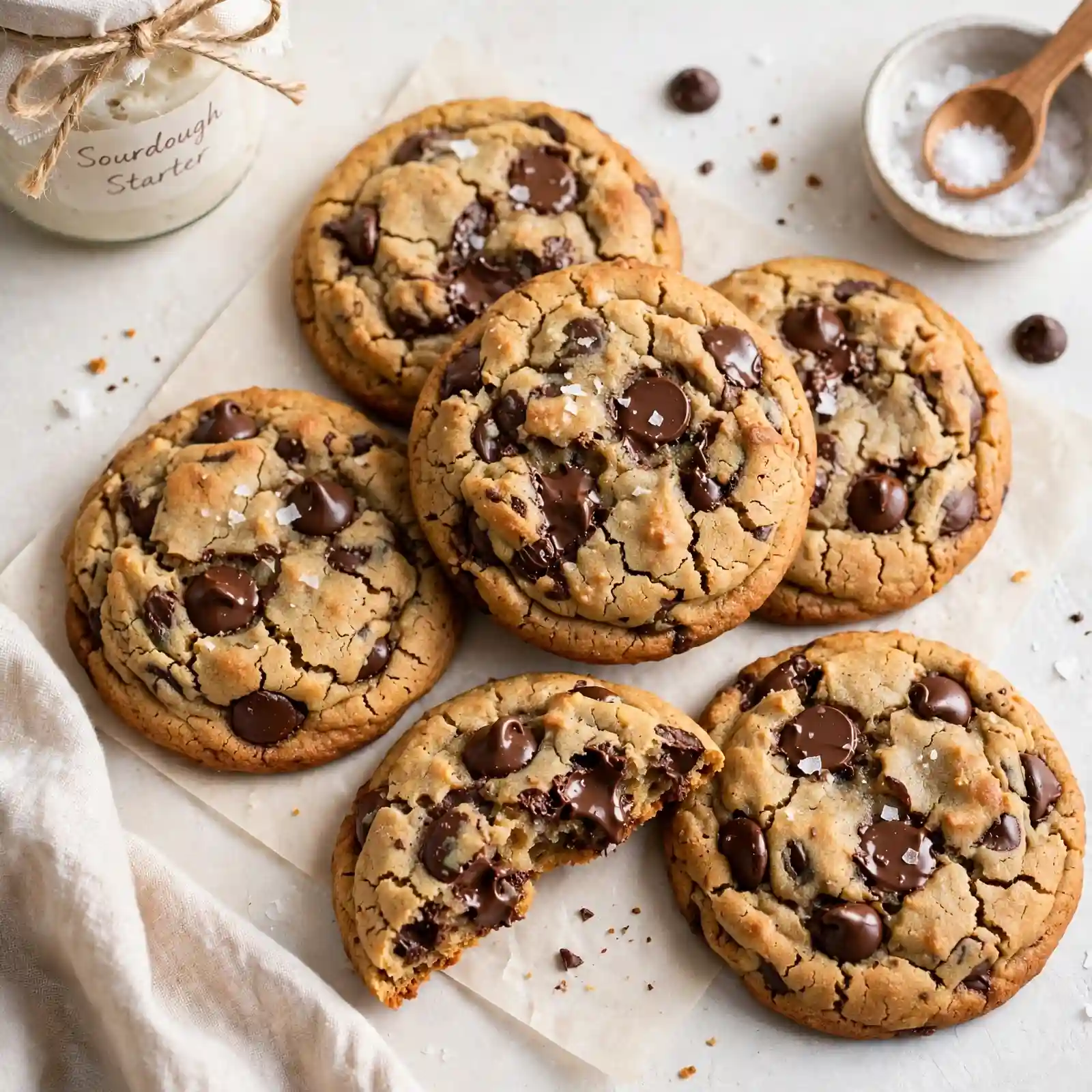
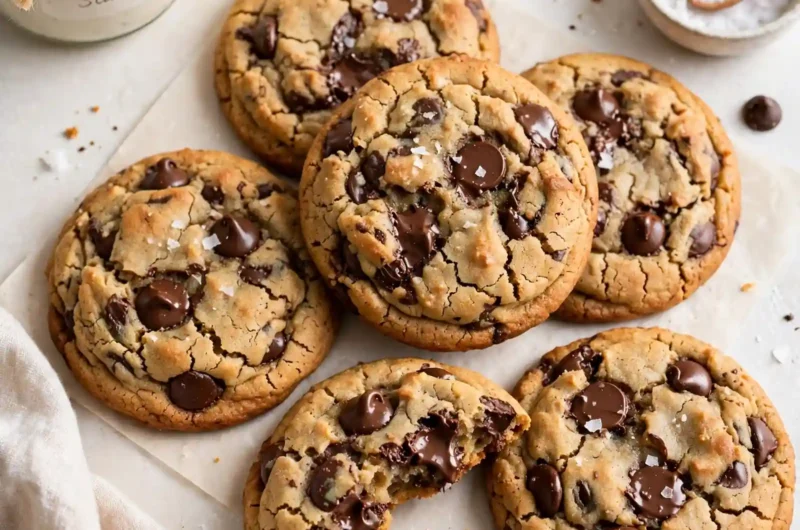
What came out of the oven was something I genuinely wasn’t prepared for. The edges were crisp and lightly caramelized, the centers were thick and fudgy, and underneath all that chocolate was this subtle, almost buttery tang that made every bite taste more complex than your average cookie. The sourdough doesn’t shout — it whispers, and that’s exactly what makes these cookies unforgettable.
These sourdough chocolate chip cookies have become my go-to for potlucks, late-night baking sessions, holiday cookie trays, and any occasion where I want to hand someone a cookie and watch their eyes go wide. If you’ve been looking for a reason to keep your sourdough starter going, this is it. Whether you call them sourdough discard cookies or bakery-style cookies, they belong in your regular rotation. Let’s make them.
Why You’ll Love This Recipe
The Tang Makes the Chocolate Taste Better
The mild acidity from the sourdough discard does something remarkable to the chocolate chips — it deepens and rounds out their flavor, making them taste more rich and intentional. It’s the same reason a pinch of salt makes desserts better. The contrast is subtle but completely noticeable.
Perfectly Chewy With Crisp Edges
These cookies hit the textural sweet spot that most people spend years chasing. The centers stay soft and almost gooey even after cooling, while the edges develop that thin, golden crisp that gives way beautifully with every bite.
Easy to Make With Pantry Staples
Beyond the sourdough discard, everything else here lives in your pantry already — butter, sugar, flour, eggs, vanilla, baking soda. There’s no chilling required if you’re in a rush, though a rest in the fridge takes them from great to exceptional.
Crowd-Pleasing at Any Occasion
These are the cookies you bring to a party and leave with zero. They’re approachable enough that kids devour them and interesting enough that bakers ask you for the recipe. No one needs to know how easy they were.
A Smart Way to Use Sourdough Discard
If you keep a sourdough starter, you know the guilt of throwing away discard. This recipe uses it meaningfully — the discard adds moisture, lift, and flavor all at once, making it one of the best sourdough desserts you can make with what’s already on hand.
Ingredients
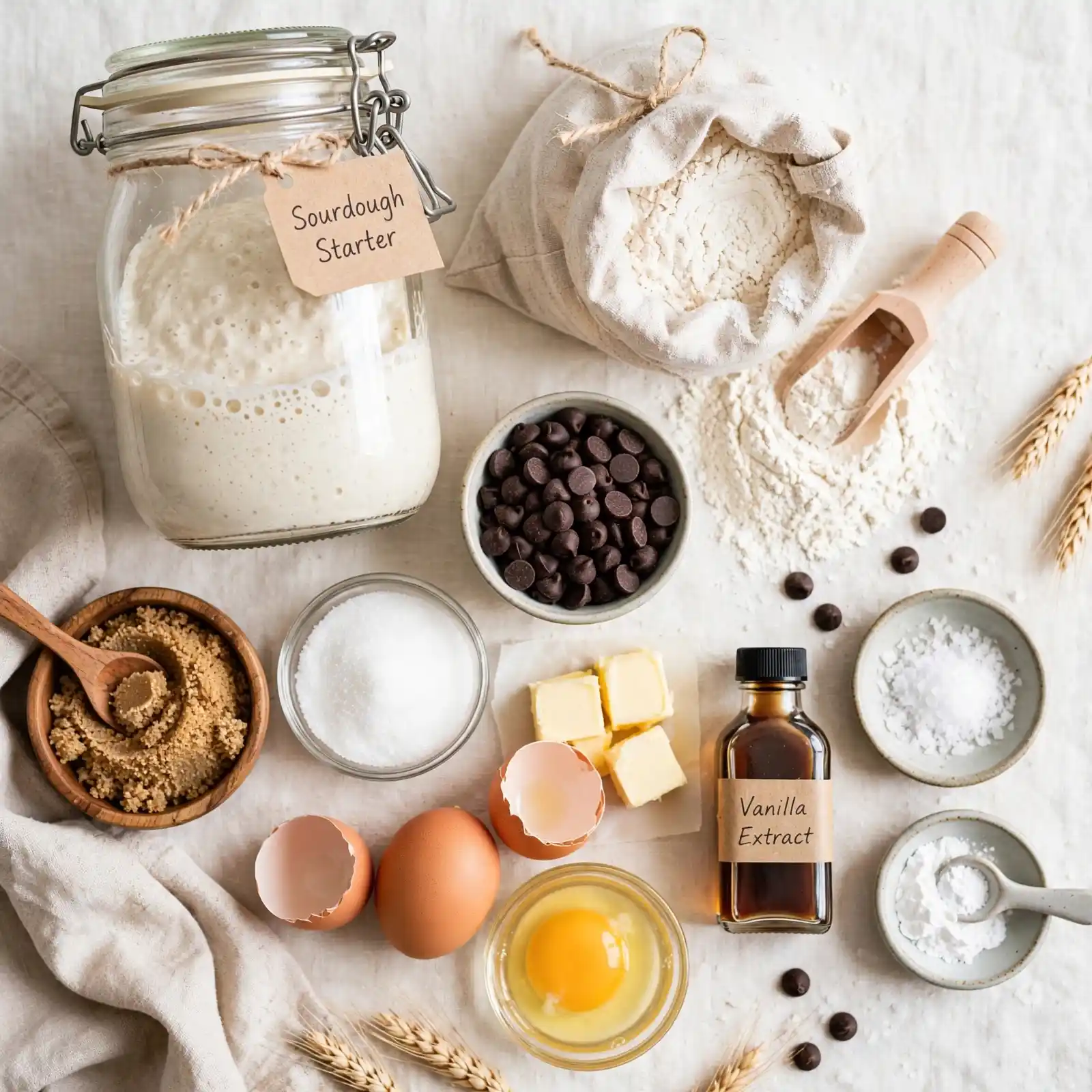
For the Cookie Dough Base
- 1 cup (2 sticks / 227g) unsalted butter, softened to room temperature
- ¾ cup (150g) granulated white sugar
- ¾ cup (165g) packed light brown sugar
- 2 large eggs, room temperature
- 2 tsp pure vanilla extract (not imitation — it makes a difference here)
- ½ cup (120g) sourdough discard, unfed and at room temperature
- 2 ¼ cups (280g) all-purpose flour, spooned and leveled
- 1 tsp baking soda
- 1 tsp fine sea salt
For the Mix-Ins
- 1 ½ cups (255g) semi-sweet chocolate chips (or a mix of chips and chopped chocolate chunks)
- ½ cup (85g) dark chocolate chunks (optional but highly recommended for extra pools of chocolate)
For Finishing
- Flaky sea salt for topping (such as Maldon — don’t skip this)
The butter and brown sugar create a deeply caramel-toned dough, while the sourdough discard loosens it just enough to keep the centers soft without making the cookies spread too thin. The combination of chocolate chips and chunks gives you both melty pockets and solid chocolate bites in every cookie.
How to Make Sourdough Chocolate Chip Cookies — Step-by-Step
Step 1: Cream the Butter and Sugars
In a large bowl using a hand mixer or stand mixer with the paddle attachment, beat the softened butter, granulated sugar, and brown sugar together on medium speed for 2–3 minutes, until the mixture is noticeably lighter in color and fluffy. You’re looking for a pale, almost whipped texture — this step builds the structure of your cookie, so don’t rush it. Don’t worry if your butter looks a little streaky at first; it will come together within the first minute.
Step 2: Add Eggs, Vanilla, and Discard
Add the eggs one at a time, beating for about 30 seconds after each addition. Mix in the vanilla extract, then add the sourdough discard and mix until everything is smooth and fully incorporated. The dough may look slightly glossy and looser than you expect — that’s normal. Don’t worry if the discard smells a little tangy; that’s exactly what you want.
Step 3: Mix in the Dry Ingredients
In a separate bowl, whisk together the flour, baking soda, and salt. Add the dry ingredients to the wet mixture and mix on low speed just until no streaks of flour remain. Stop mixing the moment the dough comes together — overmixing develops the gluten and makes cookies tough instead of tender.
Step 4: Fold in the Chocolate
Switch to a spatula and fold in the chocolate chips and chunks by hand. This keeps you from overmixing and also lets you control exactly how distributed the chocolate gets. At this point, you can bake immediately or cover the dough and refrigerate it for 30 minutes to 24 hours — the longer rest deepens the flavor and reduces spread significantly.
Step 5: Scoop, Top, and Bake
Preheat your oven to 375°F (190°C) and line two baking sheets with parchment paper. Scoop dough into balls roughly 2 tablespoons in size and place them 2 inches apart. Press a few extra chocolate chips onto the tops if you like that bakery look. Sprinkle each one with a pinch of flaky sea salt. Bake for 10–12 minutes, until the edges are set and golden but the centers still look underdone and slightly glossy. They’ll firm up as they cool — pulling them out early is the secret to a chewy center.
Step 6: Cool on the Pan
Let the cookies cool on the baking sheet for at least 5 minutes before transferring to a wire rack. This rest time lets the centers finish setting without overbaking from the oven’s residual heat. If you can wait the full 10 minutes, they’ll slice and lift cleanly with a perfectly gooey center.
Perfecting This Recipe
- Use room temperature butter — not melted. Melted butter leads to flat, greasy cookies; softened butter traps air and gives you lift.
- Spoon your flour into the measuring cup and level it off. Scooping directly compacts the flour and can make your cookies dry and dense.
- The sourdough discard should be at room temperature. Cold discard can cause the butter to seize slightly and affect how evenly the dough mixes.
- Chilling the dough is optional but genuinely worth it. Even 30 minutes in the fridge tightens the fat, reduces spread, and concentrates the flavors — the cookies come out taller, chewier, and more complex.
- Pull the cookies from the oven when the centers look just barely underdone. The carryover heat from the pan finishes the job.
- Using a mix of chocolate chips and chopped chocolate gives you both small melty bits throughout the dough and larger molten pockets — far better than chips alone.
- Brown sugar is the key to chew. If you want a slightly crisper cookie, shift the ratio toward more white sugar. If you want maximum chewiness, lean into the brown.
Common Mistakes to Avoid
- Using cold butter — Cold butter won’t cream properly with the sugars, which means less air is incorporated and your cookies come out dense and flat instead of light and chewy. Softened butter should leave a slight indent when pressed but not feel greasy.
- Overmixing after adding flour — Once the flour goes in, the gluten activates. Mix only until the dough just comes together or you’ll end up with tough, bread-like cookies instead of tender ones.
- Baking on a hot pan — If you’re baking multiple batches, always let your baking sheet cool between rounds. A hot pan causes the dough to melt and spread before it has time to set, leading to flat cookies with thin, crispy edges.
- Skipping the flaky salt — It sounds optional but it isn’t. The salt on top balances the sweetness, enhances the chocolate flavor, and makes each bite taste more finished and intentional. It’s one ingredient that does a disproportionate amount of work.
- Using starter that’s too ripe or too sour — Very active, bubbly starter that’s past peak can make the dough overly acidic and lead to a strange, almost metallic aftertaste. Unfed discard straight from the fridge is ideal here.
Add Your Touch
- Swap semi-sweet chips for white chocolate chips and add dried cranberries for a completely different flavor profile.
- Stir in ½ cup of toasted walnuts or pecans for crunch and a nutty depth that pairs beautifully with the sourdough tang.
- Add 1 tsp of espresso powder to the dough — it doesn’t make the cookies taste like coffee, but it amplifies the chocolate significantly.
- Brown the butter before creaming it in (let it cool to room temperature first) for a nutty, almost toffee-like complexity.
- Use a mix of dark and milk chocolate for a more rounded sweetness if semi-sweet feels too intense.
- For a holiday twist, add a pinch of cinnamon and swap in white chocolate chips plus dried cherries.
- Press a square of good-quality dark chocolate into the center of each dough ball just before baking for a dramatic chocolate pool in every cookie.
Visit Also: Caprese Salad Skewers
What to Serve With This
A cold glass of whole milk is the classic pairing and honestly unbeatable — the fat in the milk softens the richness of the cookie in the best way. A cup of strong black coffee or a flat white works beautifully if you’re serving these for a morning treat. They also sit nicely alongside a scoop of vanilla bean ice cream if you’re serving them warm as a dessert. For a more composed dessert plate, pair them with a small dish of lightly salted caramel sauce for dipping. And if you’re building a cookie box or holiday tray, these hold their own next to shortbread and snickerdoodles without overpowering the spread.
Storing and Serving
Fridge: Store baked cookies in an airtight container at room temperature for up to 5 days. They actually get chewier on day two as the moisture redistributes through the cookie.
Freezer: Freeze baked cookies in a single layer first, then transfer to a zip-lock bag or airtight container. They keep well for up to 3 months. You can also freeze unbaked dough balls — freeze on a tray until solid, then bag them and bake straight from frozen, adding 2–3 minutes to the bake time.
Reheating: Warm individual cookies in the microwave for 10–15 seconds to revive that just-baked softness. You can also reheat them in a 300°F oven for about 5 minutes.
Make-Ahead Tip: The dough can be made up to 48 hours in advance and stored covered in the fridge. You can also portion it into balls and refrigerate them, ready to bake off in batches whenever you need fresh cookies.
Servings: Makes approximately 24–28 cookies depending on scoop size.
Nutrition (Approximate Per Serving)
- Calories: 210
- Total Fat: 10g
- Saturated Fat: 6g
- Carbohydrates: 28g
- Sugar: 18g
- Protein: 2.5g
- Sodium: 115mg
Nutritional values are approximate and may vary based on specific ingredients and brands used.
Chef’s Helpful Tips
- Take your butter and eggs out of the fridge at least an hour before baking. Room temperature ingredients emulsify together more smoothly, which directly impacts the texture of the finished cookie.
- If your kitchen is warm and your dough feels very soft after mixing, a quick 15-minute rest in the freezer before scooping will make portioning cleaner and help the cookies hold their shape in the oven.
- Use a cookie scoop for uniform sizing — it means all your cookies bake evenly and you won’t end up with some overdone and others underdone on the same sheet.
- For clean, perfectly round cookies straight from the oven, use a round cookie cutter or the rim of a glass slightly larger than the cookie and swirl it around gently right after baking. The cookie firms into a perfect circle as it cools.
- If your cookies come out too crispy, your oven may run hot. Try reducing the temperature by 25°F and checking them a minute earlier. If they come out too flat, your butter was likely too warm — chill the dough next time.
Frequently Asked Questions
Q1. Can I make these without sourdough discard?
You can, but you’ll lose the subtle tang and extra moisture that makes these cookies stand out. If you don’t have a sourdough starter, you can substitute the discard with ½ cup of plain full-fat Greek yogurt thinned with a teaspoon of lemon juice — it mimics the acidity and texture reasonably well, though the flavor won’t be quite the same.
Q2. How do these compare to regular chocolate chip cookies?
Think of your favorite bakery-style chocolate chip cookie, then imagine it with an extra layer of depth underneath the sweetness — a slight richness and complexity you can’t quite put your finger on. They’re not sour at all; the tang is subtle and mostly serves to make the chocolate flavor pop more than usual.
Q3. Are these beginner-friendly?
Absolutely. If you’ve made any kind of drop cookie before, these will feel familiar. The most important thing is not to overbake them — pull them out when the centers still look slightly underdone and trust the process. They firm up beautifully on the pan.
Q4. Can I make the dough ahead and bring these to a potluck?
These are ideal for potlucks. You can bake them the night before and they’ll still taste fresh and chewy the next day. Alternatively, portion the dough balls, refrigerate them overnight, and bake fresh that morning so the cookies are at their absolute best when you arrive.
Q5. Can I freeze the baked cookies?
Yes, they freeze extremely well. Layer them between sheets of parchment in an airtight container and freeze for up to 3 months. When you’re ready to eat them, let them thaw at room temperature for 20–30 minutes or pop one in the microwave for 12 seconds. They come out tasting nearly fresh-baked.
Conclusion
Some recipes become part of your life not because they’re complicated or impressive, but because they’re genuinely, reliably good every single time. These sourdough chocolate chip cookies are exactly that kind of recipe. They’ve gotten me through rainy afternoons, last-minute party contributions, late-night cravings, and more jars of discard than I can count — and they’ve never once let me down. The fact that they’re made from something as humble as leftover starter makes them feel a little like kitchen magic every time.
If you’ve been sitting on a jar of discard and wondering what to do with it, this is where it belongs. Make a batch this week, share them with someone you like, and don’t be surprised when they ask you for the recipe. These cookies have a way of earning their place in the rotation — and then staying there permanently.
Chewy Sourdough Chocolate Chip Cookies
Course: Trending Recipes24–28 cookies
servings15
minutes10
minutes210 per cookie
kcal30 (optional but recommended)
minutes25
minutesThick, golden, and irresistibly chewy, these sourdough chocolate chip cookies have crisp edges, gooey chocolate centers, and a subtle tang from sourdough discard that makes the whole thing taste more complex than any cookie has a right to. Perfect for weeknight baking, potlucks, or anytime you need a serious cookie.
Ingredients
Cookie Dough Base:
1 cup (227g) unsalted butter, softened
¾ cup (150g) granulated sugar
¾ cup (165g) packed light brown sugar
2 large eggs, room temperature
2 tsp pure vanilla extract
½ cup (120g) sourdough discard, room temperature
2 ¼ cups (280g) all-purpose flour, spooned and leveled
1 tsp baking soda
1 tsp fine sea salt
Mix-Ins:
1 ½ cups (255g) semi-sweet chocolate chips
½ cup (85g) dark chocolate chunks
Finishing:
Flaky sea salt for topping
Directions
- Beat softened butter, granulated sugar, and brown sugar on medium speed for 2–3 minutes until pale and fluffy.
- Add eggs one at a time, beating after each. Mix in vanilla and sourdough discard until smooth.
- Whisk flour, baking soda, and salt in a separate bowl. Add to wet ingredients and mix on low until just combined.
- Fold in chocolate chips and chunks by hand. Chill dough for 30 minutes to 24 hours if time allows.
- Preheat oven to 375°F (190°C). Scoop 2-tablespoon portions onto parchment-lined baking sheets, 2 inches apart. Top with extra chips and flaky salt.
- Bake 10–12 minutes until edges are set and golden but centers still look slightly underdone. Cool on the pan 5 minutes before transferring to a rack.