The Most Showstopping Prime Rib Recipe Your Holiday Table Has Ever Seen
The first time I watched my grandmother pull a bone-in rib roast from the oven, I didn’t say a word. The crust was a deep mahogany, crackling softly as it rested on the carving board, and the whole kitchen smelled of rosemary and warm, beefy richness that made everything feel exactly right. She handed me the first slice — blushing pink from edge to edge — and that was it. I was a prime rib person for life.
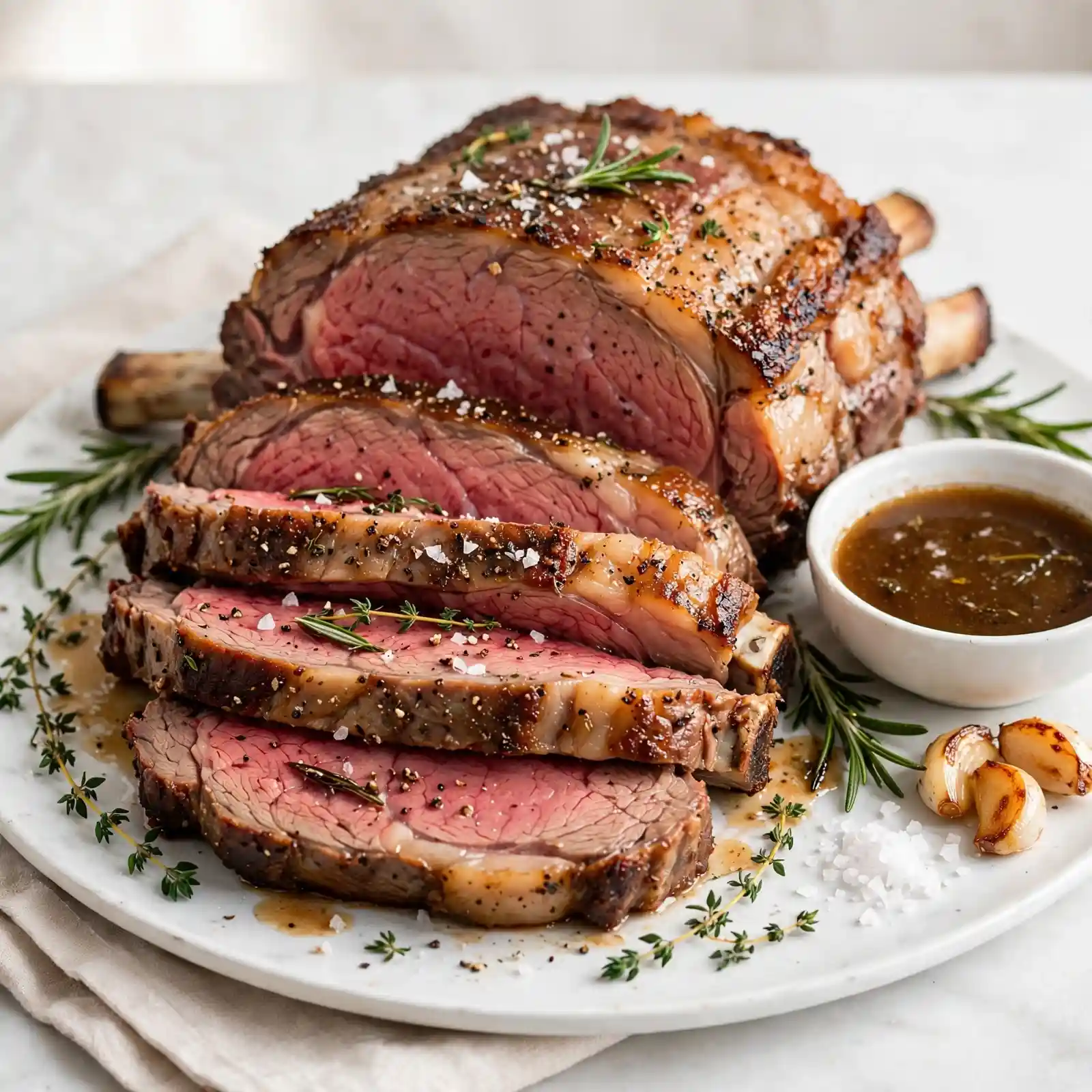
Nothing quite replicates that moment at the dinner table when a perfectly roasted prime rib lands in the center of the spread. The crust gives way with a satisfying crunch, revealing a buttery, tender interior that practically melts before your fork even reaches it. The fat has rendered into something silky and deeply savory, while the herb crust carries just enough garlic and rosemary to feel festive without overshadowing the beef itself.
This prime rib recipe is the one I turn to every Christmas, Easter, and anniversary dinner in between. It pairs beautifully alongside a classic standing rib roast presentation, works just as well for an intimate dinner of four as it does for a party of twelve, and it always draws that collective sigh of appreciation the moment it’s sliced. Whether you’re hosting your very first holiday feast or looking to finally nail a dish you’ve been intimidated by for years, this guide will walk you through every step.
Why You’ll Love This Recipe
It Tastes Like the Best Steakhouse in Town
The combination of dry-brining overnight and a simple herb butter rub creates layered, complex flavor that no restaurant shortcut can replicate. Every bite carries that deep, mineral beefiness you only get from quality rib roast, finished with a whisper of garlic and fresh herbs.
The Texture Is Impossibly Tender
Slow roasting at a low temperature before finishing at high heat locks in the juices completely. The result is a roast with an even, rosy interior from center to crust — no grey band, no dryness, just pure melt-in-your-mouth tenderness.
It’s Far Easier Than It Looks
Despite its impressive appearance, this recipe demands surprisingly little hands-on work. You season it ahead, set it in the oven, and the beef does the rest. The hardest part is simply waiting.
It’s Made for Gatherings and Celebrations
A bone-in rib roast is the ultimate centerpiece for holidays, Sunday suppers, or any occasion that calls for something truly memorable. It feeds a crowd generously and always makes guests feel genuinely celebrated.
A Classic Flavor With a Herb Butter Twist
While traditional prime rib is simply seasoned with salt and pepper, this version adds a garlic-herb compound butter that forms an extraordinary, crackling crust without masking the beef. It’s familiar and deeply satisfying, with just enough of a signature touch to feel like yours.
Ingredients
For the Dry Brine
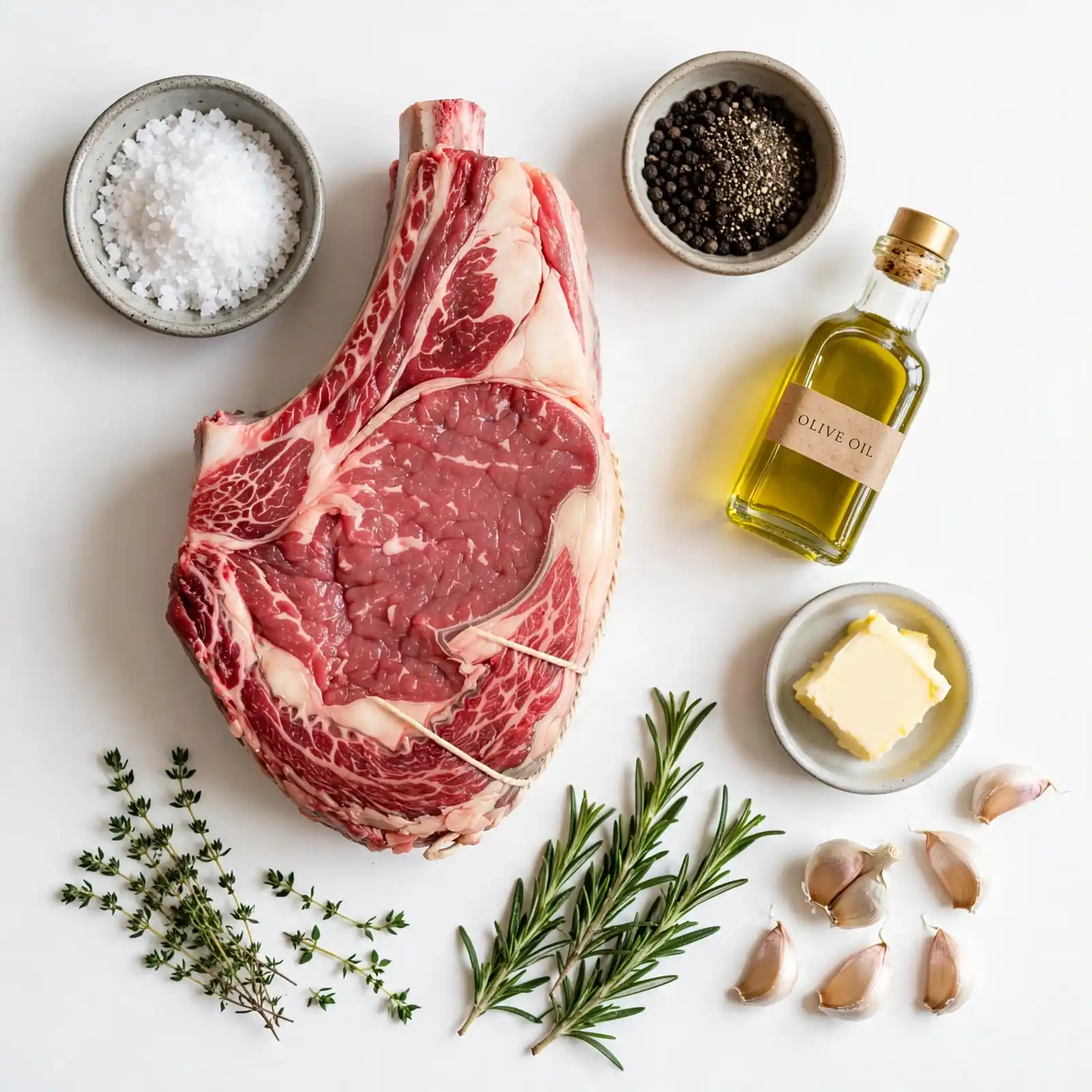
- 2 tablespoons kosher salt (Diamond Crystal preferred — Morton’s is saltier, so reduce by 25% if using)
- 1 tablespoon cracked black pepper
- 1 teaspoon garlic powder
For the Herb Butter Rub
- 4 tablespoons unsalted butter, softened to room temperature (cold butter will not spread evenly)
- 6 cloves garlic, minced
- 2 tablespoons fresh rosemary, finely chopped (dried works in a pinch — use 2 teaspoons)
- 1 tablespoon fresh thyme leaves
- 1 tablespoon Dijon mustard (adds depth and helps the crust adhere)
- 1 teaspoon smoked paprika
- ½ teaspoon onion powder
For the Roast
- 1 bone-in prime rib roast, 4–7 lbs (approximately 2–3 ribs; ask your butcher to remove the chine bone for easier carving)
- 2 cups beef broth (for the roasting pan — low sodium preferred)
For the Au Jus (Optional but Highly Recommended)
- Pan drippings from the roast
- 1 cup dry red wine (Cabernet Sauvignon or Merlot)
- 1½ cups beef broth
- 1 teaspoon Worcestershire sauce
- Salt and pepper to taste
The dry brine draws moisture to the surface and then back into the meat, creating a self-basting effect as it roasts. The herb butter melts into every crevice of that crust, while the beef broth in the pan keeps the environment in the oven gently moist — giving you that tender, juicy prime rib with au jus that tastes like the result of hours of professional effort.
How to Make Prime Rib Recipe — Step-by-Step
Step 1: Dry Brine the Roast (Up to 48 Hours Ahead)
Pat your prime rib completely dry with paper towels — moisture is the enemy of a good crust. Mix the kosher salt, cracked pepper, and garlic powder together and rub the mixture all over every surface of the roast, getting into the spaces between the ribs and along the fat cap. Place the roast on a wire rack set over a rimmed baking sheet and refrigerate it uncovered for at least 12 hours, but up to 48. Don’t worry if the surface looks a little tacky or dark when you pull it out — that’s exactly what you want.
Step 2: Bring to Room Temperature and Prep the Oven
Pull the roast from the refrigerator 2 full hours before you plan to cook it. This step is non-negotiable — a cold roast goes into the oven unevenly and results in a thick grey ring around the outside. While the beef comes to temp, preheat your oven to 250°F (120°C) and position the rack in the lower third of the oven. Pour the beef broth into the bottom of a heavy roasting pan.
Step 3: Apply the Herb Butter Rub
Combine the softened butter, minced garlic, rosemary, thyme, Dijon mustard, smoked paprika, and onion powder in a small bowl and mix into a cohesive paste. Rub it all over the outside of the roast — the fat cap, the sides, and down along the bones. Set the roast bone-side down in the roasting pan (the bones act as a natural roasting rack). Don’t worry if some of the butter slides off as you transfer it — it will flavor the drippings in the pan beautifully.
Step 4: Slow Roast to Your Target Temperature
Slide the pan into the preheated oven and roast low and slow until the internal temperature reaches your desired doneness. Use an instant-read or leave-in probe thermometer — this is the one tool that makes or breaks a prime rib recipe. Pull the roast at 120°F for rare, 125°F for medium-rare (the sweet spot most people love), 130°F for medium, or 135°F for medium-well. Cooking time varies by size but expect roughly 15–18 minutes per pound at 250°F. The roast will smell absolutely magnificent — nutty, herby, and deeply savory — long before it’s finished.
Step 5: Blast at High Heat for the Perfect Crust
Remove the roast from the oven and tent it loosely with foil while you crank the heat to 500°F (260°C). Once the oven reaches full temperature, uncover the roast and return it for exactly 10–15 minutes until the crust is a deep, crackling mahogany brown. Watch it closely — at this temperature it can go from perfect to overdone quickly. Pull it out, tent with foil again, and let it rest for a full 20–30 minutes before carving. Don’t worry if the internal temperature rises another 5–10°F as it rests — this carryover cooking is expected and accounted for in the pull temperatures above.
Step 6: Make the Au Jus and Carve
While the roast rests, set the roasting pan over medium-high heat on the stovetop. Add the red wine and let it bubble and reduce for 2 minutes, scraping up every flavorful bit stuck to the bottom of the pan. Add the beef broth and Worcestershire sauce and simmer for 5–7 minutes until slightly reduced. Season to taste and strain through a fine mesh sieve into a warm serving vessel. To carve, slice between the ribs to separate into bone-in portions, or remove all the bones first and slice the roast into your preferred thickness.
Perfecting This Recipe
- Always dry brine uncovered in the refrigerator — the airflow is what dries the surface and creates that crackly, deeply flavored crust.
- Bring the meat to true room temperature before roasting; rushing this step is the number one reason for uneven cooking.
- Invest in a reliable meat thermometer. Color and time estimates are guides; temperature is the only guarantee.
- When applying the herb butter, work it under any loose flaps of fat cap for maximum flavor penetration.
- Let the roast rest the full 20–30 minutes. Slicing too early causes the juices to run out onto the board instead of staying inside each slice.
- The low-and-slow approach followed by the high-heat blast is the key to an edge-to-edge pink interior with a properly seared, crackling crust — do not skip either phase.
- Save every dripping in the pan. That liquid is liquid gold for your au jus.
Common Mistakes to Avoid
- Skipping the Dry Brine — A dry brine isn’t optional seasoning; it’s a functional step that draws moisture in and out of the muscle fibers, resulting in deeper flavor and a dramatically better crust. Even 12 hours makes a significant difference.
- Pulling from the Fridge and Roasting Immediately — A cold roast cooks unevenly from outside in, creating a thick, overcooked grey band around the edges. Two full hours at room temperature is the minimum.
- Not Using a Meat Thermometer — Guessing by time or color will cost you a very expensive piece of beef. A thermometer removes all guesswork.
- Slicing Too Soon — Cutting into the roast before it has rested means losing up to 30% of its internal juices onto the cutting board. A properly rested prime rib is juicy throughout; a rushed one is not.
- Using Too Small a Pan — The roast needs airflow on all sides. A pan that’s too snug traps steam and prevents the crust from forming properly. Use a heavy roasting pan with at least 2 inches of clearance around the roast.
Add Your Touch
- Swap the rosemary and thyme for a bold Montreal-style rub (coarse salt, pepper, garlic, coriander, dill) for a steakhouse spin.
- Add 1 tablespoon of horseradish to the herb butter for a classic British-inspired bite.
- Mix a tablespoon of anchovy paste into the herb butter — it dissolves completely during cooking and adds unbelievable umami depth without any fishiness.
- For a smoke-kissed variation, finish the roast on a charcoal grill set up for indirect heat instead of the high-heat oven blast.
- Lay sliced onions, whole garlic cloves, and fresh herb sprigs in the roasting pan beneath the roast for an aromatic base that makes the au jus extraordinary.
- A thin smear of Worcestershire sauce under the herb butter adds an extra savory layer that subtly deepens the crust.
Visit Also: Buffalo Wings Recipe
What to Serve With This
Creamy Horseradish Sauce — The tangy, cool contrast to the rich, beefy roast is non-negotiable at my table.
Yorkshire Pudding or Popovers — The perfect vehicle for soaking up every drop of that au jus.
Roasted Garlic Mashed Potatoes — Buttery, smooth, and hearty enough to stand up to the main event.
Crispy Roasted Brussels Sprouts with Bacon — A slightly bitter, smoky counterpoint that balances the richness beautifully.
A Full-Bodied Red Wine — A Cabernet Sauvignon or a bold Côtes du Rhône makes the entire table feel like a celebration.
Storing and Serving
Fridge: Store leftover prime rib tightly wrapped in foil or in an airtight container for up to 4 days. Slice only what you need and keep the rest whole to retain moisture.
Freezer: Wrap individual slices tightly in plastic wrap, then in foil, and freeze for up to 3 months. Quality is best within the first 6 weeks. Thaw overnight in the refrigerator before reheating.
Reheating: For the best results, reheat individual slices in a 275°F oven in a covered dish with a splash of beef broth for 15–20 minutes. Microwaving is not recommended — it toughens the meat quickly. A quick sear in a hot skillet also works beautifully for leftovers turned into a new meal.
Make-Ahead Tip: The roast can be dry-brined and held in the refrigerator for up to 48 hours before cooking. The herb butter can be prepared and refrigerated up to 3 days in advance; bring it to room temperature before applying.
Servings: A 4-lb roast serves 4–5 people generously. A 7-lb roast serves 8–10. Plan on approximately ¾ to 1 lb of bone-in roast per person.
Nutrition (Approximate Per Serving)
- Calories: 620
- Total Fat: 44g
- Saturated Fat: 19g
- Carbohydrates: 2g
- Sugar: 0g
- Protein: 52g
- Sodium: 740mg
Nutritional values are approximate and may vary based on specific ingredients and brands used.
Chef’s Helpful Tips
- Room temperature butter is essential for the rub. Cold butter clumps rather than spreading evenly, and you’ll lose coverage across the roast. Set it out at least 30 minutes before mixing.
- Buy the best beef you can afford. This is one recipe where quality genuinely shows up on the plate. Look for USDA Prime or Choice with good fat marbling throughout.
- Let the thermometer do the thinking. Pull 5°F below your target because carryover cooking will bring it the rest of the way during the rest period.
- For clean, beautiful slices: Use a long, thin carving knife and a steady hand. Let the knife do the work rather than pressing down or sawing aggressively.
- If your roast turns out slightly more done than planned: Don’t panic. Thin slices served with extra au jus are still absolutely delicious. A rich, warm sauce covers a multitude of minor mishaps.
Frequently Asked Questions
Q1. Can I make this without a bone-in roast? A boneless prime rib works perfectly with this method, though you’ll lose a little of the deep flavor the bones add during roasting. Reduce cooking time slightly — boneless roasts cook faster — and use a thermometer just as diligently to nail your target temperature.
Q2. How does prime rib taste compared to a regular steak? Think of your best ribeye steak, then imagine it cooked more gently, more evenly, and with hours for the fat to slowly render into something buttery and rich. Prime rib has a deeper, more complex flavor than a quick-seared steak because the low-and-slow method allows the connective tissue and fat to transform during cooking in a way a hot pan simply cannot replicate.
Q3. Is this recipe beginner-friendly? Absolutely. The steps are straightforward, and the most technical thing involved is reading a meat thermometer — which takes about 3 seconds. The biggest keys to success are patience (don’t rush the rest period) and a good thermometer (don’t guess by time alone).
Q4. Can I make this ahead for a dinner party? Yes — dry brine up to 48 hours in advance and apply the herb butter the morning of your event. The roast itself is best cooked the day of and served immediately after resting, but the au jus can be prepared a day ahead and gently reheated on the stovetop before serving.
Q5. Can I freeze a cooked prime rib? You can, and it freezes reasonably well for up to 3 months. Wrap portions tightly to prevent freezer burn and thaw slowly in the refrigerator overnight. For best texture, reheat gently in the oven with a bit of broth rather than microwaving. Frozen and reheated prime rib makes spectacular sandwiches, hash, or beef fried rice even if the texture softens slightly.
Conclusion
There is a reason a perfectly executed prime rib recipe has anchored holiday tables for generations. It is generous, deeply satisfying, and carries with it the kind of weight that only truly special meals can. Once you learn the method — the patient brine, the slow roast, the high-heat finish, the essential rest — it becomes the recipe you return to every single time the occasion calls for something that genuinely matters.
Make it your own. Add the horseradish if your family loves the bite. Try the anchovy butter trick just once and watch people ask what your secret is. Serve it with popovers on Christmas morning or with just a simple salad on a Tuesday that needed rescuing. However you bring it to the table, this is a recipe worth knowing, worth sharing, and worth every minute of the wait.
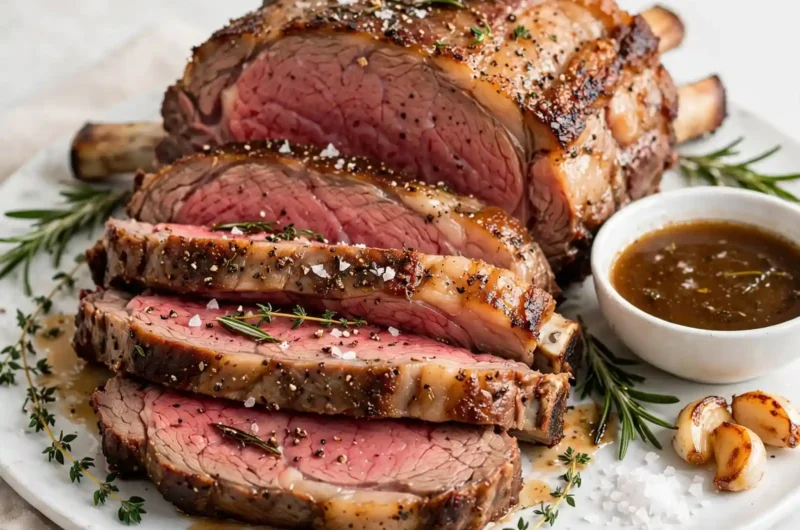
Classic Herb-Crusted Prime Rib Recipe
Course: Trending Recipes4–10 (depending on roast size)
servings20
minutes620 per serving
kcal2½–3½
hours10–15
minutes20–30
minutes45
minutesA stunning bone-in rib roast with a garlic-herb butter crust and a rosy, melt-in-your-mouth interior. Perfect for Christmas, Easter, anniversary dinners, or any occasion that deserves a true centerpiece.
Ingredients
Dry Brine:
2 tbsp kosher salt
1 tbsp cracked black pepper
1 tsp garlic powder
Herb Butter Rub:
4 tbsp unsalted butter, softened
6 cloves garlic, minced
2 tbsp fresh rosemary, finely chopped
1 tbsp fresh thyme leaves
1 tbsp Dijon mustard
1 tsp smoked paprika
½ tsp onion powder
Roast:
1 bone-in prime rib roast, 4–7 lbs
2 cups beef broth (for roasting pan)
Au Jus:
Pan drippings
1 cup dry red wine
1½ cups beef broth
1 tsp Worcestershire sauce
Salt and pepper to taste
Directions
- Pat roast dry. Mix dry brine ingredients and rub all over the roast. Place on a wire rack over a baking sheet and refrigerate uncovered for 12–48 hours.
- Remove roast from fridge 2 hours before cooking. Preheat oven to 250°F. Pour beef broth into roasting pan.
- Mix herb butter ingredients into a paste. Rub all over the roast. Set bone-side down in the roasting pan.
- Roast at 250°F until internal temperature reads 5°F below your target: 120°F (rare), 125°F (medium-rare), 130°F (medium). Approximately 15–18 minutes per pound.
- Remove roast and tent with foil. Increase oven to 500°F. Once preheated, return uncovered roast for 10–15 minutes until deeply browned.
- Tent with foil and rest for 20–30 minutes.
- Make au jus: deglaze pan over medium-high heat with red wine, scraping up browned bits. Add broth and Worcestershire, simmer 5–7 minutes. Strain and season.
- Carve and serve with au jus.